The economic realities of frontline employment are fundamentally shaped by wages, a crucial factor driving a significant portion of the workforce—over 70%—to frequently transition between jobs and employers in pursuit of marginal hourly pay increases. This dynamic is particularly pronounced in sectors like restaurants, retail, hospitality, and transportation, where entry-level positions often require minimal specialized skills. For employers in these fields, the hiring process becomes a high-stakes race against time. With numerous applicants vying for similar roles, a swift response to candidates is paramount. The decision to accept a job offer often hinges on the immediate compensation, making pay rates a primary determinant in securing and retaining talent.
The recruitment cycle for frontline workers is characterized by a high volume of applications. Companies frequently receive hundreds of submissions, necessitating rapid screening, interviewing, and background checks to avoid overwhelming on-site management. This urgency in the hiring process can lead to rapid offers, with candidates accepting positions only to abandon them shortly after due to more lucrative opportunities surfacing. This phenomenon is not an anomaly but a recurring challenge. A common scenario involves a candidate accepting a position on a Friday, only to fail to report for their Monday start date because they secured a role offering a mere $5 per hour more over the weekend. This churn is exacerbated by the proliferation of automated application tools and "apply-bots" that continuously scour job boards for openings. Websites such as jobhire.ai, jackandjill.ai, aiapply.co, and applyblast.com facilitate this automated application process, enabling workers to apply to numerous positions simultaneously. When these bots identify a role offering a significant pay increase, such as $10 more per hour, employees are quick to make the switch, highlighting the critical role of compensation in this labor market.
The overarching consensus is clear: in lower-skilled roles, compensation plays a pivotal role. While other factors such as job satisfaction, company brand, working hours, and conditions are important, base pay remains a foundational need that significantly influences employee decisions.
The Influence of Tipping and Evolving Tax Regulations

The economic calculus for frontline workers is further complicated by the role of tips, particularly in light of recent shifts in tax policy. Companies can broadly be categorized into those that actively collect tips and those that do not. Historically, tips have been treated as employee income, directly impacting their take-home pay. However, recent federal directives have introduced nuances, particularly concerning how tip income is recognized and taxed.
For businesses that facilitate tip collection, whether through cash or electronic means, tips are typically accounted for as an employee liability rather than direct company revenue or expense. This accounting treatment means that tips do not directly influence a company’s reported profit, revenue, or capital requirements. Consequently, from an employer’s perspective, facilitated tip income can be viewed as a cost-neutral mechanism to enhance employee earnings. This has historically served as an incentive for employees to provide superior service, thereby potentially increasing their tip earnings.
This distinction creates a significant advantage for "tipping" companies—such as many restaurants, cafes like Starbucks, and service providers like Uber—over "non-tipping" companies like major retailers (Target, Walmart, Costco) or logistics firms (FedEx). The tipping model allows these companies to offer potentially higher overall compensation to their employees without a corresponding increase in their direct labor expenses. The magnitude of this advantage has become particularly pronounced following new IRS regulations.
A Closer Look at IRS Tip Regulations and Their Financial Impact
New IRS guidelines have illuminated the substantial financial benefits associated with tip income, creating a potentially transformative impact on the compensation structures of businesses that utilize a tipping model. According to a U.S. Department of the Treasury press release, new legislation related to tip income has generated significant tax refunds or reductions for eligible workers. In the first half of 2026, approximately 3.5 million filings indicated a benefit, with an average reduction of $1,300 per individual. This translates to an estimated total government subsidy of $4.5 billion directed towards this segment of the workforce.
This substantial fiscal allocation raises critical questions about its distribution and ultimate beneficiaries. Initial analysis suggests that this benefit could significantly augment the earnings of tipped employees. If the IRS figures are accurate, this implies that approximately 2.1% of all U.S. workers who filed under these new provisions received tip amounts that effectively equated to $7 to $11 or more per hour. Considering that the Bureau of Labor Statistics (BLS) reports an average non-managerial hourly wage of approximately $32 for hourly work, this tip income could represent an addition of nearly one-third to an employee’s total earnings.
The calculation underpinning this estimate involves several assumptions. While the average U.S. worker tax rate is around 14.5%, a significant portion of hourly workers, particularly those in lower-paying roles, may pay substantially less or no federal income tax. For the purpose of this analysis, it’s estimated that the average hourly worker subject to tip income might pay between 8% to 10% of their earnings in federal tax. Dividing the $1,300 tax benefit by this estimated tax rate suggests that these tipped workers received between $13,000 to $16,000 in tips annually. While these figures are substantial and prompt consideration of potential IRS data inflation, the trend indicates a significant financial uplift.
Factoring in typical working hours, hourly workers generally log between 1,500 to 2,000 hours per year, with an average around 1,700 hours. This annual tip income, when translated to an hourly rate, equates to an additional $6 to $10 per hour. When combined with the $1,300 tax return, the effective tip income per hour escalates to a range of $7 to $11. This represents a substantial increase in earnings potential for tipped employees.
Comparative Wage Structures: Tipped vs. Non-Tipped Employers
The financial advantage for companies operating with a tipping model becomes starkly evident when comparing compensation structures with their non-tipped counterparts. Average hourly wages across major frontline employers can vary significantly based on geographic location, specific job roles, and prevailing local minimum wage laws, such as state-mandated fast-food wage floors. However, the inclusion of tip income as a significant component of overall compensation creates a substantial disparity.

For instance, if a non-tipped employer offers a base wage of $15 per hour, and a tipped employer offers a base wage of $10 per hour plus an estimated $7 per hour in tips (factoring in the tax benefits), the total compensation for the tipped worker could approach $17 per hour. This scenario suggests that "tipping" companies can effectively secure a workforce at a significantly lower direct cost—potentially around 35% less—compared to "non-tipping" companies, when considering the total compensation package.
Implications of the Shifting Tipping Landscape
The recent legislative and regulatory changes surrounding tip income present several critical implications for employers, consumers, and the broader economic landscape.
Employer Advantage and Cost Structures
One of the most immediate implications is how employers can leverage this new financial dynamic. Companies that do not collect tips are compelled to offer higher base wages to attract and retain frontline workers. Conversely, businesses that facilitate tip collection can potentially offer lower base wages, relying on tip income to supplement employee earnings. This suggests that the federal benefit, intended to support workers, may inadvertently increase the profitability of "tipping" companies by reducing their direct labor costs in a competitive market. This raises concerns about whether the intended benefit truly translates into higher overall worker earnings or primarily serves to enhance employer margins.
Consumer Experience and the Tipping Dilemma
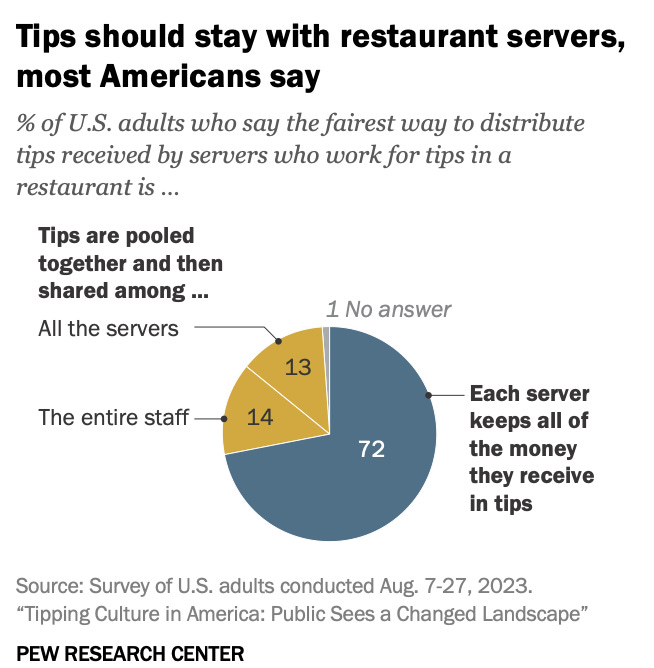
The proliferation of tipping requests has become a notable aspect of the modern consumer experience. Nearly every point of transaction, from mobile applications to credit card terminals and physical checkouts, now prompts for a tip. Platforms like Uber and DoorDash have removed the option to "skip tipping," leading to concerns among drivers about declining base pay. Consumers often feel a sense of obligation to tip, driven by empathy for workers perceived as earning low wages. However, this widespread expectation of tipping, coupled with the potential for employers to leverage tax benefits, creates a complex ethical and economic dilemma. The increasing visibility and frequency of tipping requests have led to consumer fatigue, with studies indicating that a significant portion of the American public believes tipping culture has become excessive.
Income Inequality and Government Subsidies
The substantial government subsidy, estimated at $4.5 billion, directed towards tip income presents a question of equitable resource allocation. The current system prioritizes businesses that utilize a tipping model, potentially creating a disparity in how government support is distributed across different sectors of the low-wage workforce. While the political intent was to honor and support hourly workers, the effectiveness and fairness of this approach are subjects of ongoing debate. The significant financial incentive for businesses to encourage tip income raises questions about whether this is the most efficient or equitable method of supporting low-income workers.
Societal Shifts Towards a "Work for Hire" Model
The increasing reliance on tips and the associated tax benefits further entrench a "work for hire" model of employment. This trend, as detailed in broader analyses of the evolving employer-employee relationship, signifies a gradual decoupling where the direct employer-employee bond is softened, with compensation becoming more transactional and performance-based. While tips can incentivize employees to focus on customer satisfaction, the employer’s role in providing a stable, predictable wage structure can become diminished. The long-term societal impacts of this shift are still unfolding, but it points towards a future where contingent and performance-based compensation models become more prevalent.
The Future of Compensation in Frontline Industries
The current landscape suggests a continuing trend towards increased reliance on tipping mechanisms, driven by both market pressures and legislative incentives. Businesses that do not currently incorporate tipping may face increasing pressure to adopt such models to remain competitive in attracting and retaining talent. This could lead to a broader societal normalization of tipping across a wider array of service industries, regardless of traditional tipping norms.
The financial implications for both employers and employees are significant, and the long-term consequences of these evolving compensation structures remain to be fully understood. As tipping becomes more ubiquitous, the debate over fair wages, employer responsibility, and the role of government subsidies in shaping the workforce will undoubtedly continue. The $4.5 billion federal subsidy is a clear indicator of the significant role tip income plays in the U.S. economy and the ongoing efforts to regulate and recognize this form of compensation.