Employee turnover, a persistent challenge for organizations across all sectors, serves as a crucial indicator of underlying issues within a company’s culture and management practices. When employees choose to leave, they are not merely departing from a job; they are often signaling unmet needs, unaddressed concerns, or a lack of perceived value. The true complexity lies not in identifying that turnover is occurring, but in deciphering the specific reasons behind it and implementing effective strategies to retain top talent before they seek opportunities elsewhere. By understanding the drivers of employee attrition, businesses can proactively cultivate environments where individuals feel valued, supported, and motivated to commit to the organization’s long-term success.
The Mechanics of Measuring Employee Turnover
While employee turnover rates may not possess the immediate allure of sales figures or profit margins, they offer profound insights into the health and vitality of a company’s internal ecosystem, particularly its organizational culture. Fortunately, calculating these metrics does not necessitate advanced financial acumen or clairvoyance. A straightforward formula, applied with diligence and perhaps a strong cup of coffee, can provide clarity.
The fundamental formula for calculating employee turnover is as follows:
*Annual Turnover Rate = (Number of Employees Who Left During the Year / Average Number of Employees During the Year) 100**
To illustrate, consider a scenario where an organization had an average of 90 employees throughout a given year, and 6 employees departed during that same period. The annual turnover rate would be calculated as:
(6 / 90) * 100 = 6.67%
This calculation provides a quantitative snapshot of attrition. However, the critical next step involves delving into the qualitative aspects – understanding why employees are leaving. This is precisely where the significance of employee recognition emerges as a pivotal driver of retention. Data from the Achievers Workforce Institute’s (AWI) 2026 Engagement and Retention Report sheds critical light on this dynamic:
- Limited Appreciation: A mere 25% of employees report feeling genuinely appreciated at work. This statistic underscores a significant deficit in the employee experience, signaling a clear opportunity to enhance engagement levels before they manifest as increased turnover.
- Appreciation as a Retention Tool: Employees who consistently feel appreciated are demonstrably more likely to remain with their current employer, exhibiting a 2.5 times higher likelihood of staying. This finding highlights a direct correlation between recognition initiatives and improved retention outcomes, transforming insights into actionable strategies.
- The Impact of Rewards: A substantial 75% of employees indicate that the removal of rewards would significantly influence their decision to leave their current position. This emphasizes the role of tangible recognition in reinforcing an employee’s sense of value, thereby fostering long-term loyalty and commitment beyond mere short-term engagement.
The insights derived from turnover data pinpoint where an organization is experiencing attrition. Conversely, robust recognition programs offer a pathway to understanding how to retain valuable team members. Consequently, leading organizations are increasingly prioritizing not only the measurement of turnover but also strategic investments in comprehensive recognition and rewards programs designed to make employees feel seen, supported, and confident in their future with the company.
A Five-Step Framework for Calculating Employee Turnover
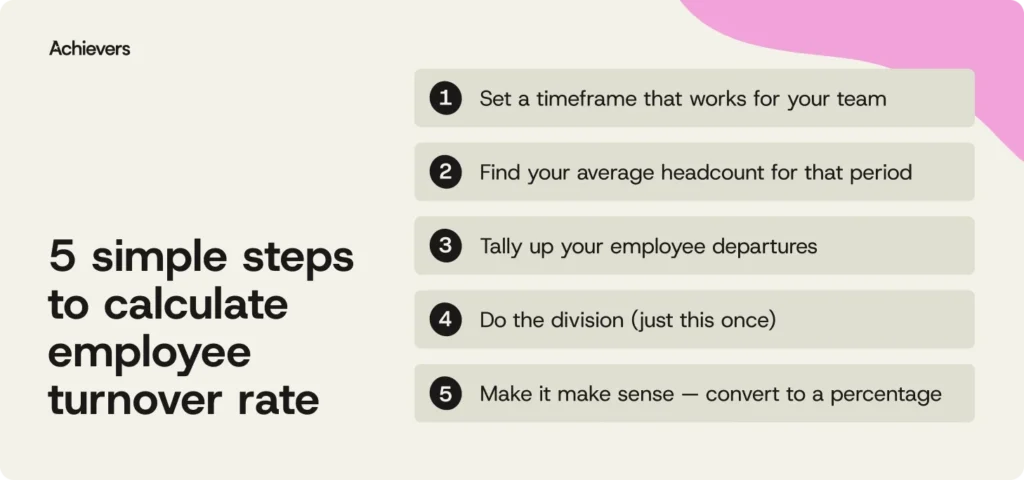
Implementing a systematic approach to calculating employee turnover ensures consistency and accuracy. The process can be broken down into five manageable steps:
1. Define Your Measurement Period
The initial step involves establishing a clear timeframe for your analysis. This could be monthly, quarterly, or annually, depending on the organization’s needs and reporting cycles. Shorter periods are effective for identifying immediate trends and potential disruptions, while annual figures provide a broader perspective on long-term patterns and the efficacy of retention strategies.
2. Determine Average Headcount
To calculate the average number of employees during your chosen period, you will need to record the total number of employees at the beginning and end of that timeframe. Sum these two figures and divide by two. For instance, if a company had 85 employees at the start of the first quarter and 95 employees at the end, the average headcount for that quarter would be (85 + 95) / 2 = 90 employees.
3. Tally Employee Departures
Next, meticulously count the total number of employees who left the organization during the defined period. This count should encompass all types of departures, including voluntary resignations, retirements, terminations, and layoffs. Regardless of the reason for separation, each departure contributes to the overall turnover narrative.
4. Perform the Division
With the number of employee departures and the average headcount established, the next step is to divide the former by the latter. This calculation will yield the employee turnover rate expressed as a decimal.
5. Convert to a Percentage
To render the turnover rate more accessible and interpretable for reporting and discussion, multiply the decimal result by 100. This conversion transforms the decimal into a percentage, a common metric used in presentations, dashboards, and strategic planning meetings.
Once this percentage is established, it serves as a foundation for deeper analysis, enabling organizations to investigate the underlying causes of attrition and develop targeted strategies to retain their most valuable employees.
Interpreting Your Turnover Rate: Reading Between the Lines
The calculated turnover rate is more than just a number; it’s a diagnostic tool that communicates vital information about an organization’s internal health. A high turnover rate often signals systemic issues that require attention. These could range from inadequate compensation structures and a toxic work environment to a lack of growth opportunities or poor management practices. Conversely, a low turnover rate can sometimes indicate a stable, albeit potentially disengaged, workforce that is staying for reasons other than proactive satisfaction. Understanding these nuances is crucial for effective intervention.
A high turnover rate may be communicating:
- Compensation Gaps: Salaries and benefits are not competitive with the market.
- Poor Management: Ineffective leadership, lack of support, or unfair treatment from supervisors.
- Limited Career Growth: Employees feel stagnant with no clear path for advancement or skill development.
- Unhealthy Work Culture: Pervasive negativity, lack of psychological safety, or excessive stress.
- Lack of Recognition: Employees feel their contributions are not valued or acknowledged.
- Burnout: Excessive workloads and unsustainable demands leading to exhaustion.
On the other hand, a low turnover rate could be telling you:
- Job Security Concerns: Employees are staying due to economic uncertainty or fear of unemployment, rather than genuine satisfaction.
- Lack of Better Opportunities: Employees may be passively seeking other roles but haven’t found a compelling reason to leave yet.
- Complacency: A stable workforce can sometimes mask underlying disengagement if not actively monitored.
- Effective Retention Strategies: A genuinely positive culture, strong leadership, and opportunities for growth are in place.
It is important to acknowledge that each organization is unique, and turnover will always have specific contextual layers. However, regardless of the rate, it serves as a powerful starting point for exploring the true drivers of employee departures or, conversely, the factors that foster long-term commitment.
Unpacking the Common Causes of High Turnover
Several recurring factors contribute significantly to elevated employee turnover rates. While these issues are not new to the business landscape, their persistent presence can lead to a steady exodus of talent.
- Inadequate Compensation and Benefits: When employees perceive their compensation and benefits packages as falling short of industry standards or failing to meet their financial needs, they are more likely to seek roles that offer better remuneration. This can include base salary, bonuses, health insurance, retirement plans, and other perks.
- Poor Leadership and Management: Ineffective or unsupportive management is a leading cause of employee dissatisfaction and departure. This can manifest as a lack of clear direction, inconsistent feedback, favoritism, micromanagement, or a failure to address employee concerns.
- Lack of Career Development and Growth Opportunities: Employees, particularly ambitious and high-potential individuals, seek environments where they can learn, grow, and advance their careers. When opportunities for upskilling, training, and promotion are scarce, employees may look elsewhere for professional fulfillment.
- Toxic Work Environment: A negative or unhealthy workplace culture can be incredibly damaging. This includes issues like bullying, harassment, excessive competition, lack of collaboration, or a general atmosphere of distrust and disrespect.
- Work-Life Balance Issues: Persistent overwork, unreasonable demands, and a lack of flexibility can lead to burnout and a desire for a more sustainable work-life integration. Employees who feel their personal lives are constantly encroached upon by work are prone to seeking roles that offer better balance.
- Lack of Recognition and Appreciation: Employees need to feel that their efforts and contributions are valued. A persistent lack of acknowledgment, whether through formal recognition programs or informal appreciation, can lead to feelings of being undervalued and demotivated.
The Tangible and Intangible Costs of High Turnover
Employee turnover is far more than a statistical entry on a balance sheet; it represents a complex web of financial, operational, and cultural repercussions for any organization. The immediate costs associated with replacing an employee are significant, but the ripple effects extend much further, impacting productivity, morale, and the very fabric of the company.

The Financial Drain of Turnover
The financial burden of replacing an employee can be substantial, often ranging from 40% to 200% of their annual salary, depending on the complexity and seniority of the role. This expense encompasses not only the direct costs of recruitment, onboarding, and training but also the indirect costs associated with lost productivity during the ramp-up period for new hires. Furthermore, the departure of experienced staff can leave gaps that strain remaining team members, potentially leading to decreased morale and engagement as they absorb additional workloads.
Erosion of Company Culture and Knowledge
Each employee who leaves takes with them not only their skills and experience but also invaluable institutional knowledge, established relationships, and a unique understanding of the company’s history and operations. This loss can disrupt team dynamics, hinder project continuity, and create a void in organizational memory. When this happens frequently, it can erode trust, create a sense of instability, and foster a perception that the company does not prioritize its people.
Impeded Growth and Strategic Momentum
High turnover rates can act as a silent brake on organizational growth and scalability. Frequent departures can delay critical long-term projects, damage customer relationships due to inconsistent service or points of contact, and fragment the collective momentum required for strategic execution. The constant need to replace personnel diverts resources and attention away from innovation and expansion, ultimately impacting the company’s competitive edge and its ability to attract and retain the talent necessary for future success.
Strategic Imperatives for Reducing Employee Turnover
The most effective approach to reducing employee turnover is not through reactive measures but through a proactive and intentional cultivation of a positive and supportive organizational culture. Great employees rarely leave because they feel overly appreciated, excessively supported, or profoundly fulfilled. Instead, they depart when their needs are unmet and their potential is stifled. Therefore, reducing attrition is fundamentally about building an environment where employees feel recognized, rewarded, and empowered to develop and thrive.
Cultivating a Positive Workplace Culture
The cornerstone of retention lies in fostering a workplace culture that employees genuinely enjoy being a part of. This involves consistently recognizing achievements, both big and small, in a meaningful and impactful way. Building a culture of appreciation, where contributions are acknowledged and celebrated, sends a clear message that every individual’s role is important.
Engagement and retention initiatives, such as well-designed employee recognition programs, are not optional luxuries but essential components of a healthy organization. When executed effectively, these programs can significantly boost morale, reinforce desired behaviors, and provide employees with compelling reasons to remain committed to the company.
Furthermore, prioritizing employee wellness—encompassing physical, mental, and emotional health—demonstrates a profound commitment to employees as individuals. Offering support through initiatives like gym memberships, mental health days, or resources for managing work-life balance communicates that the company values its employees beyond their immediate professional output.
Investing in Growth to Foster Loyalty
A compelling strategy for retaining talent is to provide clear and abundant opportunities for career growth and development within the organization. When employees can see a future for themselves and their careers within the company, they are less likely to seek external opportunities. This includes offering robust learning and development programs, upskilling and reskilling initiatives, and clear pathways for advancement.
Professional development should not be viewed as merely a perk but as a proven retention tool. Investing in employees’ growth prepares them for leadership roles, reduces the organization’s reliance on external hires, and ultimately saves on recruitment costs. Moreover, it cultivates a strong sense of trust: when employees perceive that their company is invested in their success, they are more inclined to reciprocate with long-term commitment and dedication.
Achieving a Committed and Engaged Workforce with Achievers
Building a workplace where employees are not only retained but also inspired to grow and contribute requires a foundational commitment to culture. When employees feel genuinely recognized, consistently supported, and actively heard, they exhibit higher levels of engagement and a stronger long-term commitment to the organization’s objectives. This is where solutions like those offered by Achievers can make a significant difference.
Achievers empowers organizations to cultivate enduring cultures of appreciation by transforming everyday interactions into opportunities for meaningful recognition. By facilitating clear channels for employee feedback and enabling leaders to act upon insights that matter most, Achievers helps foster a workforce that feels valued, energized, and poised for sustained commitment. The ultimate outcome is a team that is not only present but also deeply invested in the company’s success and future.
Frequently Asked Questions About Employee Turnover Rates
What is employee turnover and why is it important to measure?
Employee turnover refers to the rate at which employees leave an organization. It is crucial to measure because it serves as a key indicator of employee satisfaction, company culture, and management effectiveness. High turnover can be costly and disruptive.
How do you calculate the annual employee turnover rate?
The formula is: (Number of Employees Who Left During the Year / Average Number of Employees During the Year) * 100.
What constitutes "average number of employees" in the turnover calculation?
This is typically calculated by summing the number of employees at the beginning of the period and the number of employees at the end of the period, and then dividing by two.
Does the reason for an employee leaving matter in the turnover calculation?
Yes, while the basic calculation counts all departures, understanding the reasons for leaving (e.g., voluntary resignation, termination, layoff) is critical for diagnosing underlying issues.
What is considered a "high" employee turnover rate?
This varies significantly by industry and region. However, rates consistently above 15-20% are often considered high and warrant further investigation.
Can low employee turnover be a bad sign?
Yes, in some cases. Very low turnover might indicate a lack of innovation, fear of job loss leading to complacency, or a workforce that is not being challenged or developed.
What are the main strategies to reduce employee turnover?
Key strategies include improving compensation and benefits, enhancing leadership and management practices, providing career development opportunities, fostering a positive work culture, and implementing robust recognition programs.
How does employee recognition impact turnover?
Studies show that employees who feel appreciated are significantly more likely to stay with their employer. Recognition reinforces value and strengthens loyalty.
What is the cost of replacing an employee?
The cost can range widely, from 40% to 200% of an employee’s annual salary, encompassing recruitment, onboarding, training, and lost productivity.
How can technology help in managing employee turnover?
Platforms like Achievers can help by facilitating recognition programs, collecting employee feedback, and providing data insights to help leaders understand and address the root causes of turnover.