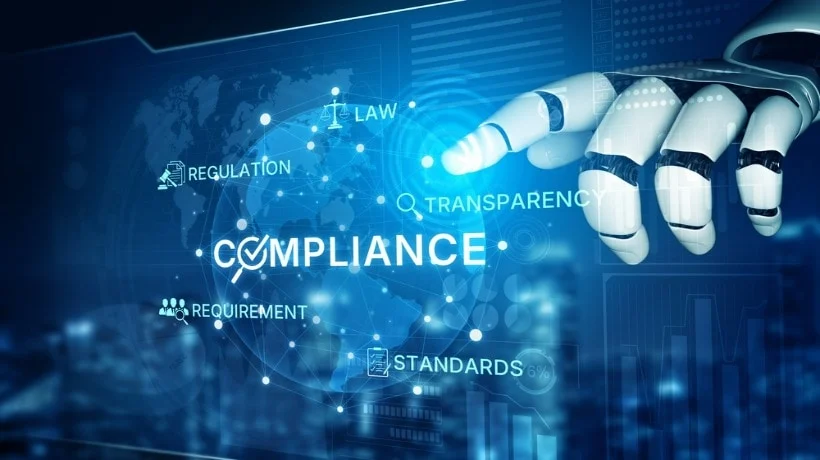
The rapid integration of generative artificial intelligence into corporate environments has fundamentally altered the landscape of Learning and Development (L&D). A common scenario now unfolding in modern offices involves a new hire completing a mandatory 12-minute compliance course, including a final assessment, only to discover later that the professional, articulate "presenter" they watched was not a human being. The absence of a disclosure or disclaimer regarding the synthetic nature of the video often leads to a subtle but significant erosion of organizational trust. While the information presented may be entirely accurate, the realization that a digital facsimile was used without acknowledgment can cast doubt on the authenticity of all subsequent corporate communications.
As organizations increasingly pivot toward AI-generated voices and avatars to replace traditional, high-cost video production, the necessity for robust disclosure standards has become a critical priority. The core challenge is not the use of synthetic media itself, which offers immense scalability and cost-efficiency, but rather the lack of transparency surrounding its deployment. Establishing a framework for AI training video disclosure is now viewed as an essential component of corporate governance, spanning the entire content lifecycle from initial voice cloning consent to the eventual decommissioning of stale material.
The Evolution of Synthetic Media in Corporate Training
The transition from human-led training videos to AI-generated content represents a major shift in the $370 billion global corporate training market. Historically, producing high-quality video content required significant investments in studio time, professional videographers, and on-screen talent. The emergence of Generative AI platforms—such as Synthesia, HeyGen, and ElevenLabs—has democratized video production, allowing HR and L&D departments to generate realistic avatars and voiceovers from simple text scripts in a matter of minutes.
This technological leap has occurred over a relatively short timeline. In the mid-2010s, corporate training relied heavily on static slide decks and basic animations. By 2020, the shift toward remote work accelerated the demand for video-based asynchronous learning. By 2023, the mainstreaming of Large Language Models (LLMs) and sophisticated text-to-video tools allowed for the creation of "digital twins" and generic avatars that are nearly indistinguishable from real people. However, this speed of adoption has outpaced the development of internal ethical guidelines, leading to the current "transparency gap" where learners are often unaware they are interacting with synthetic media.
The Global Regulatory Landscape: EU vs. US Frameworks
The legal requirements for AI disclosure are currently in a state of flux, with different jurisdictions taking varying approaches to transparency. Organizations operating internationally must navigate a complex web of emerging laws and voluntary frameworks.
The European Union AI Act
The most significant and binding regulation to date is the European Union AI Act, which was formally approved in early 2024. Article 50 of the Act imposes direct transparency obligations on providers and deployers of certain AI systems. Specifically, it mandates that "deployers of an AI system that generates or manipulates image, audio, or video content that constitutes a deepfake shall disclose that the content has been artificially generated or manipulated."
For corporate entities, this means that any training content featuring synthetic presenters must be clearly labeled if it is being deployed within the EU. Failure to comply with these transparency requirements can result in substantial fines, potentially reaching percentages of a company’s global annual turnover. While initial enforcement has focused on public-facing media and misinformation, legal experts anticipate that internal corporate communications will eventually fall under the same scrutiny to protect employee rights.
United States Regulatory Trends
In the United States, there is currently no federal law that explicitly mandates the disclosure of AI-generated content in internal corporate training. However, the regulatory environment is tightening. The Federal Trade Commission (FTC) has updated its Endorsement Guides to combat deceptive practices, signaling that any use of AI that misleads consumers—or by extension, employees—could be treated as an unfair or deceptive act.
Furthermore, several states, including California and New York, have introduced or passed legislation aimed at "digital replicas." While these laws often focus on the likenesses of performers and public figures, they establish a legal precedent for the "right of publicity" and the necessity of consent when cloning an individual’s voice or image. The 2023 White House Executive Order on the Safe, Secure, and Trustworthy Development and Use of Artificial Intelligence also emphasizes the need for content authentication and watermarking, encouraging federal agencies and private partners to adopt standards that identify AI-generated material.
Supporting Data on AI Adoption and Employee Sentiment
The push for disclosure is supported by emerging data regarding how employees perceive AI in the workplace. According to a 2023 report by the Society for Human Resource Management (SHRM), nearly 25% of organizations use AI for HR-related tasks, including training and development. However, a parallel study by Edelman on trust in technology found that employees are significantly more likely to trust AI-driven processes when the organization is transparent about how the technology is used.
Industry data suggests that "hallucinations"—instances where AI generates false but plausible-sounding information—remain a persistent risk. A study of LLM-generated technical content found error rates in factual assertions can range from 3% to 15% depending on the complexity of the subject matter. This data underscores the liability risk for companies using AI to deliver safety or compliance training without a human-led verification process.
A Practical Framework for AI Disclosure Standards
To mitigate legal risk and maintain organizational integrity, industry leaders are adopting a multi-tiered approach to AI training video governance. This framework covers the lifecycle of content from inception to archiving.
1. Consent and Likeness Rights
The first pillar of any disclosure standard is the acquisition of explicit, written consent. If an organization chooses to clone the voice or digital likeness of a real employee, subject-matter expert (SME), or executive, a formal agreement must be in place. This document should specify the scope of use, the duration of the permission, and the right of the individual to revoke their consent. Using a generic, platform-provided avatar avoids these specific legal hurdles but still requires documentation to prove that no real-world identity was misappropriated.
2. Thresholds for Disclosure
Not every instance of AI use requires a disclaimer. Using AI for background noise reduction, color grading, or initial script outlining is generally considered a production detail that does not impact the learner’s perception of the source. However, the threshold for disclosure is met when the AI serves as the "source" of information. If a reasonable employee would assume they are watching a human presenter, the synthetic nature of that presenter must be disclosed.
3. Visual and Auditory Labeling
Effective disclosure must be conspicuous. Common best practices include:
- Introductory Disclaimers: A brief title card or spoken statement at the beginning of the module.
- Persistent Watermarking: A small, unobtrusive label (e.g., "AI-Generated Persona") in the corner of the screen throughout the video.
- Metadata Tagging: Embedding digital signatures or C2PA (Coalition for Content Provenance and Authenticity) metadata into the video file to ensure its origin can be verified by technical systems.
4. Human-in-the-Loop Verification
To combat the risk of AI hallucinations, organizations are implementing mandatory human review cycles. Every AI-generated script and final video must be signed off by a human SME. This process ensures that accountability remains with a person rather than a system. In the event of a training failure or a legal dispute regarding the content of a compliance course, the organization must be able to point to a specific individual who authorized the information.
5. Provenance and Version Control
Maintaining a detailed "content audit trail" is essential for long-term governance. Organizations should keep records of which AI models were used, what versions of the software were active during production, and the original source documents used to generate the script. This is particularly vital for compliance training, where updates to laws or company policies may necessitate the immediate identification and replacement of all affected videos.
Implications for Corporate Culture and Accountability
The shift toward AI-generated training is not merely a technical change; it is a cultural one. If employees feel that their employer is using synthetic media to "trick" them or to distance leadership from the workforce, the resulting cynicism can undermine the effectiveness of the training itself.
Experts in organizational psychology note that the "uncanny valley"—the sense of unease created by human-like objects that aren’t quite human—can be exacerbated when the viewer feels deceived. Conversely, when an organization is upfront about its use of AI, it can frame the technology as a tool for innovation and efficiency, potentially increasing employee engagement with the tech-forward approach.
Furthermore, the accountability gap remains a primary concern for legal departments. If an AI avatar provides incorrect instructions that lead to a workplace injury, the legal defense that "the AI said it" is unlikely to hold up in court. By establishing rigorous disclosure and review standards, companies effectively "re-humanize" the content, ensuring that even if the delivery is synthetic, the responsibility remains authentic.
Conclusion: Balancing Innovation with Integrity
Building trust into AI-generated video requires a shift in perspective: disclosure should be viewed as a feature of high-quality training, not a legal burden to be minimized. As AI tools become more sophisticated and harder to detect, the ethical imperative for transparency only grows. Organizations that lead with clear standards—cloning only with consent, labeling with clarity, and verifying with human expertise—will be best positioned to leverage the benefits of AI without sacrificing the trust of their workforce.
In the final analysis, the goal of corporate training is the effective transfer of knowledge and the reinforcement of company values. If the medium of that transfer—AI-generated video—is perceived as deceptive, the message itself is compromised. By adopting the NIST framework or the EU’s transparency requirements as a baseline, organizations can ensure that their transition into the era of synthetic media is both productive and principled.