Most compliance checklists treat the burgeoning field of AI hiring laws as a monolithic entity, presenting each regulation with a similar tone and an implied uniform urgency. This approach, however, is fundamentally inaccurate and has been for some time. The reality is far more complex: a patchwork of distinct obligations, each with its own timeline, enforcement mechanisms, and definition of compliance. Treating "AI hiring law" as a single, undifferentiated category leads to checklists that become obsolete almost immediately upon publication. For employers operating across state lines, this isn’t mere trivia; it represents four separate legal obligations, each on its own distinct timetable, demanding unique compliance strategies. Misinterpreting a single deadline can lead to the grave error of assuring candidates or regulators that a control is in place when it is not, or conversely, stating that a requirement does not apply when it already does.
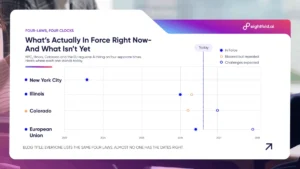
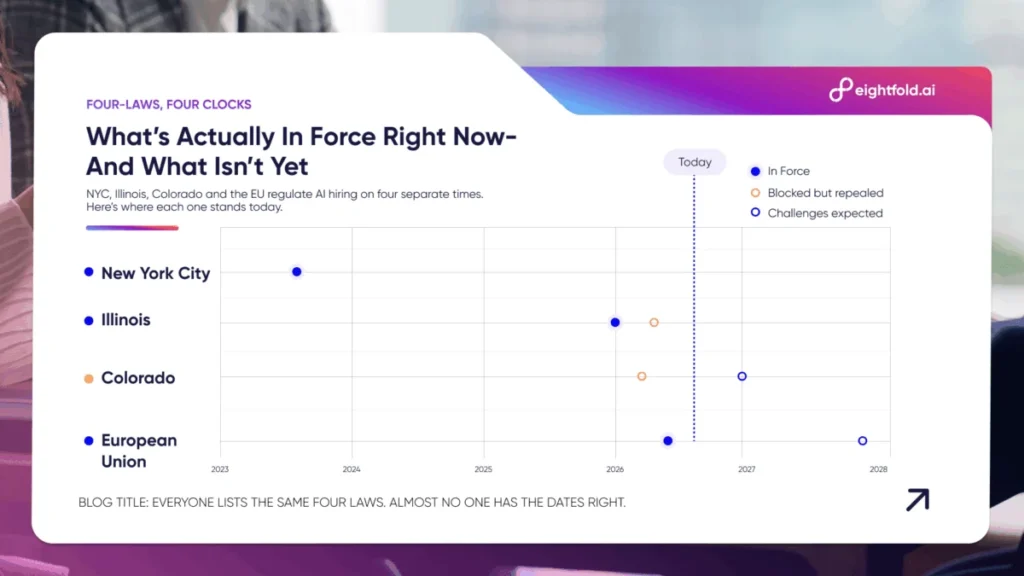
The image accompanying this analysis visually represents the diverging timelines of key AI hiring regulations, highlighting New York City’s Local Law 144, Illinois’ HB 3773, Colorado’s Senate Bill 26-189, and the European Union’s AI Act. This visual aid underscores the critical need for employers to understand the granular differences between these frameworks.
New York City Local Law 144: A Pioneering Framework in Force Since 2023
New York City’s Local Law 144 stands as the earliest and most established of the four discussed, having been in effect since July 5, 2023. It is the only one of these four laws with a significant track record of implementation and enforcement. The core of this legislation mandates that any automated tool used to evaluate candidates for roles within New York City must undergo an independent bias audit annually. This audit’s findings, including selection rates and impact ratios broken down by demographic categories, must be published in a location accessible to candidates. This transparency requirement ensures that individuals are informed about the performance of AI tools used in hiring decisions. Furthermore, candidates must receive a separate notice at least ten business days before an automated tool is used for their evaluation, with clear instructions on how to request an alternative selection process.
The enforcement of Local Law 144 falls under the purview of the New York City Department of Consumer and Worker Protection (DCWP). A critical compliance gap arises if an AI tool is employed without a current, independent bias audit on file, irrespective of the tool’s operational efficacy. This proactive stance by New York City has set a precedent, prompting many AI vendors to develop specific disclosure mechanisms, such as Eightfold.ai’s own NYC disclosure, to assist employers in meeting these stringent requirements. The law’s practical implications mean that employers must not only ensure their AI tools are performing equitably but also demonstrate this through rigorous, publicly accessible audits.
Illinois HB 3773: Integrating AI into Existing Civil Rights Protections
In contrast to New York City’s audit-centric approach, Illinois’ HB 3773, set to take effect on January 1, 2026, adopts a different strategy. The statute folds the use of AI-assisted employment decisions directly into the state’s existing Human Rights Act, rather than establishing a novel audit regime. This means that employers must notify candidates when AI plays a role in hiring, promotion, discipline, or discharge decisions. Crucially, employers must be able to explain the functionality of these tools in plain language.
The key distinction here is that a discriminatory outcome resulting from AI is not treated as a new "AI violation" but is prosecuted under the same framework as human decision-making, a framework the state has enforced for decades. The defense of "the algorithm decided, not us" has never been a tenable legal position in Illinois, and this legislation reinforces that principle. A notable development occurred in June 2026 when the Illinois Department of Human Rights withdrew its proposed implementing rules, citing a need for continued coordination with other state agencies. While no revised timeline for these rules has been provided, the statute’s core duties regarding notice and non-discrimination remain fully applicable. Employers are therefore obligated to comply with these requirements, even without finalized regulatory details on specific notice language or timing. This approach underscores a philosophy of holding employers accountable for AI-driven outcomes within established legal structures.
Colorado Senate Bill 26-189: A Revised Framework Amidst Legal Challenges
Colorado’s legislative journey concerning AI in hiring has been particularly dynamic. The original Colorado AI Act (SB 24-205), which was poised to be one of the nation’s most demanding frameworks, mandating impact assessments, an explicit duty to prevent algorithmic discrimination, and ongoing risk-management programs, never took effect as written. In April 2026, a federal court blocked its enforcement following a constitutional challenge. Facing significant pressure from industry and the legal challenge, Colorado’s legislature repealed the original act and enacted Senate Bill 26-189 in its place, signed into law in May 2026.
The revised SB 26-189, slated for implementation on January 1, 2027, presents a considerably lighter regulatory burden. Key provisions include requiring advance notice to candidates before the use of "covered automated decision-making technology." Following an adverse decision, individuals are entitled to a plain-language explanation within 30 days, along with the right to request data correction and human reconsideration. However, the crucial caveat "to the extent commercially reasonable" is embedded within the statute, qualifying the unconditional nature of these rights. Legal challenges to this revised version are reportedly anticipated, making the January 2027 effective date a target rather than a settled certainty. This evolving regulatory landscape in Colorado exemplifies the ongoing debate and adaptation surrounding AI governance.
A comparative table highlights the evolution of Colorado’s approach:
| Framework | Core Duty | Status |
|---|---|---|
| Original SB 24-205 | Impact assessments, discrimination-prevention duty, ongoing risk management | Blocked by federal court; repealed |
| SB 26-189 | Advance notice, 30-day adverse-decision explanation, data correction, conditional human reconsideration | Effective January 1, 2027; further challenges possible |
The European Union’s AI Act: A Comprehensive Approach to High-Risk Applications
The European Union’s AI Act represents a broad, risk-based regulatory framework that includes significant implications for AI used in employment contexts. While the full scope of the Act is extensive, specific obligations for "high-risk" AI systems, which explicitly name recruitment and employee evaluation tools, are now confirmed to be effective from December 2, 2027. This date was established through the Digital Omnibus deferral, which entered into force in July 2026 as Regulation (EU) 2026/1744, pushing back the original August 2026 deadline.
The high-risk provisions will mandate rigorous requirements including mandatory risk management, detailed technical documentation, human oversight, and formal conformity assessments. Notably, one critical transparency duty, outlined in Article 50, was not subject to this deferral. This means that any candidate interacting with an AI interviewer within the EU should, as of now, be informed that they are engaging with an AI system during that conversation. Non-compliance with high-risk provisions carries substantial penalties, with fines reaching up to €15 million or 3% of global annual turnover, positioning it within the middle tier of sanctions, below the €35 million or 7% ceiling reserved for banned AI practices. This comprehensive approach by the EU signals a strong commitment to regulating AI across various societal domains.
The Federal Baseline: Enduring Anti-Discrimination Laws Remain Paramount
It is crucial to emphasize that none of these emerging AI-specific laws supersede existing federal anti-discrimination legislation. For covered employers, Title VII of the Civil Rights Act of 1964, the Americans with Disabilities Act (ADA), and the Age Discrimination in Employment Act (ADEA) remain foundational. Title VII and the ADA apply to employers with 15 or more employees, while the ADEA covers those with 20 or more. These statutes prohibit employment discrimination regardless of whether the decisions are made by an AI tool or a human.

The Equal Employment Opportunity Commission (EEOC) provides guidance that complements these statutes. While the EEOC’s 2022 ADA technical assistance and 2023 Title VII guidance address the risks associated with algorithmic bias, they do not constitute enacted AI-specific laws themselves. Furthermore, an AI vendor’s audit results do not absolve an employer of their own legal responsibilities and potential exposure under these federal laws. Employers must maintain vigilance in ensuring their AI systems do not inadvertently perpetuate or create discriminatory outcomes, irrespective of any vendor assurances.
AI Hiring Compliance Laws: Four Distinct Levers, One Unified Employer Challenge
When examining these four jurisdictions side-by-side, the differences in their regulatory approaches are structural rather than superficial. New York City’s Local Law 144 mandates an "audit-and-publish" model, requiring annual public demonstration of equitable performance. Illinois’ HB 3773 integrates AI into its existing civil rights framework, meaning AI-assisted decisions are evaluated under the same legal scrutiny as human ones. Colorado, post-amendment, employs a "notice-and-recourse" system, emphasizing pre-use notification, post-decision explanation, and the option for human review. The EU’s AI Act adopts a "product-safety" approach, classifying AI systems, demanding documentation, risk assessment, and pre-market conformity.
Despite these divergent methodologies, the underlying concern across all four is the prevention of bias and discrimination in AI-driven hiring processes. The challenge for employers lies in understanding and adhering to these varied compliance mechanisms. A vendor or solution provider that is only equipped to address one of these regulatory frameworks will be insufficient for a customer operating across multiple jurisdictions.
Building a Robust and Adaptable AI Hiring Compliance Strategy
Creating an effective AI hiring compliance checklist requires a nuanced understanding of these distinct legal landscapes. It necessitates moving beyond generic statements and developing specific protocols for each jurisdiction. This includes:
- Jurisdictional Mapping: Identifying all states and cities where hiring activities occur and researching their specific AI regulations.
- Tool Inventory and Assessment: Cataloging all AI-powered tools used in the hiring process and understanding their functionalities and potential risks.
- Audit and Documentation Management: Establishing processes for conducting regular bias audits (where required), maintaining detailed technical documentation, and ensuring timely public disclosure.
- Candidate Notification Protocols: Developing clear and compliant methods for informing candidates about AI usage and providing them with options for alternative processes.
- Vendor Due Diligence: Scrutinizing AI vendors to ensure their tools and practices align with the specific legal requirements of all relevant jurisdictions.
- Regular Review and Updates: Committing to frequent reviews of compliance strategies, as AI regulations are dynamic and subject to change.
What Remains Unaddressed: The Nuances Beyond Legal Text
The complexities of AI hiring compliance extend beyond the explicit stipulations of these laws. Four distinct jurisdictions, each with its own definition of "in force," represent only a fraction of the evolving regulatory environment, with more states and cities poised to introduce their own versions. Critically, none of these laws definitively articulate what constitutes a "valid" bias audit. Questions such as the required sample size for statistically significant results or the distinction between genuine bias and random data fluctuations remain largely unanswered by the legal text. These are not strictly legal questions but rather complex mathematical and statistical challenges that are frequently overlooked or inadequately explained in public discourse.
It is also imperative to acknowledge that this analysis does not substitute for professional legal counsel. The effective dates of these regulations have demonstrated a propensity to shift; indeed, three of the four laws discussed underwent significant changes during the period of tracking their development. Therefore, employers must always consult current statutory texts and seek advice from legal experts before implementing any compliance measures based on information from blog posts or articles, regardless of their source.
Frequently Asked Questions on AI Hiring Compliance
Q1: Does a later EU deadline delay a live NYC or Illinois obligation?
A1: No. Each jurisdiction’s timeline operates independently. Employers must meet every applicable deadline that is currently in force, irrespective of pending regulations elsewhere.
Q2: Is an employer responsible for a vendor’s AI tool?
A2: Yes. While vendor documentation and contracts can allocate specific tasks, they do not absolve the employer of their fundamental employment law responsibilities. A human decision-maker must remain involved at material stages of the hiring process.
Q3: Is a Local Law 144 alternative process the same as an ADA accommodation?
A3: No. These are distinct requests handled through separate processes. One does not substitute for the other; employers must manage both appropriately.
Q4: What do staffing firms need to know regarding the EU AI Act?
A4: Under the EU AI Act, firms that develop or materially modify an AI tool are considered "providers" with documentation duties. Those that solely use a tool for recruitment are "deployers" and must follow the provider’s instructions. Both roles carry specific obligations that should be clearly defined in contracts, with legal counsel.
Q5: How does an employee’s or candidate’s location affect coverage?
A5: Employers must consider the candidate’s location, the role’s location, and the employer’s operational footprint separately. For instance, NYC coverage may depend on the job’s physical location, even if interviews occur remotely. Remote work complexities are jurisdiction-specific and require careful legal review.
Q6: What if an NYC audit is older than 12 months?
A6: The AI tool should not be used for covered NYC hiring activities until a current, independent bias audit is completed and the required summary report is published.
Q7: How often should an AI hiring compliance map be reviewed?
A7: At a minimum, this map should be reviewed quarterly. It should also be reassessed before launching any new AI tool or expanding operations to new role locations, as the compliance clocks for these laws are more dynamic than annual policy review cycles.