
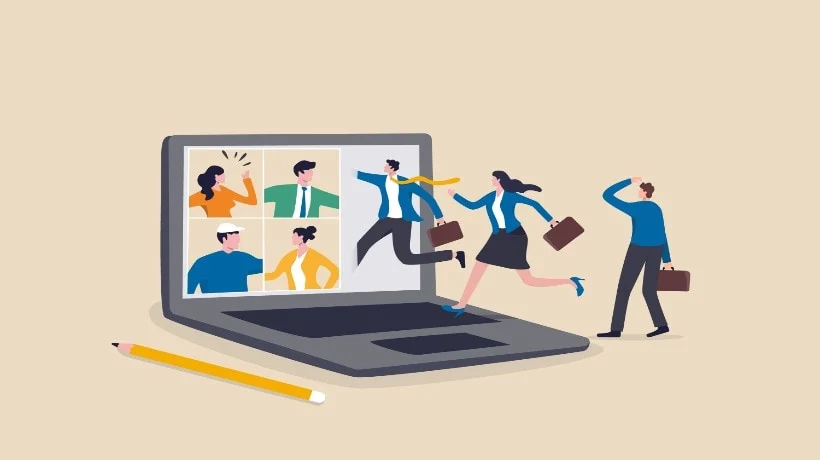
The global landscape of professional environments has undergone a radical transformation over the last five years, moving from a rigid, centralized office model to a decentralized, fluid structure. Recent data indicates that the growth of remote and hybrid work is not merely a temporary reaction to global events but a permanent fixture of the modern economy. According to recent Gallup findings, between 26% and 52% of U.S. workers in remote-capable roles are currently operating within hybrid or fully remote models. This shift has prompted a critical reevaluation of how organizations foster professional development, leading to the emergence of flexible workspaces as a primary driver of hybrid team learning and organizational growth.
As leaders navigate this transition, the focus has shifted from the logistics of "where" work happens to the quality of the "learning environment." Data increasingly suggests that hybrid teams do not just survive in flexible workspaces; they thrive. Studies have consistently demonstrated that increased job flexibility significantly reduces the odds of serious psychological distress among workers. Furthermore, companies that have embraced fully flexible work models are seeing tangible financial rewards, with revenue growth occurring 1.7 times faster than that of their mandate-driven competitors.
Defining the New Workspace Paradigm
To understand the impact of flexible spaces on team learning, it is essential to distinguish between two frequently conflated terms: flexible work and flexible workspaces. Flexible work refers to the organizational policy and cultural agreement that allows employees to choose when and where they perform their duties. It is a matter of autonomy and scheduling. In contrast, a flexible workspace refers to the physical or serviced environment—such as coworking hubs or on-demand office suites—that provides professional resources without the long-term commitment of traditional commercial leases.
The integration of these two concepts allows hybrid workers to balance the isolation of home offices with the high-resource environment of professional hubs. For many modern organizations, the "office" is no longer a static destination but a versatile tool used to maximize employee engagement and facilitate the rapid acquisition of new skills.
The Evolution of the Modern Office: A Chronology of Change
The transition toward flexible learning environments has followed a distinct chronological path over the past several decades:
- The Era of the Fixed Cubicle (1960s – 1990s): Work was defined by presence. Learning was top-down, occurring in formal meeting rooms or through direct, physical supervision.
- The Open-Plan Movement (2000s – 2010s): Organizations attempted to foster collaboration by removing physical barriers. While this increased interaction, it often hindered deep focus and specialized learning due to high noise levels and lack of privacy.
- The Remote Pivot (2020 – 2021): The global pandemic forced a total shift to home-based work. While productivity remained stable, "informal learning" and mentorship began to erode as organic interactions disappeared.
- The Hybrid Harmonization (2022 – 2024): Organizations began experimenting with "Return to Office" (RTO) mandates, often meeting resistance. The focus shifted toward "purposeful presence," where the office is used specifically for collaborative learning and social capital.
- The Optimization Era (2025 and Beyond): Current trends show a "flight to quality." Businesses are increasingly abandoning underutilized traditional real estate in favor of flexible workspaces that offer high-end amenities, networking opportunities, and the agility to scale team sizes up or down instantly.
The Four Pillars of Successful Hybrid Learning
For a hybrid model to facilitate effective team learning, it must be built upon four core pillars. Without these, even the most modern flexible workspace will fail to deliver results.
1. Meaningful Trust
Success in a flexible environment requires a shift from "command and control" management to a "trust and verify" culture. Both employers and employees must view business success as a shared goal. When workers feel trusted to manage their own time and space, they are more likely to take ownership of their professional development.
2. Personalization and Productivity
Research from the University of Exeter found that employees who are given the freedom to personalize their workspaces are 32% more productive. Flexible workspaces often provide various "zones"—from quiet pods for deep study to vibrant lounges for brainstorming—allowing workers to tailor their environment to the specific learning task at hand.
3. Engagement through Enjoyment
Data from Steelcase suggests that employees who work from spaces they actually enjoy are 33% more engaged. In the context of learning, engagement is the gateway to retention. An uninspired, sterile office environment can act as a cognitive drain, whereas a dynamic, well-designed flexible space stimulates curiosity.
4. Technological Integration
Hybrid learning is impossible without a seamless digital layer. Flexible workspaces invest heavily in high-speed infrastructure and integrated AV technology, ensuring that a team member "dialing in" from home has the same quality of experience as those physically present in the room.
Enhancing Collaboration through "Collision Points"
One of the most significant challenges of the remote work era has been the loss of "incidental learning"—the knowledge gained through overhearing a conversation or having a quick chat by the coffee machine. Traditional offices often limit these interactions to internal colleagues who share similar skill sets.
Flexible workspaces solve this by creating "collision points" with professionals from diverse industries. Data suggests that flexible workspaces help 82% of members expand their professional networks. For a hybrid team, being immersed in a hub of diverse talent allows for cross-pollination. An internal marketing team might pick up data visualization tips from a freelance analyst sitting at the next desk, or a software developer might learn about project management frameworks from a neighboring startup founder.
This environment makes employees more perceptive to learning opportunities outside their immediate scope, accelerating talent development and fostering a culture of continuous upskilling.
The Psychological Link Between Well-Being and Learning
The impact of the physical environment on mental health cannot be overstated. The World Happiness Foundation reports that independent and flexible workers experience higher levels of happiness than traditional salaried workers. Furthermore, research indicates that working in a professional flexible workspace improves well-being significantly compared to working exclusively from home, where the lines between personal and professional life often blur.
From a neurological perspective, stress is the enemy of learning. Employees with lower levels of well-being are 48% more likely to suffer daily stress and 66% more likely to worry about work. These emotional states trigger the brain’s "fight or flight" response, which shuts down the prefrontal cortex—the area responsible for complex learning and creative problem-solving. By providing access to a space that promotes well-being through better lighting, ergonomic design, and social connection, employers create the biological conditions necessary for high-level learning.
Autonomy as a Catalyst for Independent Problem-Solving
Autonomy is perhaps the most potent benefit of the flexible workspace model. In a traditional setting, employees often wait for "official" training or permission to change their workflow. In a flexible environment, the very act of choosing where to work—and how to navigate a shared space—fosters a sense of agency.
When hybrid teams operate with high levels of autonomy, they naturally identify and address their own knowledge gaps. If an employee faces a technical roadblock, the flexible environment encourages them to seek out solutions independently, whether by utilizing the resources available in the hub or by networking with other members. This "self-directed learning" is more effective for long-term information retention than passive, mandatory training sessions.
Corporate and Economic Implications
The shift toward flexible workspaces is also driven by economic necessity. Currently, 55% of office-based businesses utilize flexible spaces, and 17% plan to increase their usage in the coming year. This trend is a response to the inefficiency of traditional commercial real estate, where many companies are paying for square footage that remains 40% to 60% empty on any given day.
By transitioning to flexible offices, companies can reallocate capital from "dead" real estate costs into Learning and Development (L&D) initiatives. This creates a virtuous cycle: the organization saves money on rent, the employees work in a superior environment that promotes well-being, and the resulting increase in engagement leads to faster revenue growth.
Industry Perspectives and Future Outlook
Industry analysts and HR leaders are increasingly viewing the "office" not as a place for task completion—which can often be done more efficiently at home—but as a "social and learning hub." The consensus among organizational psychologists is that the future of work lies in "Return to Purpose" rather than "Return to Office."
If the purpose of a gathering is team bonding or complex skill acquisition, a flexible workspace provides the necessary variety and stimulation. As we move toward 2030, the traditional 10-year office lease is expected to become an anomaly, replaced by agile memberships that prioritize the human element of the business.
In conclusion, the data is clear: the physical environment is a silent partner in the learning process. By embracing flexible workspaces, organizations provide their hybrid teams with the collaboration, well-being, and autonomy required to reach their full potential. As the boundaries between work and learning continue to dissolve, the spaces we inhabit will be the deciding factor in which companies lead and which ones fall behind in the global talent race.






