By Anne Maltese
Talent remains the paramount driver of business results, a truth that has endured despite the relentless evolution of tools and strategies. In today’s competitive landscape, organizations that excel are those whose teams demonstrate high performance and exhibit strong retention, not solely those with the largest resource pools. This reality elevates team health from a peripheral HR function to a core business imperative. However, a significant challenge persists: investments in people are often fragmented, with disparate systems managing engagement, performance, and development in isolation, failing to communicate and offer a holistic view. The true opportunity lies in unifying these investments around a singular, powerful objective: enabling every team to thrive.
Quantum Workplace, a leader in employee experience solutions, emphasizes that thriving teams are not an accidental outcome but the result of intentional cultivation. Their research, spanning over two decades, identifies four fundamental conditions essential for teams to flourish: being Aligned, Empowered, Growing, and Valued. These conditions are crucial for navigating the dual demands of performance and connection. Performance reflects what a team achieves, while connection measures the strength of an individual’s tie to their work, colleagues, and the organization’s overarching mission. When both are high, teams achieve a state of thriving. Conversely, deficiencies in either can lead to strained, struggling, or drifting team dynamics.
Understanding Team Dynamics: A Spectrum of Performance and Connection
The interplay between performance and connection can be visualized on a spectrum, revealing four distinct team types:
- Straining Teams: Characterized by high performance but low connection. These teams often push their members to their limits, leading to burnout.
- Struggling Teams: Exhibit low performance and low connection. These teams stagnate, failing to achieve significant results or foster strong relationships.
- Drifting Teams: Possess high connection but low performance. While members may feel a sense of camaraderie, a lack of clear direction or accountability hinders progress.
- Thriving Teams: Achieve high performance and high connection. These teams are the epitome of success, demonstrating sustained productivity and robust interpersonal bonds, which are critical for retaining top talent and driving long-term business growth.
This framework underscores the symbiotic relationship between employee engagement and business outcomes. A disengaged workforce, even if performing adequately in the short term, is susceptible to burnout and turnover, ultimately impacting productivity and innovation. Conversely, teams that are deeply connected to their work and colleagues, even if facing temporary performance challenges, can often rally with strong leadership and clear direction.
The Four Pillars of Thriving Teams
Quantum Workplace’s extensive research points to four essential conditions that must be present for teams to truly thrive:
-
Aligned: Aligned teams possess a clear understanding of the organization’s strategy and priorities. Crucially, they can articulate how their individual and team goals directly contribute to these broader objectives. This clarity of purpose fosters focus and provides a unified direction, ensuring that efforts are channeled effectively. Signals that a team may not be aligned often manifest as confusion about priorities, frequent shifts in direction without clear rationale, or a perceived disconnect between daily tasks and company objectives.
-
Empowered: Empowerment goes beyond mere task assignment; it means equipping team members with the necessary resources, information, and training to excel. A critical component of empowerment is a supportive manager who actively listens to feedback and values employee input. This sense of agency extends to broader organizational channels, where employees feel genuinely heard and believe their feedback influences decision-making. Empowerment is the delicate balance between trust and accountability, where individuals feel confident in their abilities and are held responsible for their contributions. Indicators of an unempowered team include a lack of autonomy, a feeling that feedback goes unheard, reluctance to share ideas due to fear of reprisal, or a perception that processes are rigid and unchangeable.
-
Growing: Teams that are growing are actively developing the skills needed for current roles while simultaneously building capabilities for future organizational needs. This growth is not a static event but an ongoing process driven by consistent effort and proactive investment from managers. Managers play a pivotal role in fostering a culture of continuous learning and development. Signs of a team that is not growing might include a lack of investment in training, limited opportunities for skill development, stagnation in career progression, or a workforce that is ill-equipped to meet evolving industry demands.
-
Valued: Feeling valued is intrinsically linked to fair compensation and meaningful recognition. High performers should be celebrated, and rewards should directly correlate with tangible results. When employees feel their contributions are recognized and appreciated, their performance often exceeds expectations. Conversely, a lack of perceived value is a significant predictor of employee turnover. Indications that a team does not feel valued can include a perception of inequitable pay, infrequent or generic recognition, a lack of acknowledgment for significant achievements, or a general feeling of being overlooked.
These four conditions are interdependent, creating a virtuous cycle. Alignment provides the roadmap, empowerment fosters ownership and initiative, growth builds the necessary skills and adaptability, and feeling valued cultivates commitment and loyalty.
HR’s Strategic Role in Fostering Thriving Teams
The creation of thriving teams is not a matter of chance; it is the direct result of effective leadership. Human Resources leaders are uniquely positioned to empower these leaders and cultivate an environment where teams can flourish. Every organization requires high-performing, adaptable, and growing teams to achieve its strategic objectives. Thriving teams, in turn, depend on leaders who can instill clarity, build trust, and translate insights into actionable strategies.
HR’s critical role involves equipping managers with the data, tools, and confidence they need to lead effectively. This endeavor extends beyond the HR department, requiring buy-in and active participation from senior leadership. Senior executives must create opportunities for people managers to share their own feedback and feel invested in organizational strategy before expecting them to cascade it effectively to their teams. A manager who understands and believes in a strategy is far more capable of communicating its importance and impact than one who receives it secondhand.
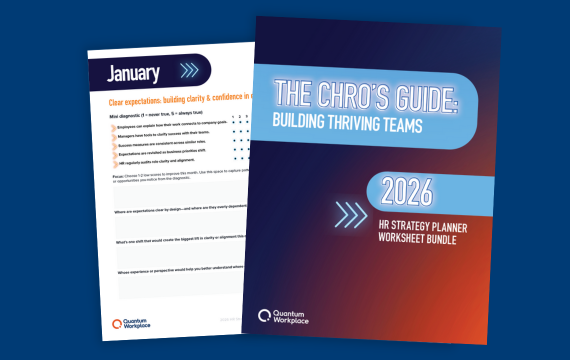
In practice, HR’s contribution to fostering thriving teams can be distilled into three key areas:
- Providing Essential Resources: This includes offering managers access to robust employee data, user-friendly technology platforms, and comprehensive training programs that enhance their leadership capabilities.
- Facilitating Strategic Alignment: HR can ensure that managers understand the organization’s strategic priorities and are empowered to translate these into team-specific goals and initiatives.
- Championing a Culture of Feedback and Development: HR plays a crucial role in establishing and promoting mechanisms for continuous feedback, recognition, and professional growth, ensuring these are embedded into the daily fabric of the organization.
Building these conditions is not a one-time project but an ongoing commitment. When leaders consistently connect purpose with priorities, insight with action, and feedback with meaningful conversations, thriving transitions from a sporadic effort to the inherent operational rhythm of the team.
Quantum Workplace’s Integrated Approach to Building Thriving Teams
To translate the framework of thriving teams into daily practice, the right tools are indispensable. Quantum Workplace offers a comprehensive suite of solutions designed to cultivate each of the four essential conditions:
Enabling Alignment: Performance Reviews, Feedback, Goals, and 1-on-1s
Quantum Workplace’s Goal Management Software transforms organizational strategy into tangible daily work. Employees can cascade individual, team, and company goals, fostering transparency and enabling individuals to see how their contributions align with the bigger picture. An AI-powered Goal Assistant aids in crafting clear, measurable objectives, while a live newsfeed ensures that goal progress remains a visible and ongoing conversation.
1-on-1 Meeting Software reinforces this alignment by providing structured opportunities for meaningful dialogue. HR-approved templates guide managers through check-ins, goal progress reviews, and development discussions. An agenda builder allows both managers and employees to shape conversations proactively. By integrating goals and feedback directly into 1-on-1s, managers enter each meeting with actionable context, moving beyond guesswork.
Performance Reviews and Feedback tools ensure that formal evaluations are grounded in year-round performance. Reviews can seamlessly incorporate goal progress and feedback from built-in "boosters," offering a holistic view of achievements rather than relying solely on recent memory. Day-to-day feedback mechanisms, including upward, downward, peer, and 360-degree feedback, are directly linked to real goals and context, ensuring that comments are relevant and actionable.
Fostering Empowerment: Employee Listening and Action Planning
Empowerment hinges on providing employees with genuine avenues for their voices to be heard. Quantum Workplace’s approach to Employee Listening extends beyond annual surveys, integrating engagement surveys, pulse surveys, and lifecycle surveys at critical moments like onboarding and exit. This multi-channel strategy ensures continuous feedback collection throughout the employee journey.
Crucially, listening must lead to action. The Team Report & Walkthrough feature directs managers to key metrics and focus areas, demystifying the data. AI-powered discussion starters and AI-generated action ideas alleviate the challenge of developing effective improvement plans. Action Planning Dashboards provide both managers and HR with visibility into progress, preventing plans from languishing after surveys conclude. Bulk nudges help maintain accountability without imposing additional manual burdens on HR teams.
Driving Growth: Development, Talent Reviews, and Succession Planning
Growth becomes tangible when supported by structured processes. Quantum Workplace’s Career Vision and Career Coach tools leverage AI-powered competency mapping to help employees build personalized development plans. These plans are integrated with existing work, and the Job Explorer feature illuminates potential future career paths, making them visible and achievable.
Development Conversations offer insights into employee aspirations, while performance data highlights organizational development needs. Talent Reviews, presented in a 9-box grid format, enable leaders to assess performance and potential across the organization, moving beyond subjective manager advocacy. These reviews support ongoing commentary and insights, with successor nominations seamlessly integrated into succession plans.
Succession Planning tools translate these insights into a pipeline of ready successors for critical roles. Organizations can build and assign multiple plans, with scoped access for functional owners. By linking succession plans to performance data, talent reviews, development goals, and 1-on-1 conversations, companies can proactively identify and address successor skill gaps, avoiding last-minute scrambles when key positions become vacant.
Cultivating Value: Recognition & Rewards, Feedback, and 1-on-1s
Feeling valued stems from recognition that is specific, frequent, and meaningful. Quantum Workplace’s Recognition & Rewards platform allows employees to celebrate teammates directly within collaboration tools like Slack or Microsoft Teams. An AI writing assistant helps craft thoughtful and specific shoutouts, while automated milestone tracking ensures important events like birthdays and work anniversaries are never missed. A global rewards catalog offers employees choices that resonate with their preferences.
Feedback and 1-on-1s provide the substance behind recognition. Feedback tools support comprehensive feedback loops (upward, downward, peer, 360) and include an AI writing assistant to promote constructive and specific comments. The integration of feedback directly into 1-on-1 conversations ensures that recognition and coaching are delivered within a cohesive framework, rather than as disconnected processes.
By integrating these functionalities, Quantum Workplace empowers leaders to transform the theoretical framework of thriving teams into a consistent, daily practice, fostering an environment where teams not only perform but also connect, grow, and feel genuinely valued. The sustained success of any organization in the modern business era is inextricably linked to its ability to cultivate and sustain high-performing, engaged, and resilient teams. This necessitates a strategic, integrated approach that prioritizes the holistic well-being and development of its most valuable asset: its people.