The subtle yet pervasive force of leadership energy is emerging as a critical determinant of organizational success, influencing everything from individual employee motivation to overarching company performance. While often overlooked or misunderstood, this dynamic energy, present at individual, relational, and collective levels, acts as a powerful leading indicator of future results. Leaders and organizations that proactively cultivate and manage this energy are better positioned to navigate challenges, foster resilience, and achieve sustained high performance.
A recent analysis of leadership dynamics highlights a scenario where seemingly disparate issues within an organization converge, all pointing to a shared underlying cause: a deficit in leadership energy. Imagine a senior vice president observing a top-performing director exhibiting a marked decline in engagement, becoming notably quiet and visibly diminished in team meetings. Simultaneously, a once-smooth handoff process between two departments begins to falter, characterized by a lack of alignment and a palpable erosion of trust. As the quarter concludes, multiple departments report missed targets, with each team convinced their struggles are isolated incidents, unrelated to the challenges faced by their colleagues.
These challenges – a disengaged high-performer, inter-team friction, and missed performance objectives – might initially be perceived as requiring distinct interventions: individual coaching for the director, a specific boundary-spanning exercise for the inter-departmental conflict, and a performance audit for the underperforming teams. However, the emerging perspective suggests a unifying root cause. This perspective posits that "leadership energy" is the common thread, manifesting in diverse ways across the organization.
Energy, in this context, is not merely about enthusiasm or vigor. It represents the underlying capacity that fuels employee motivation, sustains morale, and ultimately drives organizational performance. When understood and managed effectively, it becomes a quantifiable signal, offering insights into future performance trends before they are fully reflected in traditional metrics. This concept is gaining traction as organizations recognize that leadership energy is not solely an individual trait but a complex interplay that can be intentionally cultivated and strategically supported.
Understanding the Three Levels of Leadership Energy
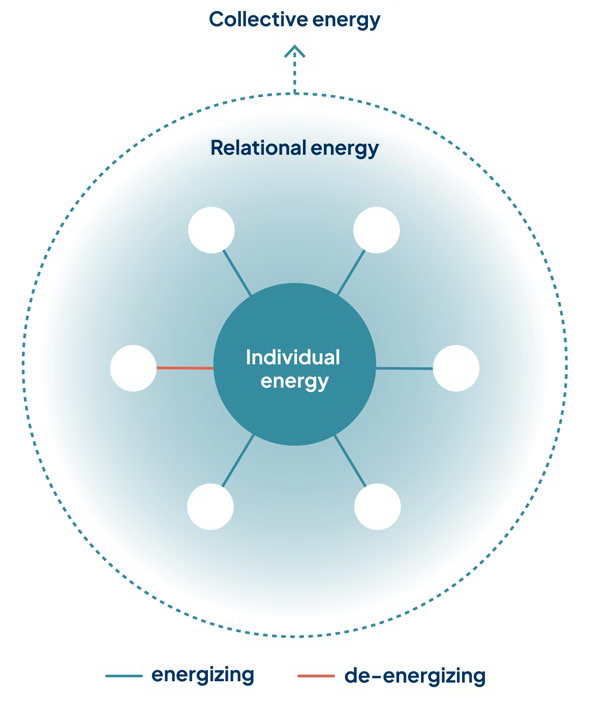
At its core, leadership energy operates on three interconnected levels, each contributing to the overall organizational climate and performance:
-
Individual Energy: This refers to the personal reservoir of energy a leader brings to their role. It encompasses their self-awareness, resilience, emotional regulation, and capacity for sustained effort. An individual leader who is personally energized is better equipped to inspire and motivate others. Conversely, depleted individual energy can manifest as burnout, decreased creativity, and a diminished ability to lead effectively.
-
Relational Energy: This level focuses on the quality of interactions between individuals. It is the energy generated or consumed through communication, collaboration, and the nature of interpersonal relationships. Energizing relationships foster trust, psychological safety, and open communication, leading to enhanced team cohesion and productivity. De-energizing relationships, conversely, can create friction, mistrust, and disengagement, hindering collaboration and eroding team morale. Research indicates that even a single de-energizing relationship can have a disproportionately negative impact on a team’s functioning.

-
Collective Energy: This represents the cumulative effect of individual and relational energy across the entire organization. It is the shared sense of purpose, alignment, and momentum that propels the organization forward. A high collective energy fosters a culture of innovation, adaptability, and sustained high performance. When collective energy is low, it can lead to inertia, siloed thinking, and a general lack of drive, even among highly motivated individuals.
A recent report detailing the importance of leadership energy underscores these dynamics. It outlines how patterns of energy exchange can be identified, quantifies the tangible cost of a single de-energizing relationship, and offers actionable strategies for organizations to foster a more energetic and productive environment. The report emphasizes that the capacity for leadership energy can be developed, both within individuals and within the organizational systems that support them.
Shared Responsibility: Beyond the Individual Leader
A critical insight emerging from this discourse is that managing energy effectively is not solely the responsibility of individual leaders. While cultivating self-awareness and healthy habits is paramount for any leader, the broader organizational context plays an equally significant role. A system designed to support, rather than undermine, leadership energy is essential for sustained success.
Consider the example of a director who, through feedback, recognizes that his team meetings are consistently draining. He identifies the cause not as the frequency of meetings but as a default to open-ended discussions lacking clear objectives and outcomes. Upon restructuring his meetings with a more focused agenda, his team responds positively, exhibiting increased engagement and productivity. However, the positive impact is limited. Meetings in other departments continue to operate under the old, less effective model. Six months later, his team, despite their improved meeting practices, finds themselves once again de-energized by the broader organizational context.
This scenario illustrates a crucial point: even when a leader implements the correct individual fixes, their efforts can be negated if the surrounding organizational systems are not aligned. When organizations treat energy as a purely personal responsibility, even well-intentioned interventions can be undermined by systemic issues. This underscores the necessity of a shared approach, where both individual leadership development and the creation of a healthy leadership ecosystem evolve in tandem. The synergy between these two elements amplifies the positive impact of energy, leading to stronger overall performance.
The Outsized Impact of De-Energizing Relationships
The research into relational energy offers compelling data on the profound impact of negative interactions. It highlights that not all relationships carry equal weight; a single de-energizing relationship can inflict damage far exceeding its apparent scope. Often, this imbalance is unilateral, with only one party experiencing the interaction as draining.
Based on assessment data from over 600 leadership teams, research into relational energy has quantified the significant influence of these dynamics. Team leaders and members were asked to rate how interactions with each individual affected their energy levels. The findings reveal that the imbalance created by negative energy is not confined to the immediate dyad; it ripples outward, shaping the overall functioning and performance of a team.
For instance, psychological safety, a well-established predictor of team performance, is particularly vulnerable to the effects of de-energizing relationships. The research indicates that one de-energizing relationship can erode psychological safety more significantly than multiple energizing relationships can bolster it. To merely neutralize the negative impact of one draining relationship on psychological safety, it takes the equivalent of four strongly energizing relationships, and even then, the team is only restored to a neutral baseline.
When this mathematical principle is scaled across an entire organization, the implications become stark. A few unaddressed negative relationships can create a ceiling on organizational energy and, consequently, on overall performance. This highlights the urgent need for organizations to identify and address these detrimental interactions proactively.
Leadership Energy as a Lens for Familiar Challenges
The influence of leadership energy extends beyond interpersonal dynamics, serving as a unifying lens through which to understand and address many common organizational challenges that leadership development programs aim to resolve. While these challenges often manifest differently, the underlying mechanism frequently involves leader energy that is not being effectively preserved, renewed, or guided.
Familiar organizational challenges that can be illuminated by an energy-focused approach include:
- Decreased Innovation and Creativity: When leaders and teams are consistently drained, their capacity for novel thinking and risk-taking diminishes.
- High Employee Turnover: Persistent low energy, stemming from poor leadership or a toxic environment, is a significant driver of attrition, particularly among top talent.
- Poor Communication and Collaboration: De-energized individuals are less likely to engage in proactive communication or collaborative efforts, leading to silos and inefficiencies.
- Resistance to Change: A general lack of energy can translate into inertia and a reluctance to embrace new initiatives or adapt to evolving market demands.
- Inconsistent Performance: Fluctuations in performance across departments or teams can often be traced back to varying levels of leadership energy and its impact on motivation and execution.
By adopting leadership energy as a diagnostic framework, organizations can gain a more holistic understanding of the root causes of these persistent issues. This allows for the development of interventions that address multiple challenges simultaneously by focusing on the preservation, renewal, and strategic direction of energy at individual, relational, and collective levels. The opportunity lies in identifying the points where individual leadership capacity intersects with the organizational systems that either sustain or deplete energy, and then implementing targeted actions.
Energy as a Leading Indicator of Performance

The interconnectedness of individual, relational, and collective energy means that shifts at one level will inevitably cascade and become visible at the next. This interconnectedness elevates leadership energy from a qualitative concept to a powerful quantitative indicator, signaling future performance trends before they manifest in traditional metrics such as engagement surveys or exit interviews.
Understanding and interpreting these energy signals allows organizations to intervene proactively. By identifying where energy is being generated, shared, or lost, development initiatives can be precisely targeted. This early detection enables shifts in behavior before they solidify into entrenched habits, and before habits shape a broader organizational culture.
The "Energy Equation," a framework that provides the language to diagnose these dynamics, is instrumental in this process. By leveraging this framework, organizations can move beyond reactive problem-solving to a more predictive and preventive approach. The full report associated with this research offers deeper insights into the underlying scientific principles and outlines specific development actions designed to address energy at its source, fostering a more resilient and high-performing organization.
Webinars and Further Exploration
Organizations seeking to deepen their understanding and application of leadership energy concepts can benefit from expert-led discussions. Related webinars offer valuable insights into specific aspects of this critical field. For instance, sessions like "How Leader Resilience Impacts Energy Dynamics at Work" and "How Collective Energy Shapes Performance" provide practical guidance and research-backed strategies. These webinars feature insights from leading researchers and practitioners, offering a comprehensive overview of the latest thinking and actionable approaches to cultivating a more energized and effective workplace.
In conclusion, leadership energy is emerging as a fundamental driver of organizational performance. By recognizing its presence at individual, relational, and collective levels, and by fostering a shared responsibility for its cultivation, organizations can unlock new levels of resilience, innovation, and sustained success. The ability to accurately read and respond to the subtle signals of leadership energy offers a distinct competitive advantage in today’s dynamic business landscape.