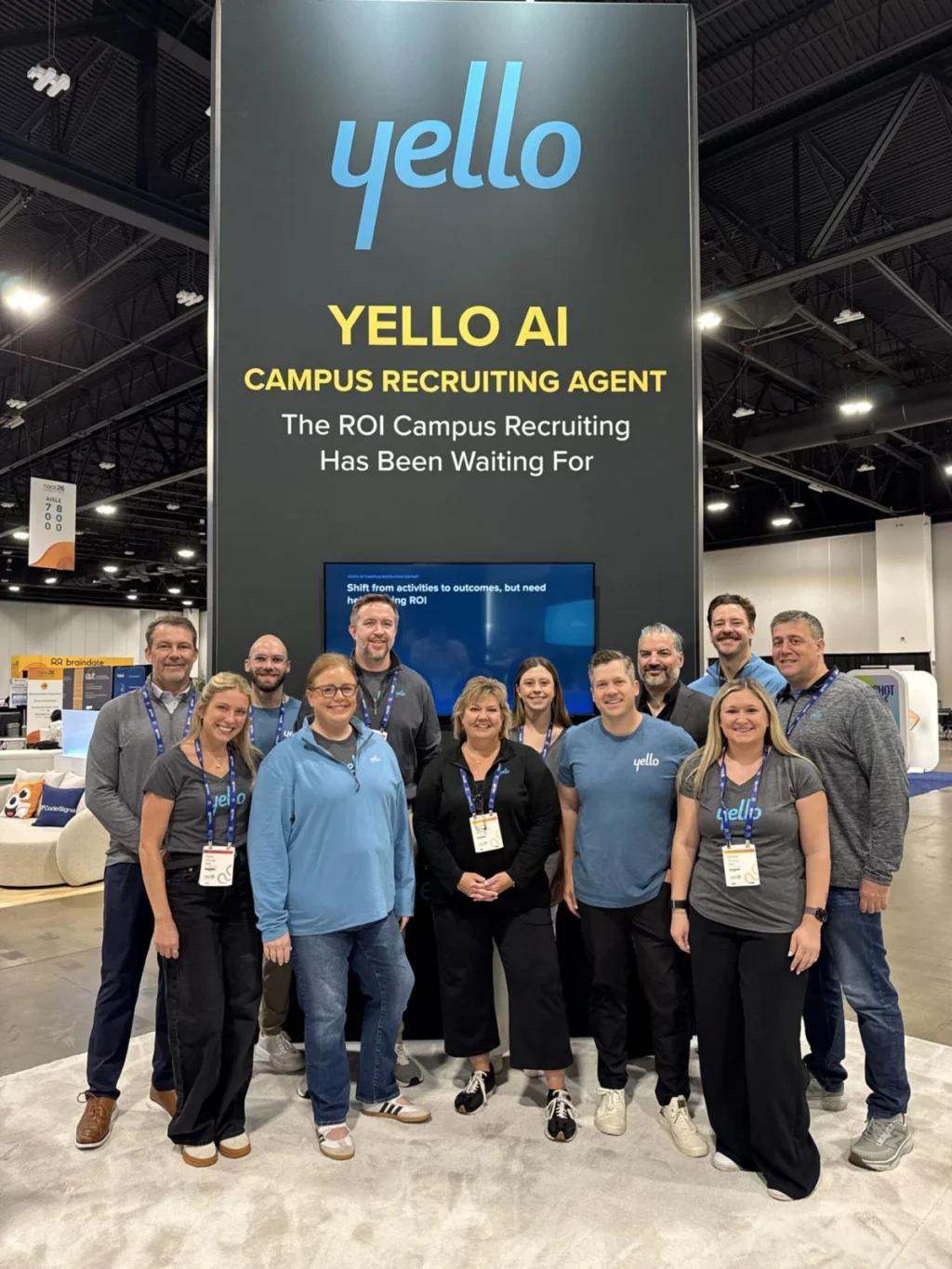
Early talent acquisition strategies are undergoing a significant transformation, driven by technological advancements and evolving candidate expectations, a central theme at NACE26 in Denver. Yello, a leading platform in early talent recruitment, played a pivotal role as a platinum sponsor, leveraging the event to unveil its innovative AI Campus Recruiting Agent and announce a strategic partnership with Symplicity. The conference, a critical forum for connecting with the early talent community, underscored three major shifts: the nuanced integration of artificial intelligence into recruiting processes, a redefinition of event strategies, and the persistent challenge of offer reneges.
The Evolving Landscape of Early Talent Acquisition
The National Association of Colleges and Employers (NACE) annual conference, NACE26, convened professionals from academia and industry to discuss the latest trends and best practices in university relations and early career hiring. Held in Denver, the event served as a barometer for the state of campus recruiting, with discussions often circling back to the overarching goal of connecting qualified candidates with promising opportunities efficiently and effectively. Yello’s presence included several speaking sessions, a networking reception, and an active booth, facilitating numerous conversations that highlighted the industry’s dynamic challenges and innovative solutions. The company’s dual announcements – a new AI-powered solution and a significant data partnership – directly addressed many of these emerging needs, signalling a strategic push to empower recruiters with advanced tools.
AI’s Double-Edged Sword in Campus Recruiting: Automation vs. Autonomy
The integration of artificial intelligence into recruitment workflows was arguably the most discussed topic at NACE26, reflecting a broader industry trend towards automation and data-driven decision-making. While AI’s potential is widely acknowledged, the critical question of how it should be applied dominated conversations. According to Yello’s recent State of Campus Recruiting report, AI adoption among campus teams is already prevalent, but its current application is heavily concentrated at the top of the funnel. Approximately 26% of AI usage is directed towards candidate sourcing, and another 25% focuses on initial candidate communications. This data reveals a significant gap: the area where AI could yield the greatest strategic impact – data analysis and proving return on investment (ROI) – remains largely underutilized.
This disparity was a recurring point of contention and discussion in Denver. Recruiters expressed a clear preference for AI that serves as an administrative assistant rather than a decision-maker. The demand is for tools that can automate the repetitive, time-consuming tasks that consume valuable recruiter hours, thereby freeing them to engage in higher-value interactions with candidates. This sentiment was echoed in a highly anticipated session titled, "Can Campus Recruiting Be Autonomous? The Answer Is Complicated." The panel, featuring Tamara Welch from LPL Financial, Matthew Brink from NACE, and Dan Bartfield from Yello, delved into whether the ultimate goal should be fully autonomous recruiting or simply enabling recruiters to dedicate more time to strategic, human-centric work.
The audience’s consensus firmly leaned towards the latter. For AI to be truly effective in campus recruiting, it must be purpose-built to address the unique complexities and challenges of this sector. Generic AI solutions often fall short because they fail to account for the specific nuances of academic cycles, student motivations, and the importance of personal connection in early career hiring. By strategically deploying AI to automate manual processes – such as initial screening, scheduling, and routine correspondence – recruiters can significantly enhance their efficiency. This shift allows them to focus on critical aspects like building rapport, conducting meaningful interviews, and guiding candidates through the hiring journey, ultimately improving both candidate experience and hiring outcomes.
Matthew Brink of NACE further emphasized the candidate perspective, highlighting student apprehension towards employers who over-rely on AI in their hiring processes, especially without transparency. A recruitment process that feels impersonal or opaque due to excessive AI integration can deter highly qualified candidates and subtly erode an employer’s brand reputation. Trust and authenticity remain paramount, suggesting that AI should augment human interaction, not replace it entirely. The ethical implications of AI, including potential biases and the need for disclosure, are increasingly critical considerations for campus recruiting teams aiming to maintain a positive and inclusive employer brand.
Redefining Event Strategy: From Presence to Purpose
Beyond AI, NACE26 illuminated a fundamental shift in how employers approach recruitment events. The second key session, "Purpose Over Presence: Rethinking Your Event Strategy for Better ROI," featured Vincent Bond from Synchrony, Kristin Leek from Boeing, and Christopher Cantu from Marathon Petroleum, who collectively articulated a significant change in methodology. These industry leaders reported a common paradox: while application volumes continue to climb, identifying truly qualified candidates has become increasingly difficult. This challenge is partly exacerbated by the proliferation of AI-assisted resume tools, which enable candidates to optimize their applications, making many resumes appear remarkably similar. As Vince Bond aptly put it, "AI is fighting AI," creating a scenario where employers must contend with sophisticated, AI-generated candidate profiles.
In response, these pioneering leaders are advocating for a more intentional, outcomes-based approach to events. The traditional model of attending numerous career fairs, meeting a high volume of candidates, and hoping to stumble upon a few good fits is being superseded by a strategy focused on quality over quantity. Instead of measuring success by mere activity – such as the number of resumes collected – organizations are now scrutinizing which events yield the best return on investment, specifically those that result in high-quality hires.
Christopher Cantu introduced a compelling analogy, describing career fairs not as the starting line, but as the "end zone" – the culmination of a recruitment effort rather than its initiation. The critical groundwork, he explained, is laid months, or even years, in advance through targeted events and consistent candidate touchpoints. This proactive engagement builds "relationship equity," which is emerging as the competitive differentiator in today’s crowded campus recruiting landscape. By investing earlier and more deeply in cultivating genuine relationships with potential candidates, employers can cut through the noise of high application volumes and mitigate the risks associated with candidate fraud, ensuring a more authentic and effective talent pipeline. This paradigm shift requires recruiters to transition from passive presence to strategic engagement, prioritizing meaningful interactions that foster trust and loyalty long before an offer is even extended.
Tackling the Reneges Crisis: The Post-Offer Engagement Imperative
The conversation around relationship building naturally extended to the pervasive challenge of offer reneges, which remained a hot topic at NACE26. The sobering reality for many employers is that an offer acceptance no longer guarantees a done deal. In a competitive talent market, candidates often receive multiple offers, leading to a significant percentage of accepted offers being rescinded before the start date. The teams most effectively combating this trend are those that recognize the post-offer period as an active and critical phase of recruitment.
Consistent, personalized communication between the offer acceptance and the actual start date is no longer a luxury but a necessity for retaining top talent. This proactive engagement helps maintain candidate enthusiasm, addresses any lingering questions or concerns, and reinforces the candidate’s decision to join the organization. Panelists consistently noted that their pre-offer relationship-building efforts, particularly through targeted events, were instrumental in keeping their renege rates low, underscoring the long-term value of relationship equity.
In a virtual session titled "Designing the Complete Journey: From Pre-Boarding to Off-Boarding," Ahva Sadeghi of Yello introduced the "KEEP framework," a structured approach designed to maintain candidate engagement throughout the entire journey. KEEP stands for Kick Off, Engage, Enable, and Perform – four pillars that guide a candidate from the moment of offer acceptance through to their first day and beyond. Sadeghi further elaborated on the various reasons candidates renege, which can range from receiving a better offer to feeling a lack of connection or support from the hiring company. She also detailed the substantial true cost for employers, including wasted recruitment resources, lost productivity, and potential damage to employer brand. Demonstrating the effectiveness of strategic engagement, Sadeghi highlighted how Symba customers have successfully reduced their renege rates by over 55% through focused post-offer engagement strategies. This data underscores that sustained, personalized interaction is a powerful antidote to the renege problem, transforming a vulnerable period into an opportunity for reinforcement and connection.
Yello’s Strategic Innovations Unveiled at NACE26
NACE26 also served as the platform for Yello’s two significant announcements, directly addressing many of the industry challenges discussed throughout the conference.
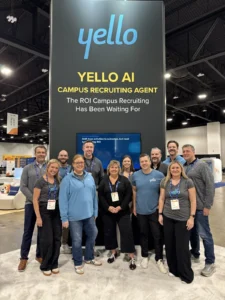
Firstly, Yello officially launched the Yello Campus Recruiting Agent, an AI-powered solution engineered to redefine the efficiency and effectiveness of early talent acquisition. This innovative agent is designed to automate a vast array of manual tasks, fundamentally simplifying the process of building events, sourcing candidates, managing campaigns, and scheduling interviews. The core benefit is to liberate recruiting teams from administrative burdens, allowing them to redirect their focus towards engaging meaningfully with candidates.
The Yello Campus Recruiting Agent is poised to flip the traditional model of campus recruiting. Historically, recruiters would attend events hoping the right candidates would visit their booth. Now, the AI agent proactively identifies best-fit candidates and pre-schedules interviews before the event even begins. This means recruiters arrive at career fairs or campus events with a full interview schedule, populated by candidates who have already been matched to specific roles based on comprehensive criteria. The agent handles the heavy lifting of event creation and management, intelligent candidate matching and prioritization, targeted outreach, and intricate interview scheduling. This transformative capability ensures that every interaction is purposeful, maximizing the ROI of event participation and drastically improving the efficiency of the recruitment funnel.
Secondly, Yello announced a crucial new partnership with Symplicity, a leading provider of career services management solutions for higher education. This collaboration significantly expands candidate access for Yello customers, providing direct access to Symplicity’s extensive network of over 600,000 early talent candidates. This integration means that employers utilizing the Yello Campus Recruiting Agent can now match against active candidates not only from their own Applicant Tracking Systems (ATS) and existing Yello databases but also from the vast Symplicity database. This is in addition to sourcing capabilities from WayUp and over 35 other diverse online sources across the web.
The Symplicity partnership is a game-changer for candidate sourcing. By tapping into Symplicity’s robust network, Yello users gain access to a wider, more diverse pool of pre-vetted early talent. This expanded reach, combined with the AI Campus Recruiting Agent’s intelligent matching capabilities, enables recruiters to pinpoint the most suitable candidates with unprecedented precision. It addresses the challenge of rising application volumes by providing tools to effectively sift through candidates and identify those with the highest potential, ultimately leading to better quality hires and a more streamlined recruitment process.
Broader Implications for Early Talent Acquisition
The insights and innovations showcased at NACE26, particularly those from Yello, signal a profound evolution in early talent acquisition. The industry is moving towards a future where technology and human strategy are inextricably linked, each augmenting the other. The discussions on AI underscored that while automation is crucial for efficiency, the human element of building relationships and providing a personalized candidate experience remains irreplaceable. The shift in event strategy highlights a growing emphasis on strategic engagement and long-term pipeline development over transactional interactions. Furthermore, the persistent challenge of reneges reinforces the critical need for continuous, personalized communication throughout the entire candidate journey, extending well beyond the initial offer.
Yello’s new AI Campus Recruiting Agent and its partnership with Symplicity directly address these converging trends. By automating administrative tasks and enhancing candidate sourcing and matching, Yello empowers recruiters to focus on what truly matters: engaging with candidates, building relationships, and making informed hiring decisions. These advancements are not merely incremental improvements but represent a strategic pivot towards a more intelligent, efficient, and candidate-centric approach to early talent acquisition. As the competitive landscape for emerging talent continues to intensify, organizations that embrace these integrated technological and strategic solutions will be best positioned to attract, secure, and retain the next generation of leaders. The future of campus recruiting is one of strategic autonomy, data-driven insights, and deeply cultivated relationships, driven by innovations that enable recruiters to be more effective and impactful than ever before.