
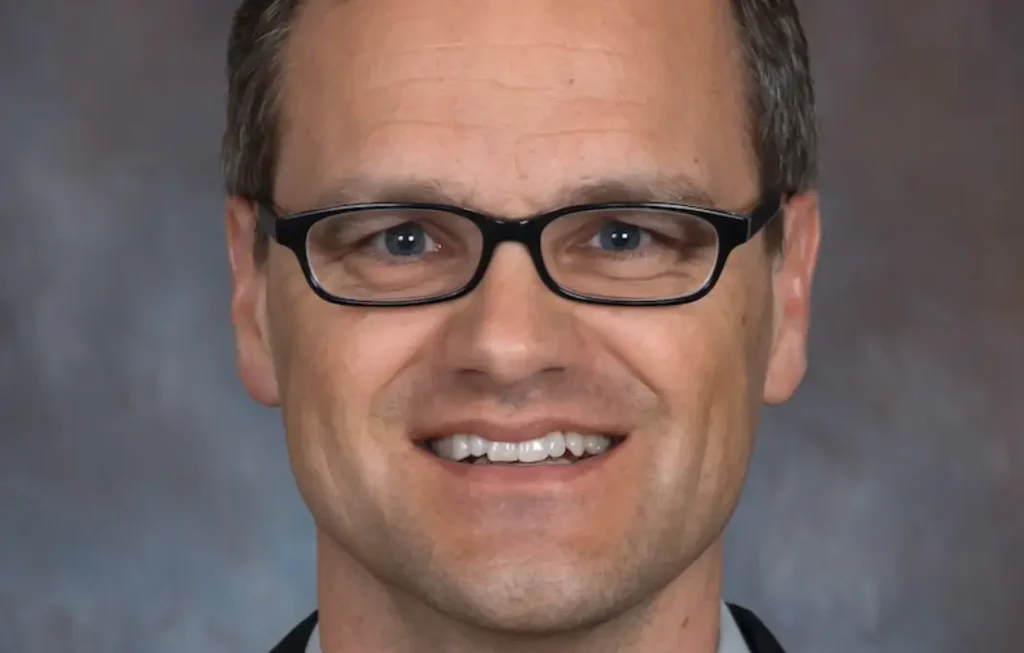
The sting of an unexpected alarm at 0300 hours in the Red Sea during the tense closing stages of the first Gulf War was a visceral awakening for many aboard the naval vessel. For Peter Allen Mann, then a young officer, this moment would become a crucible, forging a leadership philosophy that would later prove instrumental in his transition from military service to pioneering manufacturing reshoring. His remarkable ability to remain calm amidst escalating chaos, rather than signaling detachment, was, as he would later articulate, "a different way of processing chaos." This distinct approach to managing high-stakes environments, he contends, is not a personal anomaly but a characteristic of neurodivergent individuals, whose unique perceptual abilities offer a potent, often untapped, competitive advantage in both military and corporate arenas.
This excerpt is drawn from Mann’s forthcoming book, The Perception Revolution: How to Turn Neurodivergent Insights into Competitive Advantage, slated for release in August 2026 by Fast Company Press. Mann, the CEO of Oransis, a Virginia-based manufacturer of air filtering and cooling products, has recently achieved a significant milestone by fully reshoring his company’s operations back to the United States, a move that places him among the vanguard of U.S. manufacturing firms to undertake such a comprehensive repatriation. His journey and the strategic brilliance behind Oransis’s reshoring will be further detailed at the upcoming Manufacturing Leaders Summit in St. Louis, scheduled for May 4-6.
The Crucible of the Red Sea: Leadership Under Fire
The narrative of "The Day Everything Changed," as presented in the book’s introduction, vividly recounts the palpable tension of Mann’s deployment. An unidentified aircraft was rapidly approaching the ship, a scenario fraught with immediate peril. Within the Combat Information Center, the critical hub where life-and-death decisions are formulated, the atmosphere was electric with fear and uncertainty. The commanding officer, Mann observed, was audibly distraught, his fury escalating to a point of physical distress, a phenomenon Mann later described with striking imagery: "Have you ever seen someone so angry they foam? It’s unsettling. It’s like watching someone become their own barista, but the only specialty they are serving up is rage."
This volatile display of leadership lasted precisely 90 seconds. It was at this juncture that the captain intervened, his voice a stark contrast to the prevailing hysteria. "You’re relieved," he stated quietly to the agitated officer, a clear signal of his loss of command. Then, his attention turned to the young Mann. "Mann, you have the watch."
This pivotal moment provided Mann with a profound early lesson in leadership. He realized that in situations where toxic leadership jeopardizes operational integrity, the protection of one’s personnel is not merely a matter of ethical imperative but a fundamental requirement for survival. The officer Mann replaced, it is noted, never reconciled Mann’s composure with his own breakdown, harboring resentment for months. However, the crew’s reaction was far more valuable than a superior’s forgiveness. They offered Mann their trust, a trust he reciprocated. This exchange, he would later understand, was the bedrock of all enduring success: the cultivation of genuine, authentic relationships, irrespective of the stress levels inherent in the environment.
Unpacking the "Calm": Neurodivergent Perception as an Asset
The ability to remain outwardly calm during such extreme duress was not, Mann emphasizes, a sign of emotional detachment or a lack of empathy. It was, in fact, a fundamentally different mode of processing overwhelming stimuli. Decades later, and following a late-in-life autism diagnosis, Mann would fully grasp that this composure stemmed from a heightened state of perception. This perception allowed him to discern patterns within the surrounding "noise," to intuitively understand the crew’s underlying needs amidst the immediate crisis, and to foster stability where others generated turmoil.
A Late-Life Revelation: The Autism Diagnosis
At the age of 55, after a successful career building multiple companies, Peter Allen Mann received an autism diagnosis. This revelation served as a profound reorientation of his life’s experiences. The catalyst for this self-discovery was a segment on CBS Mornings featuring an autistic woman working at the National Geospatial-Intelligence Agency. As she articulated her ability to hyperfocus and identify patterns invisible to others, a powerful sense of recognition dawned within Mann.
Receiving an autism diagnosis at 55, Mann likens it to discovering an instruction manual for a complex piece of furniture only after spending five decades assembling it without one. Suddenly, long-standing personal traits and behaviors began to make sense. His delayed speech development until the third grade, his uncanny accuracy in predicting business outcomes, his immediate visceral reactions to certain individuals, and the way his greatest strengths were often misconstrued as weaknesses – all these elements coalesced into a coherent picture.
The Power of Collective Perception: "I Wasn’t Alone"
Perhaps the most significant realization stemming from his diagnosis was the understanding that he was not an outlier. Research indicates that a substantial segment of the population, estimated between 15-20% and with more recent studies suggesting figures closer to 30%, shares this heightened perceptual capacity. These individuals are not "broken" or excessively sensitive; rather, they are finely tuned detection instruments operating within a societal framework that often values emotional numbing over acute awareness.
The critical shift in perspective, Mann argues, lies in recognizing that the very traits that can make neurodivergent individuals targets for exploitation or misunderstanding also render them indispensable assets for innovation, proactive problem-solving, and authentic leadership.
The Economic Imperative: Harnessing Neurodivergent Talent
The global economy, according to Mann, is currently experiencing a significant drain of value, a situation he believes should be a cause for alarm among leaders, investors, and workers alike. The World Health Organization estimates that depression and anxiety alone contribute $1 trillion annually to lost productivity worldwide. In the United States, organizations face staggering turnover costs, potentially reaching $223 billion over a five-year period. Furthermore, workplace stress is estimated to add between $125 billion and $190 billion annually to healthcare expenditures.
However, these statistics, Mann points out, fail to capture a crucial demographic: the approximately 30% of the population who process information with greater depth – individuals who are neurodivergent, highly sensitive, or both. These are often the most perceptive and innovative members of the workforce, capable of identifying potential problems months before they escalate into crises. Their departures from organizations are not indicative of an inability to handle pressure, as is often misconstrued. Instead, it is their acute awareness of systemic issues within toxic environments that leads them to recognize the unsustainability of such conditions and, consequently, to seek more conducive workplaces.
Mann’s own experience at Oransis stands in stark contrast to this trend. He has achieved an impressive 95% team retention rate. This success, he asserts, is not the result of employing disparate strategies across different contexts. Rather, it is rooted in a consistent adherence to a fundamental biological truth: when individuals’ nervous systems feel safe and secure, they are empowered to thrive. This principle, he contends, is universally applicable, transcending the specific demands of military service or the complexities of manufacturing.
Broader Implications for Business and Society
The implications of Peter Allen Mann’s insights extend far beyond the realm of individual career success. His narrative challenges deeply ingrained societal perceptions of neurodivergence, reframing these traits not as deficits but as powerful cognitive advantages. In an era characterized by rapid technological advancement, increasing complexity, and a growing emphasis on innovation, the ability to perceive patterns, identify anomalies, and approach problems from unconventional angles is becoming increasingly valuable.
Companies that actively cultivate environments where neurodivergent employees feel safe, understood, and valued are likely to benefit from enhanced creativity, improved problem-solving capabilities, and greater employee loyalty. This requires a conscious shift in management practices, moving away from rigid, one-size-fits-all approaches towards more flexible and inclusive leadership models. Training programs that educate managers on neurodiversity, fostering empathy and understanding, are crucial. Creating communication protocols that accommodate different processing styles and providing accommodations that leverage individual strengths can unlock the full potential of a neurodiverse workforce.
Furthermore, Mann’s experience with Oransis highlights the strategic importance of reshoring manufacturing. By bringing operations back to the U.S., he not only strengthens domestic supply chains and creates American jobs but also gains greater control over his company’s operational environment. This control is paramount in ensuring the safety and well-being of his employees, a key tenet of his leadership philosophy. The ability to foster a supportive and stable work environment, directly influenced by leadership’s commitment to understanding and valuing diverse cognitive styles, is a critical factor in retaining top talent and achieving sustained business success.
The "Perception Revolution" Mann advocates for is not just about recognizing the value of neurodivergent individuals; it is about fundamentally re-evaluating how we define and cultivate effective leadership and how we build organizations that are resilient, innovative, and truly human-centric. His journey from the high-pressure environment of naval combat to the forefront of American manufacturing offers a compelling case study for how embracing unique cognitive strengths can lead to extraordinary outcomes, both personally and professionally. As the business world continues to grapple with unprecedented challenges, Mann’s message of harnessing neurodivergent insights offers a beacon of hope and a practical roadmap for future success.








