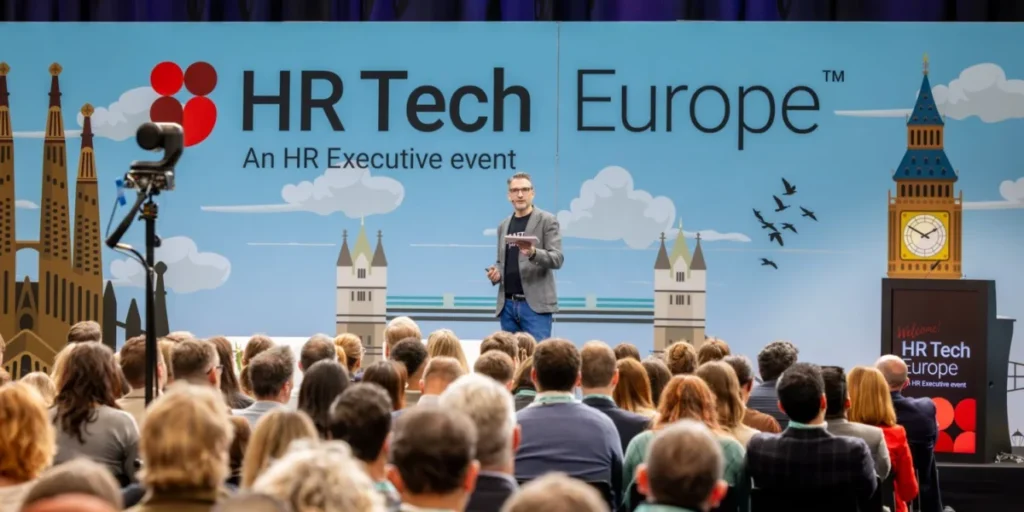
Copenhagen, Denmark – In a significant triumph for strategic human resources, global jewelry giant Pandora has unveiled a groundbreaking approach to talent management that has led to a remarkable 25% reduction in employee attrition, embedding an estimated €200 million in measurable value directly into its profit and loss statement. This transformative initiative, spearheaded by Byron Clayton, the company’s Chief People and Planet Officer, was a focal point of his keynote address at the prestigious HR Tech Europe 2026 conference held recently in Amsterdam, offering a compelling blueprint for retailers grappling with high turnover rates.
Pandora, renowned for selling over 112 million pieces of jewelry annually—a staggering three pieces per second—has long mastered the art of product delivery. However, retaining the dedicated individuals who drive these sales has presented a more intricate challenge. Clayton’s presentation elucidated how a strategic pivot, focusing initially on the pivotal role of the store manager, laid the foundation for this monumental success, with attrition improvements alone accounting for 75% of the targeted financial uplift.
The Genesis of the Challenge: Overwhelmed Store Managers
The traditional retail model often places immense pressure on store managers, tasking them with a myriad of operational duties alongside critical people management responsibilities. Pandora was no exception. Unlike many organizations that initially scrutinize the candidate pool when facing attrition issues, Pandora took a counter-intuitive but ultimately decisive step: it turned its gaze inward, examining the role and burdens of its store managers. This reorientation, as Clayton emphasized, proved to be a game-changer.
"The store manager is the most important role in our value chain," Clayton asserted during his keynote, underscoring the central tenet of their revamped strategy. A comprehensive internal survey involving 2,000 Pandora store managers brought the scale of the problem into sharp relief. The findings were stark: a significant 30% of their non-selling time was consumed by administrative tasks related to human resources. More alarmingly, recruitment activities alone were devouring an average of 12 hours per week per manager. These individuals, crucial for driving sales and embodying the Pandora brand, were effectively being "consumed by people administration," diverting their focus from core business activities and leadership.
The initial knee-jerk reaction often seen in similar corporate scenarios might have been to centralize the hiring process, removing store managers entirely from recruitment decisions and entrusting job offers solely to dedicated recruiters. However, Clayton wisely dismissed this as a "recipe for disaster." He articulated that such a move would merely make "a really bad process super efficient with no ownership," leading to a disconnect between the hiring entity and the on-the-ground operational needs of the stores. The problem, Pandora realized, wasn’t a lack of attractive candidates—the brand’s strength ensured a consistent flow of applications. The true impediment was the sheer volume of unmanageable applicant pools overwhelming managers, hindering effective decision-making and contributing to a subpar hiring experience for both managers and candidates.
Technological Innovation: A Strategic Partnership for Precision Hiring
To address this complex challenge, Pandora embarked on an ambitious technological overhaul of its recruitment process. The solution wasn’t a single off-the-shelf product but a sophisticated integration of best-in-class HR technologies. Pandora collaborated with AI recruitment platform Paradox to develop a virtual recruitment assistant named Olivia. This core system was then augmented with predictive candidate assessment technology from Harver. Clayton highlighted the synergy of this approach: "Bringing two different, unique pieces of technology together is what created the right solution to meet Pandora’s needs. It’s improving the experience for the manager, but also for the candidate."
Paradox’s Olivia was tasked with shouldering the substantial operational load that had previously bogged down store managers. This included automating initial candidate screening, streamlining interview scheduling, managing onboarding documentation, and providing 24/7 candidate communication—a critical factor in maintaining engagement and reducing drop-off rates in a competitive talent market. By automating these time-consuming administrative tasks, Olivia freed up store managers to focus on what they do best: leading their teams and engaging with customers.
Harver’s contribution was equally pivotal, introducing a layer of data-driven intelligence to the hiring process. Its predictive fit modeling was developed using insights gleaned from 500 of Pandora’s own top-performing store associates. This data-driven approach moved beyond traditional résumé screening, identifying the underlying traits, skills, and cultural fit that truly predicted success within Pandora’s retail environment.
Uncovering New Talent Pools and Expanding Horizons
The insights derived from Harver’s predictive modeling led to several "aha moments" for Pandora’s talent acquisition team. The analysis revealed that the traditional candidate pool, often restricted to individuals with prior retail experience, was not necessarily the optimal source of talent. In the U.K., for instance, some of Pandora’s highest-performing associates came from diverse backgrounds, including the food and beverage industry and even the National Health Service (NHS). "The traditional candidate pool is not the right one," Clayton noted, indicating a significant paradigm shift in their sourcing strategy. This broader perspective allowed Pandora to tap into previously overlooked talent segments, enriching their workforce with individuals possessing transferable skills, strong service orientations, and a fresh perspective.
The successful implementation of Olivia and Harver’s integrated solution has already seen significant global expansion. Olivia is currently live in key markets including the United States, Canada, the U.K., and Ireland, with plans for rollout in 20 additional countries. The system’s efficiency is evident in its ability to automatically screen out approximately 75% of applicants before a store manager even needs to intervene, allowing managers to dedicate their valuable time to interviewing only the most qualified and pre-vetted candidates, ultimately leading to more informed and efficient final hiring decisions.
Quantifiable Business Outcomes and Strategic Value Creation
The strategic investment in HR technology and process re-engineering has yielded a cascade of impressive business outcomes, directly impacting Pandora’s bottom line and operational efficiency. The administrative burden of recruitment on store managers plummeted by a remarkable 64%. This reduction directly translated into more time for sales leadership, team development, and customer engagement.
The time to hire, a critical metric in fast-paced retail environments, saw a dramatic decrease from an average of 38 days to just 15 days. During Q4, the crucial six-week holiday period that accounts for 40% of Pandora’s annual business, the company now boasts an astonishing capability to move a candidate from initial application to start date in under five days. This agility ensures that stores are adequately staffed during peak periods, maximizing sales opportunities and customer service quality.
Beyond efficiency gains, the most impactful metric was the 25% reduction in attrition, directly contributing to the €200 million in measurable value identified by Clayton. Lower attrition rates translate into reduced recruitment costs, decreased training expenditures, and a more experienced, productive workforce. Furthermore, candidate satisfaction soared to an impressive 9.7 out of 10, underscoring the positive impact of the streamlined, transparent, and responsive hiring process on potential employees.
Perhaps the most compelling financial outcome was the 4% increase in sales per labor hour. Clayton’s team quantified this improvement as an additional $35 million in value in the U.S. market alone, a testament to the direct link between effective HR strategies and tangible business growth. "We have become magicians," Clayton quipped, "We are creating time." This "created time" allows managers and associates to focus on value-added activities, enhancing the customer experience and driving revenue.
The "Deal": Redefining the Employee-Employer Relationship
In an exclusive interview following his keynote, Clayton delved deeper into what he terms "the deal"—Pandora’s deliberate shift from an implicit to an explicit employment contract, particularly concerning internal mobility and career development. In the evolving landscape of work, Clayton believes "employability becomes a much different thing." Pandora has moved away from the traditional, often rigid, concept of "career paths" towards a more dynamic and personalized notion of "careers."
Under this new "deal," if a store associate demonstrates a genuine aspiration for a career within Pandora, the company commits to investing significantly in their development. In return, the associate agrees to be open to future opportunities and mobility within the organization. For associates who view their role as supplemental income or a stepping stone (e.g., students), the conversation is equally direct and transparent, albeit different. Clayton emphasized that this clarity on both sides is fundamental to effective retention and strategically guides where Pandora allocates its substantial development investments. This explicit agreement fosters mutual understanding and commitment, aligning individual aspirations with organizational needs.
Future Horizons: Scaling Innovation and Sustaining Value
Pandora’s journey of HR transformation is far from over. Clayton outlined the company’s ambitious next steps, which include "scaling digital leadership development, investing in internal mobility, introducing AI-enabled scheduling, and using technology to improve decisions in the employee lifecycle." These initiatives reflect a continuous commitment to leveraging technology to optimize human potential and operational efficiency across the employee journey. Crucially, the overarching objective remains constant: "keeping our teams focused on creating value, beginning with the customer." This customer-centric approach underpins all HR initiatives, ensuring that talent strategies directly contribute to business success.
Broader Industry Implications: A Blueprint for Retail and Beyond
Pandora’s success story serves as a powerful case study for the global retail sector and beyond, highlighting the profound impact that strategic, data-driven HR initiatives can have on business performance. In an era where employee retention is a universal challenge and the "war for talent" intensifies, Pandora’s model demonstrates that investing in intelligent HR technology and rethinking traditional processes can yield substantial, measurable returns.
The company’s focus on empowering store managers rather than disempowering them, coupled with the precise application of AI to streamline administrative burdens and identify optimal talent, offers a compelling blueprint. It underscores the critical importance of understanding the root causes of HR challenges, rather than merely treating symptoms. By moving beyond conventional hiring metrics and embracing predictive analytics, organizations can uncover untapped talent pools and build more diverse, resilient, and high-performing teams.
Moreover, Pandora’s explicit "deal" around careers and mobility represents a forward-thinking approach to employee engagement and retention. In a world where job tenure is shorter and career aspirations are more fluid, fostering transparency and investing in transferable skills and internal growth pathways can be a powerful differentiator. The emphasis on continuous digital leadership development and AI-enabled scheduling further illustrates a commitment to creating an agile, technologically advanced workforce capable of navigating future challenges.
As the retail landscape continues to evolve, Pandora’s strategic HR transformation stands as a testament to the power of human ingenuity amplified by smart technology. It offers a tangible example of how a global enterprise can not only survive but thrive by placing its people—and the systems that support them—at the very heart of its value creation strategy, proving that investing in human capital, intelligently and strategically, is the ultimate key to sustainable competitive advantage.