
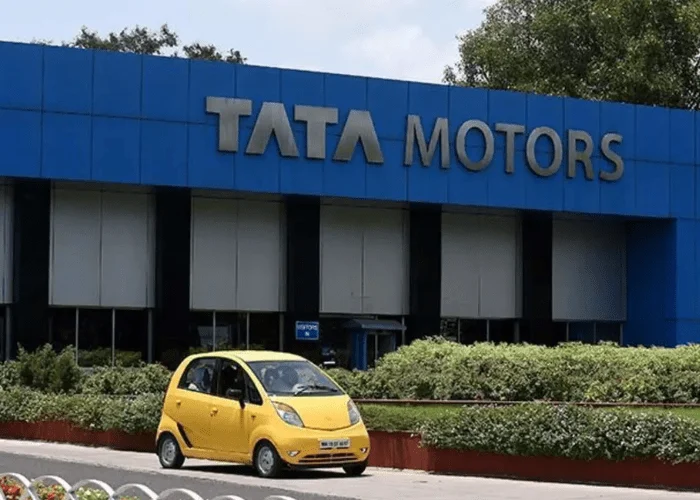
Tata Motors, India’s leading automotive manufacturer, has successfully concluded a voluntary retirement scheme (VRS) offered to permanent employees across its passenger vehicle (PV) and commercial vehicle (CV) businesses, a move initiated following requests from worker unions. This program marks a significant milestone as the first such comprehensive initiative since the company’s pivotal operational restructuring in 2025, which formally separated its passenger and commercial vehicle divisions into distinct entities. The strategic decision underscores the company’s commitment to optimizing its operational footprint, managing workforce costs, and aligning its human capital with the evolving demands of a rapidly transforming global automotive industry, particularly in the context of substantial investments in electric vehicles (EVs) and advanced technologies.
The voluntary retirement scheme was open for applications for a period of three weeks, commencing on April 10 and concluding on April 30. The program specifically targeted a demographic of approximately 750 permanent employees, primarily those aged between 40 and 55 years, representing a critical segment of the company’s long-serving workforce. Out of this eligible pool, a total of approximately 300 employees elected to accept the offer, demonstrating a measured uptake of the scheme. The compensation package offered to employees opting for the VRS was meticulously designed to provide attractive financial incentives, structured around factors such as years of service and existing role within the organization, alongside comprehensive medical benefits to ensure a smooth transition for departing staff. Tata Motors emphasized that the program was conceived to offer flexibility and choice to its employees, allowing them to make informed decisions about their careers, while simultaneously enabling the company to recalibrate its workforce without resorting to compulsory layoffs, thereby maintaining industrial harmony.
The Context of the 2025 Restructuring: A Foundation for Transformation
To fully comprehend the strategic significance of the recent VRS, it is imperative to delve into the foundational changes implemented by Tata Motors in 2025. Prior to this landmark restructuring, Tata Motors operated its passenger and commercial vehicle businesses under a unified corporate umbrella. However, recognizing the increasingly divergent market dynamics, technological requirements, and strategic imperatives of these two distinct segments, the company embarked on a comprehensive demerger. This strategic move led to the formal separation of the passenger vehicle business, including electric vehicles, into a new entity, Tata Motors Passenger Vehicles Ltd. (TMPVL), and the commercial vehicle business, including buses and trucks, into Tata Motors Commercial Vehicles Ltd. (TMCVL).
The rationale behind the 2025 split was multi-faceted. The passenger vehicle segment, particularly with the aggressive push into electric mobility, demanded agility, rapid innovation, and a distinct capital allocation strategy. It faced intense competition from both domestic and international players, requiring significant investments in R&D, new product development, and charging infrastructure. Concurrently, the commercial vehicle business, while robust, operated on different product lifecycles, regulatory frameworks, and customer demands, focusing on aspects like fuel efficiency, payload capacity, and fleet management solutions. By creating two independent entities, Tata Motors aimed to empower each business with greater operational autonomy, streamlined decision-making processes, and focused capital deployment strategies tailored to their respective market opportunities and challenges. This restructuring was widely lauded by industry analysts as a forward-thinking step to unlock greater value for shareholders and enhance the competitive positioning of both segments. The current VRS, therefore, can be seen as a subsequent logical step in optimizing the human resources of these newly independent, yet strategically aligned, divisions.
Broader Industry Trends and the Imperative for Efficiency
The initiative by Tata Motors reflects a broader, industry-wide trend where automotive manufacturers globally, and particularly in India, are navigating a complex landscape defined by technological disruption, shifting consumer preferences, and evolving regulatory environments. The transition towards electric vehicles (EVs) represents a paradigm shift, demanding massive capital outlays for product development, manufacturing infrastructure, battery technology, and charging networks. Alongside EVs, investments in connected car technologies, autonomous driving capabilities, and advanced driver-assistance systems (ADAS) are becoming increasingly critical for staying competitive.
Furthermore, the global supply chain disruptions witnessed in recent years, coupled with the ongoing need for continuous technology upgrades (such as adherence to stricter emission norms like BS6 in India), have placed immense pressure on manufacturers to enhance efficiency, rationalize costs, and optimize their manufacturing footprints. The Indian automotive sector, a cornerstone of the nation’s manufacturing economy, employs millions directly and indirectly. However, the nature of jobs is evolving rapidly, moving away from traditional manufacturing roles towards those requiring specialized skills in software, data analytics, battery technology, and power electronics. This necessitates a strategic recalibration of the workforce to match the demands of future production lines and product portfolios. Companies are increasingly seeking to right-size their operations, not merely through headcount reduction but through a strategic realignment of skills and roles to meet future needs, often balancing legacy workforces with the influx of new talent required for emerging technologies.
Strategic Rationale for Tata Motors: Productivity and Future Readiness
For Tata Motors, the VRS program is intrinsically linked to its wider strategic objectives of improving productivity, streamlining factory operations, and enhancing overall profitability in a highly competitive market. Post-demerger, both the passenger and commercial vehicle businesses are focused on achieving higher operational efficiencies. This involves not only optimizing production processes and supply chain logistics but also ensuring that the workforce composition is aligned with modern manufacturing practices and future technological requirements.
The company has been making substantial investments in upgrading its manufacturing facilities, integrating advanced automation, and enhancing its research and development capabilities, particularly in the EV space. Tata Motors has set ambitious targets for EV penetration in its passenger vehicle portfolio and is actively developing new electric platforms and models. Such endeavors require a workforce that is not only skilled in contemporary manufacturing techniques but also adaptable to rapid technological advancements. The VRS, while voluntary, provides an avenue for employees who may be nearing retirement or seeking alternative career paths to transition gracefully, while allowing the company to introduce new talent with specialized skills in areas critical for its future growth, such as software development for EVs, battery management systems, and advanced robotics for production lines.
Moreover, managing workforce costs is a continuous process for any large manufacturing entity. By offering a voluntary scheme, Tata Motors aims to achieve a more optimal cost structure without impacting industrial relations, a factor of paramount importance in the Indian context. This proactive approach allows the company to manage its human resource requirements in a planned and phased manner, preventing the need for more drastic measures in the future.
Engaging with Stakeholders: Unions and Employee Perspectives
A critical aspect of the VRS program’s successful implementation was the proactive engagement with worker unions. Tata Motors, known for its generally stable industrial relations, initiated this scheme following requests and consultations with union representatives. This collaborative approach ensures transparency and builds trust, which is vital for the long-term health of employee-employer relationships. While the company has not released specific statements from union bodies, the very premise of the scheme being initiated "following requests from worker unions" suggests a level of consensus and understanding regarding the evolving needs of the company and its workforce. Unions often play a crucial role in negotiating fair terms and ensuring that employee welfare is protected during such transitions.
For the employees, the decision to opt for a VRS is a deeply personal one, weighing financial compensation against continued employment, job security, and personal aspirations. The modest uptake of 300 out of 750 eligible employees suggests that a significant portion of the targeted group preferred to continue their association with Tata Motors. This indicates a strong sense of loyalty and belief in the company’s future prospects among a large segment of its workforce. It also highlights that while attractive, the offer might not have been compelling enough for everyone, or that many employees felt secure and valued in their current roles within a company that is showing strong growth in certain segments, especially EVs.
Analysis from Industry Observers and Implications
Industry observers and automotive analysts have closely watched Tata Motors’ strategic moves, including this VRS. Many view selective retirement schemes as an increasingly common tool for large, established manufacturing companies to reshape workforce demographics and adapt to changing production needs. "This isn’t just about cutting costs; it’s about re-skilling and re-tooling the human capital for the future," noted a Mumbai-based automotive analyst. "Companies like Tata Motors, with a long history and substantial legacy workforce, need mechanisms to transition out employees whose skills might no longer align with the demands of highly automated, EV-focused production lines, while simultaneously bringing in new talent."
The fact that the uptake was selective, rather than overwhelming, is also seen as a positive sign. It indicates that the company is not in a distressed situation requiring aggressive headcount reduction, but rather undertaking a strategic, measured recalibration. This approach helps in maintaining morale among the remaining workforce and avoids the negative perception often associated with mass layoffs. The financial implications, while not explicitly detailed by the company, would involve a one-time payout for the departing employees, which would then be offset by long-term savings in salary and benefits, as well as potential improvements in productivity from a more agile and appropriately skilled workforce.
Furthermore, this VRS signals Tata Motors’ unwavering focus on operational discipline and long-term transformation in a highly competitive market. The company has been aggressively pursuing market leadership in key segments, especially electric passenger vehicles, where it holds a dominant share. Such leadership requires not only innovative products but also a lean, efficient, and technologically adept manufacturing base. The VRS is one piece of this larger puzzle, contributing to a holistic strategy that encompasses product innovation, market expansion, supply chain resilience, and human capital development.
Looking Ahead: The Future of Workforce Transformation
As Tata Motors continues its journey of transformation, particularly with its aggressive EV roadmap and global expansion plans, the role of human resources will remain paramount. The company is likely to continue investing heavily in training and re-skilling its existing workforce to meet the demands of advanced manufacturing processes and digital technologies. Simultaneously, strategic talent acquisition in specialized areas will be crucial.
The VRS, despite its modest uptake, serves as a clear indicator of the ongoing evolution within the automotive industry. It highlights the proactive measures companies are taking to prepare for a future defined by electrification, digitalization, and automation. For Tata Motors, this program is more than just a headcount adjustment; it is an integral part of its broader strategy to foster a dynamic, efficient, and future-ready organization capable of navigating the complexities and capitalizing on the opportunities of the 21st-century automotive landscape. The company’s commitment to maintaining stable industrial relations while pursuing rigorous operational efficiency positions it well for sustainable growth and continued leadership in the Indian and global automotive markets.








