

The rapid integration of Artificial Intelligence (AI) across industries is fundamentally reshaping the corporate landscape, creating an unprecedented demand for new skills and a critical re-evaluation of how organizations approach employee development. This urgent need for reskilling, upskilling, and accelerating AI fluency was a dominant theme at recent high-level gatherings of Chief Human Resources Officers (CHROs) in India and Singapore. Discussions with over 200 CHROs revealed a singular focus: ensuring AI readiness by fostering widespread AI capability and comprehension throughout their organizations.
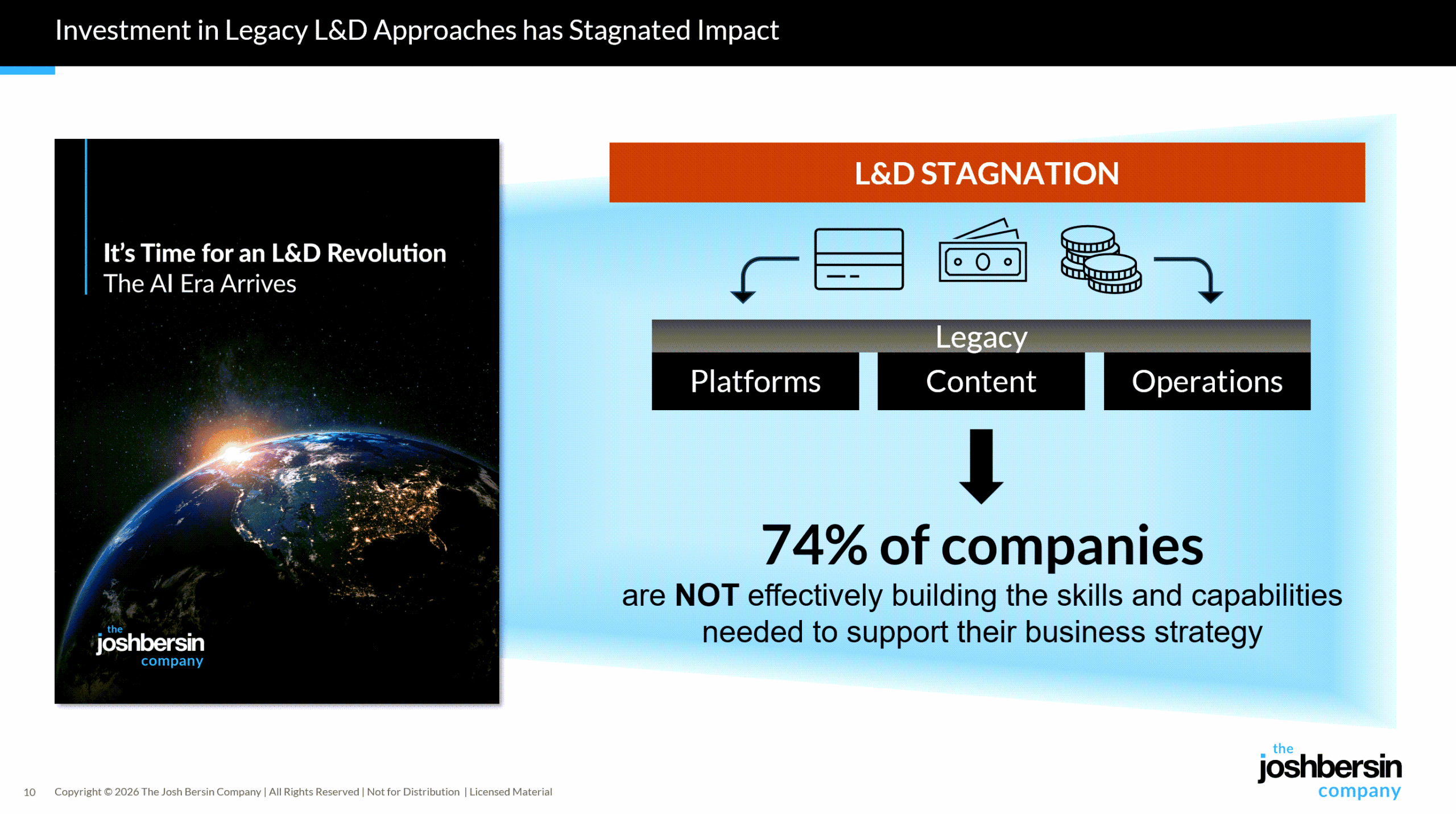
This widespread concern stems from a stark reality: the current paradigms, technologies, and operational models for corporate learning are, by many accounts, outmoded. A groundbreaking fifth major study on corporate Learning and Development (L&D) has unveiled a startling statistic: a staggering 74% of companies report they are failing to keep pace with their organization’s evolving skill demands. This finding is particularly alarming given the estimated $400 billion global investment in corporate training, content libraries, L&D technology, trainers, and consultants. The implication is that a substantial portion of this vast expenditure may be yielding diminishing returns, or worse, proving ineffective in addressing critical workforce needs.

The core of the issue, as identified by industry researchers, lies in a fundamental misunderstanding of the challenge. The prevailing skill gap is not merely a matter of "learning" or "training" in the traditional sense. Instead, it is a dynamic problem requiring the agile sharing of information, fostering an environment where individuals can explore, question, and actively apply new concepts. The established pedagogical models of "training" appear to be acting as a bottleneck, hindering the necessary agility and responsiveness.
The Research Unveiling a New Learning Paradigm
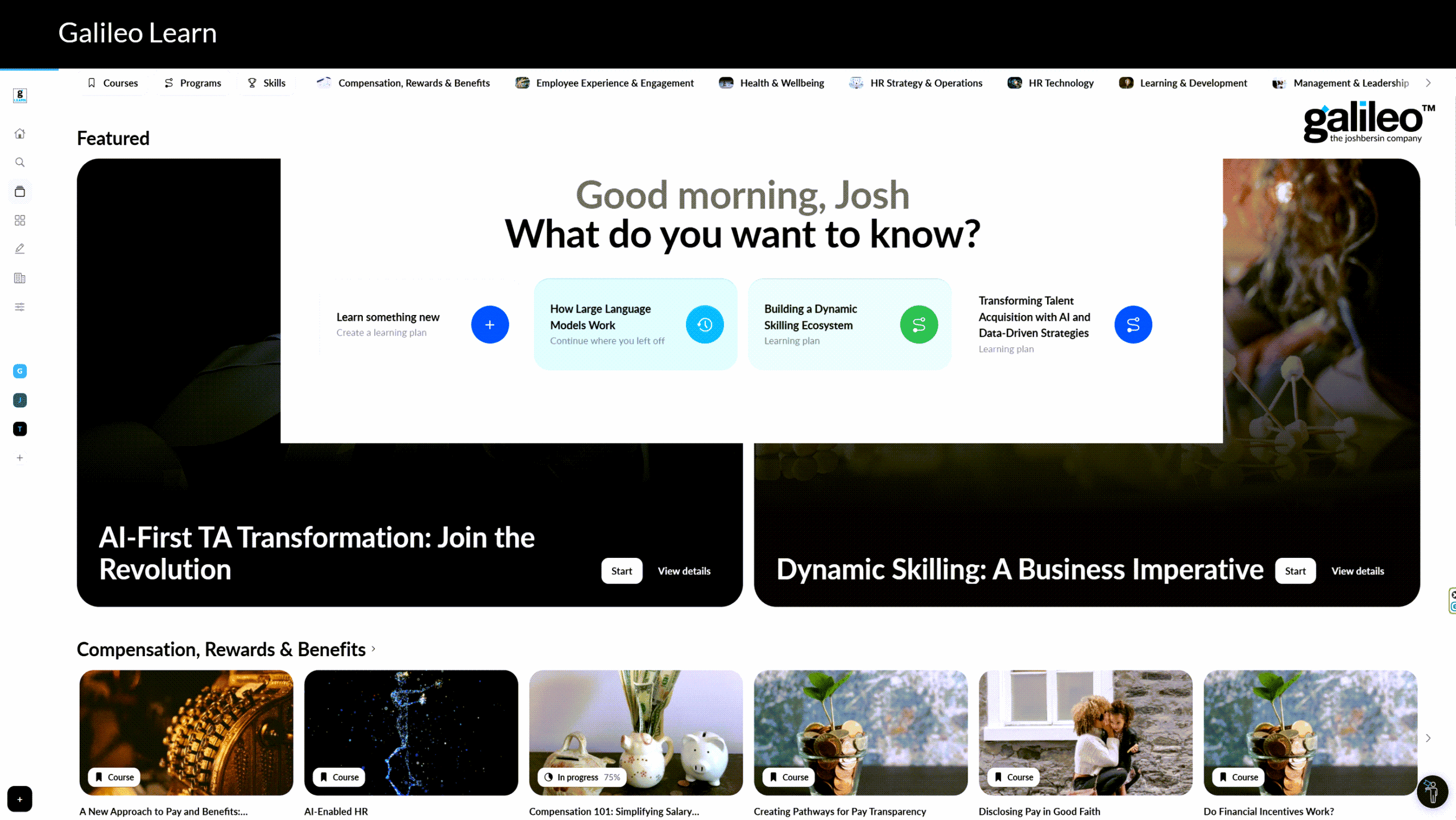
The findings emerge from extensive research, including surveys and interviews with hundreds of companies, technology vendors, and senior business leaders. This research builds upon prior hypotheses, notably those articulated in "The Revolution of Corporate Learning," which posited that AI is poised to fundamentally transform organizational learning. The latest study’s conclusions strongly affirm this prediction, indicating that AI-native systems, capable of dynamically generating and sharing content, are set to redefine how organizations train, upskill, support, and ultimately "enable" their workforce. This emerging landscape, exemplified by platforms like Galileo, has the potential to revolutionize L&D, HR, and all facets of organizational change management.
Defining AI-Native Learning: Beyond Static Content
AI-native learning leverages the inherent capabilities of generative AI to create content dynamically. Unlike traditional methods that involve manual design, development, and publication of static courseware – which often requires extensive updates, translations, and ongoing improvements – AI platforms can generate content on demand, tailored to specific needs and formats.

Platforms like Galileo, built on underlying technologies such as Sana, exemplify this shift. They enable the rapid creation of new courses, potentially reducing development timelines from months to days. Crucially, when new information or topics emerge, the entire system can instantly integrate this content. This allows employees to:
- Access information on demand: Employees can ask questions and receive immediate, contextually relevant answers, drawing from a vast and ever-updating knowledge base.
- Personalize learning journeys: AI can tailor content delivery based on individual roles, skill levels, and learning preferences, moving beyond a one-size-fits-all approach.
- Engage with dynamic content: Learning materials can be presented in various formats, including interactive simulations, personalized explanations, and adaptive learning paths.
A key feature of these AI-native systems is their ability to automatically categorize content into defined skill taxonomies. As employees interact with the platform, their skill levels are dynamically inferred from their activities. This creates a sophisticated understanding of the workforce’s capabilities, allowing for more targeted development initiatives. Furthermore, the interconnected nature of content within these systems means that new information automatically updates the entire library, functioning as a unified "intelligence system" for the organization.
The transformative impact of this approach is underscored by the widespread adoption and engagement with tools like ChatGPT, where a significant portion of users report learning new things. This level of learner success has historically eluded traditional corporate learning platforms, highlighting the efficacy of the AI-driven paradigm. Moreover, organizations are increasingly incorporating expert interviews and raw data into these platforms, ensuring that the knowledge base remains current and reflects real-world insights and best practices. This application of AI promises not only to enhance learning but also to drive substantial business improvements, potentially valued in the trillions of dollars globally.
The Four Levels of Learning Maturity: A Framework for Transformation
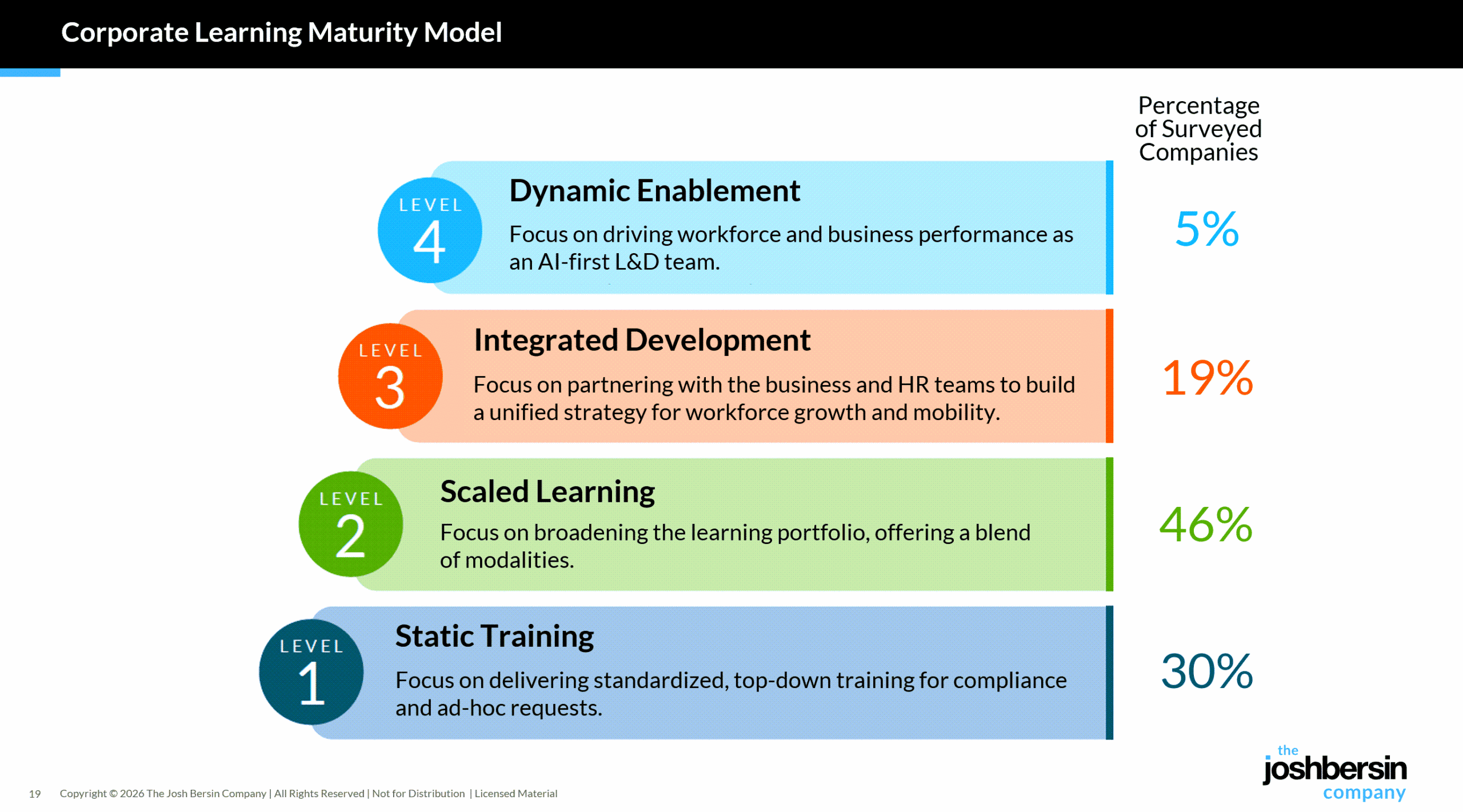
To navigate this evolving landscape, a new Learning Maturity Model has been developed, categorizing organizational approaches into four distinct levels:
Level 1: Static Training Programs
At the foundational level, companies typically implement static training programs. This often involves building or purchasing courses designed for compliance, new product launches, or other episodic needs. While these programs are generally cost-effective to develop and acquire, they offer limited scope for skills-based learning and are characterized by a top-down, mandatory completion approach. Approximately one-third of the market operates at this level, focusing on ensuring employees stay current with immediate requirements.
Level 2: Scaled Learning and Diverse Content Formats
As organizations mature, they move to Level 2, embracing "Scaled Learning." This stage involves expanding the learning portfolio beyond traditional courses to include a variety of formats such as videos, audio recordings, job aids, and other "learning tools." Content vendors play a significant role here, providing a broad range of resources. Major platforms like LinkedIn Learning, Coursera, and Skillsoft largely fall into this category. While the volume of available learning resources increases, the onus is on the individual learner to identify and consume relevant content, often leading to a fragmented learning experience.
Level 3: Integrated Development and Tailored Programs
Level 3 represents "Integrated Development," where companies begin to tailor learning programs around specific job roles, skills, and career paths. This involves developing comprehensive "development programs" rather than just isolated training modules. However, this approach introduces significant complexity. The dynamic nature of the modern workplace, where skills can become obsolete within a year, makes maintaining these multi-dimensional frameworks challenging. While effective for specific areas like channel training, technical education, and onboarding, the sheer volume of content, curricula, and skills models required at this level can become unwieldy and costly to manage.
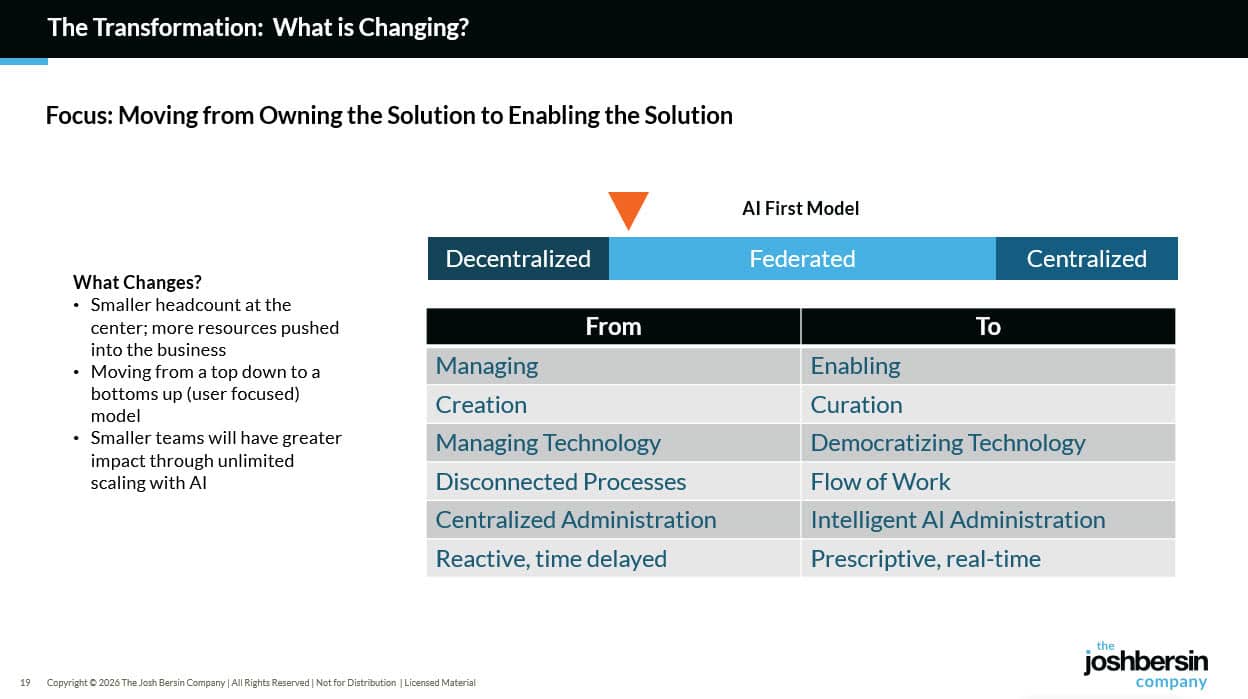
This level often leads to a decentralization of L&D efforts. While corporate L&D teams manage strategic programs, a substantial majority of training often occurs within specialized functional domains like sales, manufacturing, or customer service. This necessitates a federated model, where core L&D functions focus on global topics, and individual business units develop localized training academies. This distribution, while potentially more scalable, can also create operational complexities and challenges in maintaining a unified learning strategy.
Level 4: AI-Driven Dynamic Enablement
The pinnacle of the maturity model is Level 4, where AI fundamentally transforms the learning landscape into "Dynamic Enablement." This level envisions a platform that consolidates all organizational knowledge, encompassing formal courses, documents, policies, expert interviews, and more. This is not merely a "learning platform" but a comprehensive knowledge and enablement ecosystem.
AI-native learning allows for the rapid publication of information, potentially in days rather than months. Employees gain the ability to learn in ways that best suit their individual needs and workflows. While traditional Learning Management Systems (LMS) may persist for legacy compliance programs, AI platforms are increasingly replacing Learning Experience Platforms (LXPs), learning portals, and many content development tools. Early adopters of this model are reporting significant reductions in internal L&D spend, often between 40-50%.
The Implications of Dynamic Enablement
The shift to Dynamic Enablement signifies a profound move from a focus on "learning" to a focus on "enablement." The ultimate goal of workplace learning is to empower individuals to perform at higher levels and contribute to organizational growth. AI-native platforms facilitate this by embedding learning directly into the flow of work.
For instance, employees can ask benefits-related questions directly within HR platforms, receive sales coaching integrated into CRM systems, or get immediate updates on departmental changes via internal chatbots. A travel reservations company, for example, is leveraging call recordings from top customer service agents to create learning modules that share best practices and address challenging customer interactions. This approach offers unparalleled opportunities for training across all functional areas, from customer support and engineering to sales and beyond.
In practice, companies are publishing all new materials, including client interviews and industry insights, into these AI-powered systems. This ensures that every employee has access to current information, enabling them to better understand clients, industries, and evolving business needs. This seamless integration of knowledge into daily operations is what defines "Dynamic Enablement."
Proven Returns and the Path Forward
The benefits of achieving Level 4 maturity are substantial and quantifiable. Companies operating at this level are demonstrably more innovative, more likely to exceed financial targets, and better equipped to adapt to change. The transition from formal, often static, training to dynamic, AI-driven enablement accelerates speed and fosters innovation. As these platforms mature, the positive impact on business outcomes is expected to grow even larger.
The roadmap to achieving Dynamic Enablement requires a strategic shift beyond simply using AI to accelerate course creation. It necessitates a fundamental replacement of traditional SCORM-based LMS systems with dynamic content platforms. Companies must undertake a comprehensive rationalization of their existing content, identifying what to retain and how to transform legacy SCORM courses into AI-native formats. Establishing new governance models for L&D is also critical.
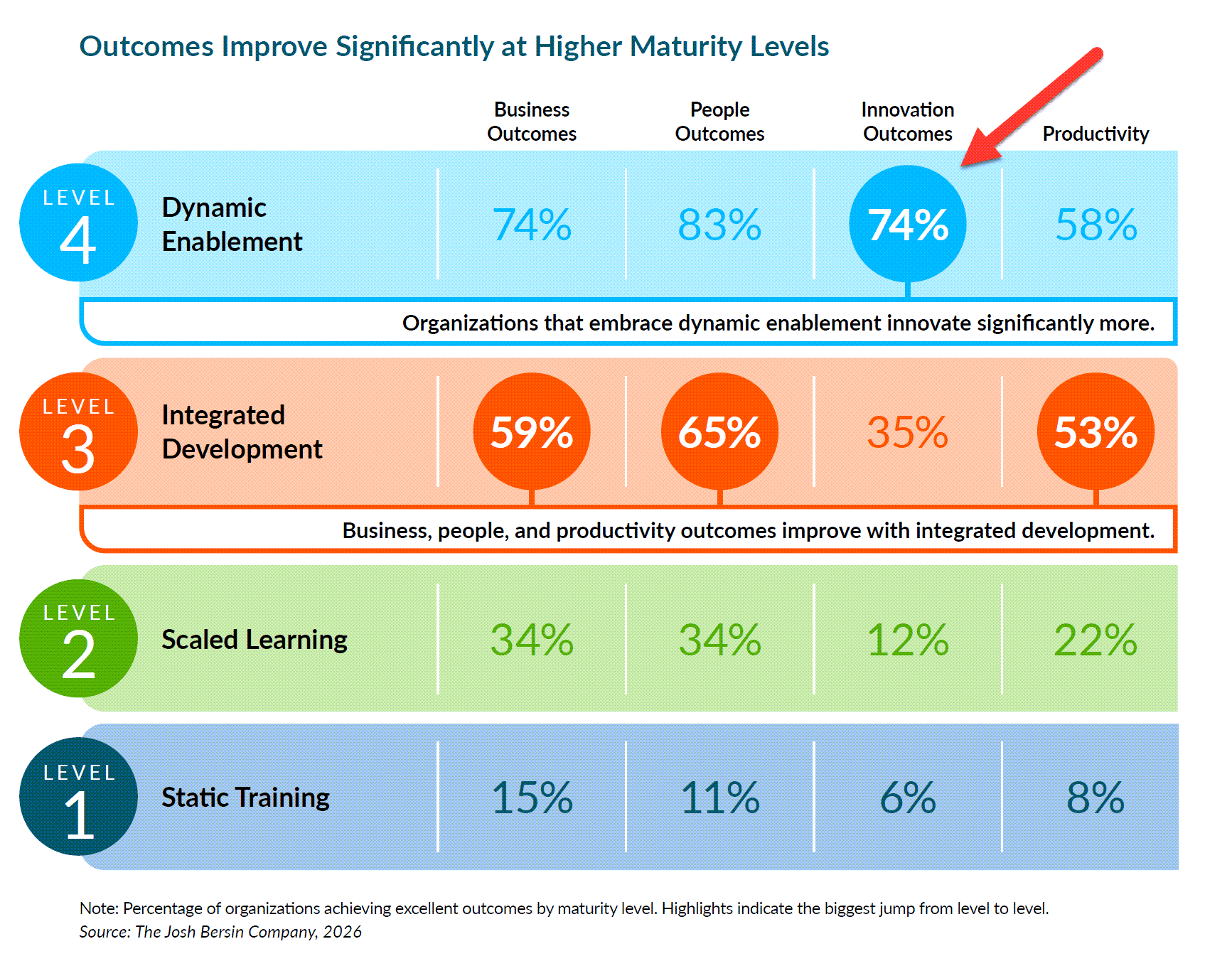
Early adopters in sectors like insurance, healthcare, pharmaceuticals, and airlines are already discovering the benefits of a hybrid or distributed operating model. Once the AI-native system is established, line-of-business training can be effectively delegated to local staff. This empowers corporate HR to concentrate on global strategic initiatives such as leadership development, compliance, culture, and overall business strategy, while individual business units can create specialized "Enablement Academies" for their specific needs. This agile and federated approach ensures that learning remains relevant, responsive, and deeply integrated with business objectives.
In conclusion, the research unequivocally demonstrates that AI-Native Learning, or Dynamic Enablement, is not merely an evolutionary step in corporate education; it is a transformative force that will redefine how businesses operate, innovate, and achieve sustained success in the rapidly evolving digital age. The imperative for organizations to embrace this new paradigm is no longer a matter of future planning but of present-day necessity.







