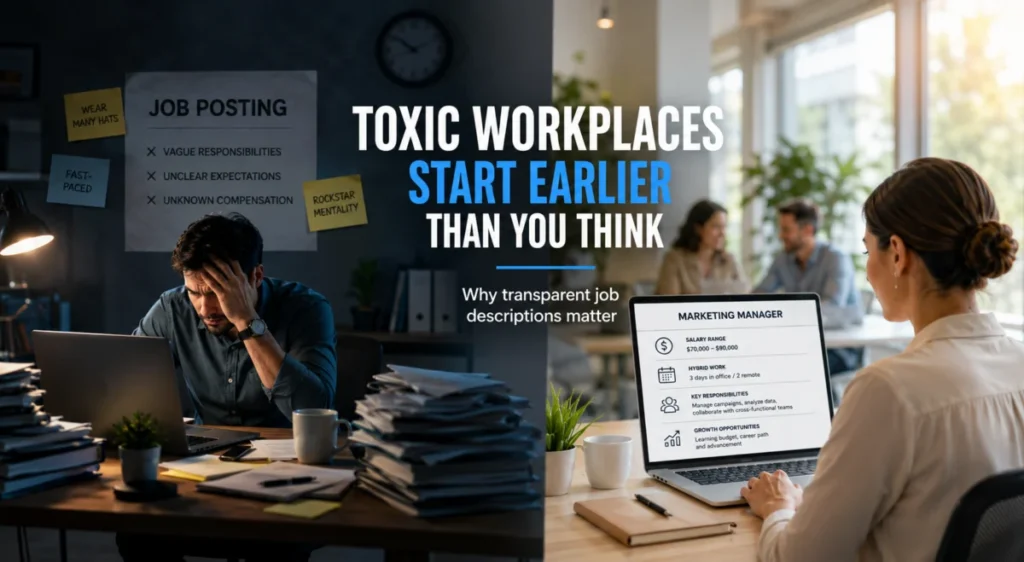
A recent investigation into the modern workplace landscape reveals a troubling trend: a significant majority of employees are enduring toxic work environments, a problem often exacerbated, if not initiated, by misleading job descriptions. According to Monster’s comprehensive 2026 State of Workplace Mental Health Report, a striking 71% of workers disclosed that they are currently staying in jobs they recognize as toxic. This statistic underscores a critical, yet frequently overlooked, dimension of workplace dysfunction, suggesting that the root causes of toxicity often predate an employee’s first day on the job, originating in the very language used to attract talent. While conversations about toxic workplaces typically center on management behavior, the foundational issues frequently arise much earlier, specifically at the job posting stage, where what employers articulate—or fail to articulate—in a job description sets the initial tone for the entire employment experience.
The Pervasive Problem of Workplace Toxicity
The Monster report serves as a stark warning, highlighting not just individual employee struggles but systemic issues that demand employer attention. The report’s findings, while not fully detailed in the provided excerpt, point to a landscape where mental health in the workplace is in crisis. The 71% figure, indicating workers’ reluctance or inability to leave toxic roles, suggests a complex interplay of factors including economic pressures, fear of career disruption, and a lack of viable alternatives. This pervasive toxicity manifests in various forms, from abusive leadership and high-pressure, unsustainable workloads to discriminatory practices and a lack of psychological safety. The long-term consequences for employees include increased rates of burnout, anxiety, depression, and a general decline in overall well-being. For organizations, the costs are equally substantial, encompassing higher turnover rates, decreased productivity, damaged employer brand reputation, and potential legal liabilities. The report’s implication is clear: these are not merely individual complaints but structural deficiencies that require proactive, organizational-level intervention.
The Genesis of Disillusionment: Flawed Job Descriptions
The problem of workplace toxicity is intimately linked to the initial recruitment phase, particularly the drafting of job descriptions. Many of the stressors reported by workers can be traced back to the expectations set—or distorted—before onboarding. CareerPlug’s 2024 Candidate Experience Report substantiates this, revealing that 26% of candidates cited "the role and responsibilities were different from what I expected" as a primary reason for declining a job offer. This significant percentage illustrates a widespread disconnect between advertised roles and reality, impacting talent acquisition from the outset.
Misleading job descriptions take various forms, but the underlying pattern remains consistent: candidates and new hires encounter a role that fundamentally diverges from what was advertised. This misalignment can manifest as:
- Vague or Ambiguous Language: Descriptions that lack specificity regarding daily tasks, team dynamics, or reporting structures, allowing for broad interpretation that can later be exploited.
- Inflated Responsibilities: Overstating the strategic importance or scope of a role, often masking mundane or excessive tasks.
- Omission of Critical Information: Failing to mention challenging aspects of the role, high-stress periods, or a demanding work culture.
- Unrealistic Expectations: Setting benchmarks or growth trajectories that are unattainable given the role’s actual resources, support, or scope.
- "Bait-and-Switch" Tactics: Advertising one type of role or environment to attract talent, only to reveal a different reality post-hire.
The impact of such misrepresentation is immediate and severe. Employ’s 2025 Job Seeker Nation Report further reinforces this, finding that 36% of respondents left a job within the first 90 days. This high rate of early attrition is a direct consequence of the stark disconnect between what candidates were led to believe during the interview process and the actual realities of the role once they commenced employment. When job descriptions do not accurately reflect reality, the damage begins long before an employee’s official start date, eroding trust and setting the stage for disillusionment.
A Chronology of Misalignment: From Application to Attrition
The journey from an enticing job advertisement to an early departure or prolonged stay in a toxic environment often follows a predictable, regrettable chronology:
- The Initial Lure (Application Phase): A candidate, actively seeking new opportunities, encounters a job description. This document, often crafted to attract the widest pool of talent, might inadvertently or deliberately gloss over challenges, exaggerate benefits, or paint an overly optimistic picture of the role and organizational culture. The candidate is drawn in by the promises and perceived opportunities.
- The Interview Process (Validation and Further Embellishment): During interviews, hiring managers and recruiters may further reinforce the positive aspects of the role, potentially downplaying demanding aspects or cultural nuances. Questions from candidates about work-life balance or team dynamics might receive generic, reassuring answers that do not fully represent the truth. The candidate’s expectations solidify, based on incomplete or sugar-coated information.
- Onboarding and Early Days (Reality Sets In): The new hire begins their role, often with initial enthusiasm. However, within weeks or even days, discrepancies begin to emerge. Daily tasks might be significantly different from what was described, the workload might be far heavier, or the team culture might be overtly dysfunctional. The stark contrast between expectation and reality creates immediate cognitive dissonance.
- Sustained Disconnect (Erosion of Trust and Well-being): As time progresses, the initial disillusionment deepens. The employee finds themselves consistently battling unmet expectations, navigating a role that is not what they signed up for, and potentially enduring a toxic work environment. This sustained misalignment leads to increased stress, decreased job satisfaction, reduced engagement, and a growing sense of betrayal. The psychological contract between employer and employee is severely damaged.
- The Decision Point (Stay or Depart): Faced with an untenable situation, the employee reaches a critical juncture. As highlighted by Monster, a significant 71% choose to stay, often due to financial necessity, fear of an unstable job market, or a reluctance to reset their career path. For the 36% identified by Employ, the decision to leave within the first 90 days is a direct consequence of the irreconcilable gap between the advertised role and the lived experience. Both outcomes represent a failure in the recruitment and retention process, stemming from a lack of transparency at the very beginning.
The Ripple Effect: Broader Implications for Organizations and Employees
The consequences of misleading job descriptions extend far beyond individual disappointment, creating significant ripple effects for both employees and the organizations they serve.
For Employees:
- Mental Health Decline: The constant stress of an unaligned role, coupled with a potentially toxic environment, directly impacts mental health, leading to burnout, anxiety, and depression.
- Erosion of Trust: When initial promises are broken, employees lose trust in their employer, impacting their willingness to commit fully and contribute meaningfully.
- Reduced Engagement and Productivity: Disillusioned employees are less engaged, leading to decreased motivation, lower productivity, and a reluctance to go beyond basic requirements.
- Career Stagnation: Staying in a misaligned or toxic role can hinder skill development, limit growth opportunities, and negatively impact long-term career trajectory.
- Financial Strain: While some stay due to financial need, the psychological toll can indirectly impact financial stability through health issues or reduced earning potential in the long run.
For Employers:
- High Turnover and Recruitment Costs: The 36% early attrition rate translates to substantial financial losses due to repeated recruitment, onboarding, and training expenses. The cost of replacing an employee can range from 50% to 200% of their annual salary.
- Damaged Employer Brand: Negative experiences, especially those leading to early exits, are often shared through word-of-mouth, online reviews (e.g., Glassdoor), and professional networks, severely tarnishing the company’s reputation as an employer.
- Difficulty Attracting Top Talent: A poor employer brand makes it challenging to attract highly skilled and sought-after candidates, who are increasingly scrutinizing company culture and transparency.
- Decreased Team Morale and Productivity: Constant churn disrupts team dynamics, increases workload for remaining employees, and creates a sense of instability, leading to overall lower morale and productivity.
- Legal and Ethical Risks: In some cases, deliberate misrepresentation in job descriptions could lead to legal challenges, particularly if it crosses into deceptive employment practices.
- Lack of Accountability: As revealed by Monster, 44% of workers did not believe leadership is held accountable for toxic behavior. This culture of impunity often starts with a lack of transparency in initial communications, signaling that honesty is not a core value.
The Imperative for Transparency: Crafting Authentic Job Descriptions
Addressing workplace toxicity effectively requires a fundamental shift towards radical transparency, beginning with the job description. A truly transparent job description does more than merely list duties; it provides candidates with an honest, clear, and comprehensive picture of the daily realities of the role, the team, and the organizational culture, empowering them to make informed decisions about whether to apply.
Transparency in job posts involves:
- Realistic Day-to-Day Responsibilities: Moving beyond generic bullet points to describe the actual tasks, projects, and challenges an employee will encounter regularly. For example, instead of "manage social media channels," specify "create and schedule 15-20 posts daily across 3 platforms, engage with comments for 2 hours, and analyze weekly metrics."
- Clear Expectations and Performance Metrics (KPIs): Defining what success looks like in the role from day one. Including Key Performance Indicators (KPIs) in the job description helps candidates understand the tangible outcomes expected of them, mitigating misunderstandings about job priorities and performance benchmarks. This clarity provides a roadmap for success and reduces ambiguity.
- Compensation Disclosure: Openly stating the salary range or expected compensation. CareerPlug’s report highlights that candidates expect to learn about compensation before applying or within the job post itself. This not only builds trust but also filters out candidates whose salary expectations are misaligned, saving time for both parties.
- Insight into Team Dynamics and Culture: Describing the team structure, how the role interacts with other departments, and aspects of the company culture. Is it collaborative or independent? Fast-paced or methodical? This helps candidates assess cultural fit.
- Reporting Structure and Managerial Style: Clearly outlining who the role reports to, the size of the team, and perhaps even a brief description of the manager’s leadership philosophy. This gives candidates a glimpse into their direct support system.
- Values and Mission Alignment: Integrating the company’s core values and mission into the description. This signals the organizational ethos and helps attract candidates who genuinely resonate with the company’s purpose.
- Challenges and Growth Opportunities: Acknowledging the inherent difficulties or demanding aspects of the role, balanced with potential for professional development and career progression. This fosters realistic expectations and demonstrates honesty.
By embracing these elements, companies can transform their job descriptions from mere checklists into powerful tools for attracting the right talent—individuals who are not only qualified but also a genuine fit for the role and culture, thus significantly reducing early turnover and fostering a more stable workforce.
Expert Perspectives and Best Practices
HR and recruitment experts consistently advocate for transparency as a cornerstone of effective talent acquisition and retention. "The job description is the first true handshake between a company and a prospective employee," states Dr. Evelyn Reed, a veteran organizational psychologist. "When that handshake is dishonest, it sets a precedent for distrust that permeates the entire employment lifecycle. Companies must view job descriptions not just as recruitment tools, but as foundational documents for establishing psychological safety and cultural integrity."
Recruitment specialists emphasize that investing time in crafting authentic job descriptions yields long-term dividends. "We advise our clients to conduct ‘reality checks’ for every role," says Mark Jensen, CEO of a leading recruitment consultancy. "This involves interviewing current employees in similar roles, asking them to describe their day-to-day, their biggest challenges, and what truly makes them successful. This qualitative data is invaluable for creating job descriptions that resonate with accuracy."
Technology also plays a crucial role in enhancing transparency and fairness. Tools like Ongig’s Text Analyzer, mentioned in the original article, assist companies in ensuring job descriptions are clear, balanced, and bias-free before publication. Such platforms can identify vague language, gender-biased terms, or phrases that might inadvertently mislead candidates, promoting inclusivity and accuracy. Integrating these technological solutions with human oversight ensures that job postings are not only comprehensive but also equitable and reflective of the actual work environment.
Addressing the Accountability Gap Systemically
The Monster report’s finding that 44% of workers did not believe leadership is held accountable for toxic behavior, and 35% experienced negative consequences for speaking up, points to a profound accountability gap within organizations. This deficit of accountability is not a separate issue but is deeply intertwined with the lack of transparency in recruitment. Companies that are vague or misleading in their job descriptions often foster cultures where employees feel unsafe speaking up, precisely because the culture of avoidance and lack of honesty begins at the recruitment stage.
Job postings that explicitly include company values, ethical guidelines, and clear reporting structures for grievances can signal to candidates that the company takes accountability seriously. Furthermore, by including Key Performance Indicators (KPIs) in job descriptions, employers establish a clear framework for performance evaluation, reducing ambiguity and creating a basis for objective feedback. This proactive approach ensures that expectations are managed from the outset, laying the groundwork for a culture where performance, conduct, and accountability are clearly defined and upheld.
A clear and honest job description is one of the earliest and most powerful trust signals a company can send. This initial act of transparency builds a foundation of trust, which is the bedrock of psychological safety—an environment where employees feel safe to express ideas, ask questions, and report concerns without fear of negative repercussions. When transparency is prioritized in recruitment, it cultivates an organizational culture where honesty, integrity, and accountability are not just buzzwords but lived realities.
Conclusion
The growing awareness of toxic workplaces demands a proactive and comprehensive approach, one that extends beyond reactive measures to address foundational issues. The job description, often seen as a mere administrative formality, emerges as a critical leverage point in this endeavor. It represents one of the first, and most impactful, conversations a company has with a potential hire. Making this conversation honest, specific, and realistic is not merely a best practice in recruiting; it is the essential first step towards cultivating a healthier, more productive, and psychologically safe work environment. By committing to transparency in job descriptions, organizations can reduce turnover, enhance their employer brand, attract better-suited talent, and ultimately foster a workplace built on trust and mutual respect, paving the way for happier and more engaged employees.