The rapid evolution of artificial intelligence (AI) is presenting a profound cultural challenge to enterprises worldwide, moving beyond mere technical training to demand comprehensive, people-centric strategies. A recent Gartner report, published on May 15, 2026, issued a stark warning: organizations failing to cultivate such a holistic approach risk losing their most valuable AI talent to more prepared competitors as soon as 2027. This pivotal insight underscores a growing consensus that effective AI adoption is less about installing software and more about fostering an environment of trust, understanding, and strategic engagement.
The Gartner analysis, based on an extensive survey conducted in Q1 2026 involving over 12,000 employees and managers, revealed that a concerning 50% of organizations without a well-defined, human-focused AI strategy are vulnerable to this impending talent exodus. The report challenges the prevailing notion that simply providing access to AI tools equates to successful integration, coining this misconception the "enablement illusion."
"The survey revealed that in the shift to an AI-powered workforce, most leaders are mistaking basic access or adoption metrics for transformation," stated Swagatam Basu, a senior director analyst in the Gartner HR practice. "This ‘enablement illusion’ is hiding risks and draining ROI." Basu’s remarks highlight a critical disconnect between executive expectations and on-the-ground realities, where superficial metrics obscure deeper systemic issues that hinder true AI-driven productivity and innovation.
The Rise of AI and the Evolving Workplace Landscape
The journey towards AI integration in the enterprise has been swift and, for many, disorienting. The late 2022 and early 2023 explosion of generative AI, spearheaded by tools like OpenAI’s ChatGPT, catapulted artificial intelligence from a niche technological pursuit into a mainstream corporate imperative. Companies globally began to experiment with AI, seeking efficiencies, new capabilities, and a competitive edge. This initial wave of enthusiasm, however, often outpaced strategic planning, leading to a focus on rapid deployment rather than thoughtful integration.
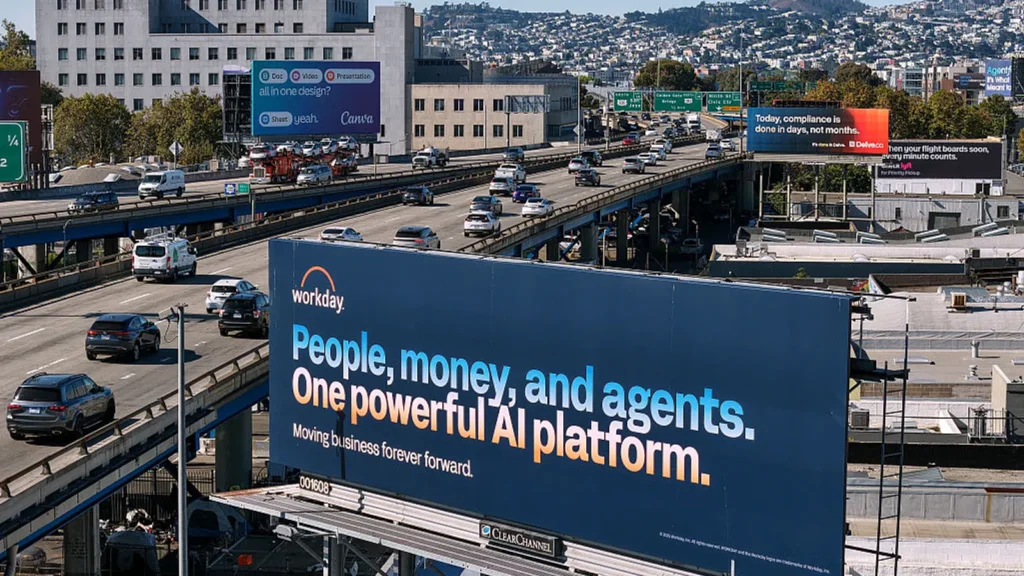
Throughout 2024 and 2025, the conversation around AI shifted from "if" to "how." Businesses poured investments into AI technologies, recognizing their transformative potential across various functions, from customer service and marketing to software development and human resources. The increasing ubiquity of AI became visually apparent, with advertising for artificial intelligence companies, such as the one seen on a San Francisco billboard on September 16, 2025, becoming a common sight. Yet, even as AI permeated the corporate consciousness, a foundational question lingered: how to effectively measure its success and ensure its harmonious integration with the human workforce?

By 2025, early indicators of organizational strain began to emerge. A Mercer report from that year highlighted how a "leadership vacuum" – a lack of clear communication and guidance from senior management regarding AI tools – was already prompting significant anxiety among employees. This anxiety, in turn, directly contributed to a lack of engagement with the new technologies, illustrating that fear and uncertainty were powerful deterrents to adoption. Conversely, a "recent" report from Microsoft, referenced by Gartner, began to articulate the counter-argument: organizations with clear rules for AI use, a supportive workplace culture, and encouraging talent practices consistently experienced greater rewards from their AI implementations. These earlier reports set the stage for Gartner’s more comprehensive 2026 findings, confirming that the human element was not merely a secondary consideration but the very bedrock of successful AI transformation.
Anatomy of the "Enablement Illusion"
Gartner’s latest report dissects the core problem facing many organizations: a misinterpretation of AI success metrics. A common approach for executives has been to quantify success by the number of "hours saved" through AI tool usage. While seemingly logical, this metric, according to the survey, often paints an incomplete, if not misleading, picture. A significant 19% of surveyed employees reported saving no time at all with AI, directly contradicting the executive-level perception of widespread efficiency gains.
This discrepancy points to the "enablement illusion," where organizations conflate basic access or superficial adoption with genuine, transformative integration. Simply making AI tools available or tracking their minimal usage does not guarantee that employees are leveraging them effectively, or that these tools are truly contributing to strategic objectives. The illusion can lead to misallocated resources, flawed strategic decisions, and, critically, a failure to realize the expected return on investment (ROI) from AI initiatives.
True AI success, Gartner contends, requires a deeper and more nuanced understanding of employee engagement. It necessitates moving beyond mere quantitative metrics like hours saved to qualitative assessments of how AI tools enhance problem-solving, foster innovation, improve decision-making, and contribute to overall business value. Without this shift in perspective, organizations risk perpetuating a cycle of underperformance and disillusionment, where the promise of AI remains largely unfulfilled.
Bridging the Digital Divide: Equitable Access and Upskilling
A significant finding from the Gartner report highlights a crucial disparity in AI access and support within enterprises. The research indicates that AI tools are most readily accessible to managers and executives, while individual contributors frequently remain "underserved with support and guidance." This creates a digital divide within organizations, where those positioned to drive day-to-day operational efficiencies and innovations are precisely those lacking the necessary resources.

This uneven distribution of resources has profound implications for overall AI productivity. If frontline employees, who often interact directly with data and processes ripe for AI augmentation, are not adequately equipped or trained, the full potential of AI remains untapped. This observation resonates with an earlier Forrester report, published in 2026, which suggested that many workers "may not know how to use AI" due to employers failing to provide a conducive learning environment. The Forrester report emphasized that a lack of structured education, hands-on practice, and clear use-case guidance leaves employees feeling adrift, unable to translate theoretical AI capabilities into practical workplace applications.
The solution, therefore, extends beyond mere technical training sessions. It requires a deliberate strategy to ensure equitable access to AI tools, coupled with comprehensive, continuous learning programs tailored to different roles and skill levels. This involves creating internal academies, mentorship programs, and communities of practice where employees can learn from each other, share best practices, and receive ongoing support. Organizations must invest in upskilling and reskilling initiatives that empower all levels of the workforce to confidently interact with and leverage AI, transforming potential users into skilled practitioners.
Addressing the Human Element: Anxiety, Trust, and Communication
Beyond the technical and access challenges, the Gartner report underscores the profound psychological impact of AI on the workforce. Workers continue to harbor significant anxiety about AI-driven job loss, a concern that, if unaddressed, can severely impede adoption and foster resistance. This anxiety is not merely a personal issue but a collective organizational challenge that demands strategic attention.
"AI adoption is a culture issue, not just a training issue; standard software training and technical learning do not improve workforce sentiment or build trust," Gartner emphasized in its press release. This statement encapsulates the core of the cultural imperative. Trust, confidence, and a positive sentiment towards AI cannot be engineered through technical manuals or one-off workshops. They are built through transparent communication, empathetic leadership, and a clear articulation of AI’s role within the organization.
Leaders who fail to communicate openly and frequently about new tools and their implications risk creating a "trust issue" about technology at work, as highlighted by the 2025 Mercer report. When employees are left to speculate about the future of their roles, fear often takes root, leading to disengagement and a reluctance to embrace new technologies. Conversely, organizations that establish clear ethical guidelines for AI use, cultivate a supportive workplace culture that encourages experimentation and learning, and implement talent practices that prioritize employee development and well-being, consistently achieve better outcomes from their AI initiatives.
Swagatam Basu reiterated this crucial point, stating, "The most effective drivers of positive AI adoption are employee confidence in their current and future roles, and transparent, ongoing communication about how AI will be used and its impact on jobs." This emphasizes that fostering confidence is paramount. Employees need to understand not only how AI will augment their capabilities but also how their skills will evolve, and what opportunities for growth will emerge in an AI-powered future. This involves proactive career pathing, identifying new roles, and investing in the transition for existing employees.

The Strategic Imperative: Cultivating an AI-Ready Culture
The implications of Gartner’s findings extend far beyond the IT department; they represent a fundamental strategic imperative for executive leadership, particularly HR. AI is not merely a technological upgrade but a catalyst for profound organizational transformation. Companies that embrace a people-centric AI strategy are not just implementing new tools; they are redefining work, roles, and the very culture of their enterprise.
For HR professionals, this means stepping into a more strategic role, moving from administrative tasks to becoming architects of organizational change. HR must lead initiatives that focus on:
- Change Management: Guiding employees through the transition, addressing fears, and building enthusiasm.
- Skill Development: Designing robust upskilling and reskilling programs that anticipate future AI-driven skill demands.
- Talent Acquisition and Retention: Crafting compelling value propositions for AI talent, ensuring that the workplace environment is conducive to their growth and innovation.
- Ethical AI Governance: Collaborating with legal and IT departments to establish clear, ethical guidelines for AI use that protect employees and build trust.
- Communication Strategy: Developing transparent and consistent communication plans that inform employees about AI’s impact and opportunities.
CEOs and CTOs, too, must shift their focus from purely technical deployment to cultural integration. The initial pressure to implement AI rapidly must now be balanced with the understanding that sustainable success hinges on human adoption. This requires strong cross-functional collaboration, breaking down silos between technology, HR, and business units.
The Path Forward: A Holistic Approach to AI Transformation
The Gartner report serves as a critical call to action for enterprises worldwide. The window of opportunity to build a resilient, AI-ready workforce is rapidly closing, with the threat of losing top AI talent looming by 2027. This is not a challenge that can be solved with a quick fix or a new training module. It demands a holistic, long-term strategic vision that prioritizes the human element at every stage of AI integration.
Organizations that succeed in this new landscape will be those that view AI not as a replacement for human intelligence, but as an augmentation that empowers their workforce. They will be the ones that invest in a culture of continuous learning, foster transparent communication, build trust through empathetic leadership, and ensure equitable access to AI tools and support. By embracing AI as a cultural transformation rather than just a technological one, companies can unlock its full potential, drive sustainable innovation, and secure their competitive advantage in the rapidly evolving digital economy. The future of work, indeed, belongs to those who master the art of human-AI collaboration, built on a foundation of trust, understanding, and shared purpose.