The global market for professional development, encompassing training, certification, and upskilling, is a colossal industry valued at over $400 billion. A significant portion of this expenditure, nearly a third, is dedicated to skills and technologies that transcend specific company needs. For decades, this demand has been predominantly met by a diverse ecosystem of training providers, offering everything from extensive online course libraries and video modules to sophisticated simulations, expert assessments, and a wide array of professional certifications and accreditations. This sector has historically been resilient, often termed "recession-proof," due to the continuous requirement for employees to enhance their skill sets and advance their careers.
However, the landscape of online learning is undergoing a rapid and fundamental transformation, driven by the relentless pace of technological advancement. Prominent players that once dominated the market, such as Udacity (recently acquired by Accenture), Coursera, Udemy (now part of Coursera), LinkedIn Learning, SkillSoft, and Pluralsight, along with content aggregators like Masterclass, TEDx, and BigThink, are experiencing a shift in their perceived value. Recent market movements, including the reported merger of Coursera and Udemy and the subsequent decline in stock prices of publicly traded companies, underscore this disruption. This recalibration is not attributed to a lack of acumen among management, but rather to a profound evolution in both the underlying technology and the prevailing consumption patterns of learners.
The Evolving Paradigm: From Selling Courses to Delivering Holistic Growth
The enduring demand for professional development remains robust. Every working individual possesses career aspirations, fueling a consistent need for skill acquisition across all job functions, from IT and sales to marketing, finance, human resources, and customer support. This demand can be broadly categorized into five distinct levels of professional growth, a framework that helps delineate the varying needs of learners.
Level 1: Foundational Knowledge Acquisition
At the entry level, individuals new to a profession, role, or career path often seek fundamental knowledge and foundational certifications. While certain certifications, such as those offered by SHRM or HCI in the HR field, have historically held weight, their value can fluctuate. Employers may increasingly prioritize demonstrated skills over paper credentials, leading to a diminished impact of some traditional certifications. At this stage, learners require an understanding of core concepts, industry-specific terminology, fundamental principles, and an overview of essential tools.
Level 2: Expanding Expertise
Professionals with two to three years of experience typically possess a grasp of the basics but lack deeper insights. This group requires advanced training, case studies, and practical exercises designed to broaden their perspectives and challenge their thinking. For instance, a recruiter aiming to become a senior recruiter might need to delve into advanced sourcing techniques, sophisticated skills assessment methodologies, effective candidate marketing strategies, and the application of artificial intelligence in recruitment.
Level 3: Broadening Specialized Skills
Individuals at this level have developed deep expertise in a specific area but lack breadth across related domains. A tech recruiter, for example, might be highly skilled in hiring software engineers but have no experience recruiting senior executives or sales teams. Similarly, a professional might seek to learn how to build a product organization by understanding hiring and assessment practices across various functions. These professionals often seek to transition into leadership roles, requiring training that offers global and multi-industry exposure, or advanced multi-technology experience. This transition from a specialized role to a leadership position, such as "Senior Recruiter" to "Head of Recruiting," necessitates a new career trajectory, often leading to further learning opportunities.

Level 4: World-Class Advancement and Diversification
This level encompasses individuals with decades of experience who aim to stay at the forefront of their fields. They seek to identify emerging technologies and methodologies, often looking to broaden their industry experience or globalize their perspectives. Senior leaders, for instance, may find their expertise confined to a specific industry. Shifting industries can provide invaluable exposure to new approaches, fostering wisdom, perspective, confidence, and enhanced value creation. These professionals might transition into senior executive roles, move from large corporations to startups, or explore vast new technological or scientific frontiers. The natural inclination for those with deep domain knowledge is often to seek expertise in adjacent fields, leading to a desire for access to in-depth skills, experts, research, and training in complementary areas, embodying a "T-shaped" skill profile.
Level 5: Thought Leadership and Knowledge Dissemination
The pinnacle of professional development is occupied by a select group of senior, tenured experts – the 10x engineers or C-suite gurus – who have a proven track record of impact. Their ambition extends to teaching, mentoring, and contributing to the collective knowledge base. They are not seeking fame but rather opportunities to connect with peers, collaborate, and engage in deep research and exchange of global best practices. This level is characterized by a desire for professional communities and access to cutting-edge research and international case studies.
The AI Imperative in Professional Development
Traditional training and professional education companies have historically attempted to address these diverse needs through packaged solutions. However, many of these offerings fail to align with the nuanced requirements of advancing professionals, often presenting generic "advanced" courses that may not be relevant to a Level 3 or Level 4 learner. This disconnect highlights a significant gap in the market.
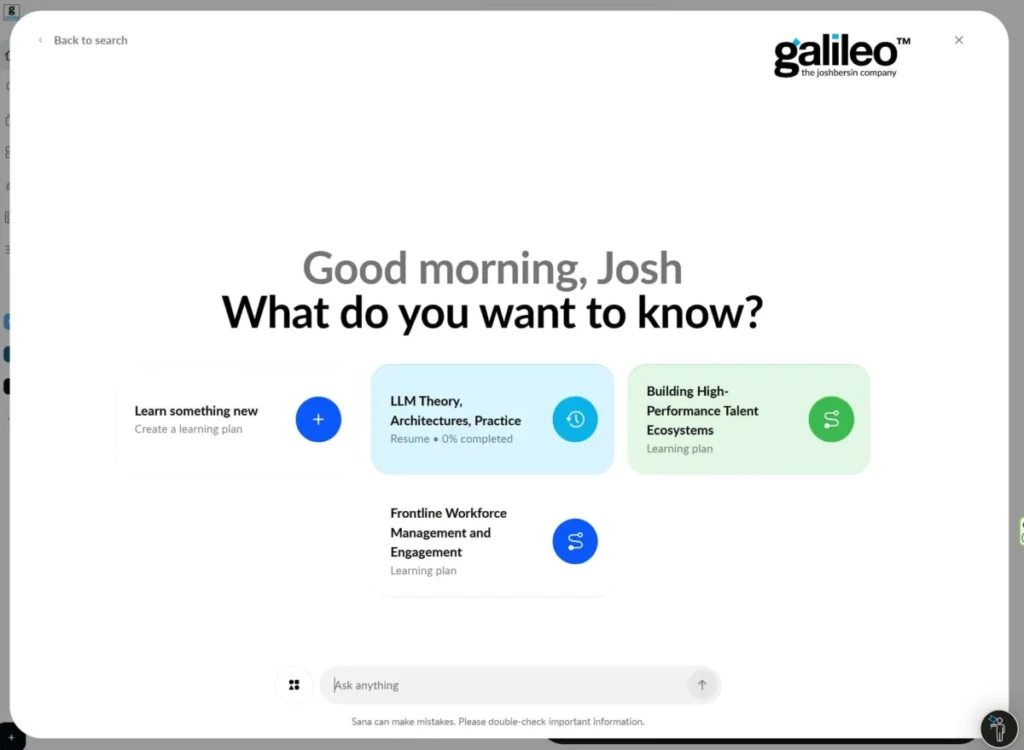
Artificial intelligence is emerging as a transformative solution to this challenge. AI is uniquely positioned to curate and assemble learning content in a highly customized manner, tailored to individual goals and developmental stages. As detailed in the research "Revolution in Corporate Learning," AI can revolutionize the professional development landscape. Platforms like Galileo exemplify this shift, offering personalized learning experiences for HR professionals and leaders. The widespread adoption of AI tools like ChatGPT, with an estimated 900 million weekly users, underscores this trend. Analysis from OpenAI and other researchers indicates that a substantial portion of these interactions, upwards of 40%, are driven by learning objectives – seeking information, acquiring skills, or problem-solving. This rapid user engagement within a relatively short period surpasses the reach of any traditional learning and development platform in history.
Two primary factors contribute to this phenomenon:
-
Intuitive Learning Through Inquiry: The ease with which users can pose questions, learn, and satisfy their curiosity through AI agents mirrors the natural learning processes developed in childhood. This "question-driven" approach, facilitated by an AI agent, encourages exploration and discovery.
-
Holistic Information Interconnection: AI models, such as those underpinning Galileo, interconnect information through advanced embeddings, creating a systemic and holistic knowledge base. This approach liberates learners from rigid, linear learning paths. Users can dynamically request explanations, delve deeper into topics, or bypass sections as needed, significantly enhancing both the speed and quality of their learning journey.

Galileo, for instance, provides on-demand examples, scenarios, challenges, and simulations. Users can engage with formal courses or simply interact with the "Supertutor" to receive answers and discover new information and experiences, dynamically adapted to their role, past interactions, and other relevant data. This adaptive and responsive learning environment is proving to be a paradigm shift.
Market Disruption: From Publishing to Dynamic Delivery
This fundamental transition from a "course publishing" model to one of "dynamic content delivery" is profoundly reshaping the professional development market. The industry can be segmented into five key areas: learning platforms (LMS, LXP), learning content (course libraries, programs, executive education), content development tools, certifications (testing and accreditation), and learning consultants. Each of these segments must adapt to an AI-native infrastructure, representing not an incremental change but a discontinuous and rapid evolution.
The traditional "old model" was rooted in a publishing paradigm: identifying needs, engaging subject matter experts, designing courses, and then "publishing" them into learning management systems for distribution. This web-publishing approach, pioneered in the late 1990s, disrupted numerous classroom-based training companies. While high-touch, high-cost executive education programs from institutions like Wharton, Harvard, and Stanford will likely persist, the majority of professional development is migrating towards a new paradigm.
This AI-First or AI-Native model leverages artificial intelligence to collect, generate, translate, and deliver content. AI-native platforms like Galileo integrate extensive research and case studies with a company’s proprietary internal content. Learners can access formal courses, request simulations, participate in role-playing exercises, or engage the Supertutor for immediate answers, much like asking a question in a classroom. This dramatically alters the traditional courseware business model.
The user experience becomes highly personalized, as AI systems learn and adapt to individual needs. Furthermore, complex and costly processes such as instructional design, translation, and video generation are largely automated. An AI-native system can generate new learning experiences daily as new content is integrated. When a company incorporates its own internal processes, technical documentation, and cultural practices, the AI seamlessly blends this proprietary information with external expert content. Essential features like career pathways, learning paths, skills taxonomies, and assessments can now be machine-generated, shifting the vendor’s value proposition from simply providing content and a platform to offering an optimized, personalized, and user-friendly experience.
The potential for AI in content creation is vast. For example, using tools like Sora, it is possible to rapidly develop comprehensive courses, such as a five-minute module on the economics of the frontline workforce. While such content might not be directly sold, platforms like YouTube are already incorporating AI-driven features, such as automatic chapter generation in videos, enhancing educational discoverability without explicit integration of advanced AI models. As AI systems evolve, they will gain the ability to discern reading levels, learning preferences, and technical interests, further refining the learning experience. For instance, integrated AI platforms like Galileo, which incorporate tools like Gemini, ChatGPT, and Claude, can gather extensive data on user interactions, language, ongoing projects, and communication styles, creating a deeply personalized and context-aware learning environment.
Innovation and Disruption Across the Ecosystem
The online learning industry, which had experienced a period of stagnation, is now ripe for innovation thanks to AI. The potential for new solutions is virtually limitless. This disruption impacts various components of the professional development market:
- Learning Platforms: Learning Management Systems (LMS) and Learning Experience Platforms (LXP) must evolve to integrate AI capabilities, offering dynamic content delivery and personalized learning paths.
- Content Development: The creation of courses, simulations, and assessments will be revolutionized by AI tools, enabling faster, more cost-effective, and highly tailored content generation.
- Certifications and Assessments: AI can enhance the accuracy, adaptability, and fairness of certifications and assessments, moving beyond static testing to dynamic evaluation of skills.
- Consulting Services: Learning consultants will need to pivot their strategies, focusing on guiding organizations through AI integration and the re-engineering of L&D functions.
Implications for Professionals, HR, and L&D Buyers
The entire spectrum of training, certification, and professional education providers must confront this evolving landscape. While organizations may not immediately abandon existing course libraries or subscriptions, the emergence of personalized, AI-centric providers signals a potential consolidation or acquisition of legacy vendors.
The widespread adoption of AI agents on personal devices, through platforms like Microsoft and Apple, will fundamentally alter how employees access information and support. This ubiquitous presence of AI will streamline employee engagement, provided organizations offer robust backend offerings that effectively feed these agents. This shift mirrors the impact of Google Search on website development; while portals did not disappear, those not optimized for search became less user-friendly. Similarly, as employees increasingly rely on internal AI agents for benefits, HR queries, and career guidance, they will naturally ask questions such as, "What is my path to promotion?"
This presents an unparalleled opportunity to reimagine the deployment of learning at work. For an hourly worker seeking additional income, an AI agent could proactively suggest skill upgrades that enable them to take on higher-paying shifts in different roles. Such use cases are now achievable through AI.
Organizations are actively exploring AI-powered leadership coaching, advanced assessments (from vendors like Skillable and others), and content generation tools (like Sora and numerous LLMs) for creating videos, audio, tests, and courses. A strategic re-evaluation of L&D strategies is paramount for the coming year. Current L&D functions often involve extensive manual work, redundant jobs, and projects that can be fully automated by AI. Costs associated with translation, skills architecture, LMS publishing, metadata management, and the creation of job aids and career pathing can be significantly reduced or eliminated. Several large enterprises have already reported a reduction in L&D spending by as much as 40%, coupled with a far more personalized employee experience, after re-engineering their programs with AI.
For vendors and consultants, the message is clear: embrace AI. Boldness, strategic partnerships, and investment in AI platforms are crucial. This is a transformative period offering unprecedented opportunities to redefine how individuals are developed and supported, with demand for effective solutions poised to surge.
The professional development market is at a critical juncture. The transition from a static, content-publishing model to a dynamic, AI-driven learning ecosystem promises greater personalization, efficiency, and impact. Companies that fail to adapt risk obsolescence, while those that embrace this AI revolution are positioned to lead the future of workforce development.