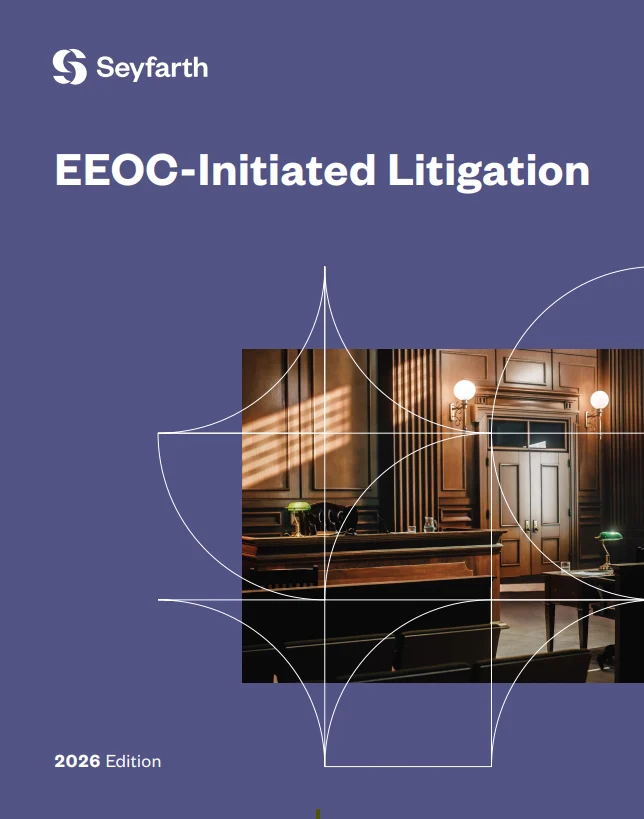
The landscape of American labor law and federal oversight underwent a transformative shift throughout 2025, culminating in a series of landmark legal challenges and policy pivots that have redefined the relationship between the Equal Employment Opportunity Commission (EEOC) and the nation’s employers. According to the newly released "EEOC-Initiated Litigation: 2026 Edition" by Seyfarth Shaw LLP, the past twelve months represented some of the most volatile and significant periods in the agency’s history. This annual desk reference, which serves as a critical guide for corporate counsel and human resources professionals, provides a granular analysis of the EEOC’s enforcement activities, categorized by case filings, judicial decisions, and the overarching political climate that influenced agency behavior.
As the 2026 report highlights, the EEOC has moved toward a more aggressive and systemic approach to litigation, focusing on high-impact cases that aim to set broad legal precedents across entire industries. The analysis suggests that the "dramatic" changes observed in 2025 were driven by a combination of new legislative mandates, such as the full maturation of the Pregnant Workers Fairness Act (PWFA), and a heightened focus on the role of artificial intelligence in hiring practices. For employers, the report serves as both a retrospective of a high-pressure year and a strategic roadmap for navigating the anticipated enforcement surges of 2026.
A Chronology of Enforcement: The 2025 Pivot
The year 2025 began under the shadow of the EEOC’s Strategic Enforcement Plan (SEP) for Fiscal Years 2024-2028, which laid the groundwork for the agency’s prioritized focus areas. However, as the year progressed, several external factors accelerated the agency’s timeline. In the first quarter of 2025, the EEOC initiated a wave of "pattern or practice" lawsuits, signaling a departure from individual charge processing toward larger, more complex systemic litigation.
By mid-year, the judicial landscape was further complicated by several appellate court rulings that challenged the EEOC’s interpretive guidance on remote work accommodations and digital accessibility. These rulings forced the agency to recalibrate its litigation strategy, leading to a concentrated burst of filings in late summer—a period the report identifies as the "August Surge." This period saw the agency filing dozens of lawsuits within a single month, many of which targeted the technology and retail sectors.
As the year drew to a close, the focus shifted toward the intersection of civil rights and emerging technologies. The final quarter of 2025 was marked by the first major enforcement actions regarding "algorithmic bias," where the EEOC targeted firms utilizing automated screening tools that were found to have a disparate impact on protected groups. This chronology illustrates an agency that is not only reactive to complaints but increasingly proactive in defining the digital boundaries of the modern workplace.
Data Analysis: Mapping the Surge in Merits Litigation
The "EEOC-Initiated Litigation: 2026 Edition" provides a statistical breakdown that underscores the agency’s heightened activity. In 2025, the EEOC filed a total of 158 merits lawsuits, a notable increase compared to the previous three-year average. Of these filings, approximately 40% were systemic in nature, involving multiple aggrieved parties or challenging an employer-wide policy. This represents a 15% increase in systemic filings over 2024, reflecting the agency’s stated goal of maximizing the impact of its limited resources.
Title VII of the Civil Rights Act remained the most frequent basis for litigation, accounting for 65% of all filings. Within Title VII, claims related to retaliation continued to dominate the docket, appearing in over half of all new lawsuits. However, the report notes a sharp rise in Americans with Disabilities Act (ADA) claims, particularly those involving mental health conditions and neurodiversity—a trend that grew by 22% year-over-year.
Furthermore, the geographic distribution of these lawsuits reveals a strategic concentration in certain jurisdictions. The EEOC’s Chicago and Philadelphia District Offices were among the most active, accounting for nearly a third of all national filings. These offices focused heavily on the manufacturing and healthcare sectors, industries that have faced significant labor shortages and high turnover rates in the post-pandemic economy.
The Technological Frontier: AI and Algorithmic Bias
One of the most significant themes identified in the 2026 report is the EEOC’s aggressive stance on Artificial Intelligence (AI) and automated decision-making systems. Throughout 2025, the agency issued several technical assistance documents clarifying that employers can be held liable under Title VII if their use of AI tools results in a disparate impact on applicants based on race, sex, or other protected characteristics.
The report details how the EEOC has begun utilizing its own data scientists to audit the hiring algorithms of large-scale employers. In one landmark case highlighted in the analysis, the EEOC successfully argued that an employer’s "cultural fit" algorithm was inadvertently filtering out older candidates, leading to a multi-million dollar settlement and a court-mandated overhaul of the company’s recruitment software. This case has set a precedent for 2026, where the "black box" of hiring algorithms is expected to be a primary target for federal investigators.
Official Responses and Industry Reactions
The "dramatic" changes noted by Seyfarth Shaw have not gone unnoticed by the business community. While the EEOC maintains that its litigation efforts are necessary to protect vulnerable workers and ensure a level playing field, industry advocacy groups have expressed concern over what they perceive as "regulation by litigation."
In response to the 2025 enforcement trends, several chambers of commerce and trade associations have called for clearer "safe harbor" provisions for employers who proactively audit their own AI systems. Legal experts cited in the report suggest that the EEOC’s current approach leaves many well-intentioned employers in a state of uncertainty, as the agency has yet to provide a definitive standard for what constitutes a "fair" algorithm.
Conversely, worker advocacy groups have praised the EEOC’s focus on systemic issues. In statements following the release of the agency’s 2025 year-end performance report, proponents argued that without the threat of large-scale litigation, many corporations would continue to overlook subtle biases embedded in their corporate structures. The Seyfarth Shaw report captures this tension, noting that the "political and policy changes we observed in the past year" have created a polarized environment where every enforcement action is viewed through a broader ideological lens.
Implications for 2026: Preparing for a High-Scrutiny Environment
Looking forward, the "EEOC-Initiated Litigation: 2026 Edition" predicts that the agency will not slow down. With the 2024-2028 Strategic Enforcement Plan in full swing, the EEOC is expected to double down on its "priority issues," which include protecting immigrant and migrant workers, addressing the "long COVID" disability landscape, and ensuring pay equity.
For employers, the report emphasizes that the cost of non-compliance has never been higher. Beyond the direct financial impact of settlements and legal fees, the reputational damage associated with an EEOC-initiated lawsuit can be devastating in an era of high corporate transparency. The report advises corporate counsel to prioritize "preventative lawyering," which includes:
- Comprehensive Audits: Regularly reviewing hiring, promotion, and termination data to identify statistical anomalies before they trigger an EEOC investigation.
- AI Governance: Establishing internal committees to oversee the procurement and implementation of HR technology, ensuring that vendors provide transparency regarding their algorithms.
- Training and Policy Updates: Ensuring that supervisors are trained on the latest nuances of the PWFA and the ADA, particularly regarding "invisible" disabilities.
- Proactive Conciliation: Engaging in the EEOC’s conciliation process in good faith to resolve disputes before they escalate into federal litigation.
Broader Impact on the Legal and Corporate Landscape
The 2026 report concludes that the EEOC has successfully transformed itself into a leaner, more data-driven enforcement machine. The agency’s ability to leverage technology and focus on systemic "impact" cases has allowed it to exert influence far beyond its actual size. This shift has forced a parallel transformation in the private sector, where the role of the Chief Human Resources Officer (CHRO) is increasingly intersecting with the General Counsel’s office.
The "dramatic" nature of 2025 served as a wake-up call for many organizations that had previously viewed employment compliance as a secondary concern. As we move into 2026, the lessons contained within the Seyfarth Shaw desk reference suggest that the era of "business as usual" in employment law is over. The intersection of social justice movements, rapid technological advancement, and a motivated federal agency has created a new reality for the American workplace—one where oversight is constant and the margin for error is razor-thin.
By providing this comprehensive analysis, the report empowers operations teams and legal professionals to make informed, data-backed decisions. In a year defined by volatility, such insights are not merely helpful; they are essential for the survival and success of the modern enterprise. The 2026 edition stands as a testament to a year of unprecedented change and serves as a vital beacon for those navigating the complex waters of federal employment enforcement.