
The landscape of online job search has undergone a transformative shift, demanding that recruiters and talent acquisition specialists adapt their strategies to remain competitive in attracting top-tier candidates. With the pervasive integration of artificial intelligence into search engines and job boards, simply listing a vacancy is no longer sufficient. In 2026, visibility hinges on a sophisticated understanding of semantic analysis, AI-driven platforms, and Google’s evolving Search Generative Experience (SGE) and AI Overviews. Companies that fail to optimize their job postings for these advanced systems risk becoming invisible to the very talent they seek to recruit. This guide delves into the essential adjustments forward-thinking recruiters are making to create search-engine-optimized (SEO) and AI-friendly job postings that are both effective and authentically human.
The Paradigm Shift in Search: From Keywords to Semantic Understanding
The days of rudimentary keyword stuffing are long over. Modern job board algorithms, Google for Jobs, and a new generation of AI hiring tools now leverage sophisticated semantic analysis to scan, understand, and rank listings. This technological evolution signifies a fundamental departure from literal keyword matching, placing greater emphasis on the clarity, comprehensiveness, and contextual relevance of the job description. Algorithms are no longer merely looking for repeated terms; they are actively interpreting the meaning of the content, the relationships between different pieces of information, and how well the listing aligns with the nuanced intent of a candidate’s search query. Data indicates that job postings utilizing natural language processing (NLP) principles and well-structured data consistently outperform those relying on outdated SEO tactics, often seeing a 20-30% increase in visibility on major platforms. Recruiters must now think like an AI, anticipating how it will parse and interpret information, ensuring that every detail contributes to a holistic and accurate understanding of the role. While keywords remain relevant, their deployment must be natural, integral to the narrative, and truly descriptive of the position.
1. Navigating AI Overviews and the Search Generative Experience (SGE)
Google’s AI Overviews, which directly surface synthesized answers within search results, have profoundly impacted how job listings gain visibility. For a job posting to be effectively cited or summarized by an AI Overview, it must be written with exceptional clarity and precision, allowing the AI to easily parse and extract key information. Vague or ambiguous language is a significant impediment, as SGE systems prioritize structured, specific content that directly addresses potential candidate queries. Listings that employ natural language, complete sentences, and granular details about the role, responsibilities, and qualifications are far more likely to be integrated into AI-generated summaries.
Furthermore, the strategic use of Schema markup, particularly the JobPosting schema, has become indispensable. This machine-readable signal provides AI systems with a clean, unambiguous data structure, enabling them to categorize and understand the core components of a job listing with high fidelity. The consequence of this advancement is a heightened penalty for duplicate or "thin" listings. AI systems are now exceptionally adept at identifying low-effort content, penalizing it by reducing its visibility or omitting it from search results entirely. The practical implication for recruiters is clear: every job listing should be crafted as if it were answering the question, "What does this role truly involve?" — demanding completeness, specificity, and a human-centric approach that nonetheless adheres to algorithmic best practices.
2. The Cornerstone: Robust JobPosting Schema
At the foundation of any successful SEO strategy for job listings in 2026 lies meticulously implemented JobPosting Schema markup. Without a clear, machine-readable structure, search engines struggle to interpret and display a job post, severely limiting its reach. Schema acts as a direct communication channel to Google, providing a comprehensive map of the role’s attributes. The more complete and accurate this schema, the greater the likelihood of the listing appearing in enhanced user experiences within Google Search results, such as dedicated job carousels or detailed information panels. Industry analysis reveals that listings with comprehensive schema markup can achieve up to 50% higher click-through rates compared to those without, as they present a richer, more trustworthy snippet to job seekers.
Key elements that must be included in JobPosting schema extend beyond the basics:
title: The exact, candidate-friendly job title.description: A concise yet comprehensive summary of the role.datePosted: The date the job was first published (crucial for freshness signals).validThrough: The expiration date of the posting, signaling its active status.hiringOrganization: Details about the company (name, logo, URL).jobLocation: Specifics on where the job is located (city, state, country, or remote status).baseSalary: The salary range, including currency and frequency (e.g., USD, annually).employmentType: Full-time, part-time, contract, etc.experienceRequirements: Minimum and preferred experience levels.qualifications: Required skills, education, certifications.responsibilities: Key duties and expectations.incentiveCompensation: Any bonuses, commissions, or other forms of compensation.jobBenefits: Health insurance, PTO, retirement plans, etc.educationRequirements: Specific degree or field of study.applicantLocationRequirements: Geographic restrictions for remote roles.
To ensure proper implementation, recruiters should regularly utilize Google’s Rich Results Test. This tool validates the schema and highlights any errors, ensuring that the structured data is correctly interpreted by search engines and maximizes visibility.
3. Prioritizing Clarity Over Keyword Repetition
The evolution of semantic search has rendered keyword stuffing not only ineffective but potentially detrimental. Algorithms are designed to detect and de-prioritize content that unnaturally repeats keywords. Instead, the focus has shifted to creating job descriptions that are inherently clear, descriptive, and engaging for both human candidates and AI. Rather than mechanically inserting "project manager" multiple times, a superior strategy involves elaborating on the true essence of the role: "This role will oversee cross-functional teams, driving key projects from inception to completion, utilizing agile methodologies and tools like Jira and Asana. Success will be measured by on-time project delivery and stakeholder satisfaction."
Effective job descriptions in this new era incorporate:
- Narrative Flow: Describe the role as a story, explaining its purpose and impact within the organization.
- Specific Examples: Illustrate responsibilities with concrete examples of tasks and deliverables.
- Tools and Technologies: List the exact software, platforms, or equipment the candidate will use.
- Team Dynamics: Describe the team structure, reporting lines, and collaborative environment.
- Company Culture Insights: Offer genuine insights into the workplace ethos, values, and work-life balance.
- Growth Opportunities: Detail potential career paths, training, and development initiatives.
- Impact and Contribution: Explain how the role contributes to the company’s broader mission and goals.
Furthermore, integrating helpful external resources, such as links to company culture videos, employee testimonials, or relevant industry trend reports, can significantly enrich the candidate’s understanding. For instance, a posting for a travel nurse might include links to current travel nurse salary benchmarks or a guide to licensing requirements in specific states, providing comprehensive information that aids a candidate’s decision-making process. The guiding principle should be to write as if explaining the role genuinely and thoroughly to a highly qualified candidate over a coffee, ensuring every piece of information is valuable and contributes to a clear understanding.
4. Employing Candidate-Centric Job Titles
While internal creative titles might foster a sense of fun within an organization, they are a significant barrier to external visibility. "Growth Wizard" or "Sales Rockstar" are largely opaque to search engines and job seekers alike, who typically search using conventional, industry-standard terminology. The primary goal of a job title in an optimized posting is clarity and alignment with candidate search intent. Recruiters must consider what a prospective applicant would most likely type into a search engine.
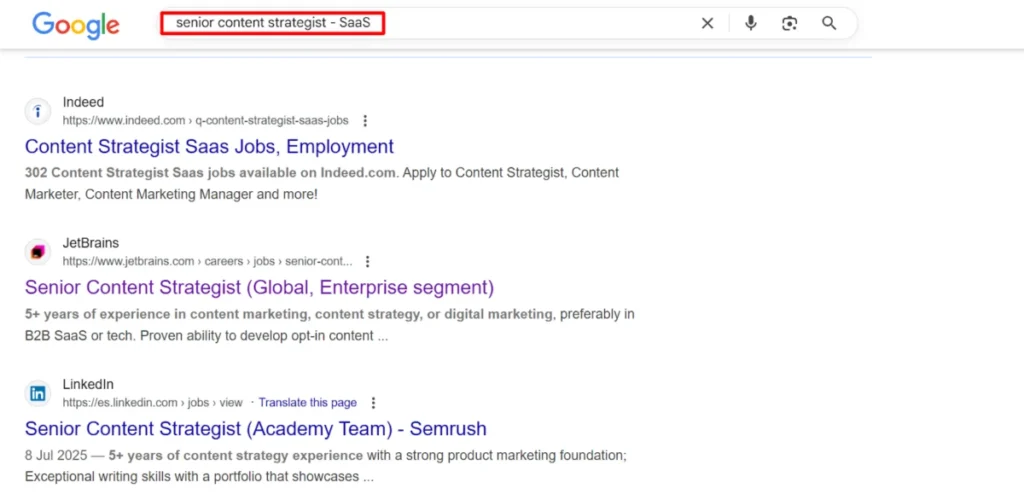
A highly effective formula to adopt is: Role + Level + Focus.
- Example 1: "Senior Content Strategist – SaaS" (instead of "Content Guru")
- Example 2: "Entry-Level IT Support (Remote)" (instead of "Tech Enthusiast")
- Example 3: "Lead Software Engineer – AI/Machine Learning" (instead of "Code Architect")
This structured approach ensures that the title is immediately recognizable, informative, and optimized for search queries. This format should be consistently applied across the page title, schema markup, and the primary heading of the job description. Any unique company personality can then be woven into the body of the description, allowing for creativity without sacrificing searchability. According to a 2025 LinkedIn study, job postings with clear, conventional titles see a 40% higher engagement rate from relevant candidates.
5. The Imperative of Salary Transparency
The inclusion of salary ranges in job postings has transitioned from a best practice to an absolute necessity. Beyond legal mandates emerging in various jurisdictions (such as New York City’s 2023 pay transparency law or California’s SB 1162), major platforms like Google for Jobs and LinkedIn explicitly grant higher visibility to listings that include salary details. A 2024 Glassdoor report indicated that 70% of job seekers are less likely to apply for a role if the salary range is not disclosed, and 60% trust employers more when pay is transparent from the outset. This transparency also contributes to a more equitable hiring process, reducing gender and racial pay gaps by setting clear expectations.
Key considerations for salary disclosure:
- Clear Range: Provide a realistic and competitive salary range (e.g., "$70,000 – $90,000 USD annually").
- Currency and Frequency: Always specify the currency and payment frequency.
- Context for Contract Roles: For contract, freelance, or travel positions, clearly state per-word, per-project, or hourly rates.
- Geographic Adjustments: If a role’s salary varies by location, clarify this or provide location-specific ranges.
Companies that embrace pay transparency often experience higher application completion rates, reduced time-to-hire, and improved candidate quality, as applicants self-select based on alignment with compensation expectations.
6. Maintaining Listing Freshness
Stale job postings are detrimental to visibility. Search engine algorithms interpret a lack of updates as a signal that the content may be inactive or less relevant. Even minor updates can signal to search engines that a listing remains active and valuable, thereby boosting its ranking. A study from Google’s webmaster guidelines suggests that regularly updated content is crawled more frequently and can maintain higher search rankings.
Strategies for keeping listings fresh:
- Review and Refresh: Weekly or bi-weekly review of active listings.
- Minor Content Updates: Tweak a sentence, add a new bullet point, or update a statistic.
- Date Adjustment: Update the
datePostedin the schema markup (ensure this reflects a genuine update, not just a superficial change). - Performance-Based Adjustments: If a listing isn’t performing, analyze engagement data and make substantive changes to the description or requirements.
- Add New FAQs: Incorporate questions from early applicants into an FAQ section.
These actions do not require a complete rewrite but ensure the listing signals ongoing relevance to search algorithms, maintaining its competitive edge in search results.
7. Precise Location and Remote Status Definitions
Ambiguity regarding a role’s location or remote status is a common pitfall that can lead to misdirected applications and candidate frustration. All elements of the job posting – title, schema, and description – must precisely align with the actual work arrangement. Misusing the term "remote" for a hybrid or location-specific role can significantly deter qualified candidates who specifically seek fully distributed opportunities. A 2025 survey by FlexJobs revealed that 75% of job seekers prioritize clear remote work policies, and misrepresentation leads to a 60% drop-off in application rates.
Effective clarification strategies include:
- Specific City/State/Country: "Marketing Manager, Austin, TX"
- Hybrid Model: "Hybrid: 3 days in office (London, UK)"
- Fully Remote (Global/Regional): "Remote (U.S. Only)" or "Remote (Global)"
- Travel Requirements: Clearly state the percentage of travel expected.
- On-site Only: Explicitly state "On-site position, requires daily presence at our New York office."
This clarity ensures the post appears in relevant location-filtered searches and sets accurate expectations for candidates, enhancing the overall candidate experience and reducing wasted applications.
8. Strategic Handling of Duplicate Content
Posting identical job descriptions across numerous job boards or duplicating them on a company’s own career site is a counterproductive strategy. Search engines are programmed to identify and largely ignore duplicate content. When multiple identical versions exist, algorithms typically index only one, and there’s no guarantee that the chosen version will be the one hosted on your primary career site, potentially diverting traffic away from your owned properties.
Instead, adopt a differentiated content strategy:
- Canonical Tags: Implement canonical tags on syndicated content to point back to the original source on your career site, signaling to search engines which version is authoritative.
- Tailored Descriptions: Create slightly varied versions for different platforms, optimizing for the unique audience and keyword patterns of each board.
- Platform-Specific Additions: For job boards that allow it, add unique content (e.g., a specific company video for LinkedIn, a unique FAQ for Indeed).
- Centralized Source: Always ensure your own career page hosts the most comprehensive and updated version.
- Strategic Syndication: Instead of blanket posting, choose 2-3 key job boards where your target audience is most active and customize content for them.
While this approach requires more effort, it significantly enhances visibility by ensuring each listing is treated as unique and valuable by search engines.
9. Mobile-First Optimization: A Non-Negotiable
With the overwhelming majority of job seekers utilizing mobile devices for searching and applying, mobile responsiveness is no longer a luxury but a fundamental requirement. A slow-loading or cluttered mobile experience can lead to immediate candidate abandonment, effectively negating all other optimization efforts. Google’s mobile-first indexing policy means that the mobile version of your career site is the primary version considered for ranking. Data from 2025 indicates that over 85% of initial job searches occur on mobile devices, and a site that takes longer than 3 seconds to load on mobile sees a 53% bounce rate.
Essential mobile optimization steps:
- Responsive Design: Ensure your career page automatically adjusts layout and content for various screen sizes.
- Fast Load Times: Optimize images, minimize code, and leverage caching to ensure quick loading.
- Legible Fonts and Spacing: Use clear, readable fonts with adequate line spacing for mobile screens.
- Touch-Friendly Elements: Buttons and links should be large enough and spaced appropriately for touch interaction.
- Streamlined Forms: Simplify application forms for mobile users, using autofill where possible.
- Accessibility: Ensure compliance with WCAG guidelines for users with disabilities.
A critical tool for assessment is Google’s PageSpeed Insights, which provides detailed reports on mobile performance and actionable recommendations for improvement, directly impacting SEO rankings.
10. Data-Driven Improvement: Tracking and Analytics
Once a job post is live, continuous monitoring and analysis are crucial for iterative improvement. Leveraging analytics tools, such as Google Analytics, allows recruiters to understand the candidate journey before application. This pre-application data, distinct from post-application metrics typically tracked by an Applicant Tracking System (ATS), reveals how candidates discover listings, which elements draw them in, and where they might be dropping off.
Key metrics and actions:
- Traffic Sources: Identify where candidates are coming from (e.g., Google for Jobs, direct search, specific job boards).
- Page Views and Time on Page: Gauge interest in the listing content.
- Bounce Rate: High bounce rates could indicate misalignment with search intent or poor content.
- Click-Through Rate (CTR): Measures how appealing your search snippet is.
- Conversion Rate: Track how many visitors initiate or complete an application.
- Heatmaps and Session Recordings: (if applicable) Understand user interaction patterns on the page.
- A/B Testing: Experiment with different titles, descriptions, or calls-to-action to optimize performance.
This analytical approach transforms recruiting into a data-science discipline, allowing for targeted adjustments that directly enhance visibility and candidate engagement. Strong-performing listings, backed by data, are a clear indicator of a credible and attractive employer brand.
11. Strengthening Internal Link Architecture
A often-overlooked but impactful SEO strategy is the optimization of internal link structure within a company’s career site. A robust internal linking strategy not only aids search engine crawlers in discovering and indexing job pages more efficiently but also distributes "link equity" throughout the site, bolstering the authority of individual job listings. Furthermore, a well-linked site enhances the candidate experience by making it easier to explore related opportunities or learn more about the company.
Practical internal linking ideas:
- Related Roles Section: Link to similar job titles or roles in different departments.
- "People Also Viewed" Suggestions: Mimic e-commerce sites with personalized job recommendations.
- Department Pages: Create dedicated pages for major departments (e.g., "Engineering Careers") that link to all relevant job openings.
- Company Values Page: Link specific job listings to sections of your company values page that align with the role’s requirements.
- Blog Content Integration: Link job openings from relevant blog posts (e.g., a "day in the life of a software engineer" post linking to software engineering openings).
- Clear Navigation: Ensure the main career page has intuitive navigation to all job categories.
This thoughtful approach to internal linking enhances both SEO performance and candidate engagement, keeping potential applicants exploring your opportunities.
12. Beyond the Basics: Elevating the Candidate Experience
To truly stand out in the competitive talent market of 2026, recruiters must go beyond fundamental optimization and focus on creating an exceptional end-to-end candidate experience.
Additional strategies include:
- Streamlined Application Process: Drastically shorten and simplify the application. Eliminate unnecessary steps, redundant questions, and protracted "psychometric" assessments that add friction without significant value. A one-click apply or a minimal form focused on essential qualifications drastically improves completion rates.
- Proactive Promotion: Don’t just publish; actively promote job posts across diverse channels. Leverage company social media, targeted email newsletters to talent pools, niche industry job boards, and professional communities (e.g., GitHub for developers, Behance for designers). This amplifies reach and engagement beyond organic search.
- Voice Search Optimization: As voice assistants become more prevalent in job search, optimize for natural language queries. Include conversational phrases like "we’re hiring a remote backend developer" or "find a marketing job in Seattle" within the content, anticipating how candidates might speak their search.
- Display Company Ratings: Integrate schema markup to prominently display trusted third-party employer ratings (e.g., Glassdoor, Indeed scores) directly within search results. This builds immediate credibility and trust with candidates.
- Personalized Candidate Communication: Utilize AI-powered chatbots for instant FAQ responses and personalize follow-up communications, even for rejected candidates, to maintain a positive brand image.
Ongig: Scaling Optimized Job Posts
The manual optimization of every job listing to meet these evolving standards can be an arduous and time-consuming task, particularly for organizations with high-volume recruitment needs. This is where specialized platforms like Ongig become invaluable. Ongig is designed to empower talent acquisition teams to create search-optimized, inclusive, and brand-aligned job descriptions at scale, circumventing the need for repetitive manual rewrites.
Ongig’s capabilities include:
- AI-Powered Optimization Suggestions: Automated recommendations for improving SEO, clarity, and inclusivity based on real-time data and best practices.
- Standardized Templates: Centralized, customizable templates that ensure consistent branding and schema markup across all job postings.
- Bias Detection and Remediation: Tools to identify and remove biased language, promoting diverse and equitable hiring.
- Content Scoring and Analytics: Provides insights into the quality and performance of job descriptions before they are published.
- Workflow Automation: Streamlines the creation, review, and publication process, saving significant recruiter time.
- ATS Integration: Seamlessly integrates with existing Applicant Tracking Systems to maintain a unified recruitment ecosystem.
By leveraging such a system, organizations can ensure that their job postings are consistently high-quality, visible, and engaging, regardless of volume, allowing recruiters to focus on candidate engagement rather than technical optimization.
Conclusion: The Future of Talent Attraction
The year 2026 marks a pivotal era in talent acquisition, characterized by the pervasive influence of AI and advanced search algorithms. Visibility for job postings is no longer a passive outcome but the direct result of deliberate, sophisticated optimization strategies. To recap, the critical elements for achieving maximum job post visibility include:
- Crafting AI-Friendly Content: Writing clearly and specifically for AI Overviews and SGE.
- Implementing Robust JobPosting Schema: Providing comprehensive, machine-readable data.
- Prioritizing Clarity Over Keyword Repetition: Focusing on semantic understanding and natural language.
- Using Candidate-Centric Job Titles: Aligning with how job seekers search.
- Embracing Salary Transparency: Disclosing pay ranges for increased visibility and trust.
- Regularly Updating Listings: Signaling freshness and relevance to search engines.
- Being Specific About Location and Remote Status: Avoiding ambiguity and matching search filters.
- Avoiding Duplicate Content: Differentiating listings across platforms.
- Ensuring Mobile Responsiveness: Optimizing for the dominant device for job search.
- Leveraging Analytics for Continuous Improvement: Tracking pre-application data to refine strategies.
- Strengthening Internal Link Structure: Enhancing discoverability and authority within your site.
- Going the Extra Step: Streamlining applications, promoting widely, optimizing for voice search, and displaying company ratings.
By meticulously following these best practices, talent acquisition teams can ensure their job posts not only reach but resonate with the precise candidates they aim to hire, solidifying their employer brand and securing a competitive advantage in the ongoing war for talent.






