The U.S. Equal Employment Opportunity Commission (EEOC) concluded its 2025 fiscal year on September 30 with a record-low number of merit lawsuits, marking a dramatic shift in federal civil rights enforcement. According to a year-end analysis of agency filings, the Commission initiated just 93 lawsuits over the past twelve months, the lowest volume of litigation activity seen in a decade and one of the lowest totals in the agency’s 60-year history. This decline comes despite the agency entering the year with a robust budget and a significant backlog of workplace discrimination charges, signaling a fundamental transformation in how the federal government approaches workplace regulation under the current administration.
The fiscal year, which began on October 1, 2024, was characterized by unprecedented structural changes within the Commission. Following the presidential transition in January 2025, the executive branch moved swiftly to reshape the EEOC’s leadership, resulting in a series of legal and administrative maneuvers that effectively curtailed the agency’s litigation engine. The result is an enforcement landscape that has shifted away from systemic "impact" litigation and toward a narrower set of priorities, including religious freedom, pregnancy protections, and the protection of American-born workers.
A Year of Institutional Transition and Quorum Challenges
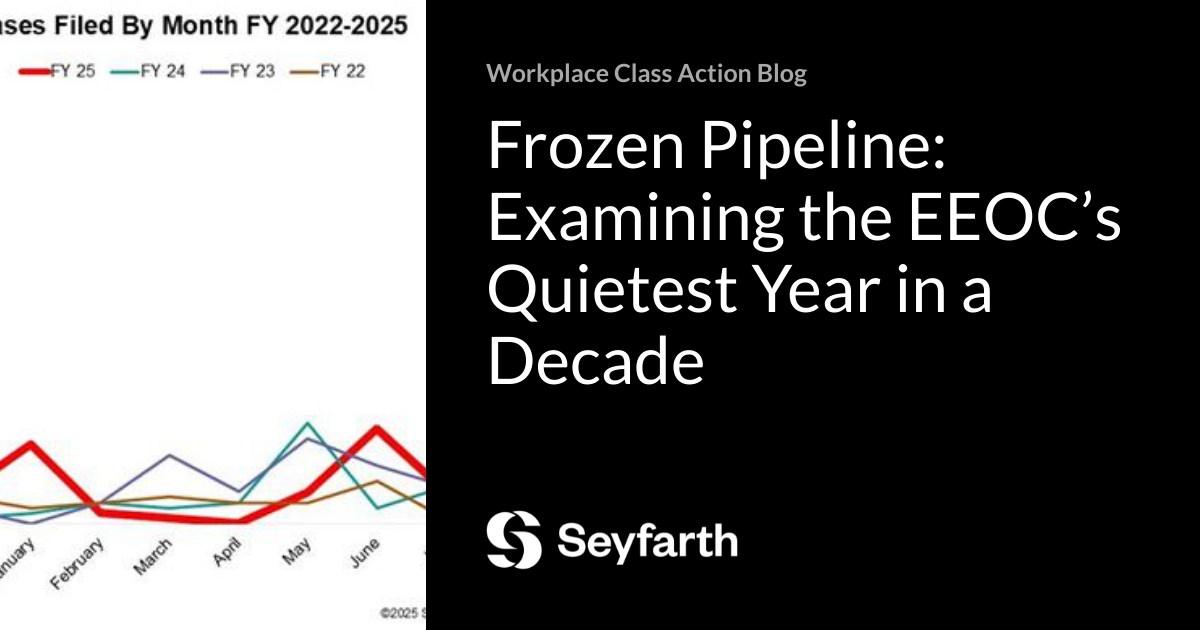
The trajectory of FY 2025 was largely dictated by a volatile political and administrative timeline. The year began under the momentum of the previous administration, with the EEOC filing 24 lawsuits in the first four months of the fiscal year. This early activity was punctuated by a surge in January 2025, during which 15 lawsuits were filed—a move interpreted by legal analysts as an effort by outgoing enforcement personnel to move cases into the judicial system before the change in executive leadership.
However, the landscape shifted dramatically in late January. President Donald Trump took the unprecedented step of terminating EEOC General Counsel Karla Gilbride and firing Commissioners Charlotte Burrows and Jocelyn Samuels, despite both having years remaining on their appointed terms. This move, which challenged long-standing norms regarding the independence of federal agencies, left the Commission without a quorum. With only Acting Chair Andrea Lucas and Commissioner Kalpana Kotagal remaining, the agency lost its collective authority to approve major litigation, systemic investigations, and cases involving novel legal theories.
Under a previous delegation of authority, the General Counsel’s office retains the power to file "routine" cases when a quorum is absent. However, this delegation expressly prohibits the filing of suits involving systemic discrimination, pattern-or-practice allegations, or matters requiring major expenditures of agency resources. This legal bottleneck is a primary driver behind the 93-filing total, as the agency was effectively barred from pursuing the large-scale class actions that defined its activity during the 2023 and 2024 fiscal years.
Chronology of Enforcement: From Lame-Duck Surge to Strategic Retrenchment
The ebb and flow of FY 2025 filings reveal a clear divide between the first and second halves of the fiscal year.
- October 2024 – January 2025: The agency maintained a steady pace, focusing on a broad range of Title VII and ADA issues. During this period, the agency also filed two high-profile lawsuits concerning transgender rights and gender identity discrimination.
- January 20, 2025: Following the inauguration, the administration issued an Executive Order titled "Defending Women From Gender Ideology Extremism and Restoring Biological Truth to the Federal Government."
- Late January 2025: Andrea Lucas was elevated to Acting Chair. In a subsequent public statement, she clarified that the Commission would no longer view the use of biologically accurate pronouns as workplace harassment, signaling a sharp departure from previous interpretations of Title VII.
- February – May 2025: Litigation activity slowed significantly as the agency underwent internal restructuring and budget reviews.
- June 2025: A surprising mid-year spike saw 18 new lawsuits filed, many focused on disability and pregnancy accommodations.
- September 2025: The traditional "September Surge," where the agency typically files the bulk of its annual cases to meet internal targets, was notably muted. The EEOC filed 35 lawsuits in the final month of the year, a sharp decline from the 71 filings recorded in September 2023 and the 56 recorded in September 2024.
Data Analysis: Shifting Statutory Priorities
A deep dive into the types of claims asserted in FY 2025 reveals a strategic realignment of the agency’s mission. While the overall number of lawsuits fell, certain categories of discrimination saw continued or increased focus.

The Dominance of the Americans with Disabilities Act (ADA)
The ADA remained the most frequently cited statute in EEOC litigation, accounting for 34 of the 93 filings. Despite the overall reduction in agency activity, the focus on disability rights remained a constant. Notably, the agency increasingly targeted "invisible" disabilities, filing multiple suits on behalf of workers with PTSD, anxiety, and depression. There was also a continued emphasis on hearing and vision impairments, specifically focusing on the failure of employers to provide reasonable accommodations during the hiring process.
Pregnancy and the Pregnant Workers Fairness Act (PWFA)
Protections for pregnant workers emerged as a top-tier priority under Acting Chair Lucas. The Commission filed 10 lawsuits specifically under the Pregnancy Discrimination Act and the newly enacted PWFA. This focus aligns with the administration’s stated goal of protecting women and families. Combined with general sex-discrimination claims, pregnancy-related issues were involved in 37 cases, making it the most active area of Title VII enforcement for the year.
The Rise of Religious Freedom Claims
One of the most significant shifts in FY 2025 was the surge in religious discrimination lawsuits. While only four such suits were filed in FY 2024, the Commission filed 11 in FY 2025. This increase is largely attributed to the backlog of charges stemming from COVID-19 vaccine mandate exemptions. Acting Chair Lucas emphasized this shift in August 2025, stating that the agency would no longer allow religious protections to take a "backseat to woke policies."
The Decline of Race and National Origin Filings
In a historic shift, the EEOC filed only three lawsuits asserting race or national origin discrimination in FY 2025. This is a staggering drop from the 27 filed in FY 2023. Furthermore, the nature of these suits changed; two of the three filings involved theories of "reverse discrimination" or "anti-American bias." For example, in EEOC v. Seward and Son Planting Co., the agency alleged that an employer gave illegal preference to non-American workers over Black American citizens.

Geographic Trends: The Silence of the West Coast
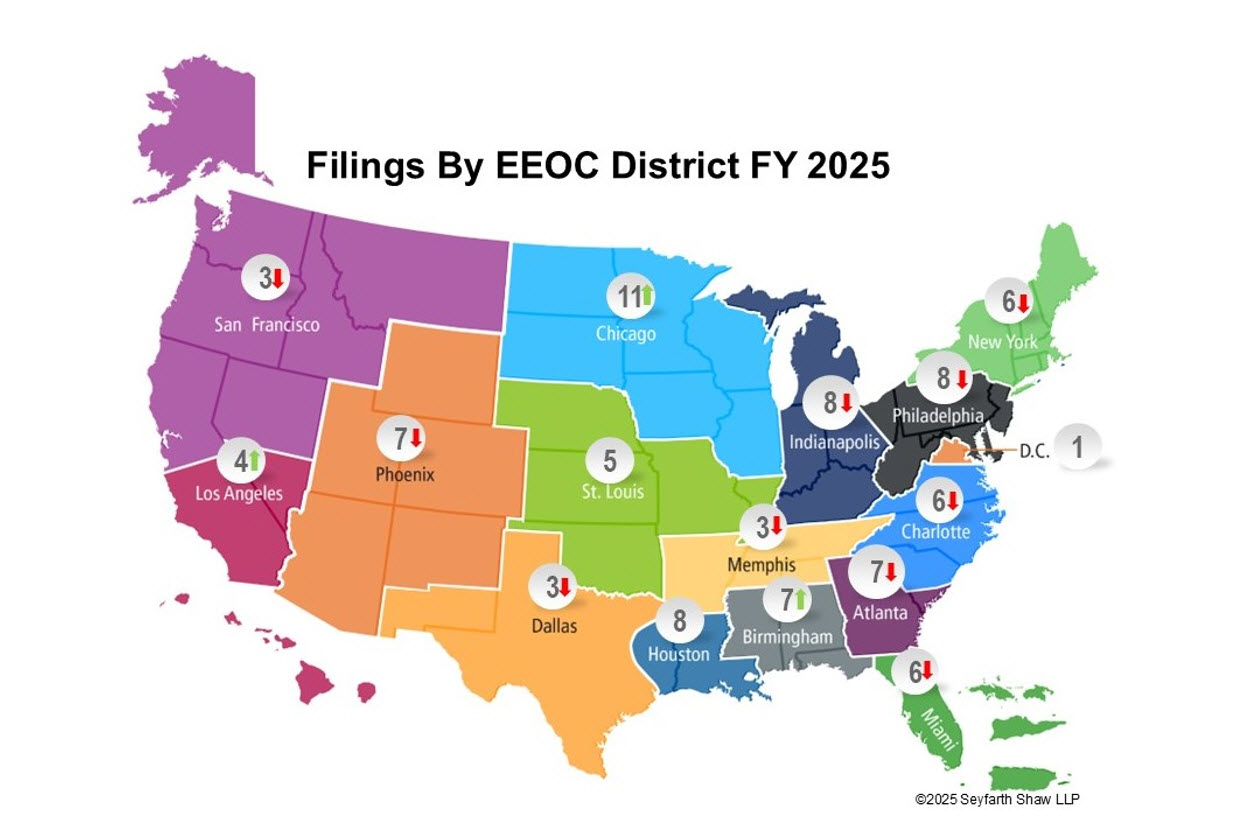
The geographic distribution of EEOC litigation in FY 2025 highlighted a growing divide between regional offices. The Chicago District Office led the nation with 11 merit filings, followed by Philadelphia, Indianapolis, and Houston, each with eight. These offices have traditionally maintained active dockets, but their dominance this year was amplified by the near-total silence of offices in historically litigious regions.
The Los Angeles, New York, and San Francisco District Offices—which during the Obama administration often filed dozens of lawsuits annually—were remarkably quiet. San Francisco filed only three lawsuits, while Los Angeles filed four. This retreat from the West Coast and Northeast suggests a shift in resource allocation away from regions with robust state-level enforcement agencies and toward jurisdictions where the EEOC remains the primary arbiter of workplace rights.
Official Responses and Implications for the Business Community
Acting Chair Andrea Lucas has been vocal about the agency’s new direction, framing the reduction in litigation as a return to "evenhanded enforcement." In official press releases, the agency has emphasized its commitment to protecting "biological truth" and ensuring that workers are not forced to choose between "their paycheck and their faith."
However, legal experts warn that the EEOC’s reduced activity does not necessarily equate to a lower risk profile for employers. The "follow-the-leader" phenomenon suggests that the private plaintiffs’ bar often adopts the theories and targets highlighted by the EEOC. As the Commission pivots toward religious accommodation and pregnancy rights, private class-action attorneys are expected to fill the vacuum, particularly in areas like LGBTQ+ rights where the federal government has stepped back.
Furthermore, the lack of a quorum creates a precarious legal environment. The 35 lawsuits filed in September 2025 may face immediate procedural challenges from defense counsel, who could argue that the agency lacked the authority to initiate litigation without a full Commission vote. These "quorum challenges" could tie up cases in appellate courts for years, creating further uncertainty for both workers and businesses.
Broader Impact: A New Era of Workplace Regulation
The 2025 fiscal year marks the end of the Biden-era "overdrive" enforcement and the beginning of a more restrained, ideologically specific period of federal oversight. For employers, the takeaways are clear: while the sheer volume of federal lawsuits is down, the scrutiny on religious accommodations, pregnancy, and American-citizen hiring preferences has never been higher.
As the agency awaits the Senate confirmation of new Trump-appointed commissioners, the EEOC remains in a state of suspended animation—active enough to maintain a presence in the courts, but too legally constrained to launch the massive systemic attacks that defined previous decades. Whether this "sluggish" pace is a temporary byproduct of administrative transition or a permanent feature of the new regulatory landscape will be the defining question of FY 2026. For now, the 93 lawsuits of 2025 stand as a testament to a year of profound institutional change.