
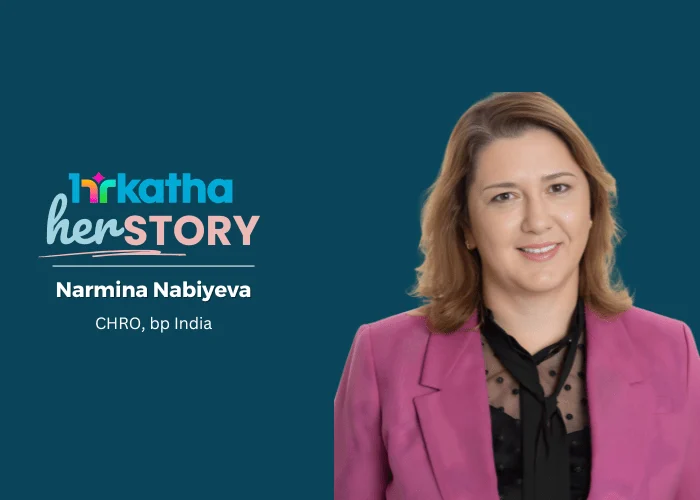
Narmina Nabiyeva, the Chief Human Resources Officer (CHRO) at bp India, embodies a leadership philosophy forged through decades of international experience and a deep understanding of human potential. Her journey into HR, initially unscripted by a "grand plan," evolved into a deliberate mission to merge her passion for learning and development with the strategic imperative of enhancing organizational effectiveness. This trajectory, from an in-house training specialist to a global CHRO, offers profound insights into the evolving role of HR, the unique complexities of the Indian talent market, and the enduring power of authentic leadership.
From Training Ground to Strategic Command: An Evolving HR Landscape
Nabiyeva’s entry into the human resources domain wasn’t through a traditional HR generalist route but rather through a focused training role. In an era when most corporate training was conducted internally, this provided a natural and impactful gateway. Her inherent interest in adult learning—how individuals develop confidence, acquire new skills, and enhance their effectiveness—found a fertile ground in this specialized function. This foundational experience, deeply rooted in individual growth, would later inform her holistic approach to talent management.
Over nearly three decades, as the HR function itself matured and expanded its strategic remit, so too did Nabiyeva’s career. Her initial focus on leadership and professional development gradually broadened to encompass wider talent management initiatives. This included workforce planning, performance management, and succession planning—areas increasingly recognized as critical components of business strategy. Subsequently, she transitioned into a full business partnering role, engaging directly with senior leadership on the entire spectrum of people and organizational issues. This evolution mirrored a global trend in HR, where the function moved from purely administrative tasks to becoming a crucial strategic partner, influencing business outcomes directly. Industry analysts often highlight that CHROs who have a strong understanding of learning and development are better equipped to navigate skill gaps and future-proof their workforce, a testament to Nabiyeva’s early career choices.
A pivotal realization that solidified her commitment to HR was the interconnectedness of its various disciplines. Talent acquisition, leadership development, compensation and benefits, organizational culture, design, and employee relations, she recognized, are not standalone silos. Instead, they operate as an integrated ecosystem, requiring alignment with each other and, crucially, with the overarching business strategy to foster a healthy, productive organizational culture. This integrated perspective is now a hallmark of effective HR leadership, distinguishing transactional HR from strategic HR.
Navigating India’s Unique Talent Tapestry: A CHRO’s Global Perspective
Having cultivated her career across diverse geographies—Azerbaijan, the Middle East, the UK, and the US—Nabiyeva describes India as a talent market unlike any other. Her observations offer valuable insights for global leaders seeking to understand and harness India’s immense human capital.
One of her initial insights underscores India’s inherent duality: the necessity to "hold two thoughts at the same time." On one hand, India demands a deeply localized approach, shaped by its distinct cultural nuances, social complexities, and regional variations. Understanding these local contexts is paramount for effective talent strategies, from recruitment practices to employee engagement. On the other hand, India simultaneously operates as a major global talent pool, producing capabilities that are relevant and highly sought after far beyond its national borders. This perspective aligns with reports from global consulting firms, which consistently rank India as a leading source of skilled talent for multinational corporations, particularly in technology, engineering, and finance. For instance, India’s STEM graduate output is among the highest globally, positioning it as a critical hub for innovation and specialized skills.
A second striking characteristic Nabiyeva highlights is the remarkable youth and dynamism of India’s talent market. In contrast to more mature economies, where HR efforts might focus on sustaining existing capabilities or managing established systems, India prioritizes opportunity creation, social mobility, and robust leadership development for early-career professionals. This emphasis on nurturing emerging talent, providing equal access, and enabling individuals to build meaningful careers resonates deeply with her own values. India’s demographic dividend, with a significant proportion of its population under 30, fuels this energetic environment, creating both opportunities and challenges for HR leaders in terms of talent attraction, retention, and skill development. The demand for robust learning and development frameworks to upskill this young workforce is immense.
Furthermore, India’s profound diversity—spanning regions, languages, familial expectations, belief systems, and trust-building mechanisms—presents a complex yet fascinating landscape for HR professionals. A "global playbook" cannot simply be transplanted; leaders must cultivate a deep capacity for listening, adaptation, and sustained curiosity. This necessitates a nuanced understanding of cultural intelligence, moving beyond surface-level differences to appreciate underlying values and motivations. For a CHRO, this makes the work both demanding and immensely rewarding, demanding constant learning and empathy. As Nabiyeva aptly puts it, "India reveals far more complexity once you experience it from within."
The Strategic Voice: Challenging Perceptions and Shaping Business Outcomes
Nabiyeva openly discusses a significant barrier she encountered: learning to fully leverage her voice within leadership circles. She notes a subtle, sometimes unconscious, expectation for women in HR to adopt a supportive, moderating role—emphasizing empathy, emotional intelligence, and maintaining balance. While these qualities are undeniably valuable, she stresses that HR leaders must also be prepared to challenge assumptions, test conventional wisdom, and speak directly about core business issues.
A transformative moment arrived when a respected business leader told her, "I do not see you as the HR leader at my table. I see you as a business leader who happens to specialize in HR." This powerful affirmation liberated her from self-imposed limitations, encouraging her to contribute beyond traditional HR topics and engage in broader strategic business conversations. This anecdote underscores a critical evolution in the perception of HR: from a purely functional support role to an integral strategic partner whose insights on human capital directly influence organizational performance and competitive advantage.
Since then, Nabiyeva has consciously resisted shrinking the space she occupies, whether due to gender expectations or functional labels. She firmly believes that empathy and challenge are not mutually exclusive; they can and must coexist. A leader can listen attentively, understand diverse perspectives, and still articulate a strong, impactful point of view. This dual capacity is increasingly vital for CHROs, who are expected to drive change, foster innovation, and ensure organizational resilience while maintaining a human-centric approach.
Lessons from an International Career: Humility, Adaptation, and Resilience
Choosing an international career, marked by repeatedly stepping into unfamiliar environments, stands as Nabiyeva’s most significant professional risk. Her extensive experience across Azerbaijan, the Middle East, the UK, and India, coupled with managing stakeholders in markets like the US, provided an unparalleled education in global leadership. Each transition, while outwardly exciting, demanded a profound immersion in new cultural contexts, business environments, stakeholder expectations, and methods of building trust.
This journey instilled in her a deep sense of humility. Success in one geography, she learned, does not automatically guarantee success in another. Trust, a cornerstone of effective leadership, must be earned anew in each context. Leaders, she argues, must prioritize listening over judging and immerse themselves fully in local realities before making decisions or implementing strategies. This approach not only enhanced her effectiveness as an HR leader but also cultivated a more open and adaptable personal outlook. Her experiences highlight the critical importance of cultural intelligence and global fluency for today’s leaders, particularly in multinational corporations operating across diverse markets. The ability to pivot, learn, and adapt rapidly to new circumstances is a hallmark of resilient leadership.
India: A Tapestry of Tradition and Modernity
What Nabiyeva particularly cherishes about her assignment in India is the vibrant fusion of curiosity, warmth, and ambition. She observes a profound eagerness among Indian professionals to learn, not merely through formal training but through active questioning, robust discussions, and intellectual debate. This strong societal reverence for education and continuous self-improvement is something she finds personally energizing. This cultural trait significantly contributes to India’s burgeoning talent pool and its capacity for rapid innovation.
She also deeply values the importance placed on family, community, and teamwork within the Indian context. Relationships hold significant weight, and trust is meticulously built. Indian professionals often demonstrate a strong sense of responsibility extending beyond their individual careers to encompass their families, teams, and wider communities. This collective ethos can foster powerful bonds and a strong sense of loyalty within organizations.
India itself, she finds, is a fascinating blend of deep tradition and rapid modernity. It is a nation steeped in thousands of years of history, philosophy, and cultural heritage, yet simultaneously aggressively pursuing advancements in artificial intelligence, entrepreneurship, and the future economy. This juxtaposition creates a dynamic environment ripe with opportunities and challenges, making it a captivating place for an HR leader to operate.
The Human Impact of Transformation: Dignity Amidst Difficult Decisions
The most challenging decisions in Nabiyeva’s career have invariably revolved around organizational change and transformation. While transformation is often a strategic necessity in large organizations, HR leaders uniquely experience its direct human impact. They are the frontline witnesses to the emotional toll and personal consequences of restructuring.
Transformation sometimes necessitates the difficult decision to part ways with long-serving employees who have made significant contributions. These moments are never easy. Her guiding principle in such situations is the unwavering belief that individuals must be treated with dignity, regardless of the difficult outcome. Leaders, she contends, bear a profound responsibility to ensure that departing employees leave with confidence, adequate support, and a sense that their contributions were valued. This commitment to empathy during difficult transitions is crucial for maintaining morale, preserving the employer brand, and fostering trust among remaining employees.
The period of uncertainty preceding major transformative decisions can be equally arduous, with employees often experiencing months of anxiety as outcomes evolve. During these phases, leaders must prioritize continuous communication, active listening, and unwavering support, even when not all answers are immediately available. Transparency, even when incomplete, is vital to manage expectations and alleviate fear. Once decisions are finalized, attention must then shift to the employees who remain, helping them rebuild confidence, adapt to new realities, and re-engage with the organization’s evolving mission. For Nabiyeva, managing change is a simultaneous test of clarity, empathy, and stamina, demanding a delicate balance of strategic foresight and human sensitivity.
Evolving as a Leader: From Spotlight to Mentorship
Reflecting on her leadership evolution, Nabiyeva describes her younger self as analytical, confident, and expressive, comfortable in the spotlight and adept at strong communication. While these traits served her well early in her career, she recognized they were insufficient as she ascended to more senior roles.
The mature Nabiyeva now takes greater pride in empowering her teams and placing them in the spotlight. She derives immense satisfaction from mentoring individuals, developing future leaders, and building self-sufficient teams capable of independent success. This shift from individual prominence to collective achievement is a hallmark of advanced leadership, where influence is wielded through enablement rather than direct command. She also cultivates a greater capacity for listening and has grown more comfortable admitting when an answer isn’t immediately apparent—a sign of genuine humility and intellectual honesty.
Her international career has also instilled a profound sense of flexibility. Different cultures, she observes, respond distinctly to variations in pace, hierarchy, directness in communication, and the manner of delivering constructive challenge. While core values remain constant, effective global leadership requires the ability to listen intently and tailor communication and engagement strategies to suit specific cultural contexts, ensuring that people are brought along in ways that resonate with them.
The Future of Work: Embracing AI While Upholding Human Connection
Nabiyeva identifies a critical mindset that must be retired: the belief that "what got us here will get us there." The rapid pace of change in the world of work renders this assumption obsolete. She posits that Artificial Intelligence (AI) represents a fundamental paradigm shift, distinct from previous workplace trends. AI, she believes, will profoundly reshape jobs, skill requirements, career trajectories, productivity metrics, and the entire employee experience.
This necessitates a radical rethinking by HR professionals of long-standing assumptions concerning work design, career progression models, value creation strategies, and capability building initiatives. As AI automates routine tasks and augments human capabilities, HR will play a crucial role in identifying future skills, designing adaptive learning pathways, and facilitating workforce transitions. The World Economic Forum, for instance, projects significant job displacement alongside the creation of new roles due to AI, underscoring the urgency for proactive HR strategies.
Simultaneously, Nabiyeva firmly believes that the fundamental importance of people and culture will never diminish. While technology will undoubtedly reshape work, organizations will continue to rely on core human elements: trust, visionary leadership, continuous learning, inclusive environments, and human energy. The imperative to create systems and cultures where individuals can thrive, find purpose, and contribute meaningfully will remain paramount for decades to come.
A Leader’s Mantras and Enduring Investments
In a rapid-fire reflection, Nabiyeva shares personal insights that illuminate her leadership approach. Her mantra for difficult days is to "Never react on the first emotional impulse. Pause, steady yourself, then take a second look." This emphasizes emotional regulation and thoughtful deliberation. For women in HR leadership, she advocates authenticity: "You do not have to fit a trope, masculine or feminine. The strongest leadership comes from being yourself." This reinforces her earlier point about not shrinking one’s space due to gender expectations.
Her morning ritual, "Yoga, one of the gifts I picked up in India that I know will stay with me," highlights the importance of well-being and cultural integration. What energizes her most about her work is the constant novelty of human challenges: "People always bring a new challenge. Even after nearly 30 years, the work still keeps teaching me." Her best investment in herself, early on, was "learning, combining education, experience and curiosity." Now, it also encompasses "the quality of my relationships and the time I invest in health and wellbeing," reflecting a holistic understanding of personal and professional growth.
Narmina Nabiyeva’s journey as CHRO at bp India is a compelling narrative of continuous evolution, strategic impact, and human-centric leadership. Her insights offer a valuable blueprint for navigating the complexities of a globalized, technologically advanced, and culturally diverse world of work, emphasizing that true leadership lies in authenticity, empathy, and an unwavering commitment to human potential.








