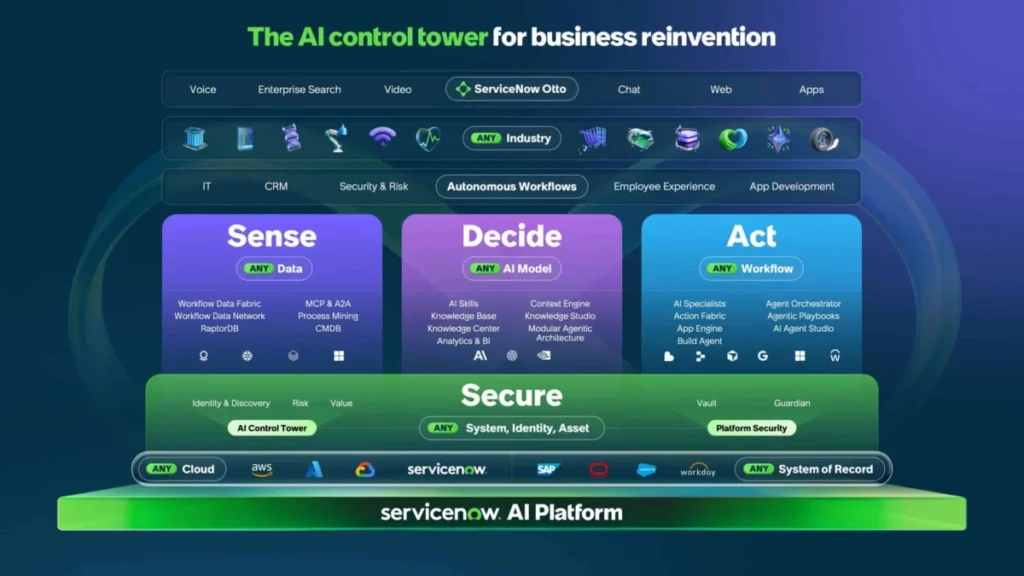
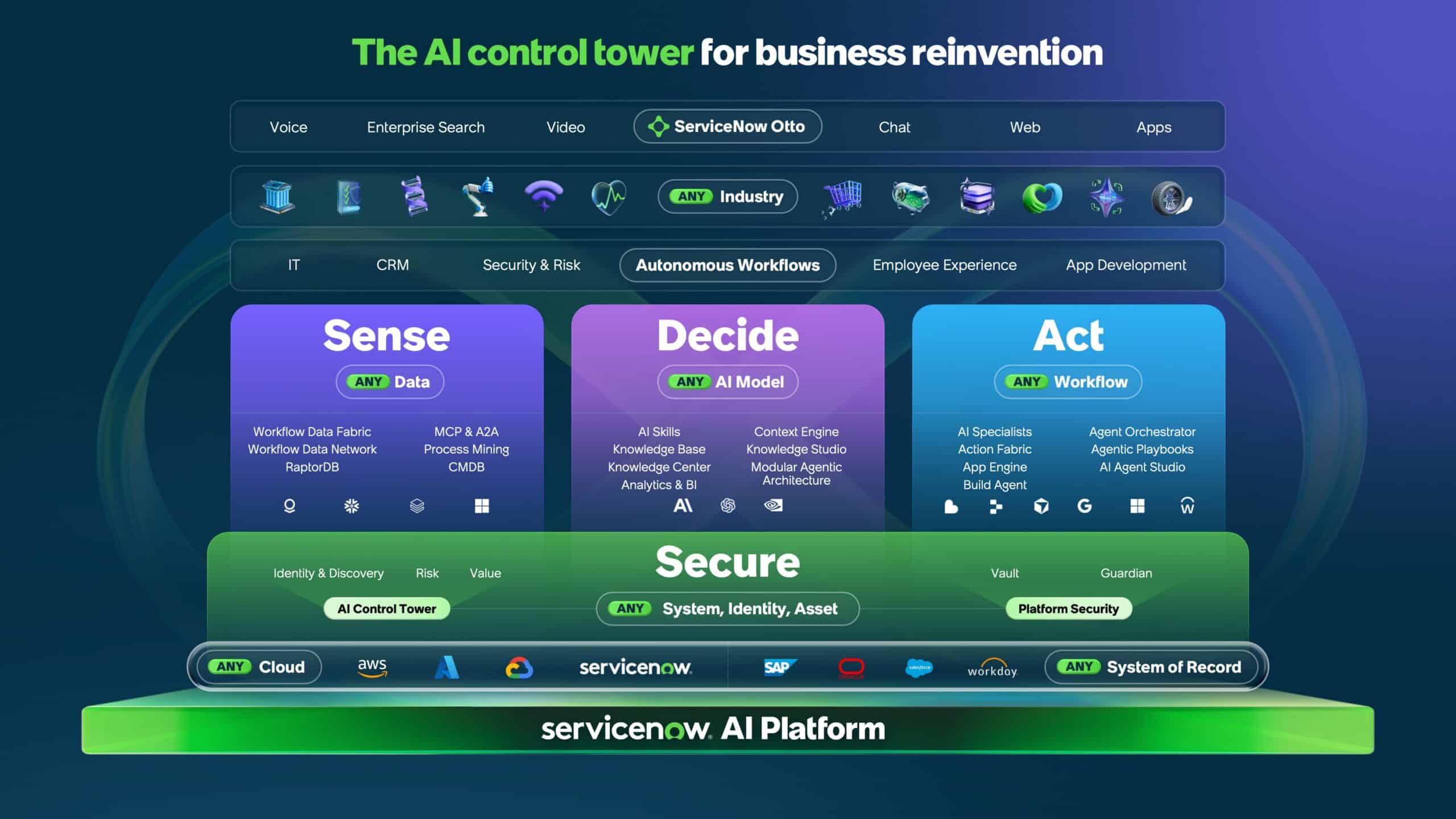
ServiceNow has launched a comprehensive suite of announcements aimed at fundamentally reshaping the enterprise AI landscape, signaling its aggressive intent to capture a dominant position in managing, securing, and providing access to the burgeoning ecosystem of AI agents. The company’s stated goal is to double its revenue to $30 billion within the next four years, a projection that underscores the strategic pivot and significant investment being channeled into its AI initiatives. This move places ServiceNow in direct competition with major players like Microsoft and Workday, all vying to control the critical infrastructure and gateway for enterprise AI deployment.
The "Action Fabric": Orchestrating the AI Agent Ecosystem
At the core of ServiceNow’s strategy is the introduction of its "Action Fabric," a sophisticated monitoring and management layer designed to bring order to what the company describes as the "enterprise AI chaos." This framework aims to govern, monitor, and manage all AI agents, irrespective of their origin or the underlying models they utilize. The overarching vision is to establish a centralized control plane for all AI activity within an organization.
ServiceNow’s "Action Fabric," powered by its Master Control Program (MCP) server, emphasizes an open architecture: "Any agent. Any model." This means that any AI agent can connect to the ServiceNow Fabric via the MCP, enabling seamless integration regardless of the developer or vendor. This inclusivity is mirrored by competitors; Microsoft offers a similar vision with its Agent 365, and Workday has introduced its Agent System of Record. The platform is also designed to be "Open to every AI," allowing management tools to be called by agents, thereby facilitating automated management scenarios and integration with third-party frameworks.
A critical aspect of the Action Fabric is its focus on "Full Control; Full Trust." ServiceNow asserts that all agents connected to its platform will undergo authentication, permission scoping, auditing, and continuous monitoring. While the specifics of enforcing business rules from other enterprise systems like Workday or SAP remain somewhat opaque, this capability leverages ServiceNow’s two decades of investment in its core platform. This includes its Configuration Management Database (CMDB), Workflow Data Network, established business rules, Security Center, and identity and access controls. Essentially, ServiceNow is positioning its robust IT management system as the foundational infrastructure for managing AI agents and applications, framing it as a necessary reinvention for the modern enterprise.
This strategic alignment is also evident in the moves made by Workday and SAP. Workday’s Agent System of Record and Agent Gateway are designed to open its existing platform to external agents on a per-call basis. Similarly, SAP has stipulated that agents must utilize SAP’s Business Accelerator Hub to access its business rules, which will also be metered by usage. The choice for enterprises will likely hinge on the existing investment in their Workday or SAP business rules and their preference for development environments like Sana or Joule.
Otto: The "Front Door" to Enterprise AI and Enhanced Employee Experience
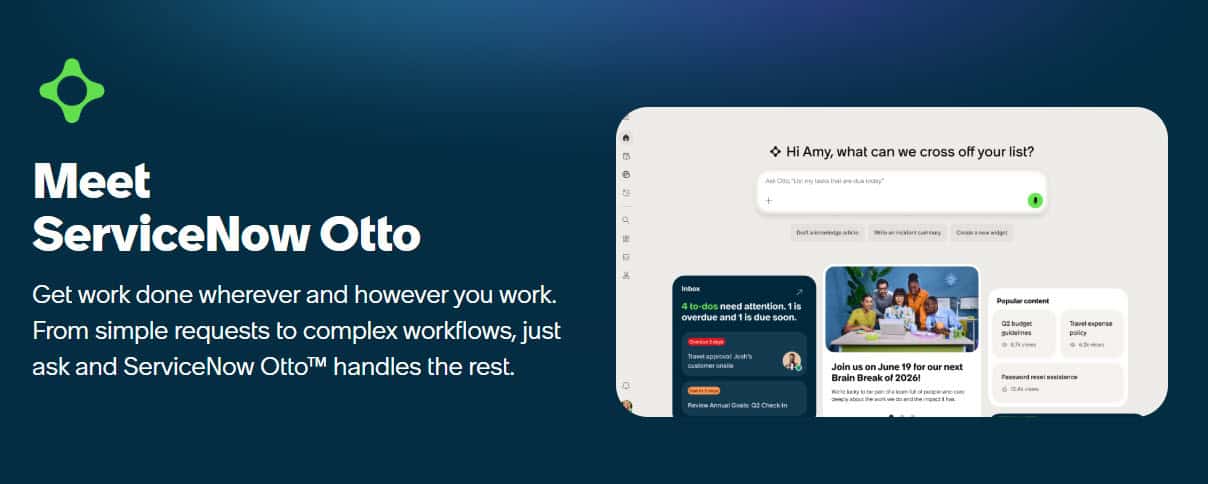
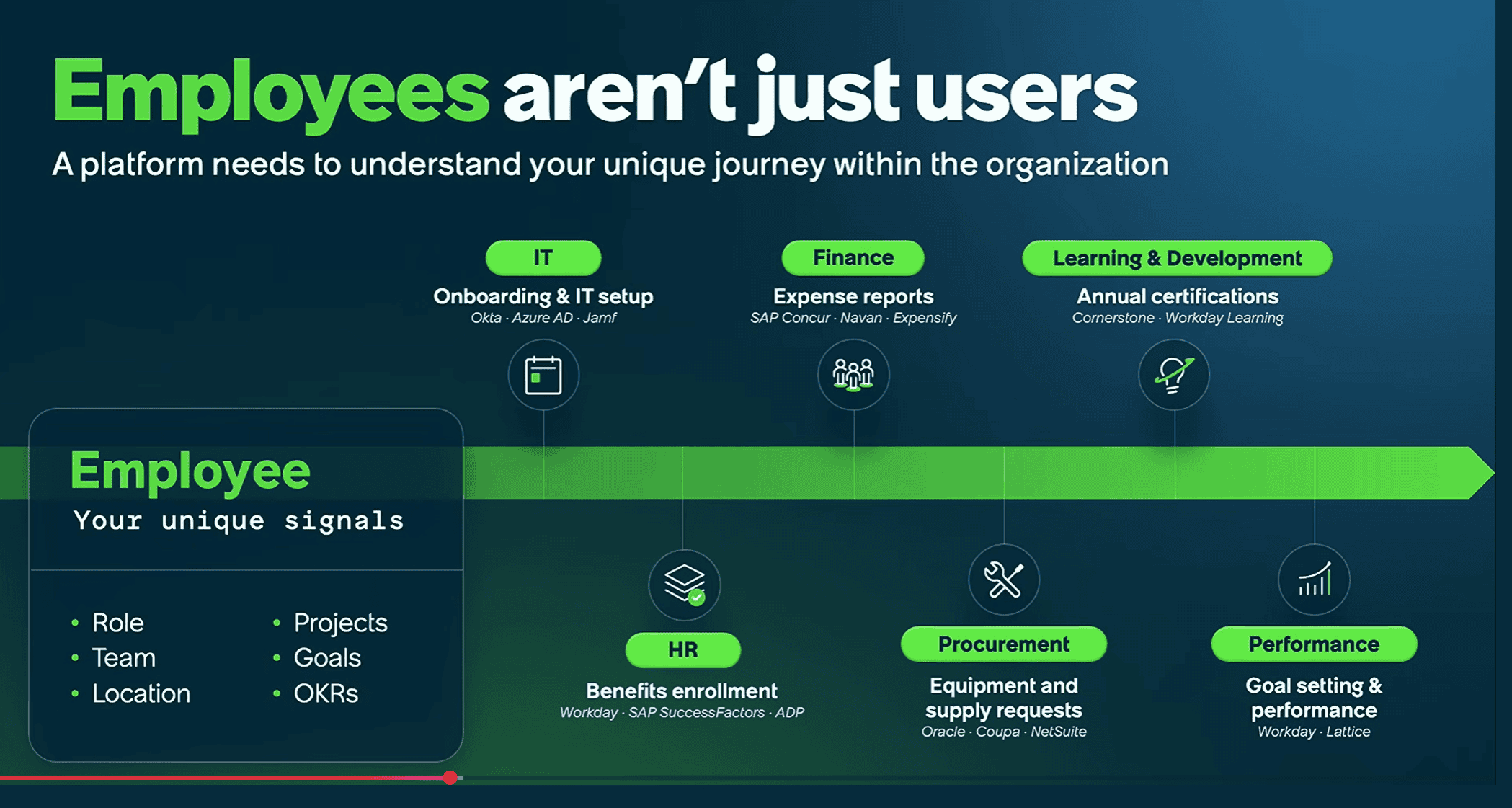
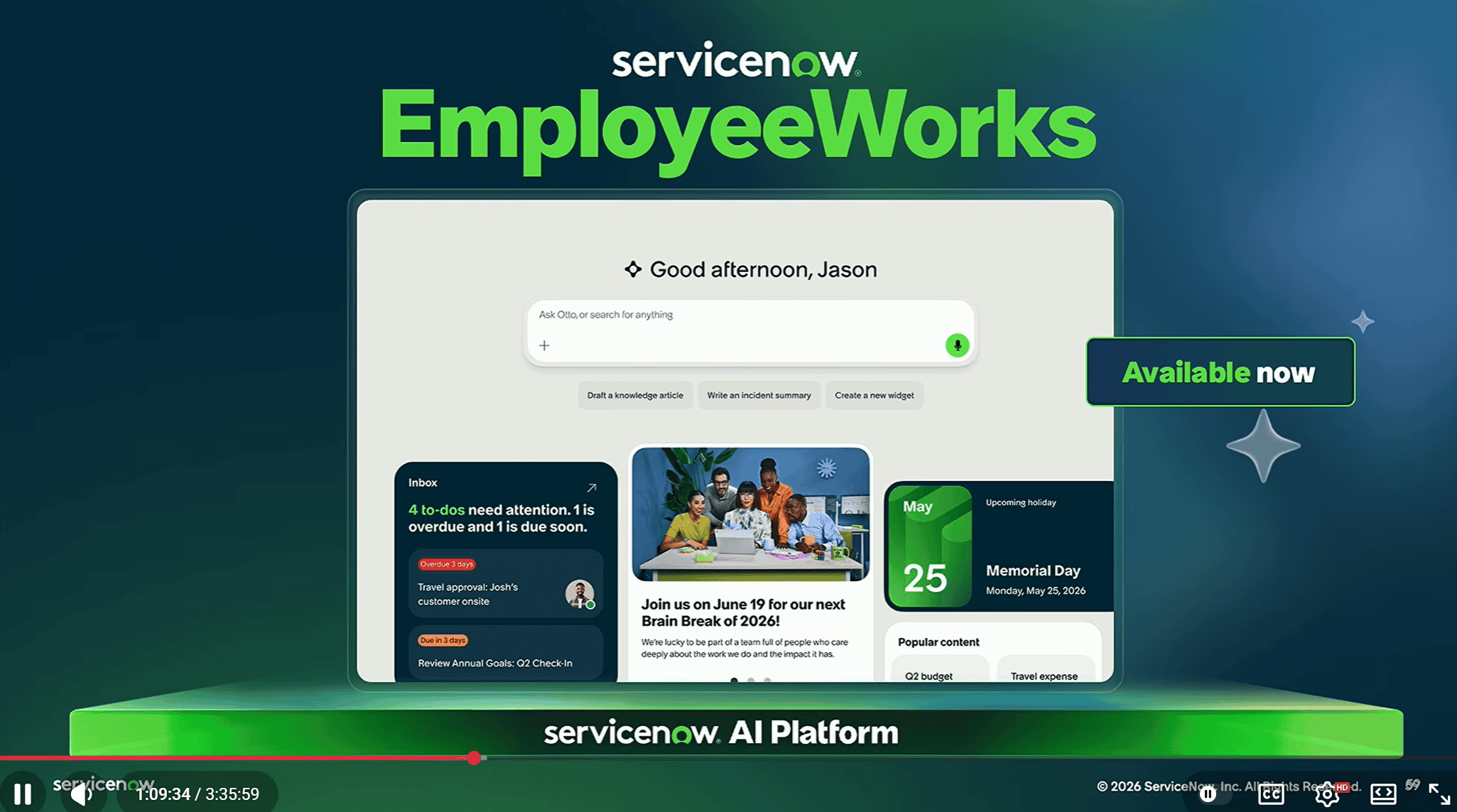
Complementing the Action Fabric, ServiceNow is reinventing its Now Assist capabilities into "Otto," a persona-driven AI agent designed to serve as the "Front Door" for employees seeking access to enterprise resources and information. This initiative mirrors Workday’s introduction of "Sana" as its enterprise front door and aligns with the growing trend of creating unified employee experience platforms.
Otto, integrated with Moveworks technology, is positioned as a friendly and accessible employee tool for search, knowledge management, and addressing a wide array of employee needs. Bhavin Shah, the founder of Moveworks, now leads the Otto initiative, which is being branded under the "EmployeeWorks" umbrella to emphasize its open nature. This strategic rebranding signals a departure from the traditional "Employee Self-Service" model, aiming to create a more intuitive and conversational interface for employees.
The concept of an "Employee Experience Platform" (EXP) has been evolving for years, and ServiceNow’s entry signifies its recognition of this critical market. While Otto may initially appear as a chatbot for routine inquiries like vacation policies or benefits, its true power lies in its ability to integrate with a vast range of other enterprise systems and address complex, multifaceted employee needs. The author notes that employee needs are inherently interconnected, and a robust EXP must extend beyond simple queries to encompass communications, community building, training, surveys, and the resolution of IT, policy, and general employee issues.
The challenges for Otto are significant, given the highly competitive nature of the EXP market, with players like Microsoft, Zoom, and various Human Capital Management (HCM) vendors also vying for this space. The success of Otto will depend on its ability to seamlessly integrate with a diverse array of applications and data sources, providing comprehensive support for scenarios ranging from routine HR inquiries to more complex situations like crisis management. The example of a custom agent developed for crisis management, capable of handling family trauma, power outages, and other emergencies, highlights the potential breadth of use cases that Otto could address.
The AI Control Tower: Governance, Security, and ROI Measurement
ServiceNow’s vision extends to an "AI Control Tower," a comprehensive platform designed to "discover, observe, govern, and secure enterprise AI." This ambitious offering aims not only to monitor and provision AI agents but also to calculate their Return on Investment (ROI). The Control Tower is intended to identify agents that are underperforming, misbehaving, or experiencing excessive operational costs (e.g., token consumption).
This concept draws parallels with earlier enterprise management systems, such as IBM’s SystemView, which sought to manage all computing resources within proprietary networks. ServiceNow’s approach, however, is specifically tailored to the dynamic and complex world of AI. The company’s CEO, Bill McDermott, has articulated a vision of enterprises as a collection of often conflicting workflows and business rules that are poorly understood. The AI Control Tower aims to provide a unified view and management capability for all identities, agents, workflows, and people within an organization.
However, the emphasis on "monitoring and managing every decision" raises important considerations. While appealing to IT departments concerned with security and efficiency, it is crucial to balance this with the need for human judgment and empowerment. The author references the Ritz Carlton’s philosophy of empowering employees to "use their own best judgment," suggesting that an overly prescriptive approach to AI management could stifle innovation and employee autonomy. The potential for AI agents to autonomously make decisions that impact individuals raises ethical questions that will need to be carefully addressed.
The Autonomous Workforce: Predefined AI Specialists
Further solidifying its strategy, ServiceNow is introducing "The ServiceNow Autonomous Workforce," a collection of predefined "AI Specialists" designed to perform autonomous work across various business functions. This initiative aligns with the growing recognition of specialized AI roles and the potential for AI agents to take on specific job functions.
ServiceNow has identified potential roles such as Site Reliability AI Specialist, AI Operations Specialist, Level 1 Service Desk Specialist, HR Service Delivery AI Specialist, Case Management Specialist, Third-party Screening Specialist, Enterprise Architecture Specialist, and Vulnerability Exposure Specialist. This move is indicative of a broader trend where AI agents are being conceptualized as capable of performing tasks previously handled by human workers.
The author’s own work on "Agentic HR" identifies three key types of agents: those that take action, those that set rules, and those that observe and monitor. ServiceNow’s AI Specialists fit within this framework, with the potential to automate and centralize tasks that were once the purview of multiple human roles. For instance, an AI Specialist could be developed for DEI analysis and compliance, employee engagement monitoring, manager approvals, or pay equity advocacy, tasks that currently require significant human oversight and effort.
The company’s integration of Galileo, described as a "digital HR consultant," into Otto further strengthens this offering. Galileo’s capabilities are now presented as an add-on feature to Otto, enhancing its ability to act as an intelligent advisor within the HR domain. The challenge for companies will be in effectively naming and defining the responsibilities of these AI agents, although ServiceNow’s proactive approach to creating predefined roles addresses this early-stage naming challenge.
The Context Engine: Unifying Enterprise Operations
Central to ServiceNow’s overarching strategy is the introduction of the "Context Engine," a sophisticated layer designed to identify and locate existing system business rules and metadata. This engine aims to provide a singular view of enterprise operations, encompassing organizational structures, privacy rules, and diverse business workflows, many of which originate from ERP and other core systems.
The Context Engine is described as a "graph of graphs," integrating ServiceNow’s workflow data network with a comprehensive set of knowledge, action, asset, and decision graphs. This allows the platform to continuously learn and adapt to how a business operates. The introduction of "autonomous data analytics," powered by an AI Analyst Specialist, further supports the integration and analysis of this vast network of information.
This area is also highly competitive. Microsoft’s WorkIQ is positioned similarly, leveraging the Microsoft Graph and offering an API for broader integration. Gloat’s recent introduction of Loomra also addresses the need for a contextual layer within human capital applications. The ability of these platforms to accurately map and understand the complex interdependencies within an enterprise will be critical to their success.
The Business Case and Revenue Model for Enterprise AI
ServiceNow’s ambitious announcements are underpinned by a clear revenue strategy: monetizing the management and access of enterprise AI. The company’s projected revenue growth from $15 billion to $30 billion in four years hinges on its ability to convince enterprises to invest in these new AI management and governance tools. This represents a significant shift in the software revenue model, moving away from traditional per-seat licensing towards a usage-based fee structure tied to AI agent activity.
The value proposition for the AI Control Tower is compelling, particularly in its ability to detect and mitigate sophisticated threats like prompt injection attacks. A live demonstration showcasing the autonomous detection and neutralization of a prompt injection attack on a pricing agent, leveraging signals from various cybersecurity vendors, highlights the tangible security benefits. The question remains whether enterprises will be willing to invest heavily in this infrastructure before the widespread adoption of AI applications that generate demonstrable ROI.
The economic argument for enterprise AI is complex. While AI promises to automate labor and reduce costs, the operational expenses associated with AI token fees and the necessary management infrastructure must be carefully weighed. The author points to Uber’s decision to scale back its use of software agents due to the cost-effectiveness of human labor as a cautionary tale. The focus, therefore, must be on "transforming work" rather than merely automating it.
Furthermore, the ease of development and integration with competing platforms like Microsoft Copilot and Workday will influence adoption. The "total cost of AI transformation" encompasses not only governance and security but also development, maintenance, and the strategic redesign of workflows.
A New Era of Enterprise Software Monetization
ServiceNow’s strategy aligns with a broader industry trend where enterprise AI is seen as a trillion-dollar opportunity, primarily monetized through agent usage rather than traditional licensing. Companies like Workday, Oracle, and SAP are all making parallel moves to capture this market. The emergence of new service companies, such as Anthropic’s partnership with Blackstone and OpenAI’s joint venture, underscores the significant investment and strategic focus on delivering integrated AI products and services.
The core concept is that "software is a service," and this fee-driven service model is poised to replace a substantial portion of human labor. However, as the author emphasizes, the ultimate goal should be to leverage AI to liberate human potential, allowing individuals to "think bigger and more clearly." The ability of AI to augment human capabilities, rather than simply replace them, will be the true measure of its long-term success. The narrative of the Ritz Carlton, emphasizing human judgment and empowerment, serves as a reminder that technology should ultimately serve human needs and aspirations.
The coming years will undoubtedly see intense competition and rapid innovation in the enterprise AI space. ServiceNow’s comprehensive suite of offerings, from the Action Fabric and Otto to the AI Control Tower and Autonomous Workforce, positions it as a formidable contender in defining the future of work and enterprise software monetization. The success of this ambitious strategy will depend on its ability to deliver tangible value, address evolving market needs, and navigate the complex ethical and economic considerations of widespread AI adoption.