
The moment a team member shares the devastating news of a significant loss in their life is often met with a leader’s silent apprehension: "What do I do now?" This universal human experience, grief, is deeply personal and profound, yet within the professional sphere, it frequently encounters a void in leadership preparedness. The very word "bereaved" originates from a term meaning "to be robbed," an etymology that encapsulates the disorienting and destabilizing nature of loss, suggesting it cannot be simply managed away or compartmentalized. Despite its pervasive presence in nearly every adult’s life, most organizational leaders receive scant formal training on how to effectively support employees navigating profound personal sorrow. While good intentions abound, tangible and effective support often falls short, highlighting a critical gap in leadership development. This gap represents an opportunity not to transform leaders into grief counselors, but to equip them with the essential human skills to be present, honest, and capable of sitting with what they cannot fix.
Bereavement in the workplace is the complex intersection of profound personal loss and the persistent demands of professional life. It is an experience that defies scheduled management or containment within organizational boundaries, as grief invariably infiltrates the professional sphere. Research from the Center for Creative Leadership (CCL) underscores this reality, revealing a significant disconnect between leaders’ intentions and the actual impact of their support. Their comprehensive study, which surveyed managers, coworkers, and bereaved employees, offers a multifaceted perspective often overlooked in traditional bereavement research. This approach demonstrates that the repercussions of loss extend beyond the individual experiencing it, impacting the entire organizational ecosystem.
The Pervasive Impact of Bereavement in the Workplace
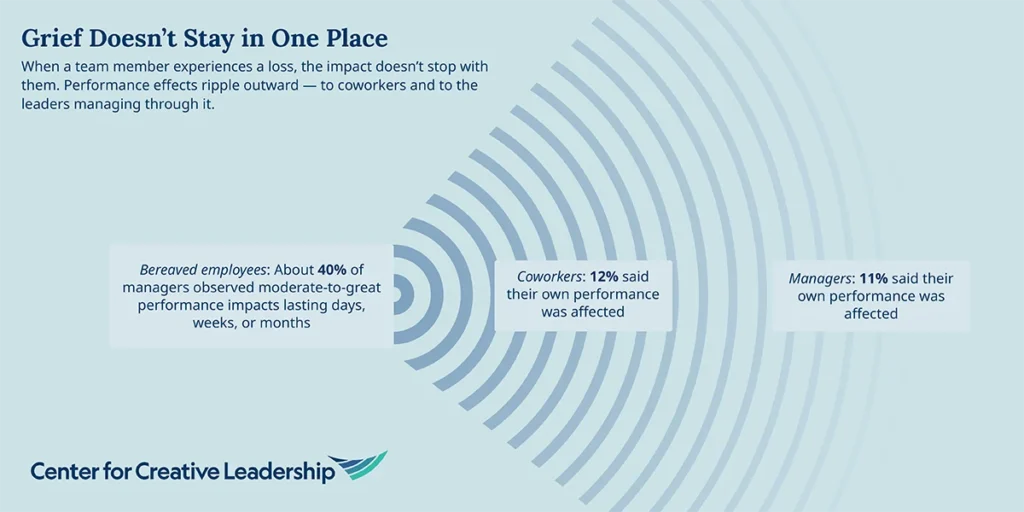
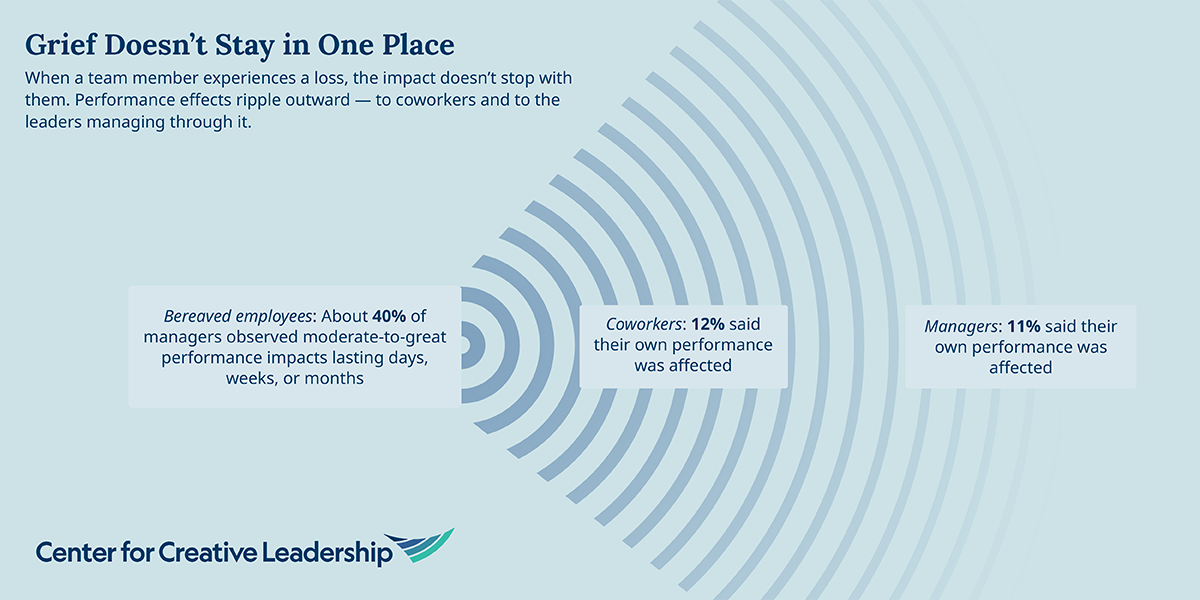
The data paints a stark picture of the widespread effects of bereavement within professional settings. CCL’s research indicates that a staggering 90% of managers observed some level of performance impact in a bereaved employee. More concerning, approximately 40% of these managers noted moderate to significant performance impacts that could persist for days, weeks, or even months. This disruption is not confined to the grieving individual. The research further reveals that 11% of managers reported their own performance was affected, and a comparable 12% of coworkers experienced similar impacts. This ripple effect underscores that bereavement is not an isolated event but a force that can disrupt team dynamics and productivity far beyond the immediate individual.
Compounding these challenges is the inadequate provision of bereavement leave in many organizations. The CCL study found that a substantial 73% of bereaved employees felt they did not receive sufficient time off to adequately process their grief. Alarmingly, 28% of employees had no access to bereavement leave at all, forcing them to return to work before they felt emotionally or mentally prepared. This situation compels individuals to manage the arduous emotional labor of grief while simultaneously attempting to meet professional obligations. Beyond the emotional toll, bereaved employees often bear the additional burdens of supporting grieving family members and managing practical responsibilities such as funeral arrangements and ongoing estate matters. These statistics are not merely indicators of productivity; they are poignant signals of the unspoken weight employees are asked to carry, frequently without adequate organizational support.
Bridging the Gap: Effective Support When Intentions Fall Short
Despite the prevalence of grief, a significant portion of managers lack the confidence and training to provide effective support. CCL’s research highlights that while 60% of bereaved employees reported their manager exhibited compassion to a great extent, a disheartening 20% – one in five individuals – felt they received little to no support during one of life’s most challenging periods. This indicates a critical failure in leadership presence and preparedness.
It is crucial to clarify what is not expected of leaders in these sensitive situations. They are not tasked with finding the "perfect" words, an often impossible endeavor that can lead to paralysis. They are not expected to "fix" grief or expedite an individual’s healing process, as these are unrealistic expectations. Leaders are not therapists, nor should they attempt to be. The research from CCL suggests a far more fundamental approach: leaders need to demonstrate presence, attentiveness, offer tangible options, and crucially, follow the lead of the bereaved employee.

Subtle Signals, Significant Impact: The Art of Attentiveness
A common pitfall for leaders is waiting for overt signs of distress, such as a breakdown or a missed deadline, before offering support. However, grief in the workplace rarely manifests so dramatically. More often, it emerges in subtle, harder-to-discern changes that managers themselves have identified. These can include shifts in communication patterns, a decline in engagement with team activities, increased absenteeism or tardiness, changes in work habits (either becoming overly meticulous or noticeably disengaged), and a withdrawal from social interactions. These are not immediate red flags but quiet indicators that, if missed, represent a lost opportunity for timely and impactful support.
Conversely, certain leader behaviors can inadvertently exacerbate the situation. These include minimizing the employee’s feelings, offering platitudes that dismiss the depth of their loss, pressuring them to return to full productivity prematurely, or avoiding any discussion of the loss altogether, thereby isolating the grieving individual. The act of checking in, even without definitive certainty, requires observation and a willingness to acknowledge the employee’s humanity.
Small Gestures, Lasting Impressions: The Power of Consistent Presence
In supporting grieving employees, grand, performative gestures often pale in comparison to consistent, low-key demonstrations of care. A simple signed card, a coffee brought without fanfare, or a brief, non-intrusive check-in that does not require the employee to feign normalcy can have a profound and lasting positive impact. These actions signal that the employee is seen as a person, not merely as a role within the organization.
In contrast, employees often recall unhelpful actions such as treating the loss as a minor inconvenience, imposing unsolicited advice, or focusing solely on the impact on work deliverables without acknowledging the human element. The significance of a gesture lies less in its magnitude and more in the message it conveys: "I see you, and I acknowledge your pain."
One Size Does Not Fit Grief: The Imperative of Personalization
One of the most critical findings from CCL’s research is that there is no universal approach to supporting grief. Employees have diverse needs and preferences; some require space and solitude, while others find solace in talking. Some may wish to immerse themselves in work as a coping mechanism, while others need their responsibilities adjusted. Many leaders, however, tend to adopt a one-size-fits-all approach, often defaulting to avoidance or excessive checking-in, rather than actively inquiring about the employee’s specific needs.
The solution is elegantly simple and a fundamental leadership skill: ask. Questions like, "How can I best support you right now?" or "Would you prefer to ease back into your responsibilities, or would you rather jump back in?" can make a significant difference. Such inquiries signal that the employee’s experience is valued and remove the guesswork that often leads to mismatched support. It is also important to acknowledge that the grieving employee may not always know precisely what they need; offering options, allowing them time to adjust, and revisiting these conversations over time are crucial components of effective support.
When Leaders Get It Right: The Impact of Empathy and Flexibility
The leaders who are most fondly remembered by bereaved employees are those who demonstrated genuine presence, flexibility, and a protective stance. This often translates into practical actions such as granting additional time off when needed, consistently checking in without being overbearing, allowing employees to set their own pace for reintegration, actively listening to their concerns, and, most importantly, acknowledging the loss. The research consistently underscores that acknowledgment of grief holds more weight than many leaders realize. These empathetic leaders, by paying attention and acting on what they observe, create an environment where employees feel supported and valued during their most vulnerable times.
Bereavement at Work: A Critical Leadership Development Opportunity
The ability to effectively navigate unscripted human moments, such as an employee’s bereavement, is often a blind spot even in well-designed leadership development programs. CCL’s research reveals that a significant 73% of managers self-identified a need for training in supporting bereaved employees, indicating a widespread call for fundamental human skills development.
The competencies required to effectively support a grieving employee are intrinsically linked to broader leadership effectiveness. These include high levels of emotional intelligence, self-awareness, empathy, the capacity for difficult conversations, and robust coaching presence. Bereavement in the workplace serves as a high-stakes crucible for these skills, a challenge for which many leaders have historically been unprepared.
The solution is not to create a niche, standalone bereavement program. Instead, it lies in integrating these essential human skills into existing leadership development frameworks. Every module on emotional intelligence, for instance, can inherently address how a leader might navigate a grieving employee’s experience. Similarly, coaching skills training can prepare leaders to ask, with genuine care and without pressure, "How are you really doing?" and "What else do you need to feel supported?" This approach reframes bereavement as a natural context for cultivating core leadership competencies, rather than an additional burden to be managed. It offers a new lens through which to view and enhance existing leadership development initiatives.
The Road Ahead: Fostering Readiness in the Workplace
Bereavement is an inevitable part of the human experience and, consequently, will touch every workplace and team. The critical question for organizations and their leaders is whether they will be prepared when such moments arise. Readiness in this context transcends having a script or a perfect phrase; it is about possessing the fundamental skills to observe, inquire, and follow the lead of the individual experiencing loss. It is, as one research participant poignantly stated, about being "human first."
Organizations must consider where in their leadership curricula managers are taught to sit with another person’s pain, or how to articulate, "I don’t know what to say, but I am here for you." Developing leaders who can authentically show up for their people in the ways they most need is a profoundly worthwhile endeavor, fostering a more compassionate, supportive, and resilient workplace for all. The ongoing research in this area continues to shed light on best practices, urging a proactive and integrated approach to leadership development that acknowledges and addresses the profound human realities of grief within the professional sphere.








