The contemporary business environment presents a complex tapestry of challenges and opportunities, demanding a fundamental reassessment of leadership paradigms. As artificial intelligence rapidly transforms industries and geopolitical landscapes shift with unprecedented speed, the very definition and practice of effective leadership are undergoing a profound metamorphosis. This article delves into the critical changes shaping leadership today, drawing upon extensive research and industry observations to illuminate the path forward for organizations and their leaders.
The Shifting Sands of Employee Engagement: From Command to Collaboration
A pivotal transformation in the past half-century has been the “decoupling” of the employee from the traditional organizational structure. Historically, a hierarchical, command-and-control model, deeply rooted in the industrial age, prevailed. Leaders could issue directives, and employees, bound by employment contracts and societal expectations, largely complied. This ingrained “boss-subordinate” dynamic permeated organizational structures and human resource practices for decades. However, this era is demonstrably drawing to a close.
Today’s workforce, encompassing full-time employees, contingent workers, and increasingly, AI-powered collaborators, operates under a different set of motivators. This paradigm shift can be characterized as leading a “voluntary army.” Individuals are no longer simply employees; they are active participants who “opt in” daily, driven by a complex interplay of personal needs, career aspirations, and evolving workplace expectations. The traditional levers of power—authority and rigid hierarchy—have proven insufficient in this new landscape. Instead, leadership is increasingly predicated on a more fragile, yet profoundly powerful, currency: trust.
Building and sustaining this trust requires a multi-faceted approach. Leaders must excel at clearly articulating organizational mission and vision, fostering an environment where individuals feel empowered and supported in their professional development. Crucially, they must cultivate an open-door policy for new ideas and perspectives. In a world where specialized skills and deep expertise are paramount, individuals at all levels of an organization may possess insights that surpass those of their leaders. Ignoring or suppressing these voices is not only shortsighted but also a missed opportunity for innovation and strategic advantage.
This “decoupling” has been a gradual process over the last fifty years, but the acceleration of AI is amplifying its impact. A single highly skilled engineer or a strategically astute professional could, in theory, disrupt or redefine an entire business model. Consequently, leaders are compelled to actively listen, engage with, and empower every member of their team, recognizing that latent talent and innovative potential reside throughout the organization. This necessitates a move away from top-down decision-making towards a more distributed and collaborative model, where diverse viewpoints are not just tolerated but actively sought and valued. The implication is clear: organizations that fail to cultivate trust and empower their people risk becoming stagnant and irrelevant in a rapidly evolving marketplace.
Embracing Iteration Over Perfection: The Imperative of Agility in the AI Age
A second significant shift in leadership philosophy is the transition from a pursuit of “doing it well” to an emphasis on “doing it now.” This evolution is driven by the pervasive integration of artificial intelligence technologies, which are inherently novel, powerful, and often non-deterministic—meaning their behavior can be unpredictable. Leaders are under immense pressure to adopt AI to remain competitive, leading to a natural inclination to meticulously research, plan, and “get it right” before implementation.

However, as observed in recent engagements with leading global corporations such as IBM, Standard Chartered, and Mastercard, this quest for a “perfect” solution often proves to be a significant impediment to progress. In the traditional industrial age, a 1.0 product or system was expected to be near-flawless before its public release. This approach, while prioritizing quality, often led to lengthy development cycles and missed market opportunities.
In the current AI-driven era, leaders must cultivate a tolerance for imperfection and embrace an iterative approach. Companies like IBM have demonstrated this by replacing their HR system, Workday, with SuccessFactors within an ambitious 18-month timeframe, acknowledging that the initial implementation would not be without its challenges. Microsoft’s widespread deployment of Copilot agents within its HR functions, even as new use cases and potential issues are continuously being discovered, exemplifies this agile methodology. The notion of waiting until a technology or strategy is “completely finished” is no longer viable.
The path from an initial concept to a fully realized objective is rarely a straight line. Instead, it is characterized by a series of iterations, calculated risks, learning from mistakes, and continuous improvement. The leader’s role in this dynamic environment is to maintain a clear focus on the overarching problem or customer need, while simultaneously empowering their teams to experiment, learn from failures, and adapt their strategies accordingly. This necessitates a culture that views setbacks not as definitive failures, but as valuable learning opportunities that contribute to long-term success. The speed of technological advancement demands that organizations be nimble, responsive, and willing to adapt, rather than rigidly adhering to outdated models of development and deployment.
The Resurgence of Values: Trust, Ethics, and Inclusion as Cornerstones of Leadership
The third critical transformation in leadership is a renewed and intensified focus on core values, ethics, and morality. In an era where information flows freely and often ambiguously, and where the lines between truth and misinformation can become blurred—sometimes exacerbated by AI-generated content—leaders are increasingly called upon to be beacons of integrity. The proliferation of “alternative facts” and the erosion of trust in public institutions underscore the urgent need for ethical leadership within organizations.
This imperative stems from a fundamental human desire for authenticity and trustworthiness. Most individuals possess an innate ethical compass and seek to align themselves with organizations and leaders whose values resonate with their own. When leaders compromise their principles, bend rules, or engage in unfair practices, the consequences extend far beyond potential legal ramifications. Such actions inflict a profound damage on the human spirit, eroding morale, stifling creativity, and ultimately undermining the very foundation of the organization.
As articulated in the research and literature on building enduring organizations, the “unquenchable power of the human spirit” is, in fact, the most significant, yet often overlooked, business asset. Leaders who foster environments where individuals feel respected, valued, and ethically guided unlock this immense potential. This underscores the critical importance of embedding ethical considerations into every decision, policy, and interaction.
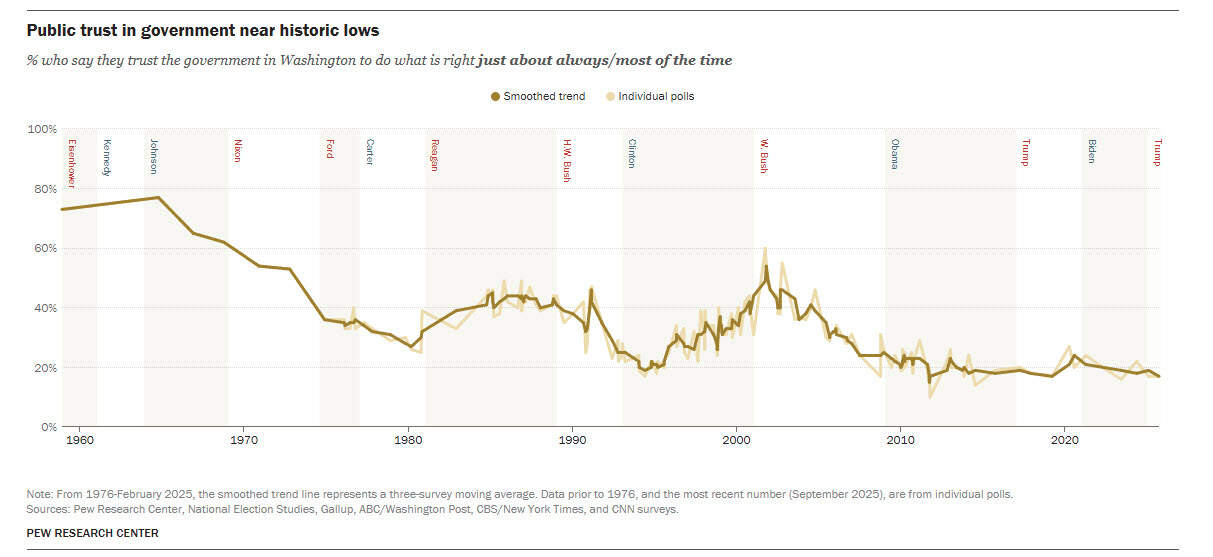
The plummeting trust in institutions, particularly evident in Western democracies, presents a significant challenge and an equally significant opportunity for leaders. In the United States, for instance, public trust in government has seen a dramatic decline, from an estimated 80% in the 1960s to a mere 17% in recent years, according to Pew Research Center data. This widespread erosion of confidence creates a vacuum that organizational leaders are increasingly expected to fill.
To bridge this trust deficit, leaders must actively listen to their people, remain steadfast in their commitment to core values, and prioritize common sense in their decision-making. This involves speaking truth to power, taking clear stances on important societal issues, and fostering an environment of genuine dialogue and mutual respect. While the discourse around Diversity, Equity, and Inclusion (DEI) has faced some opposition, the underlying principles of fairness, respect, and equal opportunity remain essential tenets of ethical leadership. Leaders who embrace these values, even amidst societal polarization, will find themselves better positioned to build resilient, engaged, and ethically sound organizations. The ability to navigate complex ethical dilemmas with integrity is no longer a desirable trait; it is a fundamental requirement for effective leadership in the 21st century.
The Imperative of Developing Future-Ready Leaders
In conclusion, the contemporary business landscape demands a fundamental re-evaluation of leadership models. The ability of an organization to adapt, innovate, and thrive is inextricably linked to the quality of its leadership. Leaders who can effectively navigate uncertainty, inspire their teams, foster a culture of trust, and champion ethical practices are the most valuable assets an organization can possess.
The insights derived from extensive research, including the concept of the "Supermanager" and the principles outlined in works like "Irresistible," highlight the critical need for developing leaders who are agile, empathetic, and ethically grounded. These leaders are not merely managers; they are architects of resilient and purpose-driven organizations.
To equip leaders for this evolving landscape, organizations must invest in robust development programs that go beyond traditional skill-building. This includes fostering critical thinking, promoting emotional intelligence, and cultivating a deep understanding of ethical frameworks. AI-powered tools, such as those offered by Galileo, can play a crucial role in personalizing leadership journeys and providing on-demand coaching and training. These platforms, built upon decades of research and case studies, can offer tailored guidance to help leaders navigate the complexities of modern leadership.
Furthermore, industry conferences and research initiatives, such as the upcoming Irresistible 2026 conference, serve as vital platforms for sharing knowledge, disseminating best practices, and fostering a collaborative ecosystem for leadership development. By embracing these evolving demands and investing in the cultivation of authentic, adaptable, and ethically driven leaders, organizations can position themselves for sustained success in an increasingly dynamic and unpredictable world. The future of leadership is not about commanding; it is about empowering, inspiring, and building trust in an era where human connection and ethical integrity are paramount.