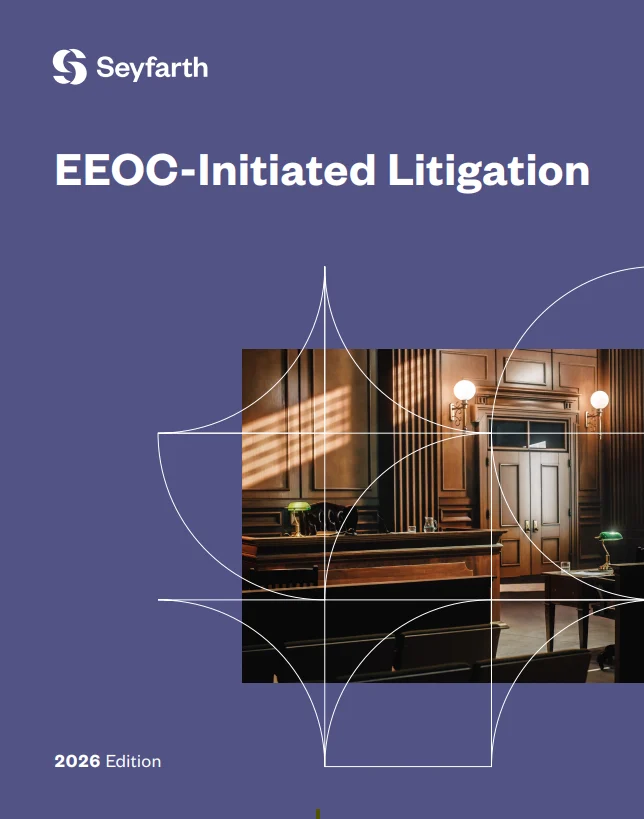
The 2026 edition highlights that 2025 was defined by the most dramatic shifts in agency policy and litigation activity observed in over a decade. As the Commission entered the second full year of its Strategic Enforcement Plan (SEP) for Fiscal Years 2024-2028, it sharpened its focus on "vulnerable and underserved" worker populations, while simultaneously launching aggressive challenges against automated hiring systems and AI-driven workplace management tools. This report compiles, analyzes, and categorizes every major case filing and judicial decision involving the EEOC throughout 2025, offering a data-driven recap of the political and legal changes that are reshaping the American workplace.
The Strategic Shift: A Recap of the 2025 Enforcement Landscape
Throughout 2025, the EEOC transitioned from a period of administrative recalibration to one of active, high-stakes litigation. The agency’s activities were largely governed by the priorities established in its 2024-2028 SEP, which emphasized the elimination of barriers in recruitment and hiring, the protection of vulnerable workers from harassment, and the advancement of equal pay. However, the 2026 Edition notes that the practical application of these priorities took on a more aggressive tone than in previous years.
One of the most significant developments of 2025 was the Commission’s increased reliance on "systemic" litigation—lawsuits that challenge an employer’s policy or practice rather than a single instance of discrimination. These cases often involve hundreds or thousands of potential claimants and result in significantly higher settlement amounts. The Seyfarth report indicates that systemic cases represented a larger percentage of the EEOC’s total litigation docket in 2025 than at any point in the last five years.
Furthermore, the implementation of the Pregnant Workers Fairness Act (PWFA) and the PUMP for Nursing Mothers Act moved into a more mature phase. After an initial period of providing guidance, the EEOC began filing merit lawsuits in 2025 to enforce these statutes, signaling to employers that the "grace period" for compliance has ended.
Chronology of EEOC Activity in 2025
The EEOC’s activity in 2025 followed a distinct pattern, beginning with a focus on policy guidance in the first quarter and culminating in a massive surge of litigation at the end of the fiscal year.
- First Quarter (January–March 2025): The year began with a series of technical assistance documents focusing on the intersection of the Americans with Disabilities Act (ADA) and artificial intelligence. The Commission signaled its intent to scrutinize "gamified" hiring assessments and algorithmic tools that might inadvertently screen out candidates with disabilities.
- Second Quarter (April–June 2025): The EEOC intensified its focus on "harassment-free workplaces," releasing updated enforcement guidance on workplace harassment for the first time in over twenty years. This guidance specifically addressed virtual work environments and social media conduct, reflecting the realities of the post-pandemic modern workplace.
- Third Quarter (July–September 2025): Consistent with historical trends, the EEOC engaged in a "September Surge." In the final month of the federal fiscal year, the Commission filed nearly 40% of its total annual lawsuits. This period saw a flurry of activity in the retail, healthcare, and hospitality sectors, with a notable concentration of filings in the EEOC’s Chicago and New York district offices.
- Fourth Quarter (October–December 2025): The final months of the year were marked by several high-profile settlements. The Commission secured several multi-million dollar consent decrees involving systemic age discrimination and sexual harassment in the tech and manufacturing industries, setting the stage for the 2026 enforcement agenda.
Supporting Data: By the Numbers
The 2026 Edition of the report provides a granular breakdown of the EEOC’s litigation statistics, offering insights into where the agency is allocating its resources.
In Fiscal Year 2025, the EEOC filed 148 new merit lawsuits, a slight increase over the 143 filed in 2024. Of these filings, 102 were individual lawsuits, while 46 were systemic or multi-claimant actions. The distribution of these lawsuits by statute reveals a clear hierarchy of priorities:
- Americans with Disabilities Act (ADA): Remained the most frequently litigated statute, accounting for 35% of all new filings. The EEOC focused heavily on "fixed-leave" policies and failures to provide reasonable accommodations for mental health conditions.
- Title VII of the Civil Rights Act: Followed closely at 32%, with a significant rise in cases involving religious accommodations and retaliation.
- Retaliation: While not a standalone statute, retaliation claims were included in over 50% of all EEOC filings, underscoring the agency’s commitment to protecting employees who participate in protected activities.
- Age Discrimination in Employment Act (ADEA): Saw a resurgence in 2025, particularly regarding digital "age-gating" in social media job advertisements.
Monetary recoveries for the EEOC remained high, with the agency securing over $500 million for victims of discrimination through both litigation and administrative enforcement (conciliation). This figure reflects the Commission’s success in leveraging large-scale systemic settlements to drive its financial impact.
Official Responses and Legal Perspectives
The legal community has reacted to the EEOC’s 2025 performance with a mixture of caution and strategic adaptation. Management-side attorneys at Seyfarth Shaw LLP emphasize that the "EEOC-Initiated Litigation: 2026 Edition" should serve as a wake-up call for companies that have not yet audited their automated systems.
"The 2025 data shows an agency that is no longer just watching from the sidelines regarding AI," the report suggests. "They are actively looking for a ‘test case’ to set a judicial precedent for algorithmic bias."
From the Commission’s perspective, Chair Charlotte Burrows has consistently maintained that the agency’s goal is to ensure that the "promise of equal opportunity remains a reality in the 21st-century workplace." Supporters of the EEOC’s 2025 trajectory point to the agency’s success in addressing long-standing issues like the gender pay gap and the "glass ceiling" in executive leadership as evidence of its effectiveness.
However, critics and some industry groups have expressed concerns regarding the EEOC’s "litigation-first" approach. Some argue that the Commission has become increasingly resistant to the conciliation process—a mandatory step where the agency is supposed to attempt to settle disputes before filing a lawsuit—leading to unnecessary and protracted legal battles.
Broader Impact and Implications for 2026
The findings in the 2026 Edition suggest several critical implications for the year ahead. First, the EEOC’s focus on "protected categories" is expanding. Beyond the traditional focus on race and sex, the agency is increasingly looking at the intersectionality of discrimination—how multiple identities (such as being an older woman of color) can create unique barriers to employment.
Second, the report predicts that 2026 will be the "Year of Pay Transparency." As more states pass laws requiring salary disclosures in job postings, the EEOC is expected to use this publicly available data to initiate Commissioner’s Charges against companies that show significant unexplained pay disparities.
Third, the judicial environment is becoming more complex. Several cases currently winding through the appellate courts involve challenges to the EEOC’s authority and the interpretation of "adverse employment actions." The outcome of these cases in 2026 will determine whether the EEOC can continue its broad interpretation of Title VII or if it will be forced to narrow its enforcement scope.
For employers, the 2026 Edition of Seyfarth Shaw’s report offers clear actionable advice:
- Conduct Proactive Audits: Review hiring algorithms and AI tools for disparate impact before the EEOC initiates an investigation.
- Update Harassment Training: Ensure policies cover remote work and digital interactions to align with the 2025 guidance.
- Strengthen Accommodations Processes: With the ADA and PWFA being top priorities, formalizing the interactive process for accommodations is essential for risk mitigation.
As the EEOC-Initiated Litigation: 2026 Edition concludes, the agency remains a formidable and well-funded force in the American labor market. By analyzing the trends of 2025, the report empowers corporate leaders to move beyond reactive compliance and toward a proactive strategy of workplace equity, ultimately reducing the risk of becoming a target of federal enforcement in the coming year.