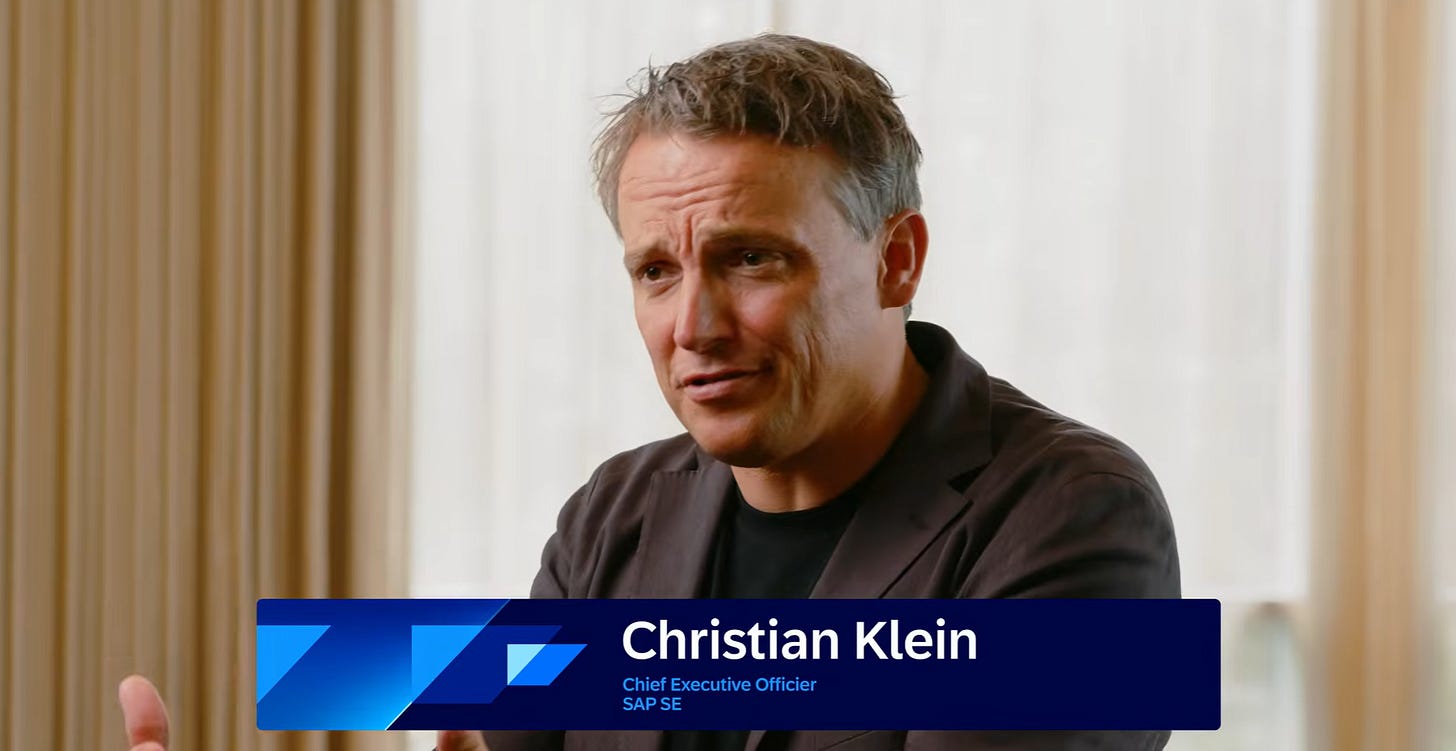
SAP has announced what is being described as one of its most significant strategic moves in years: the launch of a comprehensive enterprise artificial intelligence (AI) architecture named "The Autonomous Enterprise." This initiative, spearheaded by CEO Christian Klein, signals a profound shift for the software giant, with Klein asserting that SAP is now "an AI company at its core." The announcement, made at a recent major industry event, outlines a new vision for how businesses can leverage AI to streamline operations, enhance decision-making, and redefine user experiences within enterprise software.
The Autonomous Enterprise is built upon three key pillars: a unified AI platform for the development, contextualization, and governance of AI agents; an autonomous suite designed to execute core business operations; and a re-imagined user experience aimed at transforming how professionals interact with enterprise software. This ambitious undertaking represents a culmination of over three years of development, building on previous AI efforts like Joule and various data integration initiatives. While the terminology of "The Autonomous Enterprise" may present some initial interpretation challenges, the underlying technological advancements and strategic direction appear substantial, potentially reshaping the landscape of enterprise resource planning (ERP) and business management software.

Background: SAP’s ERP Dominance and the AI Imperative
SAP’s position as a leader in the enterprise software market is rooted in its robust Enterprise Resource Planning (ERP) systems. Unlike some competitors, SAP’s core strength lies in its comprehensive management of all business resources, spanning finance, human capital, supply chain logistics, manufacturing, procurement, and vendor relationships. With over 25 distinct industry editions, SAP’s platforms are designed to provide end-to-end visibility and control across complex value chains. This allows organizations, from pharmaceutical giants to automotive manufacturers and telecommunications providers, to meticulously track every facet of their operations, from product origin to customer support, and from supplier sourcing to profit margins.
The imperative for integrating AI into such intricate systems is driven by the increasing complexity of global business operations and the ever-growing volume of data. Traditionally, answering complex business questions, such as identifying the root cause of declining profit margins for a specific product line in a particular region, would require extensive data analysis by human teams, often involving multiple departments and significant time investment. SAP’s new AI architecture aims to automate and accelerate this process, enabling systems to proactively identify issues and provide actionable insights.
The Autonomous Enterprise: A Vision for AI-Driven Operations
At the heart of SAP’s announcement is the concept of "The Autonomous Enterprise." While the term "autonomous" might evoke images of systems operating entirely without human intervention, SAP’s current focus appears to be on creating intelligent agents that can automate routine tasks, identify inefficiencies, and suggest or implement solutions. This initiative encompasses the development of a significant number of AI agents, with over 224 announced across various business functions.
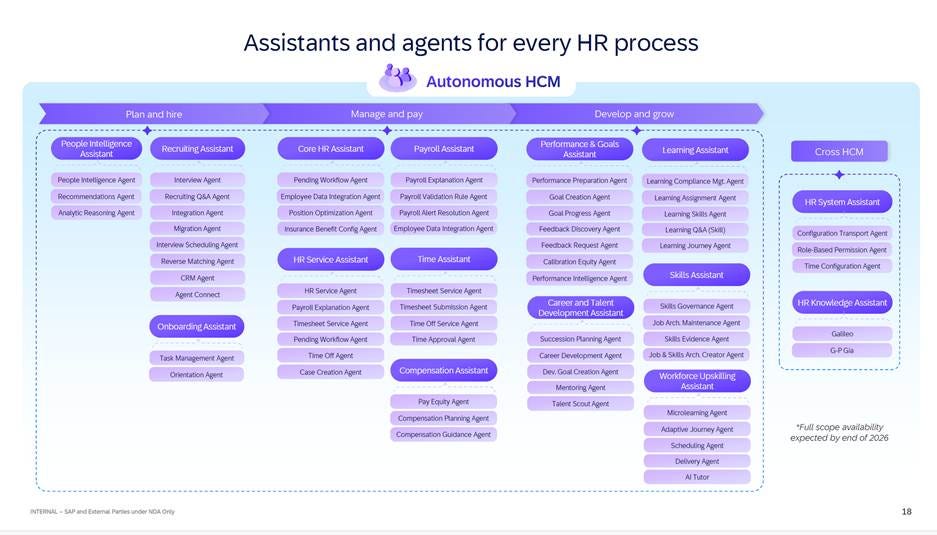
Within Human Capital Management (HCM) alone, SAP has introduced a range of specialized agents. These agents are designed to tackle complex challenges such as diagnosing underperformance within sales teams, identifying contributing factors like leadership effectiveness, training deficiencies, team tenure, or external market influences. Historically, such analyses relied heavily on manual data interpretation and expert judgment. SAP’s AI-driven approach promises to democratize this analytical capability, allowing for faster, more data-informed decision-making.
The announced agents demonstrate a granular approach to problem-solving, addressing specific processes within HR, such as payroll and employee development. For instance, in payroll, agents are expected to automate error detection, facilitate corrections, and streamline the overall process, which is notoriously complex and prone to errors. In employee development, AI agents are envisioned to personalize learning pathways, generate relevant training materials, and proactively identify employees who would benefit from specific upskilling initiatives.
Architectural Innovations: Under the Hood of SAP’s AI Strategy
SAP’s AI architecture for The Autonomous Enterprise is underpinned by several key technological advancements. The central AI layer is designed to integrate a data fabric with numerous AI models, including a large context window that allows for the ingestion and processing of extensive business data.
A significant innovation highlighted is SAP’s proprietary tabular data model, known as SAP-RPT-1.5. This model is specifically optimized for analyzing, evaluating, and modeling tabular data, which forms the foundation of most business software. Unlike general-purpose large language models (LLMs) that can sometimes struggle with the precision and scale of spreadsheet and table analysis, SAP-RPT-1.5 is engineered to handle massive datasets, enabling users to query, analyze, model, and perform "what-if" scenarios on complex, real-time business data. This development is particularly noteworthy for data analysts and those familiar with SQL, offering a powerful tool for deep data exploration. SAP has also launched a public playground for this model, encouraging user engagement and experimentation.
Central to the architecture is the SAP Knowledge Graph. This component acts as the "brain" of the system, mapping the thousands of business entities, structures, and rules within SAP into a semantic layer that AI agents can understand and interact with. When a user poses a query, whether a simple request like "what’s family leave for my new baby?" or a more complex business problem, the Knowledge Graph translates it into context-specific queries across the relevant functional areas to retrieve accurate data and information. This contextual understanding is crucial for enabling truly intelligent responses and actions.
The user interface for interacting with these AI capabilities is primarily through Joule, SAP’s intelligent copilot. Originally launched as a transactional chatbot, Joule has evolved significantly. The newly introduced Joule Studio provides an enterprise-grade development environment for designing, building, testing, integrating, and managing AI agents. This tool is designed for IT professionals and SAP developers, offering a robust platform for creating both simple and complex agents without resorting to overly simplified coding paradigms. The emphasis is on providing developers with comprehensive access to SAP’s unique data objects and modules across its suite, enabling them to build highly customized AI solutions.
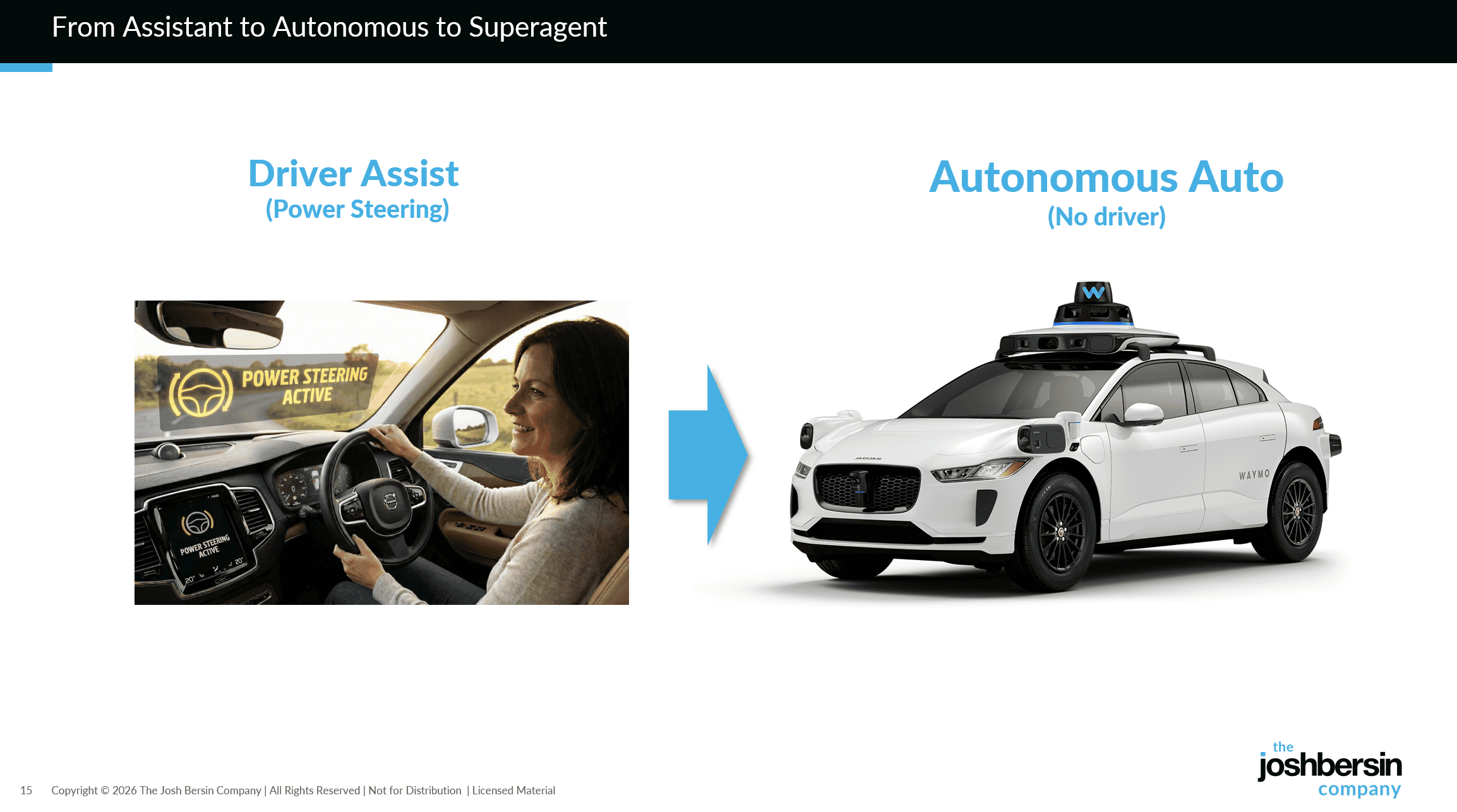
From Automation to Process Redesign: The "Waymo" vs. "Zoox" Analogy
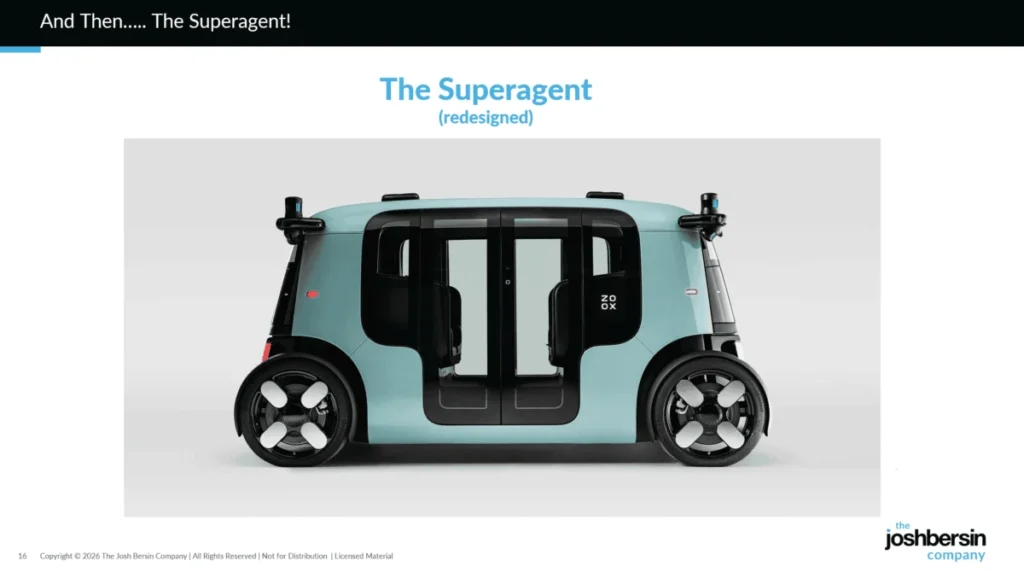
A critical distinction in the evaluation of SAP’s AI strategy, as highlighted by industry analysts, lies in the emphasis on automation versus true process redesign. The analogy of Waymo (a self-driving car built on existing car platforms) versus Zoox (a vehicle designed from the ground up for a new passenger experience) is used to illustrate this point. SAP’s current approach, while powerful, is characterized as a "Waymo" – it enhances and automates existing processes within the current SAP framework. This provides significant value by improving the efficiency and autonomy of current operations.
The initial set of announced agents appears to primarily focus on automating existing workflows, identifying and fixing glitches, and generating alerts or targeted content. While this automation is valuable, especially given the complexity of many SAP implementations, the deeper potential of AI lies in fundamentally redesigning business processes. The "Autonomous Enterprise" vision suggests that over time, SAP may move towards a "Zoox" model, where AI enables entirely new ways of operating.
However, the author notes that the ability of AI agents to learn and adapt is a key benefit. Once an automation is in place, AI can continuously tune it, making it smarter and more efficient over time. This iterative improvement, coupled with the robust development capabilities of Joule Studio, suggests a pathway toward more transformative AI applications in the future.

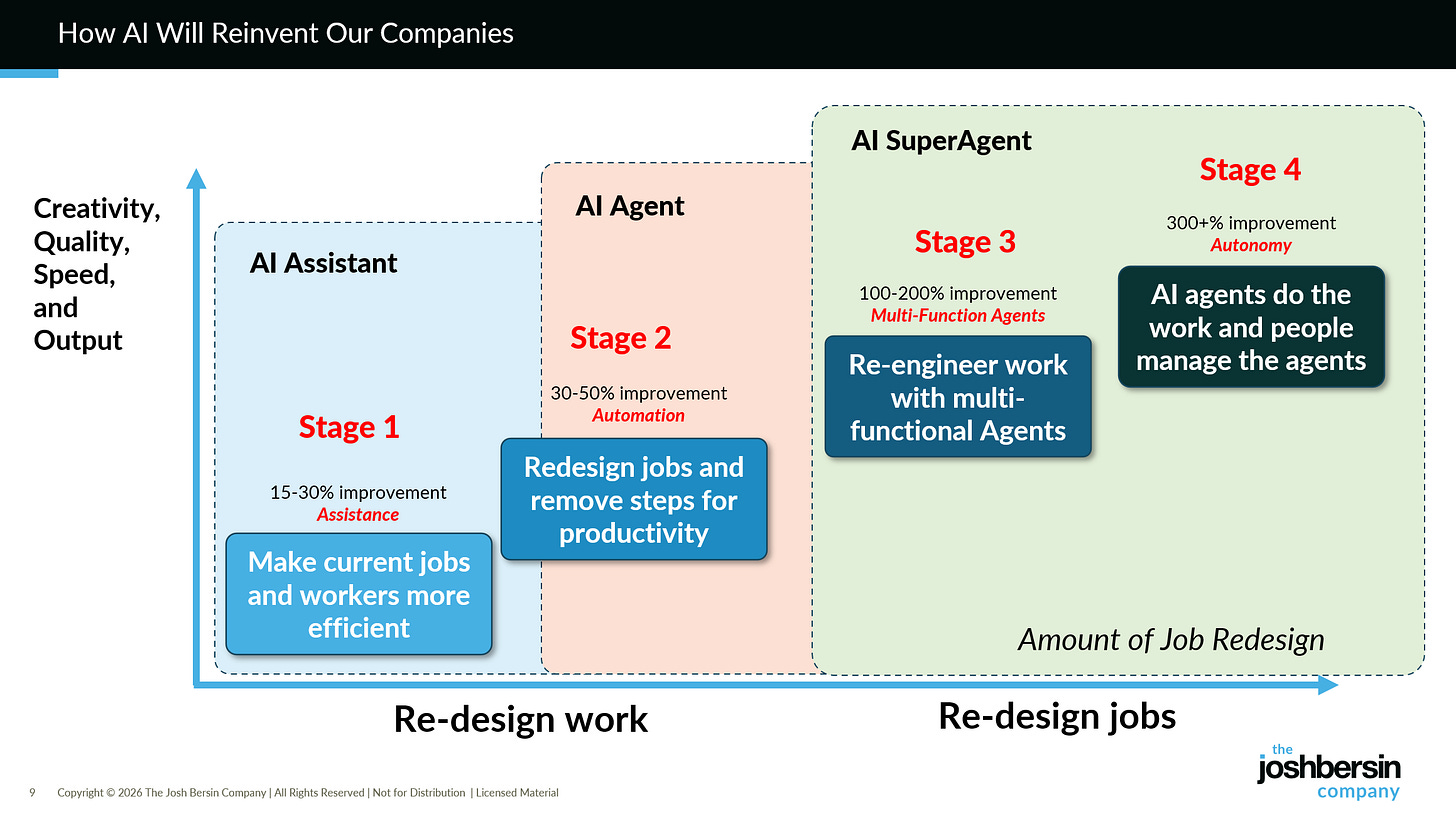
SAP’s AI strategy is structured around a four-stage model for AI agent use cases, where stages three and four, focusing on deeper analysis and redesign, offer significantly higher ROI than pure automation (stage two). The company has stated that the goal is not to replace existing systems but to leverage AI to drive cross-domain process innovation, enhance customer and employee experiences, and create smarter operational systems.
Key Components and Their Significance
- The Autonomous Enterprise Suite: This encompasses the operational execution layer, where AI agents perform core business functions.
- Unified AI Platform: This provides the infrastructure for building, contextualizing, and governing AI agents.
- New User Experience: This aims to simplify and enhance how users interact with SAP software.
- Joule Copilot and Joule Studio: Joule serves as the primary user interface for interacting with AI agents, while Joule Studio is the enterprise-grade development platform for creating these agents. This dual role positions Joule as a critical component for both end-users and developers.
- SAP Knowledge Graph: This semantic layer is fundamental for understanding the complex relationships and data within SAP environments, enabling intelligent query processing.
- SAP-RPT-1.5 Tabular Data Model: A proprietary AI model optimized for tabular data analysis, crucial for extracting insights from core business data.
- AI Agent Hub: This provides governance for AI agents, ensuring security, data policy compliance, and controlled operation, similar to offerings from competitors like Workday and ServiceNow.
Reactions and Implications for the Enterprise Software Market
SAP’s move positions it directly against other major enterprise software vendors like Workday and ServiceNow, who are also heavily investing in AI-driven platforms and agent-based architectures. The company’s strategy directly challenges the narrative of a "SaaS Apocalypse," where startups leveraging advanced AI models might render established enterprise systems obsolete. SAP, along with competitors like Workday and Oracle, is betting on its ability to re-engineer decades of accumulated R&D and industry knowledge into AI-powered applications.
The implication for businesses is that they may not need to abandon their existing, deeply embedded SAP systems to gain the benefits of advanced AI. Instead, they can leverage these new AI capabilities to enhance current operations and gradually evolve their processes. This approach is likely to be more palatable for large enterprises with significant investments in their SAP infrastructure.
The shift towards an AI-centric model also suggests a potential evolution in SAP’s financial model, moving from traditional seat licenses to consumption-based and outcome-oriented pricing. This aligns with the broader industry trend of value-based pricing for software solutions.
The success of "The Autonomous Enterprise" will depend on the practical implementation and effectiveness of its AI agents and platform. SAP’s ability to deliver on the promise of intelligent automation, insightful analytics, and ultimately, process redesign, will be critical in solidifying its position as a leader in the AI-driven enterprise software market. The company’s deep understanding of diverse business processes across multiple industries provides a strong foundation, but the execution and continuous innovation of its AI offerings will be key to its long-term success.