The artificial intelligence industry is currently abuzz with anticipation as leading generative AI companies, OpenAI and Anthropic, reportedly explore pathways toward public offerings. This burgeoning drama, fueled by the competitive ambitions of their respective CEOs, has captured the attention of the global tech sector. As details surrounding potential initial public offerings (IPOs) begin to surface, a critical question looms large: how will these AI titans compete and differentiate themselves in an increasingly crowded market? While much of the discourse has focused on the underlying models and their capabilities, a compelling counter-argument suggests that the ultimate victor in the enterprise AI landscape may not be the company with the most advanced foundational model, but rather the one that masters the "surface"—the user experience, integration, and ecosystem surrounding the AI. This analysis posits that Microsoft, through its strategic investments and platform approach, is uniquely positioned to achieve this dominance.

The Enterprise AI Market: A Multi-Layered Ecosystem
The enterprise market for artificial intelligence is not a monolithic entity. It can be broadly segmented into three interconnected layers, each presenting distinct challenges and opportunities:
1. The Foundational Models: Specialization Over Generalization
The first layer comprises the core AI models themselves—the large language models (LLMs) and other sophisticated algorithms that power AI applications. The current industry trajectory indicates a move away from a single, all-encompassing model towards specialized ones, tailored for specific tasks and domains.
- Model Specialization: The initial promise of a universal AI model has given way to the realization that different applications demand distinct AI architectures and training data. For instance, coding and analytical tasks might benefit from Anthropic’s Claude, while narrative and document generation could be optimized by OpenAI’s models. Google’s Gemini is being positioned for analytical and scientific applications, and Musk’s Grok aims for robotics and motion control. The role of NVIDIA’s world models in this evolving landscape also remains a significant consideration. This product-market fit is still in its nascent stages, with AI labs continuously refining their algorithms and data training to meet diverse enterprise needs.
- Data Training and Domain Expertise: Beyond raw computational power, the efficacy of AI models hinges on the quality and specificity of their training data. Developing a model that deeply understands complex scientific domains, such as protein folding for pharmaceutical companies or advanced genetics, requires dedicated training on specialized datasets. This emphasis on domain-specific intelligence means that a one-size-fits-all approach is becoming increasingly untenable. Our own experience with AI Galileo, which has achieved remarkable intelligence by focusing laser-like on HR, labor market dynamics, and skills development, underscores the power of deep specialization. This has allowed Galileo to function as a virtual management consultant for a myriad of human capital challenges.
- The Need for Plurality: Consequently, business buyers are likely to require a portfolio of AI models, each suited to particular functions. Claims of a single AI doing "everything" are therefore losing credibility in the enterprise sphere. The complexity of enterprise workflows necessitates a nuanced approach, where specialized AI agents can be deployed to address specific business problems.
2. The AI "Surface" or "Harness": The Crucial User Experience
The second critical layer is the "surface"—the application experience, the user interface, and the integration tools that make AI accessible and actionable for end-users and IT departments. This is often referred to as the "AI Harness."
- Beyond the Model: The true value of AI in the enterprise is unlocked not solely by the model’s capabilities, but by how seamlessly it integrates into existing workflows and how intuitive its user experience is. If Apple’s Siri were to achieve true intelligence and ease of use, its adoption would likely be rapid, irrespective of the underlying AI model. The user experience, encompassing factors like responsiveness, personalization, data integration, and overall usability, is paramount.
- Microsoft’s Historical Precedent: Microsoft’s dominance in the personal computer market serves as a potent historical parallel. While competitors like Lotus 1-2-3 and Multiplan were earlier to market, Microsoft’s relentless focus on the application experience of products like Excel, PowerPoint, and Outlook, coupled with its licensing of graphical user interfaces, ultimately secured its market leadership. The 450 million paying users of Microsoft 365 are a testament to the power of a well-crafted user experience.
- The AI Harness in Practice: For business developers and IT professionals, the AI harness encompasses the tools, integration capabilities, and development frameworks that simplify AI deployment and management. This includes ensuring that AI solutions can interact effectively with existing enterprise resource planning (ERP) systems like SAP and Oracle, customer relationship management (CRM) platforms such as Salesforce, and human capital management (HCM) suites like Workday. The ability of an AI to connect to and leverage data from these disparate systems is a critical determinant of its enterprise value.
3. The Ecosystem: Interconnectivity and Partner Networks
The third layer is the ecosystem—the network of partners, applications, and tools that surround an AI platform, fostering innovation and extending its reach.
- The Enterprise Demand for Integration: In the enterprise context, the demand for AI platforms extends beyond core functionality to encompass robust integration capabilities. Companies require solutions that can connect with their existing IT infrastructure, including legacy systems, databases, and specialized software. This need for connectivity was evident in the development of AI Galileo, where customer requests for integration with various policy databases, leadership models, and compliance training systems drove the expansion of its core platform.
- Partnering for Profit: For AI vendors aiming to capture significant market share in the enterprise, cultivating a thriving ecosystem of partners is essential. These partners can generate revenue by building applications and services on top of the AI platform, thereby creating a self-sustaining cycle of innovation and adoption.
- The Platform-Centric Approach: HR and IT leaders consistently express a dual need: accessible, packaged AI solutions for immediate employee use, and a robust platform for building, buying, and managing "agentic" applications. This platform must complement and, over time, potentially replace existing enterprise systems without locking them into a single vendor in a rapidly evolving market. The focus, therefore, is shifting from the underlying "engine" (the model) to the "surface" and the broader ecosystem it enables.
The "Surface" Versus the "Model": A Paradigm Shift
The industry’s lexicon is evolving, with a growing emphasis on "AI surfaces" rather than solely "models." A surface represents the application experience—the user interface, the speed of interaction, the available historical context, and the effectiveness of its semantic connectivity layer.

- Contextual Intelligence is Key: The true measure of an AI surface’s effectiveness lies in its ability to leverage connected data sources to provide valuable insights. For example, an AI integrated with an HR system should be able to retrieve and synthesize relevant employee data, not merely return random or incomplete information. A recent attempt to integrate Claude with HubSpot, which failed to retrieve even basic client interaction data, highlighted a significant deficiency in the "surface" layer, rather than the underlying model’s capabilities.
- The Role of Third-Party Integrators: Companies like Anthropic and OpenAI, while possessing powerful models, may not have the capacity to build out comprehensive enterprise surfaces independently. Their success will, in part, depend on third parties—such as ServiceNow, Microsoft, or Accenture—to develop these crucial integration layers. The quality of these third-party integrations will directly impact the perceived value and adoption of the underlying AI models.
Microsoft’s Strategic Advantage: The Rise of the Integrated Surface
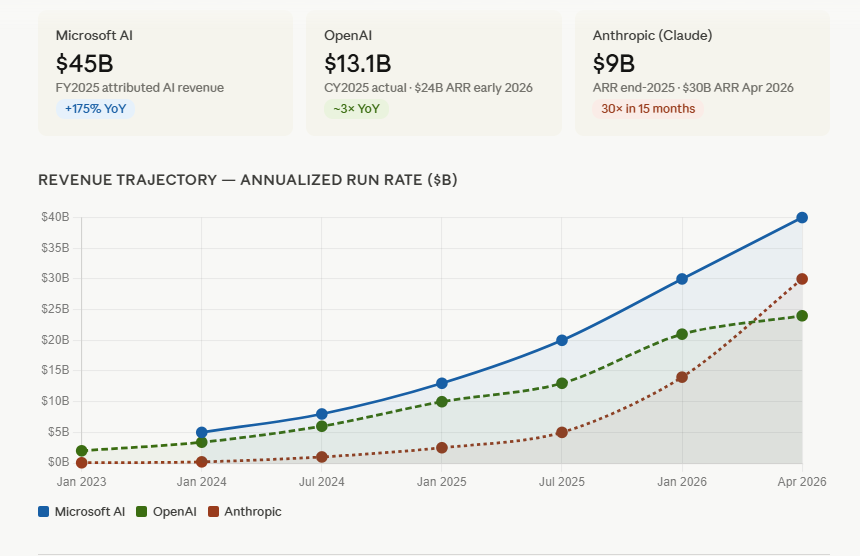
While OpenAI and Anthropic are generating significant attention with their potential IPOs, their current revenue streams offer a glimpse into their primary focus. Reports suggest that approximately 70% of OpenAI’s revenue stems from consumer subscriptions, while a similar percentage of Anthropic’s revenue comes from selling AI compute capacity to other providers. This indicates that neither company is currently dominating the enterprise "surface" market.
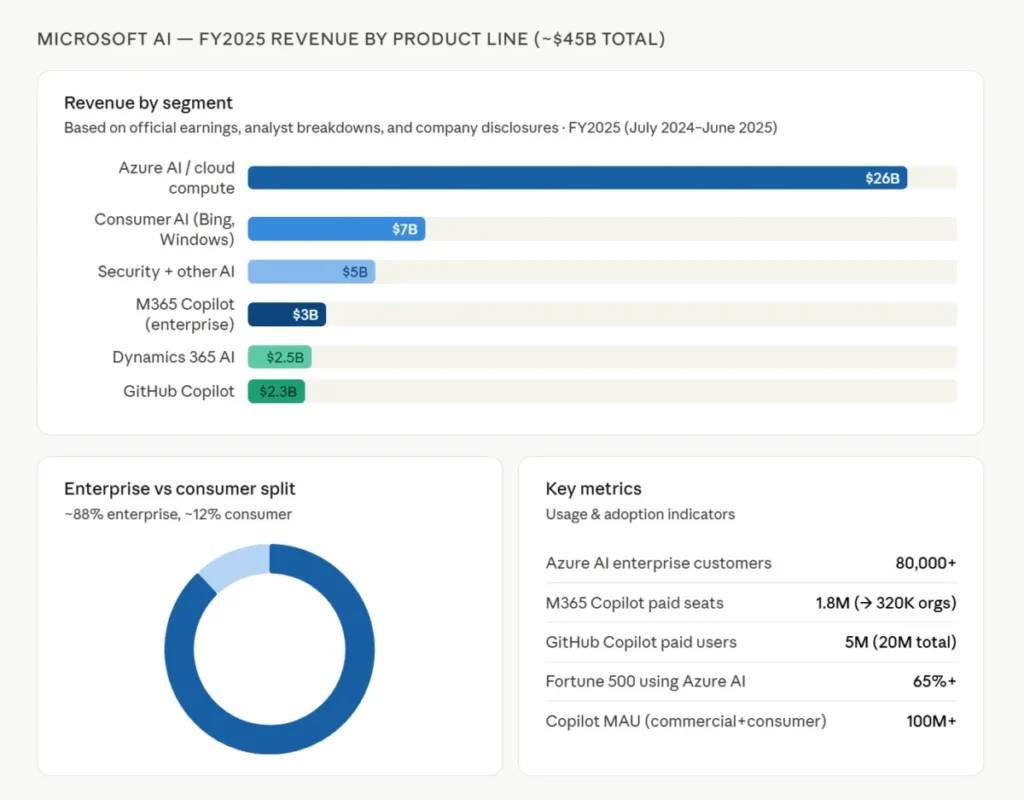
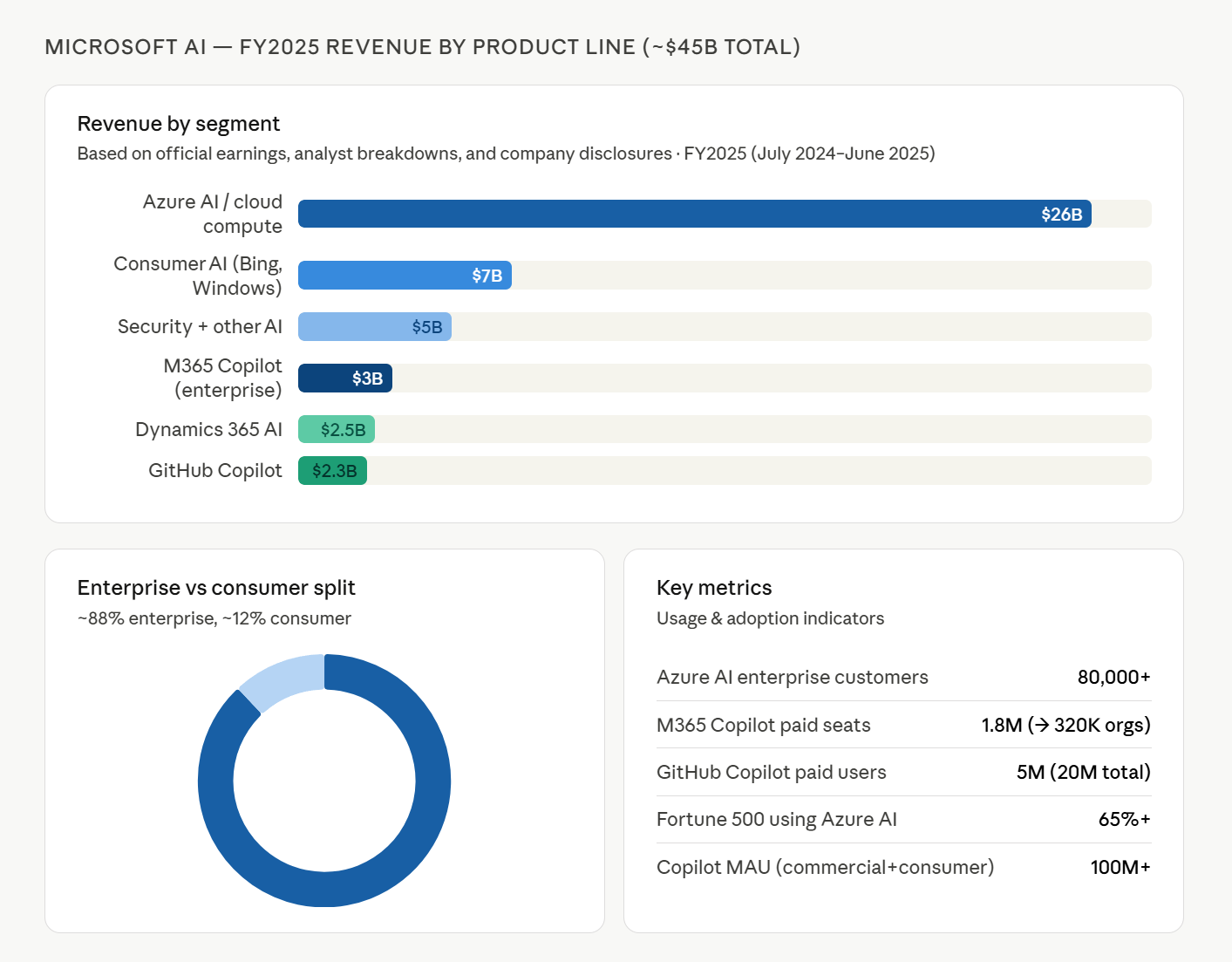
- Microsoft’s Revenue Generation: Microsoft, conversely, appears to be capturing significant value from the enterprise AI surface. With an estimated 15 million licensed users of its Copilot product, generating an estimated $4.5-5 billion annually at an average price of $25 per month, Microsoft is already a major player. When combined with Azure API service fees, Microsoft’s AI revenue is substantial and growing, projected to reach $25 billion or more. The company’s own projections indicate over $100 billion in new AI revenue within the next three years, a figure some analysts believe could be surpassed.
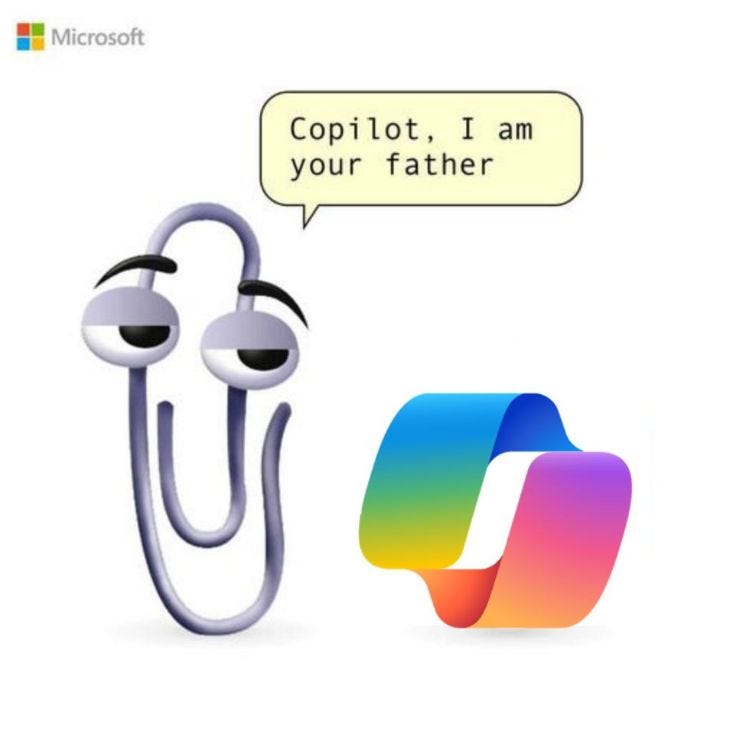
- Copilot’s Evolution: From Pieces to a Unified Platform: Microsoft’s Copilot strategy has undergone a significant evolution. Initially conceived as a licensing arrangement for OpenAI’s ChatGPT integrated into Bing, it has transformed into a comprehensive platform. The early iterations of Copilot, while promising, often felt like individual plugins or an overly simplistic "Clippy" successor. However, Microsoft’s product teams have rapidly expanded the "surfaces" by embedding Copilot into its M365 suite, Dynamics, Excel, GitHub, and other applications. The introduction of Copilot Studio, Agent 365, and Work IQ further demonstrates a commitment to building a cohesive AI experience.
- Strategic Realignment and Leadership: The recent reorganization of Microsoft’s Copilot product teams under a single leadership structure, spearheaded by Satya Nadella, signifies a strategic shift towards a unified platform approach. This consolidation, led by executives like Jacob Andreou (Copilot growth), Ryan Roslansky (LinkedIn), Perry Clarke (Copilot Core), and Charles Lamanna (Agents and Apps), allows Microsoft to operate with the integrated efficiency seen in companies like NVIDIA. This unified strategy enables Microsoft to focus on both proprietary models and a comprehensive AI engineering approach, building an integrated surface for both corporate and consumer markets.
The Pillars of Microsoft’s Enterprise AI Ascendancy
Microsoft’s potential to outpace competitors in the enterprise AI space rests on several key strategic advantages:
- Integrated Enterprise Toolset: The corporate world increasingly demands an integrated suite of tools that encompasses desktop applications, development environments, IT management capabilities for AI agents, and seamless connectivity with legacy systems. Microsoft, through its M365 ecosystem and strategic partnerships, is well-positioned to deliver this comprehensive solution. Initiatives like Work IQ and the extensive development of Agent365 and Copilot Studio are direct testaments to this strategy.
- Empowering Application Development: The vast application development world is actively seeking more integrated toolsets. ERP, financial, productivity, analytics, and other software vendors are now presented with APIs that allow them to build within the "Copilot-land" ecosystem. While navigating the various connection points (Teams, Graph, Work IQ, Fabric) can be complex, the pathway to integration is becoming increasingly clear, fostering a rich environment for third-party innovation.
- Unified Desktop Experience: For end-users, PC buyers, and IT helpdesks, the convergence of AI applications into a cohesive Microsoft desktop experience offers significant appeal. While the current Copilot interface may still be undergoing refinement, the company’s commitment to user experience design suggests a rapid beautification and simplification of the AI interaction layer.
- Leveraging the Partner Network: Microsoft’s extensive partner network is a critical asset. As Work IQ APIs become more accessible, a multitude of corporate cloud vendors, concerned about agentic disruption, will likely seek opportunities to integrate their offerings. This collaborative approach accelerates innovation and broadens the reach of Microsoft’s AI platform.
Microsoft’s Value-Add: Beyond Basic Functionality
Microsoft’s strategic approach offers distinct value-adds that extend beyond the core AI models:
- Deep Research Capabilities: Features like the "Researcher" button, which can access and analyze data within the Microsoft Graph, offer powerful capabilities for in-depth research and contextual advice. As this functionality expands with enhanced memory and context awareness, it promises to deliver significant value to individuals and leaders.
- Intelligent Routing and Optimization: New Microsoft Agents are being developed to compare queries across different AI models, optimizing cost and performance. This intelligent router can decompose complex AI tasks and distribute them among specialized agents, ensuring efficient resource utilization.
- Agentic Interfaces for Core Applications: The ability to interact with complex documents, run reports, create graphs, and modify content directly within Microsoft applications like Excel, PowerPoint, and Word through agentic interfaces is a powerful differentiator. This seamless in-app integration is poised to become increasingly sophisticated.
- Contextual Layer for Enterprise Applications: The forthcoming Work IQ API will enable companies to import and build "context" into Copilot, effectively transforming it into an agentic platform for HR, finance, sales, and other critical business functions. This deep integration with corporate data unlocks unprecedented levels of automation and intelligence.
In conclusion, while the spotlight currently shines on the potential IPOs of OpenAI and Anthropic, the long-term battle for enterprise AI dominance may hinge on the ability to create compelling user experiences and integrated ecosystems. Microsoft’s strategic focus on the "surface"—the AI harness—coupled with its robust platform, extensive partner network, and deep integration with existing enterprise workflows, positions it as a formidable contender. As the AI landscape continues to evolve, the companies that successfully bridge the gap between powerful models and seamless, actionable user experiences are most likely to emerge as the ultimate winners. The strategic vision and execution demonstrated by Microsoft in building out its Copilot ecosystem suggest a compelling path towards market leadership in the enterprise AI era.