
The rapid integration of Artificial Intelligence across industries has ignited a global conversation about reskilling, upskilling, and accelerating workforce capabilities. This imperative was underscored this week during high-level discussions with over 200 Chief Human Resources Officers (CHROs) in India and Singapore. The paramount concern for these leaders, as consistently reported, is "AI readiness"—specifically, how to rapidly enhance AI fluency and proficiency across their entire organizations. This pressing need highlights a significant disconnect: a recent comprehensive study reveals that prevailing corporate learning and development (L&D) strategies, technologies, and operating models are no longer adequate for the demands of the current business landscape.
The Staggering Skill Gap: A Global Challenge
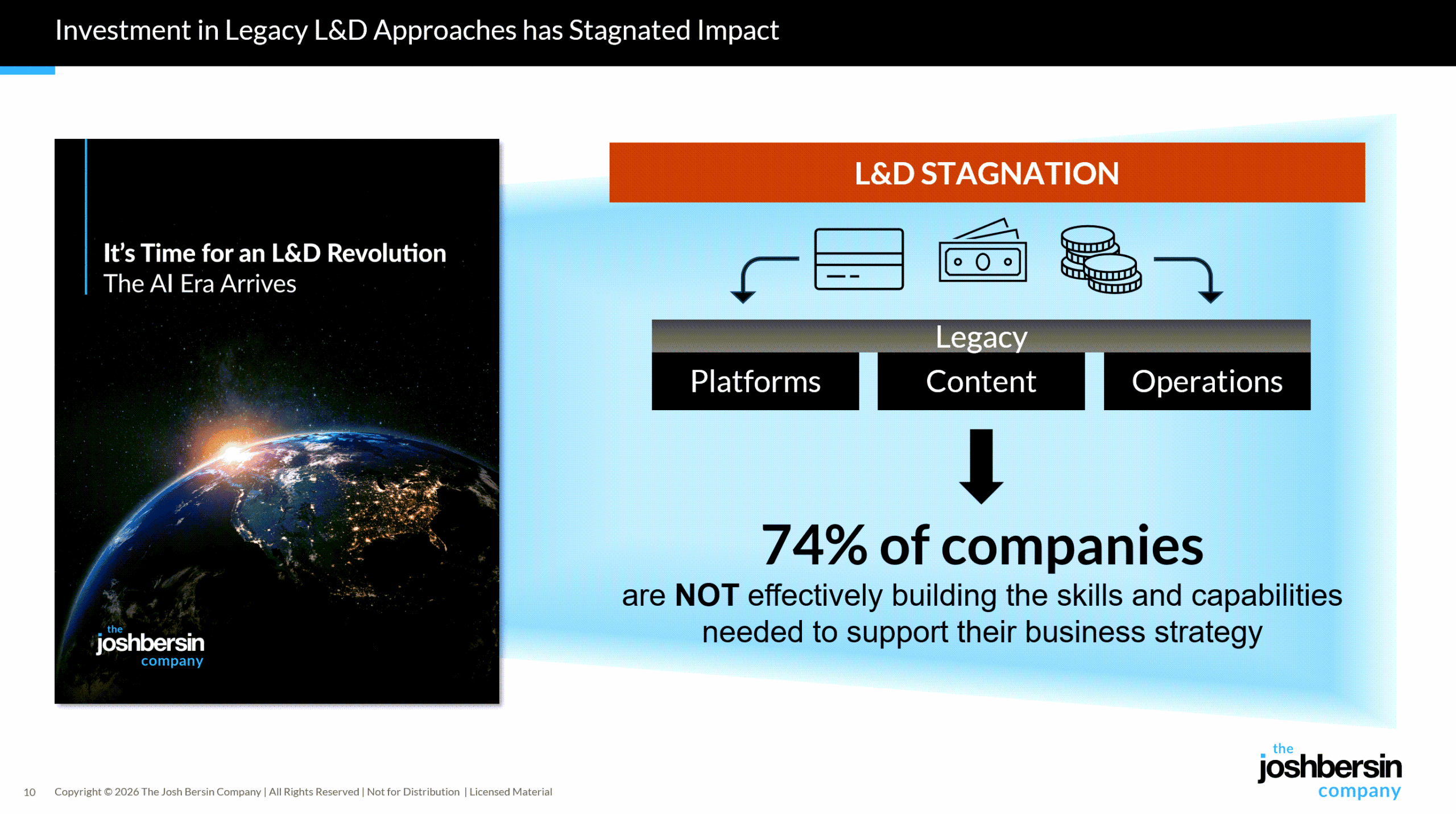
A groundbreaking study, the fifth major investigation into corporate L&D conducted by industry analyst Josh Bersin, has unveiled a startling statistic: a substantial 74% of companies report they are not keeping pace with their organization’s evolving skill requirements. This finding is particularly concerning given the immense investment in corporate training. Globally, businesses allocate an estimated $400 billion annually towards training programs, extensive content libraries, L&D technology, professional trainers, and learning consultants. The fact that three-quarters of these initiatives are failing to meet organizational needs suggests a colossal expenditure of resources with diminished returns.

The research, detailed in Bersin’s latest report, "Learning 2026," posits that the fundamental challenge lies not in the traditional concept of "learning" or "training" but in the dynamic sharing of information and the enablement of employees to explore, question, and apply new knowledge. The traditional pedagogical framework of "training," characterized by static content and linear progression, is identified as a significant bottleneck hindering progress.
The Dawn of AI-Native Learning: Redefining the Paradigm
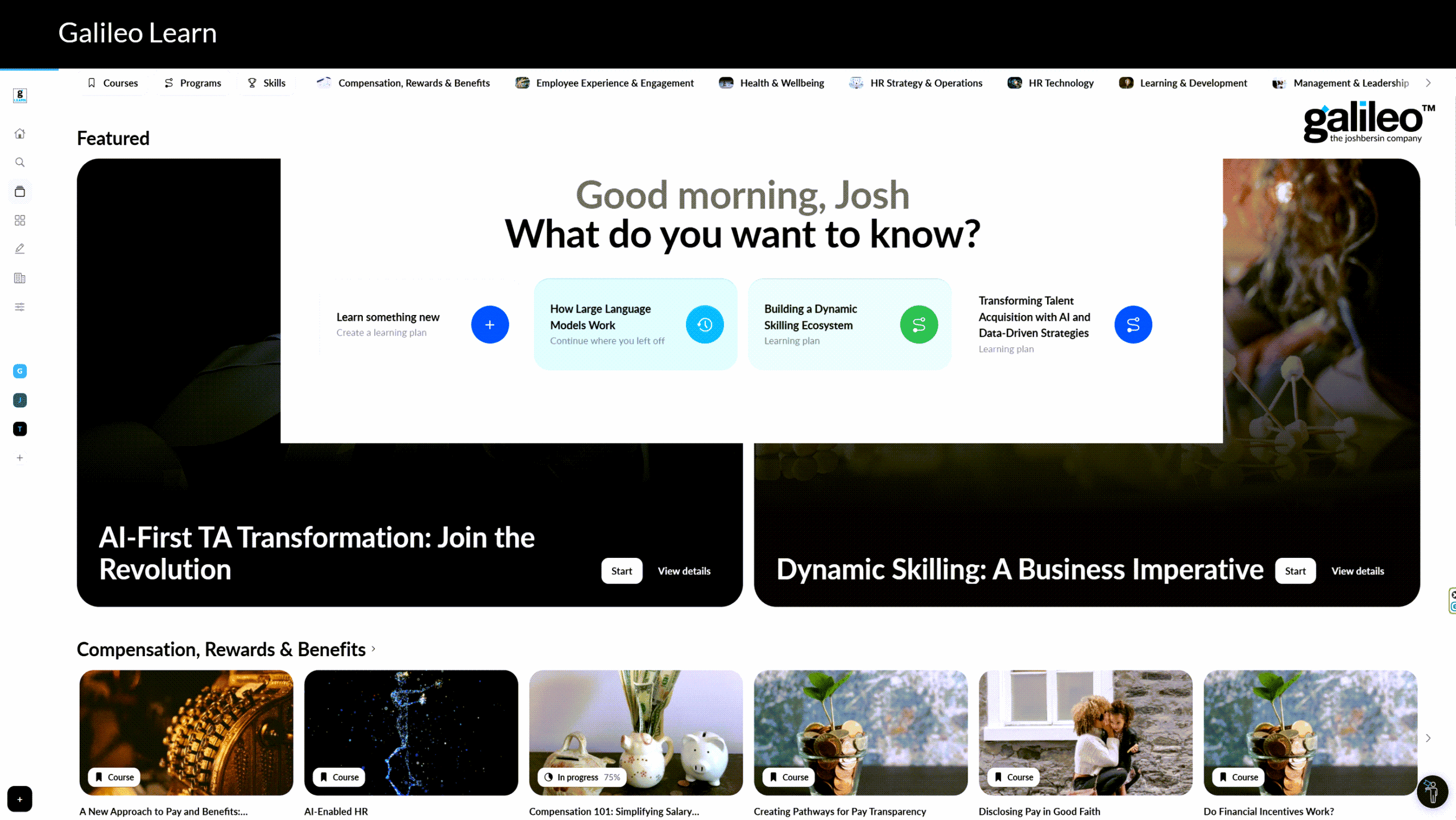
The study’s central thesis, explored in depth in Bersin’s seminal work "The Revolution of Corporate Learning," is that Artificial Intelligence is poised to fundamentally reinvent how organizations facilitate learning and development. The "Learning 2026" report solidifies this prediction, asserting that AI-native systems, capable of dynamically generating and sharing content, are uniquely positioned to revolutionize the methods by which employees are trained, upskilled, supported, and ultimately "enabled." This paradigm shift, already being implemented with platforms like Galileo, is set to redefine not only L&D but also the broader HR functions and organizational change initiatives.
What Constitutes AI-Native Learning?
AI-native learning leverages the inherent capabilities of generative AI to create and deliver content dynamically. Unlike traditional approaches that involve laborious manual design, development, and publication of static courseware requiring constant updates and revisions, AI platforms can generate content on demand, adapting to various formats and learner needs.

For instance, platforms like Galileo, built on the Sana framework, enable the creation of new learning modules in days rather than months. Crucially, as new information or topics emerge, the entire learning system can be instantaneously updated. This offers employees unprecedented agility:
- Instantaneous Access to Information: Employees can pose questions and receive immediate, contextually relevant answers drawn from the company’s knowledge base.
- Personalized Learning Paths: The system can infer an employee’s skill level based on their interactions, suggesting relevant content and development opportunities.
- Dynamic Content Updates: As new information or best practices are introduced, the entire learning library is refreshed, functioning as a unified "intelligence system" for the organization.
The success of platforms like ChatGPT, with an estimated 60% of its 900 million weekly users engaging in learning activities, serves as a powerful indicator of this new paradigm’s efficacy. This level of engagement far surpasses that achieved by traditional course catalogs. Furthermore, the practice of interviewing internal experts and publishing recordings directly into these AI platforms ensures that the knowledge base remains current, offering real-time insights and solutions. This application of AI is projected to yield significant business improvements, potentially in the trillions of dollars.
A New Framework: The Learning Maturity Model
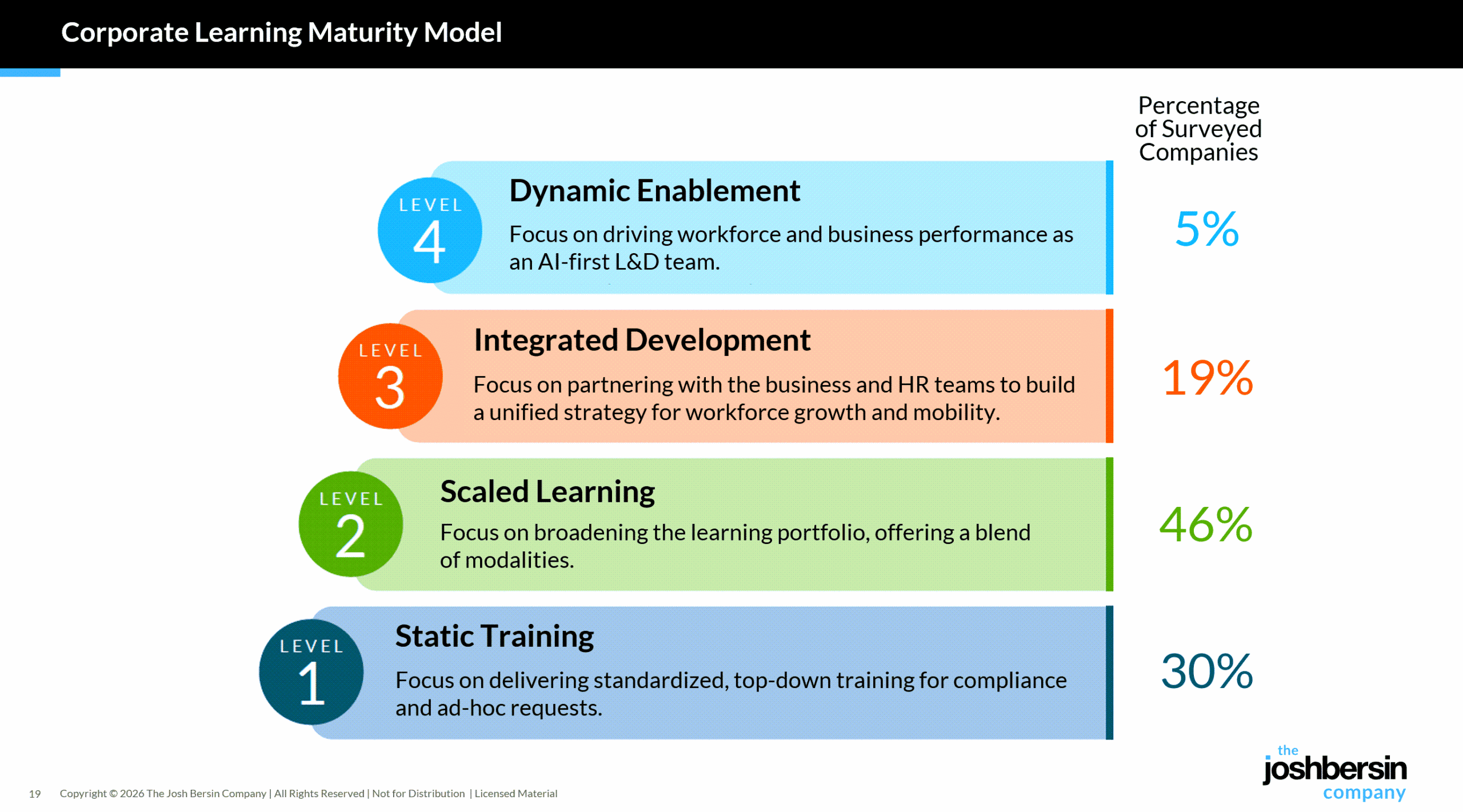
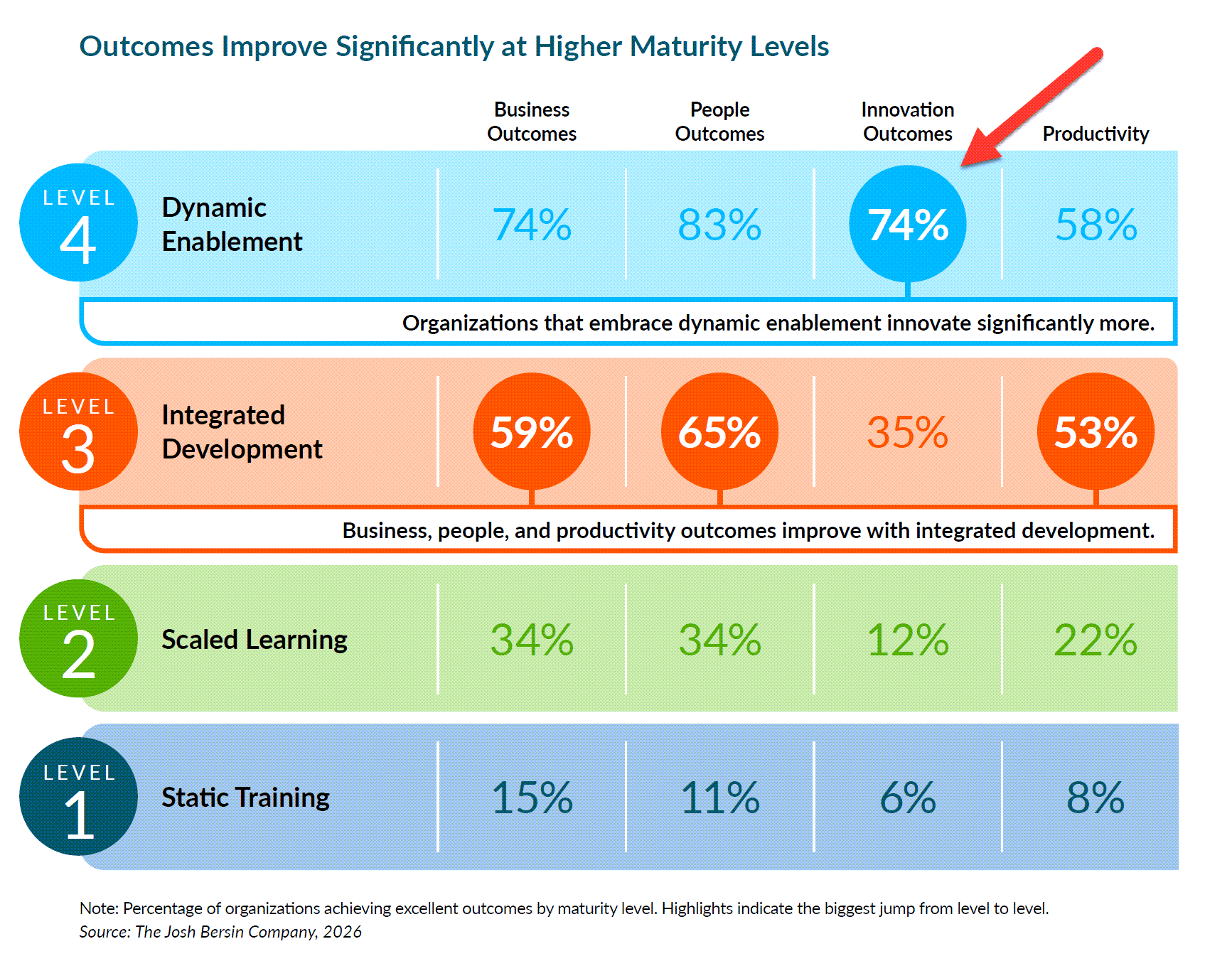
To guide organizations through this transformative period, Bersin’s research introduces a novel "Learning Maturity Model," developed over the past year. This model outlines four distinct stages of organizational learning development:
Level 1: Static Training Programs
At this foundational level, companies primarily rely on static training programs. This typically involves building or purchasing courses designed for compliance, new product launches, or other episodic needs. While these programs are often cost-effective to acquire or develop and help employees stay current with immediate updates, they offer limited scope for skills-based learning. Approximately one-third of the market currently operates at this level.
Level 2: Scaled Learning
Expanding upon static training, Level 2 involves companies adding diverse content formats such as videos, audio resources, and job aids. This broadens the learning portfolio, providing employees with a wider array of options, often sourced from third-party content vendors. While these offerings are more extensive, the onus remains on the learner to navigate and select appropriate content. Many leading online learning platforms, including those from LinkedIn, Coursera, Skillsoft, and Pluralsight, primarily fall into this category.
Level 3: Integrated Development
At Level 3, organizations move towards tailoring learning programs around specific job roles, skills, and career paths. This stage focuses on building comprehensive "development programs" rather than just isolated training modules. However, this approach introduces significant complexity. With skills becoming obsolete at an accelerated rate—LinkedIn reports that 70% of job-related skills degrade annually—maintaining these intricate, multi-dimensional frameworks encompassing technical skills, professional competencies, job roles, and career levels becomes exceptionally challenging.
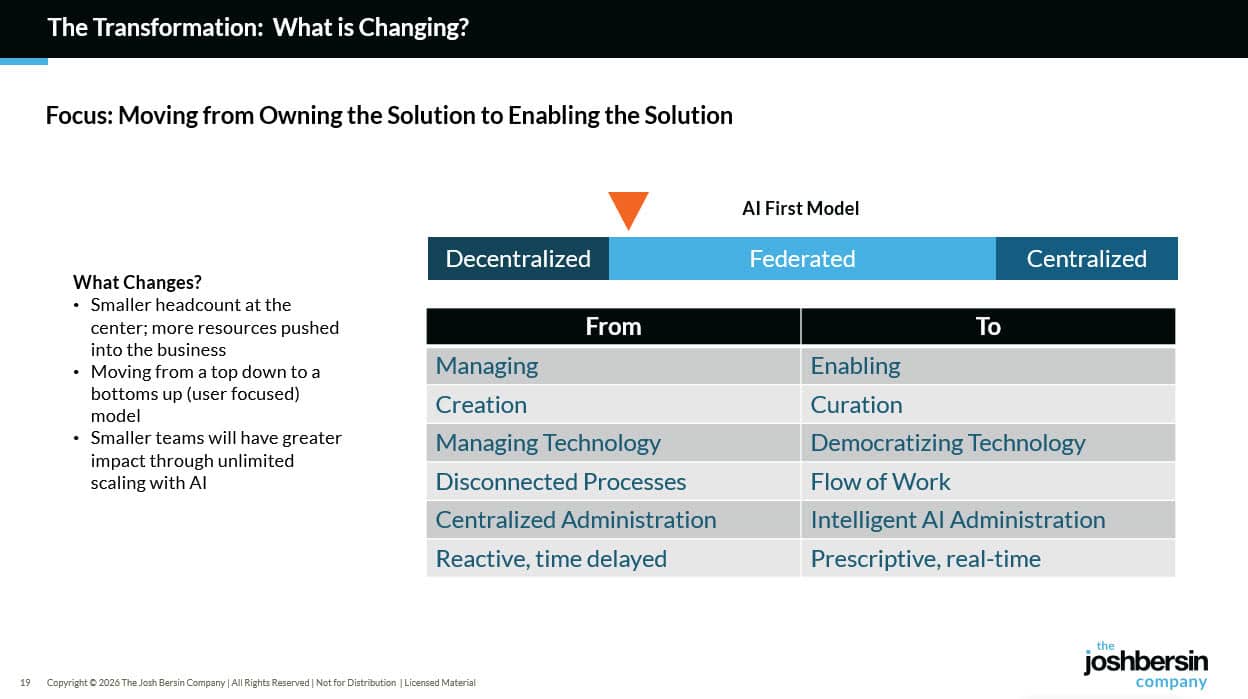
Companies operating at Level 3 often experience a substantial increase in L&D costs and operational overhead. The continuous need to build, maintain, and refresh numerous programs, curricula, skills models, and content objects can become unwieldy. Furthermore, the decentralized nature of corporate learning, where a significant portion (estimated at 70%) of training is managed within specialized domains like sales, manufacturing, or customer service, complicates this model. This often necessitates a "federated" approach, where core L&D functions focus on strategic initiatives, while line-of-business training is delegated to local teams, creating a more complex but potentially more scalable system.
Level 4: AI Transforms Everything – Dynamic Enablement
The pinnacle of this maturity model is Level 4, where AI fundamentally reshapes the learning landscape. This stage envisions a platform housing an organization’s entire knowledge repository—encompassing formal courses, documents, policies, and expert interviews. This new domain is termed "Dynamic Enablement," a shift from mere "learning" to empowering employees with immediate, context-aware support.
AI-native platforms like Galileo enable the publication of information in days, allowing employees to learn and perform in ways previously unimaginable. Traditional Learning Management Systems (LMS) are often retained for legacy compliance programs, while new AI platforms replace Learning Experience Platforms (LXPs), learning portals, and most content development tools. Early adopters of AI-native learning solutions are already reporting significant reductions in internal L&D expenditures, often in the range of 40-50%.
The Impact of Dynamic Enablement
The implications of Dynamic Enablement are profound, promising substantial savings in both time and money while delivering an exceptional employee experience. As outlined in the Systemic HR AI Blueprint, learning can now be seamlessly integrated into every corporate chatbot or agent. This allows employees to:
- Seek Benefits Information: Ask detailed questions about benefits packages within HR portals.
- Receive Sales Coaching: Obtain guidance on selling into specific industries when entering new opportunities in CRM systems.
- Access Operational Updates: Inquire about departmental changes or new processes upon logging into their workstations as a nurse or manufacturing worker.
A notable case study involves a large travel reservations company that leverages call recordings from top customer service agents. These recordings are integrated into the learning system, providing real-time examples of best practices and strategies for handling challenging customer interactions. This approach is applicable across customer service, engineering, sales, and all support functions, offering an unprecedented opportunity for practical, on-the-job skill development.
In essence, the shift to Dynamic Enablement signifies a crossing of the Rubicon from "learning" to "enablement." The fundamental purpose of learning in the workplace is no longer solely for knowledge acquisition but to empower individuals to perform at higher levels and drive organizational growth.
Proven Returns and Strategic Roadmaps
The research consistently demonstrates that organizations at Level 4, embracing AI-native learning and Dynamic Enablement, exhibit significantly higher rates of innovation (10 times more likely), financial performance (6 times more likely to exceed targets), and adaptability to change (16 times more likely). These dynamic, AI-driven learning platforms are poised to become critical drivers of business strategy execution.
The roadmap to achieving Dynamic Enablement involves more than simply accelerating course creation with AI. It necessitates a fundamental replacement of traditional SCORM-based LMS with dynamic content systems. Companies are advised to:
- Rationalize Content: Evaluate existing content, identifying what to retain and transform into AI-native formats. Platforms like Galileo offer tools to convert legacy SCORM courses into dynamic assets.
- Establish New Governance Models: Redefine the operational structure of L&D. Early adopters in industries such as insurance, healthcare, pharmaceuticals, and airlines have successfully delegated line-of-business training to local staff once the AI-native system is established.
- Embrace a Hybrid Operating Model: This distributed approach fosters agility. Corporate HR can then concentrate on global strategic topics like leadership development, compliance, culture, and business strategy, while individual business units can establish "Enablement Academies" for specialized functions like sales and manufacturing.
The research, case studies, benchmark data, and maturity model diagnostics are made available through resources like Galileo, which offers agentic workflows for diagnosing maturity levels and exploring vendor solutions. Furthermore, a dedicated "Galileo Learning" program, "The Journey to Dynamic Enablement," is available to users of the Galileo Suite, providing hands-on experience with authoring courses and utilizing AI-native learning.
As organizations navigate the complexities of the AI revolution, the adoption of AI-native learning and the transition to Dynamic Enablement are no longer optional but essential for sustained competitive advantage, innovation, and future-proofing the workforce. The evidence is clear: the future of corporate learning is dynamic, intelligent, and deeply integrated into the fabric of daily work.