The rapid ascent of artificial intelligence (AI) into mainstream business operations is poised to trigger a significant and potentially disruptive increase in the cost of AI tools, according to industry analyses. While the promise of enhanced productivity and innovation remains potent, the underlying economic realities of developing and deploying sophisticated AI technologies suggest a future where access to these powerful tools will come at a substantially higher price. This shift could redefine how businesses integrate AI, potentially leading to a reassessment of investments and even a re-evaluation of global talent acquisition strategies.
The Immense Financial Undertow of AI Infrastructure
The fundamental driver behind the escalating costs of AI is the sheer magnitude of investment required to build and maintain the underlying infrastructure. The creation of advanced AI models, particularly large language models (LLMs) and generative AI systems, demands unprecedented computational power, massive data storage, and specialized hardware. This has led to a surge in capital expenditure by major technology players and emerging AI specialists alike.
Data center construction and expansion, the backbone of AI operations, have already surpassed historical benchmarks. Adjusted for inflation, global spending on data centers has significantly outstripped the cost of building the entire 47,000-mile U.S. highway network over four decades, a feat estimated to have cost around $670 billion. This colossal investment underscores the resource-intensive nature of the AI revolution.
A Glimpse into the Billions Being Invested
Recent financial data and industry projections paint a stark picture of the financial commitments being made. The "Big Four" hyperscalers – Amazon, Alphabet (Google), Microsoft, and Meta – collectively invested an estimated $370 billion to $410 billion in 2025. Projections for 2026 indicate an even more substantial increase, with estimates ranging from $650 billion to over $750 billion, according to a Reuters report citing Bridgewater’s analysis.

When accounting for other significant players in the AI infrastructure space, such as Oracle, CoreWeave, and Elon Musk’s xAI/SpaceX initiatives, the annualized investment in "AI data-center building" escalates. This universe of recent annualized investment now approaches $500 billion and is projected to reach $700 billion to $750 billion-plus by 2026. These figures represent direct capital expenditures and do not include larger, multi-year contractual commitments for capacity, which would push the broader market value even higher.
The ecosystem supporting AI development further amplifies these costs. Companies like Nvidia, TSMC (Taiwan Semiconductor Manufacturing Company), Micron, Intel, SK Hynix, and Seagate, which are critical suppliers of AI chips, memory, and storage, are also experiencing significant revenue growth and reinvestment. Their combined annual investments are estimated to add another $200 billion to $300 billion, pushing the projected total annual spending run-rate for AI infrastructure close to a staggering $1 trillion by 2026.
The Gartner Forecast: A Trillion-Dollar Future
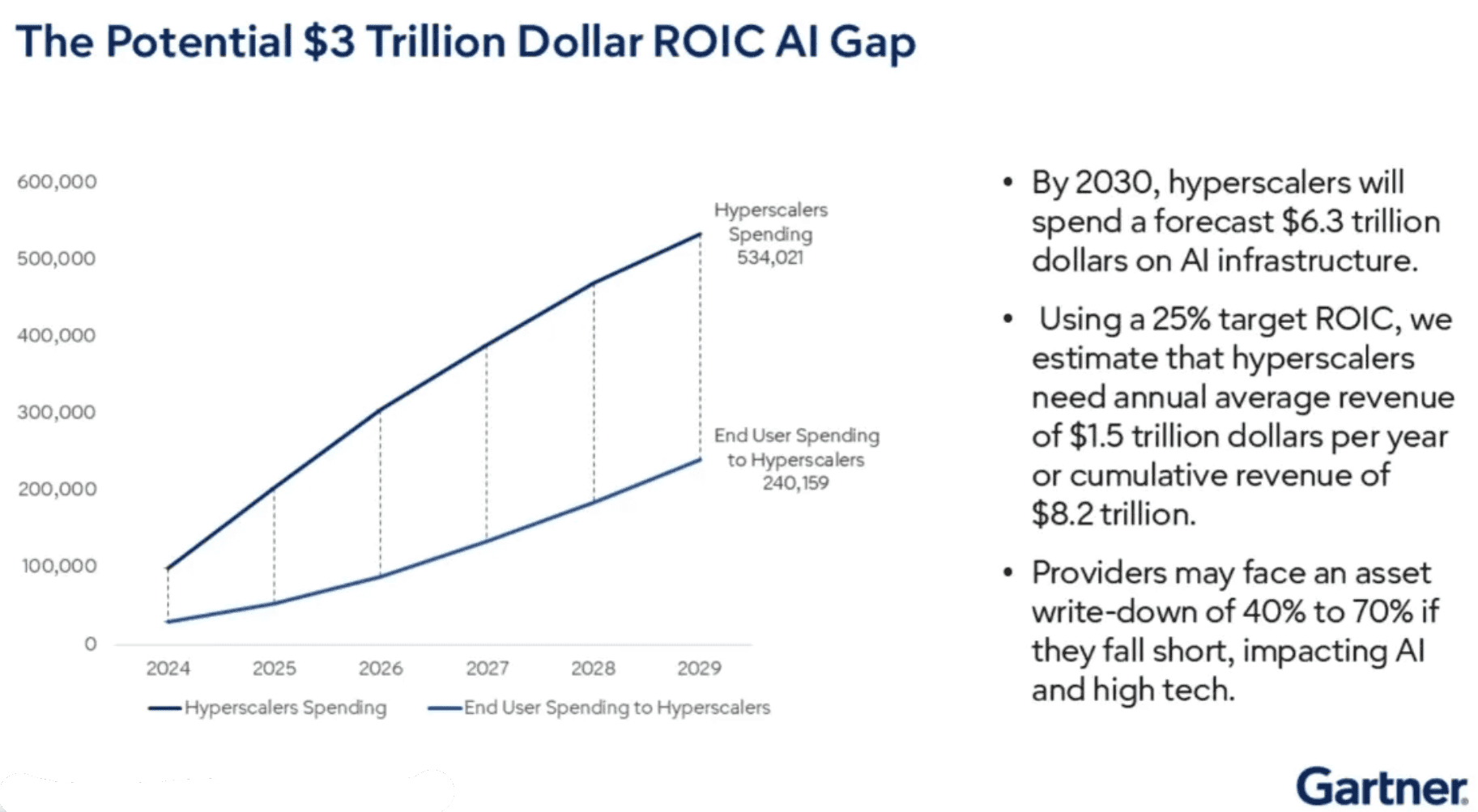
Looking further ahead, market research firm Gartner forecasts an exponential growth trajectory for AI-related spending. By 2030, Gartner predicts that global expenditure on AI could reach an astonishing $6.3 trillion. This projection suggests that the current investment surge is not a temporary spike but rather the beginning of a sustained and rapidly expanding market.
The Pressure to Monetize: Pricing Power and Profitability
As AI companies mature and many prepare for or undergo initial public offerings (IPOs), the pressure to demonstrate profitability will intensify. Companies like Anthropic and OpenAI, which are at the forefront of developing advanced LLMs, are facing increasing scrutiny from investors. To satisfy Wall Street’s demand for positive gross margins, these companies are likely to implement more aggressive pricing strategies. Anthropic, for instance, is reportedly close to achieving positive gross margins, signaling a potential shift in its pricing approach.
Similarly, established enterprise software giants such as SAP, Workday, Oracle, Salesforce, and Adobe, which are integrating AI into their existing product suites, will also be motivated to showcase robust financial performance. This could translate into higher subscription fees or new premium AI-enabled features, impacting the overall cost of doing business for their enterprise clients.
CIOs Grapple with Rising Claude Costs and Global Talent Shifts
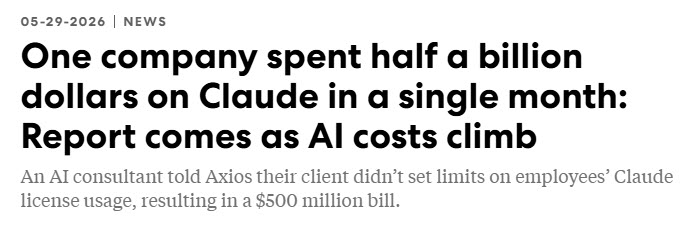
The tangible impact of these rising costs is already being felt by IT decision-makers. Anecdotal evidence suggests that the substantial expenses associated with advanced AI tools like Anthropic’s Claude are prompting businesses to explore alternative solutions. During recent client engagements in New York City, several Chief Information Officers (CIOs) and Chief Human Resource Officers (CHROs) reportedly discussed the high cost of Claude’s coding capabilities. This discussion, in turn, has led to considerations of "outsourcing" AI-intensive tasks to engineers in countries with lower labor costs, such as India.
This sentiment reflects a growing concern among business leaders that the rapid escalation of AI tool expenses might necessitate a strategic recalibration of talent sourcing. While AI is intended to augment human capabilities, the economic viability of certain AI applications could be challenged by the cost of access, leading businesses to seek more cost-effective human capital for specific tasks.
Anthropic’s Pricing Model and the "Tokenizer" Factor
A recent report from The Information highlighted how Anthropic is flexing its pricing power. The company has reportedly shifted its pricing model for enterprise customers, moving from flat fees to a usage-based system. This means that businesses whose employees are heavy users of Anthropic’s Claude products, including AI coding and other productivity tools, are likely to face significantly higher bills. This change is directly linked to the growing demand for AI compute resources and the associated operational costs.
Furthermore, Anthropic has indicated that its latest AI models utilize a new version of a technology known as a "tokenizer." Tokenizers are crucial for processing and understanding human language, and advancements in this area can contribute to the increased computational demands and, consequently, the higher costs passed on to customers. Despite these rising costs, many technology firms and large Anthropic customers have indicated a willingness to absorb these expenses, driven by the perceived value in boosting productivity for software engineers and sales teams through AI-driven automation.
The Emerging Price-Performance Battleground
The competitive landscape for AI models is rapidly evolving, with a growing emphasis on both performance and cost-effectiveness. In a significant development, Google recently announced its Gemini 3.5 Flash model, which is reportedly priced at ten times less than Anthropic’s Opus 4.7 model. This announcement signals the official commencement of a fierce battle for price-performance in the AI market. As more advanced and cost-efficient models emerge, businesses may find a wider range of options to balance their AI needs with budgetary constraints.
Quantifying the Price Increase: A Trillion-Dollar Revenue Imperative
The question of "how much will prices go up?" is directly tied to the enormous investments being made. To generate a 15% compound annual return on investment, assuming a generous five-year depreciation period for AI infrastructure, the industry needs to secure approximately $1 trillion in new annual revenue. This figure could be even higher, given the profit margins associated with AI services.
This substantial revenue requirement will likely be met through a combination of consumer and business spending. On the consumer side, a significant increase in advertising revenue, potentially doubling the current $750 billion global internet ad spending, could contribute. However, the prospect of a "double or more" increase in advertisements, often perceived as intrusive, raises questions about consumer acceptance.
For businesses, the enterprise software market, currently valued at around $1.2 trillion according to Gartner, could potentially double its spending on AI-integrated solutions. This implies that businesses may face effectively doubling their expenditure on enterprise software to accommodate AI integration.
While these figures represent significant potential revenue streams, the economic implication is clear: consumers and businesses will likely bear the brunt of the cost increase. The notion of "Moore’s Law," which suggested a consistent decrease in computing costs over time, is unlikely to hold true for AI in the near term due to the substantial upfront and ongoing infrastructure investments.
Historical Computing Costs: A Matter of Perspective
To contextualize current trends, a look at historical computing costs provides perspective. The original IBM PC, released in 1981 with a price tag of $1,565 (without a hard disk), would cost approximately $5,700 in today’s inflation-adjusted dollars. In contrast, modern laptops and personal computers, often priced around $3,000, now come bundled with advanced functionalities and often include sophisticated mobile devices like smartphones. This suggests that while the absolute cost of individual computing devices might appear to have decreased relative to inflation-adjusted historical prices, the overall "cost of computing" for consumers has not seen a drastic reduction over the past 45 years. This ongoing cost of computing, even before the advent of widespread AI integration, underscores the inherent expense of advanced technology.

The Drive for Growth, Not Replacement
The economic models of major technology companies are predicated on growth, not on replacing existing revenue streams with AI. Companies like Nvidia, Oracle, Microsoft, Workday, Google, Meta, SpaceX, Amazon, and Apple are all seeking to expand their market share and revenue. As Nvidia CEO Jensen Huang succinctly put it, "AI compute is revenue." This perspective suggests a shift away from traditional seat-based licensing models towards a model where the utilization of AI compute power directly translates into revenue for providers. This fundamental business strategy reinforces the likelihood of sustained or increasing costs for AI services as demand and investment continue to climb.
Broader Economic Implications and the Need for Productivity Gains
The significant investment in AI infrastructure and the projected revenue requirements necessitate a tangible return on investment. From an economic standpoint, this means that the widespread adoption of AI must translate into substantial productivity gains, improvements in health outcomes, or other significant societal benefits to justify the escalating costs. Without these demonstrable advantages, the increased spending on AI could simply represent a higher cost of doing business without a corresponding increase in overall economic output or societal well-being.
The integration of AI into various sectors, including government spending on military applications and new markets for bio-research and energy, suggests that revenue sources for AI will indeed be broad. However, the core economic challenge remains: ensuring that the immense investments in AI deliver commensurate benefits that outweigh the rising costs.
Conclusion: Navigating the AI Economic Landscape
The trajectory of AI development and deployment is undeniably capital-intensive. The current wave of investment in data centers, specialized hardware, and research and development is substantial, and the pressure to monetize these investments is mounting. Businesses that rely on AI tools should anticipate a period of increasing costs, prompting strategic planning around AI adoption, vendor selection, and potentially a re-evaluation of global talent strategies. The coming years will likely witness a dynamic interplay between technological innovation, market competition, and economic realities as the world grapples with the financial implications of the AI revolution.