
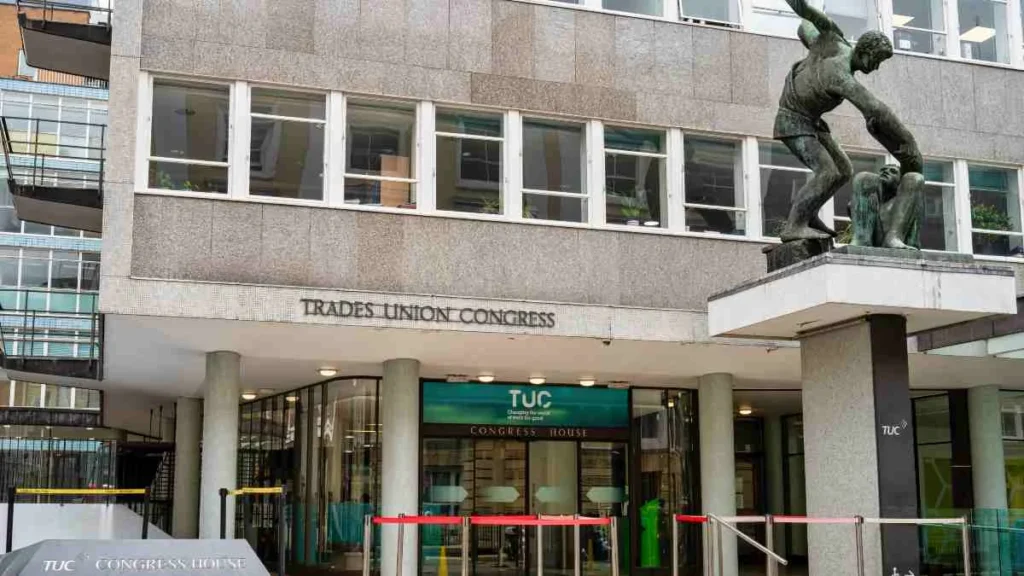
Union membership among public sector workers in the United Kingdom reached a significant 6.6 million in 2025, marking an increase of almost 200,000 from the preceding year. This robust growth in public sector affiliation contributed to an overall rise in trade union density across the UK, with the proportion of employees holding union membership climbing to 22.4%, up slightly from 22.0% in 2024. While the public sector demonstrated clear and substantial expansion, figures relating to private sector union membership presented a notable anomaly within the Department for Business and Trade’s report, indicating a rise to 76,000 members, though the accompanying figure of a 2.5 million increase appears contradictory given the broader context of national union density and the preliminary nature of these ‘official statistics in development.’ Despite this specific data point requiring further clarification, the overarching trend points towards a revitalisation of organised labour, influenced by evolving workforce demographics, legislative changes, and persistent economic pressures.
Detailed Breakdown of 2025 Membership Figures
The Department for Business and Trade’s latest figures, derived from the Labour Force Survey, paint a picture of nuanced growth across various segments of the UK workforce. The public sector remains the bedrock of union strength, with its 6.6 million members representing a significant portion of the total unionised workforce. This substantial increase of 200,000 members underscores the continued relevance and appeal of unions within government services, healthcare, education, and other public-facing roles.
In contrast, the private sector’s reported growth presents a more complex picture. While the overall trend suggests an increase in private sector unionisation, the specific figures cited in the report—an increase of 2.5 million leading to a total of 76,000 members—are inconsistent. Given the total UK workforce of approximately 33 million and an overall unionisation rate of 22.4%, the total number of union members would be around 7.4 million. With 6.6 million members in the public sector, this implies approximately 800,000 union members in the private sector. This discrepancy highlights the importance of the "official statistics in development" designation, indicating that the data is still undergoing testing and transformation by the Office for National Statistics, particularly with the introduction of a new online survey designed to improve response rates. Future releases are expected to provide clearer, reconciled figures for private sector membership.
Beyond sector-specific trends, the 2025 data reveals shifts in the demographic composition of union membership. The number of male employees in a union saw a rise of 153,000 over the year, reaching approximately 2.9 million. Female membership also grew, increasing by 39,000 to a total of 3.7 million. This indicates that women now constitute a larger proportion of the unionised workforce, reflecting broader changes in labour market participation and the increasing prevalence of women in sectors traditionally associated with higher union density, such as public services.
Educational attainment also emerged as a significant factor. The statistics show that almost two-thirds (65%) of employed union members hold a degree or an equivalent qualification. This stands in stark contrast to non-union employees, where only 52% have a degree, and the overall employee population, where the figure is 54%. This suggests a growing appeal of unionisation among highly educated workers, potentially driven by concerns over professional standards, ethical workplace practices, and the desire for a collective voice in increasingly complex work environments.
Furthermore, job tenure appears to correlate strongly with union membership. A substantial 43% of union members had been with their current employer for 10 years or more, significantly higher than the 24% recorded for non-union members. This pattern suggests that long-serving employees, who have a deeper understanding of their workplace and a vested interest in its long-term stability and fairness, are more inclined to seek the protections and advocacy offered by trade unions.
Regional Dynamics of Union Growth
Union membership trends also varied considerably across the UK’s constituent nations. Scotland experienced the most pronounced growth, with its union density rising by 2.4 percentage points to reach 29.4%. This surge underscores a potentially reinvigorated labour movement in Scotland, possibly influenced by distinct political and economic landscapes.
Conversely, Wales saw a marginal decrease in its proportion of trade union members, dropping by 0.2 percentage points to 29.3%. Northern Ireland experienced a more significant decline, with membership falling by 1.7 percentage points to 32.4%. Despite these declines, Northern Ireland still maintains the highest overall union density among the UK nations, reflecting historical industrial relations patterns and the strong presence of public sector employment. These regional variations highlight the localised factors that shape industrial relations and the diverse challenges and opportunities facing unions in different parts of the country.
The impact of collective bargaining, a core function of trade unions, also remained significant. In 2025, approximately 40% of jobs across the UK had their pay set with reference to a collective bargaining agreement covering multiple employees. This figure demonstrates the widespread influence of unions even beyond their direct membership numbers, as the terms negotiated through collective agreements often extend to non-union members within the same workplaces or sectors.
Historical Context: The Ebb and Flow of Union Power
To fully appreciate the current uptick in union membership, it is essential to contextualise it within the broader history of organised labour in the UK. Trade union membership reached its zenith in 1979, when a remarkable 13.2 million people were members of a trade union, representing over half of the workforce at the time. This period followed decades of significant union influence, particularly in heavy industries and the public sector, often characterised by robust collective bargaining and, at times, considerable industrial unrest, famously culminating in the "Winter of Discontent" in the late 1970s.
The subsequent four decades saw a sustained and steep decline in union membership. This decline was catalysed by several interlocking factors. The Conservative governments of the 1980s, under Prime Minister Margaret Thatcher, introduced a series of legislative reforms that significantly curtailed union powers, including restrictions on secondary picketing, requirements for secret ballots before strikes, and limitations on closed shop agreements. Simultaneously, the UK economy underwent profound structural changes, moving away from traditional manufacturing and heavy industry – historically strongholds of unionisation – towards a more service-based economy. De-industrialisation, privatisation of public services, and the growth of flexible working arrangements further eroded union density. Globalisation also played a role, as companies sought to reduce labour costs and increase flexibility in an increasingly competitive international market.
For many years, this downward trend appeared inexorable. However, the Department for Business and Trade’s report notes that while membership had declined over the past four decades, the rate of decline was slowing. The 2025 figures suggest that this slowing has now given way to a period of modest, yet significant, growth, potentially marking a turning point for the labour movement.
The Regulatory Landscape and Future Growth

The current legislative environment and upcoming reforms are crucial to understanding the potential for continued union growth. The designation of the Labour Force Survey statistics as "official statistics in development" means they are in a testing or transformation stage. This refers to the Office for National Statistics (ONS) introducing a new online survey to improve response rates and data quality. While this provides a caveat for the precision of certain figures, it also signifies an ongoing commitment to robust labour market data, which is vital for policy-making and public understanding.
A key development for the future of trade unionism is the Employment Rights Act 2025. This legislation is anticipated to introduce reforms that could further encourage the creation and growth of unions. Indeed, recent research from a prominent law firm has already identified the establishment of 17 new trade unions in the UK since 2020, signalling a grassroots resurgence of organised labour. These reforms, alongside potential future legislative changes that could repeal restrictive anti-trade union legislation and grant unions new rights to access workplaces, are seen by many as critical enablers for broader unionisation. Increased access to workplaces could significantly ease the process of recruitment and organisation, allowing unions to engage directly with more employees and articulate the benefits of membership.
Voices from the Movement: TUC’s Perspective
The Trades Union Congress (TUC), the national federation of trade unions in England and Wales, has welcomed the new figures with enthusiasm. Paul Nowak, the TUC General Secretary, expressed strong optimism regarding the rise in membership: "It’s great to see more people across the country joining trade unions. There has never been a more important time to be a member of one." Nowak emphasised the tangible benefits unions deliver for working people, citing their role in "fighting for fair pay and conditions, demanding better health and safety, or tackling the scourge of insecure work." His assertion that "When unions do well, working people do well. It pays to be in a union" encapsulates the TUC’s core message regarding the value proposition of union membership.
Nowak further characterised the growth in union membership as a "huge vindication" of the tireless work unions undertake but cautioned against complacency. He issued a clear call to action for the labour movement: "It’s now time to step up our efforts – especially with the repeal of restrictive anti-trade union legislation and new rights for unions to access workplaces." This statement directly links legislative reform to the imperative for continued growth, asserting that unions must expand their reach to "represent more workers and get more workplaces covered by collective bargaining." For Nowak, this strategy is not merely about organisational expansion but is fundamentally tied to broader societal goals: "That’s how we raise wages, improve conditions and cut inequality. We won’t rest until every worker has the security, dignity and respect at work they deserve."
While no direct statements from government or employer bodies were provided in the original data, their reactions can be logically inferred. The Department for Business and Trade, while publishing the data, would likely emphasize a balanced approach to industrial relations, promoting constructive dialogue between employers and employees. Employer organisations, such as the Confederation of British Industry (CBI) or the Institute of Directors (IoD), would likely acknowledge the statistics while reiterating the importance of flexibility, productivity, and avoiding industrial action that could impede economic recovery and competitiveness. They might also stress the importance of direct employee engagement and internal communication strategies alongside, or in lieu of, union representation.
Underlying Drivers of Renewed Interest
Several factors are likely contributing to this renewed interest in trade unions. The pervasive cost of living crisis, characterised by high inflation and stagnant real wages, has pushed many workers to seek collective solutions to improve their economic standing. Unions offer a mechanism for workers to collectively bargain for better pay, benefits, and improved working conditions in an environment where individual negotiation power is often limited.
Job insecurity, exacerbated by economic uncertainties and the rapid pace of technological change, also drives workers towards unions for protection and advocacy. The growing awareness of issues such as precarious work, zero-hours contracts, and the gig economy has highlighted the need for robust worker representation. Unions are increasingly seen as vital for safeguarding employment rights and ensuring fair treatment in a rapidly evolving labour market.
Changing workforce demographics, particularly the increasing proportion of graduates and younger workers entering the labour market, might also be a contributing factor. The data showing a higher propensity for graduates to join unions suggests that a new generation of workers, perhaps more attuned to social justice issues and collective action, is embracing unionisation. Furthermore, the rise of digital platforms and social media has facilitated greater awareness of workers’ rights and made it easier for individuals to connect and organise.
Finally, sectoral shifts continue to play a role. While manufacturing declined, growth in public services, healthcare, and education – sectors with historically higher union density – has provided a fertile ground for membership expansion. Even in some growing private sectors, such as tech, there have been nascent movements towards unionisation, signalling a broadening appeal beyond traditional industries.
Broader Implications and Outlook
The resurgence in union membership carries significant implications for the UK’s economic, social, and political landscape. Economically, a stronger union movement could lead to increased wage growth, particularly for lower and middle-income workers, potentially helping to address income inequality. However, this could also introduce upward pressure on business costs, potentially impacting competitiveness and inflation if not balanced with productivity gains. The increased prevalence of collective bargaining agreements, covering 40% of jobs, suggests a broader impact on pay and conditions across the economy.
Socially, a more unionised workforce could lead to improved working conditions, enhanced health and safety standards, and greater job security for millions. Unions often advocate for policies that benefit workers beyond wages, such as better work-life balance, training opportunities, and protection against discrimination. This could foster a more equitable and dignified working environment across the country.
Politically, a growing labour movement could exert greater influence on government policy, particularly concerning employment law, social welfare, and economic strategy. The TUC’s call for the repeal of restrictive anti-trade union legislation signals a desire for a more favourable legal framework, which could reshape the balance of power in industrial relations for years to come. The potential for increased industrial action, while not necessarily a direct consequence of membership growth, remains a tool that stronger unions might deploy to achieve their objectives.
The challenges for unions remain substantial, including maintaining growth in a diverse and often fragmented labour market, adapting to new forms of work, and demonstrating continued relevance to a new generation of workers. However, the 2025 statistics represent a notable moment in UK industrial relations, suggesting that the long decline of trade union power may indeed be reversing. As the Employment Rights Act 2025 takes full effect and unions continue their efforts to organise and advocate, the landscape of work in the UK is poised for a significant and ongoing transformation, with implications for every worker and employer.








