
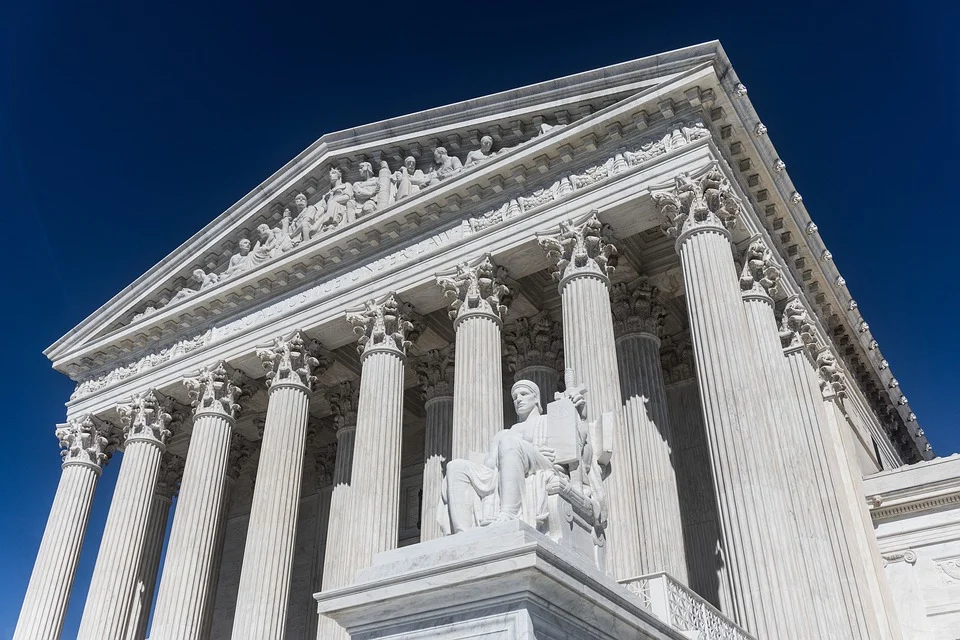
The United States Supreme Court has unexpectedly declined to resolve one of the most contentious issues in modern class action litigation, dismissing a high-profile case that sought to clarify whether federal courts can certify damages classes containing members who have suffered no actual injury. In a brief per curiam order issued on June 5, 2025, the Court dismissed the writ of certiorari in Laboratory Corporation of America Holdings v. Davis as "improvidently granted." The decision, or lack thereof, maintains a fractured legal landscape across federal circuits and leaves employers and corporate defendants facing the continued threat of massive statutory damage claims from expansive, and potentially over-inclusive, classes.
The dismissal comes after months of anticipation from the legal community, which had expected the Court to build upon its 2021 landmark ruling in TransUnion LLC v. Ramirez. By opting not to issue a merits-based decision, the Supreme Court has prolonged the uncertainty regarding the application of Federal Rule of Civil Procedure 23 in instances where a significant portion of a proposed class may lack Article III standing.
Background of the Labcorp Litigation
The roots of this legal battle trace back to the implementation of self-service technology at patient service centers operated by Laboratory Corporation of America Holdings, commonly known as Labcorp. To streamline the check-in process, Labcorp introduced touchscreen kiosks at its facilities. While these kiosks were intended to enhance efficiency for the general public, they lacked assistive technology—such as screen-reading software or tactile interfaces—necessary for use by visually impaired patients.
Luke Davis and Julian Vargas, two legally blind individuals, filed a class-action lawsuit alleging that these kiosks violated Title III of the Americans with Disabilities Act (ADA) and the California Unruh Civil Rights Act. The Unruh Act is particularly significant in this context because it provides for a minimum of $4,000 in statutory damages for each offense, regardless of whether the plaintiff can prove specific economic harm.
Labcorp defended its practices by noting that while the kiosks were not accessible to the blind, the company provided an alternative: front-desk staff were available at every location to assist patients with the same check-in technology. The company argued that because an accessible alternative existed, many potential class members were not actually "injured" or denied service. Furthermore, evidence suggested that many blind patients preferred checking in at the front desk or using online pre-registration, meaning the presence of the kiosks had no material impact on their experience.
Despite these arguments, a district court certified a class that potentially included more than 100,000 blind individuals. Under the Unruh Act’s statutory damage provisions, this certification exposed Labcorp to potential liability exceeding $500 million per year. The U.S. Court of Appeals for the Ninth Circuit subsequently affirmed the certification, leading Labcorp to petition the Supreme Court for review.
The Procedural Timeline and the "DIG" Decision
The path to the Supreme Court’s dismissal was marked by complex procedural maneuvers. After the Ninth Circuit’s affirmation, Labcorp filed its petition for certiorari, which the Supreme Court granted in late 2024. The central question presented was: "Whether a class may be certified under Federal Rule of Civil Procedure 23(b)(3) even though many of its members lack Article III standing."
However, during the pendency of the appeal, the district court issued an order "clarifying" the class definition. While the plaintiffs argued this move rendered the Supreme Court’s review moot because the original order being appealed had been supplanted, Labcorp maintained that the modification was merely cosmetic and did not resolve the underlying constitutional issue.
On June 5, 2025, the Court issued its one-sentence order dismissing the case as "improvidently granted"—a move colloquially known in legal circles as a "DIG." This typically occurs when the justices realize, after further review of the record or oral arguments, that the case is a poor vehicle for deciding the legal question at hand, often due to jurisdictional flaws or factual complications.
Justice Kavanaugh’s Dissenting View
The dismissal was not unanimous in spirit. Justice Brett Kavanaugh issued a solo dissent, expressing sharp frustration with the Court’s decision to bypass the merits of the case. Kavanaugh argued that the mootness concerns raised by the plaintiffs were "insubstantial" and that the district court’s clarification did nothing to change the reality that the class remained over-inclusive.

In his dissent, Kavanaugh characterized the legal issue as "straightforward." He asserted that under Rule 23, common questions cannot predominate when a class is comprised of both injured and uninjured members. "If there are members of a class that aren’t even injured, they can’t share the same injury with the other class members," Kavanaugh wrote, echoing arguments made by the United States government, which had filed an amicus brief supporting Labcorp.
Kavanaugh’s dissent provided a clear signal of his judicial philosophy on the matter, suggesting that he views the inclusion of uninjured members as a violation of both the "predominance" requirement of Rule 23(b)(3) and the constitutional requirements of Article III. He warned that allowing the Ninth Circuit’s decision to stand would have "serious and real-world consequences," forcing companies into "blackmail settlements" to avoid the catastrophic financial risk of overinflated classes.
Supporting Data and the Economic Impact of Class Actions
The stakes of the Labcorp case are underscored by the sheer volume of class action litigation in the United States. According to recent legal industry data, approximately 10,000 class action lawsuits are filed annually in federal courts. ADA Title III lawsuits, in particular, have seen a meteoric rise. In California alone, ADA-related filings have reached record highs, driven largely by the intersection of federal accessibility standards and state-level statutory damages like those found in the Unruh Act.
Legal analysts point out that the financial pressure on defendants is often disconnected from the actual harm suffered by the public. In the Labcorp case, the potential $500 million annual liability represented a significant portion of the company’s operating income. Justice Kavanaugh noted in his dissent that such costs are rarely absorbed by the corporations alone; instead, they are passed on to consumers through higher prices, to workers through stagnating wages, and to shareholders—including pension funds and retirement accounts.
The "no-injury" class action model is particularly prevalent in consumer privacy, wage and hour, and digital accessibility litigation. Without a clear Supreme Court mandate requiring all class members to have suffered a concrete injury at the certification stage, the "settlement pressure" identified by Kavanaugh remains a primary driver of the American litigation economy.
Implications for Employers and Corporate Defendants
The Supreme Court’s decision to "DIG" the Labcorp case is a setback for employers and corporate defendants who were hoping for a definitive tool to strike down overly broad classes. For now, the legal strategy for defending against such suits must remain multifaceted:
- Individualized Inquiry Arguments: Defendants should continue to emphasize that determining whether a specific class member was "injured" requires a case-by-case analysis. If a court must hold 100,000 mini-trials to determine who was actually harmed, common issues do not "predominate," and the class should not be certified.
- Article III Standing Challenges: Despite the dismissal in Labcorp, the Supreme Court’s 2021 ruling in TransUnion remains good law. Every class member must have standing to recover damages at the judgment stage. Employers can use this to argue that certifying a class that cannot legally recover damages is a waste of judicial resources.
- Jurisdictional Strategy: Because different circuits have varying standards for "no-injury" classes, the choice of venue remains critical. The Ninth Circuit remains a relatively friendly environment for plaintiffs, while other circuits, such as the Second and Eighth, have shown more skepticism toward classes with uninjured members.
Analysis of Future Legal Trends
The dismissal of Laboratory Corporation of America Holdings v. Davis ensures that the question of uninjured class members will return to the Supreme Court in the near future. There remains a profound circuit split that only the high court can resolve.
Legal scholars expect a "cleaner" case—one without the procedural "clarifications" that muddied the Labcorp record—to reach the justices within the next two terms. In the interim, the plaintiff’s bar is likely to feel emboldened, particularly in the Ninth Circuit, to continue filing expansive class actions that rely on statutory penalties rather than proven compensatory damages.
Furthermore, the rise of "algorithmic" and "digital" injuries—where a technical violation of a statute occurs without a tangible real-world impact—will continue to test the boundaries of Article III. Until the Supreme Court provides a definitive answer, the tension between the procedural efficiency of Rule 23 and the constitutional constraints of standing will remain the central fault line in American complex litigation.
For employers, the Labcorp dismissal serves as a reminder that the "best defense is a good offense." Proactive compliance with accessibility standards, rigorous auditing of automated systems, and the maintenance of clear, accessible alternatives for service remain the most effective ways to mitigate the risk of being targeted by high-stakes class action litigation. While the Supreme Court passed on this opportunity to limit class actions, the vigorous dissent from Justice Kavanaugh suggests that the tide may yet turn when the next test case arrives at the marble steps of the Court.








