For decades, the human resources profession has grappled with a persistent narrative suggesting its imminent demise, often labeled as "useless," "a waste of time," or "going away." This skepticism is frequently rooted in the perception held by many managers that they possess inherent expertise in managing people, rendering specialized HR functions redundant. This sentiment was recently amplified by a declaration at a major SHRM conference, as reported by Bloomberg, where a CEO proclaimed that "the field of HR faces extinction," urging HR professionals to adapt. However, a comprehensive analysis of recent labor market data, supported by extensive research, paints a dramatically different picture, indicating that HR is not only surviving but is in fact evolving into a more critical and in-demand profession.
The Shifting Landscape of HR
The notion of HR’s obsolescence is challenged by robust data demonstrating a consistent growth in HR-related job postings. Contrary to the alarmist predictions, research, including insights from the HR 2030 initiative and the upcoming book "Superpowered," suggests that HR roles are not only enduring but are experiencing a significant upswing in demand. This trend is further corroborated by a new podcast episode dedicated to dissecting this phenomenon, offering a detailed explanation of the underlying data.

Empirical Evidence: Job Postings and Growth Rates
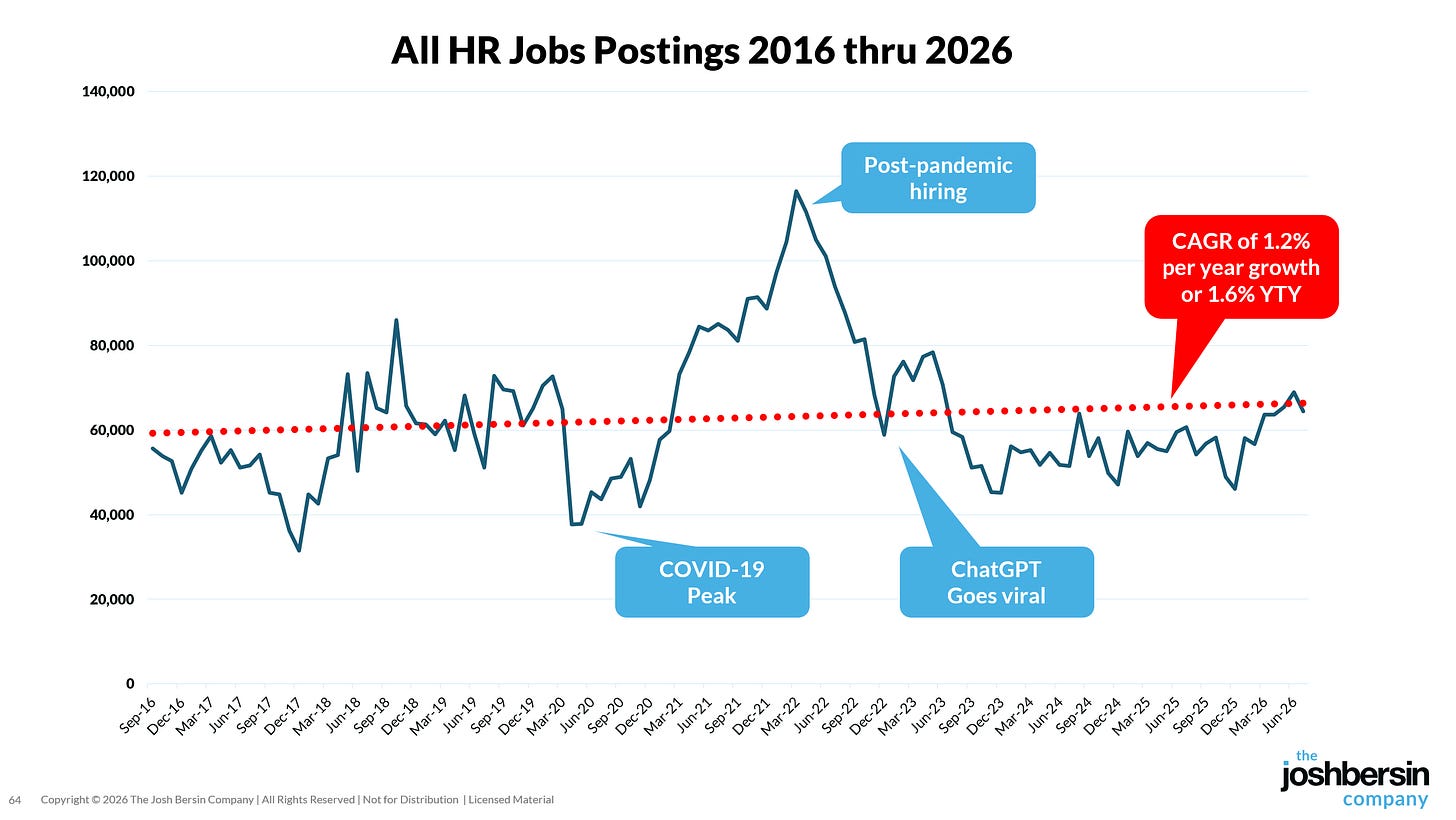
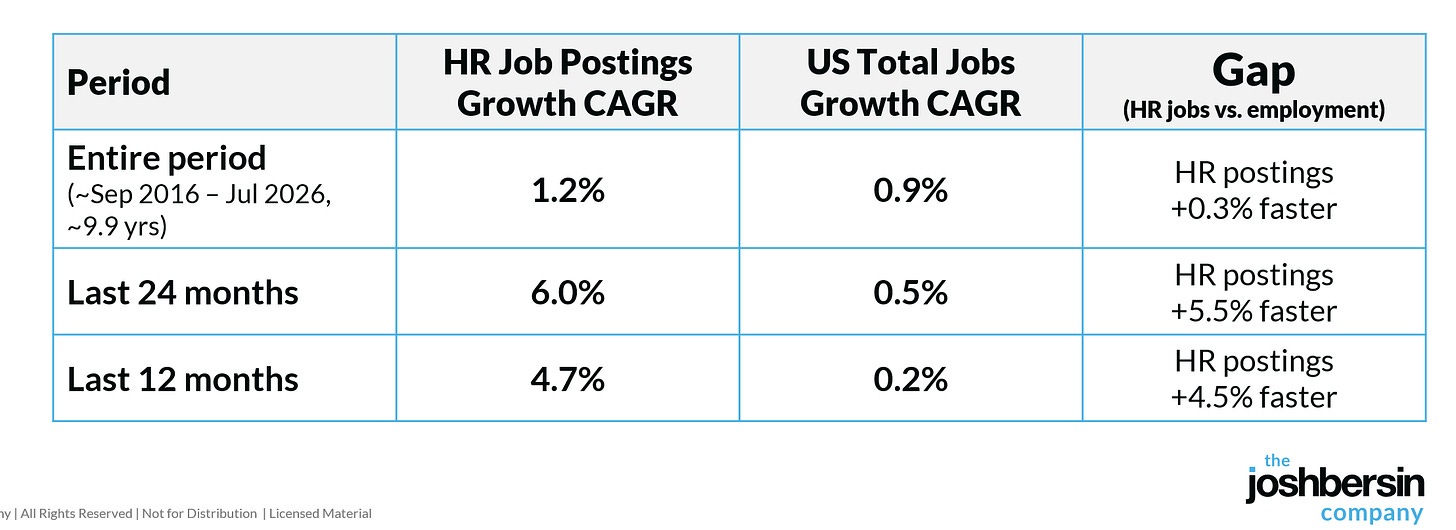
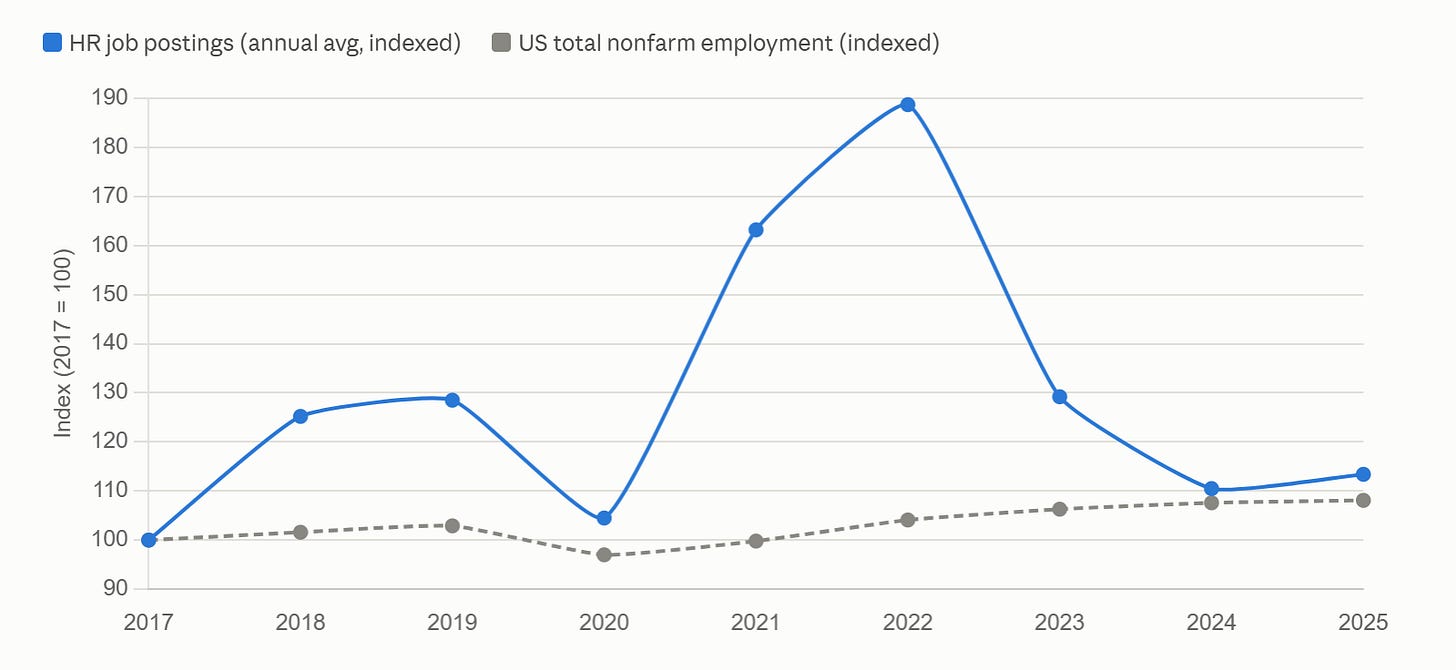
An in-depth examination of job posting data, meticulously analyzed by Lightcast, reveals a compelling trajectory for HR-related positions. This analysis encompasses a broad spectrum of roles, including recruiters, training and development specialists, HR technology professionals, and general HR practitioners. Over a twenty-year period, the compound annual growth rate for HR job postings has been approximately 1.2%. While this figure indicates steady expansion, a more striking observation emerges when focusing on the most recent two-year period, a time marked by significant advancements and integration of Artificial Intelligence (AI) in corporate settings. During this recent period, the growth rate in HR job postings has surged to an impressive 6%.
This growth rate is particularly noteworthy when compared to the overall expansion of the U.S. workforce. The data indicates that HR jobs are currently growing at a faster pace than total employment. This divergence suggests a deepening reliance on specialized HR functions within organizations, even as other sectors experience more moderate employment growth.
Comparative Growth: HR vs. Total Employment
To contextualize the growth of HR roles, a comparative analysis with the overall U.S. workforce employment growth is essential. While the U.S. workforce has seen a compound annual growth rate of approximately 0.8% over the last two decades, the HR sector has consistently outperformed this benchmark. The recent acceleration to 6% in HR job postings, compared to the more modest overall employment growth, underscores a strategic shift within businesses to invest more heavily in their people functions.
The Surprising Rise in HR Salaries
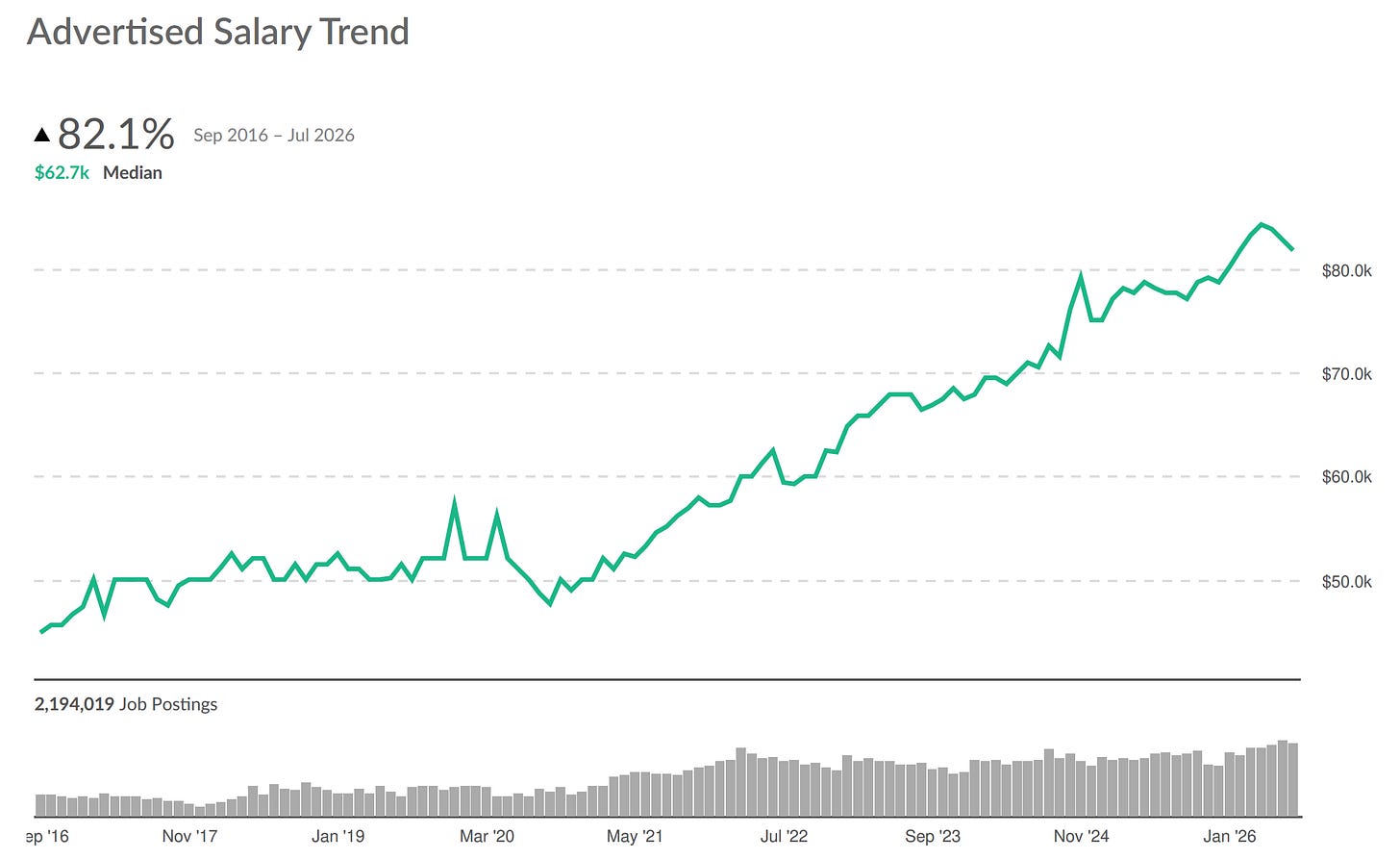
Beyond job volume, the economic valuation of HR professionals also reflects their increasing importance. Over the past two decades, HR salaries have experienced a substantial increase of 82%, translating to a compound annual growth rate of 3.1%. This rise significantly outpaces the cumulative U.S. inflation rate of 66% over the same period, which equates to an annual compound rate of 2.1%. The fact that HR salaries are growing faster than inflation suggests that the market is recognizing and rewarding the evolving value and complexity of HR roles, a trend not universally observed across all professions. This salary growth indicates that organizations are willing to invest more in attracting and retaining skilled HR talent, a clear signal of their perceived importance.
Unpacking the Transformation: Why HR is More Important Than Ever
The prevailing narrative of HR’s impending obsolescence often stems from a misunderstanding of its evolving function. While traditional administrative tasks may be susceptible to automation, the core strategic and human-centric aspects of HR are becoming even more vital. The roles that are diminishing in number are typically those focused on routine administrative duties, such as HR administrators, HR assistants, recruiting coordinators, and training administrators. These positions, which historically formed a significant portion (estimated at 30-40%) of the HR workforce, are being transformed by technological advancements.
The Evolution of HR Roles: From Administration to Strategic Partnership
The explanation for HR’s continued and growing importance lies in its fundamental transformation. Rather than being eliminated by AI and automation, these technologies are augmenting HR professionals, freeing them to focus on more complex and strategic initiatives. The decline in purely administrative roles is not a sign of HR’s irrelevance but rather an indicator of its evolution towards higher-value functions.
-
HR Service Centers and Business Partners: Professionals in these roles are increasingly tasked with managing more intricate employee relations issues, performance management, and addressing complex personal circumstances. For instance, at large organizations like Walmart and Standard Chartered, what were once common onboarding or benefits inquiries handled by administrators are now being escalated to HR Business Partners. These professionals can dedicate more in-depth attention to critical areas like employee performance enhancement and supporting employees through significant life events, offering personalized and strategic guidance.
-
Learning and Development (L&D) Managers and Instructional Designers: This segment of HR is transitioning from creating lengthy, traditional courses to developing dynamic, real-time support tools and simulations. Companies like Travelers and Polestar are shifting their L&D strategies, moving away from months-long course development cycles. Instead, they are focusing on generating concise, actionable videos and content that can be immediately utilized by sales, support, and engineering teams. This agile approach ensures that learning is timely, relevant, and directly applicable to current business needs, a stark contrast to the more static models of the past.
-
Talent Acquisition Teams: The recruitment landscape is also undergoing a significant shift. Recruiting coordinators and schedulers are being repositioned into more active interviewing roles, leveraging data analytics to identify top candidates more effectively and enhance the candidate experience. The demand for recruiting positions remains high, with many organizations prioritizing in-person interviews to combat candidate fraud and ensure higher quality hires. Contrary to initial expectations, AI interviewers have not proven to be a universally effective replacement for human interaction in assessing candidate suitability and cultural fit.
-
Internal Analytics, Compensation, and Engagement Teams: These teams are moving beyond traditional survey design and benchmark analysis. Their focus is shifting towards real-time data utilization, enabling them to gain immediate insights into employee engagement and retention drivers within their own organizations. This proactive, data-driven approach reduces reliance on external consultants for diagnosing issues like employee disengagement or turnover.
-
HR Business Partners as Senior Consultants: At companies such as Panasonic and Accenture, HR Business Partners are being elevated to senior consultant roles. They are increasingly involved in strategic workforce planning, organizational design, and change management initiatives. Simultaneously, tools like Galileo are being deployed to provide administrative support to leaders and managers, streamlining access to policies and advice, thereby allowing HR professionals to concentrate on more impactful contributions.
The AI Paradox: Augmentation, Not Elimination
The overarching trend is that AI is not primarily eliminating jobs but rather empowering individuals to perform at a higher level and tackle more complex challenges. This principle applies directly to the HR profession. As experts in change management, employee development, and organizational redesign, HR professionals are uniquely positioned to navigate the disruptions brought about by technological advancements. Their role is evolving from managing administrative processes to strategically shaping the future of work within their organizations.
The research and data presented indicate that the narrative of HR’s demise is a mischaracterization of its dynamic evolution. The profession is not only relevant but is becoming increasingly integral to organizational success, driven by a growing emphasis on strategic talent management, employee experience, and the human element in a technologically advanced world. The future of HR is not one of extinction, but of significant growth, enhanced value, and expanded influence. The emphasis is shifting from transactional tasks to transformational leadership, making HR professionals indispensable in the modern enterprise.