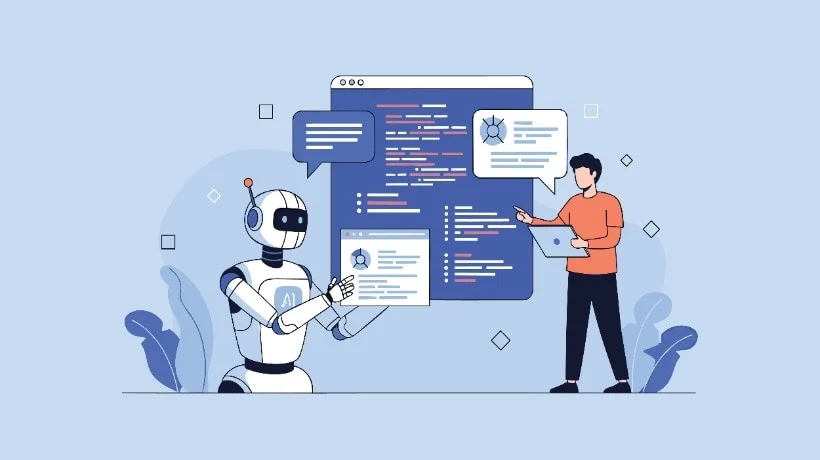
The landscape of corporate Learning and Development (L&D) is undergoing its most significant transformation since the advent of the internet, as the industry moves beyond simple content generation toward autonomous, agentic systems. For decades, the field of Instructional Design (ID) was anchored by linear, labor-intensive frameworks such as ADDIE (Analyze, Design, Develop, Implement, and Evaluate) and SAM (Successive Approximation Model). While these methodologies provided necessary structure, they were often criticized for being slow, manual, and resistant to rapid iteration. In 2026, however, the emergence of agentic AI—systems capable of autonomous reasoning, multi-step execution, and cross-tool orchestration—has effectively dismantled the traditional production bottleneck, allowing L&D departments to operate at the speed of business.
The Shift from Generative to Agentic Systems
To understand the current state of the industry, it is essential to distinguish between the generative AI wave of 2023-2024 and the agentic AI era of 2026. Generative AI functioned primarily as a high-speed draftsperson, capable of producing text, images, or quiz questions based on specific prompts. While useful, it still required constant human intervention to bridge the gaps between different stages of the design process.
Agentic AI represents a fundamental leap in capability. These systems act as autonomous instructional architects. Instead of merely writing a paragraph, an agentic system can analyze a 200-page regulatory filing, identify the specific learning gaps for a sales team, cross-reference those gaps with existing internal documentation, storyboard a multi-module course, and automatically populate the company’s Learning Management System (LMS). This transition from "AI as a tool" to "AI as a collaborator" is redefining the professional identity of the instructional designer.
A Chronology of Instructional Design Evolution
The path to agentic AI has been paved by decades of pedagogical evolution. Understanding this timeline is crucial for contextualizing the current disruption:
- The Post-War Era (1950s–1970s): The birth of instructional systems design, primarily driven by military needs. The ADDIE model emerged as a rigorous, step-by-step process where each phase had to be completed before the next began.
- The Digital Revolution (1990s–2000s): The shift to eLearning and the rise of the LMS. While delivery became digital, the design process remained rooted in the linear ADDIE model, often taking months to produce a single hour of content.
- The Agile Movement (2010s): Models like SAM introduced iterative cycles, attempting to bring the speed of software development to L&D. However, the work remained human-dependent and labor-intensive.
- The Generative AI Spike (2023–2024): Large Language Models (LLMs) began assisting with content creation, reducing the time spent on writing and brainstorming but increasing the "review and edit" burden on designers.
- The Agentic AI Era (2025–Present): AI agents now handle end-to-end workflows. They do not just generate content; they manage the logic, structure, and deployment of learning ecosystems with minimal human oversight at the task level.
Quantifying the Impact: Supporting Data and Market Sentiment
Recent industry data underscores the scale of this shift. According to the "AI in Learning & Development Report 2026," co-authored by Synthesia and Dr. Philippa Hardman, the outlook for agentic AI is overwhelmingly positive. The report finds that 27% of L&D organizations are already "active users" of agentic workflows, while 39% identify as "cautious but interested." Notably, there is almost zero active resistance to the technology; the "wait-and-see" approach adopted by many is attributed to a lack of technical familiarity rather than skepticism regarding the technology’s value.
The economic argument for adoption is compelling. Traditional eLearning development historically required between 100 and 200 hours of labor for every finished hour of training. Early adopters of agentic AI are reporting a 50% reduction in development time. This efficiency is not merely about saving costs; it is about meeting the demand for "just-in-time" training in a market where product cycles and compliance regulations change weekly rather than annually.
Overcoming the Six Modern Pressures of L&D
The move toward agentic AI is driven by six critical challenges that have plagued instructional designers for years. By addressing these pressures, AI agents are enabling a more responsive form of corporate education.
1. The Compression of Timelines
In 2026, the four-to-eight-week development cycle is no longer viable. Organizations frequently require training materials for new tools or policy updates within days. Agentic AI addresses this by automating the "mechanical" layers of production—drafting outlines, aligning objectives to Bloom’s Taxonomy, and generating storyboards—allowing designers to move from "creator" to "editor-in-chief" almost instantly.
2. The SME Bottleneck
Subject Matter Experts (SMEs) are vital for credible training but are notoriously difficult to access. Agentic AI can ingest unstructured SME inputs—such as recorded Zoom calls, Slack threads, or rough technical drafts—and organize them into a coherent pedagogical hierarchy. This shifts the SME’s role from "content source" to "content validator," a far more efficient use of their limited time.
3. Information Overload
The sheer volume of source material for modern compliance or technical training can be staggering. Agentic AI utilizes long-context window models to process thousands of pages of policy text, internal memos, and prior training decks simultaneously. It identifies nuances and contradictions that a human designer might miss, ensuring that the resulting training is evidence-based rather than instinct-driven.
4. The Demand for Personalization
Learners in 2026 expect training that respects their prior knowledge and specific job roles. Static, linear courses are increasingly viewed as a sign of underinvestment. Agentic AI enables "dynamic pathing," where the learning experience adjusts in real-time based on learner performance and background. Research cited in TechClass’s 2026 review indicates that such personalized paths lead to a 30% higher completion rate and significantly improved long-term retention.
5. Moving Beyond Rote Assessment
Traditional multiple-choice quizzes are being replaced by scenario-based assessments. Agentic AI can generate complex, branching simulations and role-plays that test judgment rather than memory. Furthermore, it provides diagnostic feedback—explaining why a choice was suboptimal—rather than simply providing the correct answer.
6. Proving Business Impact
The "completion rate" metric is dying. With the rise of AI-assisted learning, a 100% completion rate may simply indicate that learners used their own AI tools to bypass the training. Agentic AI allows designers to track more sophisticated data points, such as decision-making patterns within simulations, and correlate learning data with operational KPIs, finally reaching the elusive Kirkpatrick Level 4 (Results) of evaluation.
Industry Reactions and Stakeholder Perspectives
The reaction from the L&D community has been one of cautious optimism. Industry analysts suggest that the primary concern is no longer "Will AI replace designers?" but rather "How quickly can designers upskill to manage AI agents?"
"The role of the instructional designer is shifting toward orchestration," says one industry analyst. "We are seeing a move away from the ‘authoring tool’ mindset toward an ‘ecosystem management’ mindset. The designer is now the governor of the AI, ensuring that the autonomous outputs align with the company’s ethical standards and strategic goals."
Corporate leaders are also taking note. Chief Learning Officers (CLOs) are reporting that agentic AI allows them to align L&D more closely with business outcomes. When a policy changes at the regulatory level, the AI can identify every affected module in the company’s library and draft updates automatically, reducing the risk of non-compliance.
Implications: The New Skill Stack for Instructional Designers
As production tasks are handed over to autonomous systems, the human element of instructional design is becoming more specialized. The "designer of the future" will focus on high-level strategic decisions that AI is currently unsuited for:
- Learning Ecosystem Strategy: Determining how different learning assets (videos, simulations, AI tutors) fit together to solve a business problem.
- Outcome Governance: Defining what "success" looks like and ensuring the AI is optimized to achieve those specific behavioral changes.
- Ethics and Bias Mitigation: Monitoring AI outputs to ensure they are inclusive, accurate, and aligned with organizational culture.
- Complex Human Interaction: Designing the "blended" elements of learning—such as mentorship and peer-to-peer collaboration—that require high emotional intelligence.
Conclusion: A Human-Led, AI-Supported Future
Agentic AI is not shrinking the field of instructional design; it is expanding its reach and impact. By stripping away the manual drudgery of course production, it allows designers to focus on the science of learning and the art of experience design.
In 2026, the hallmark of a high-performing L&D department is no longer its ability to produce high volumes of content, but its ability to deploy intelligent, adaptive learning systems that evolve alongside the workforce. The transition from static courses to autonomous learning environments marks a new chapter in corporate education—one where technology handles the heavy lifting, but human designers remain firmly at the helm, defining the vision for how people learn and grow.