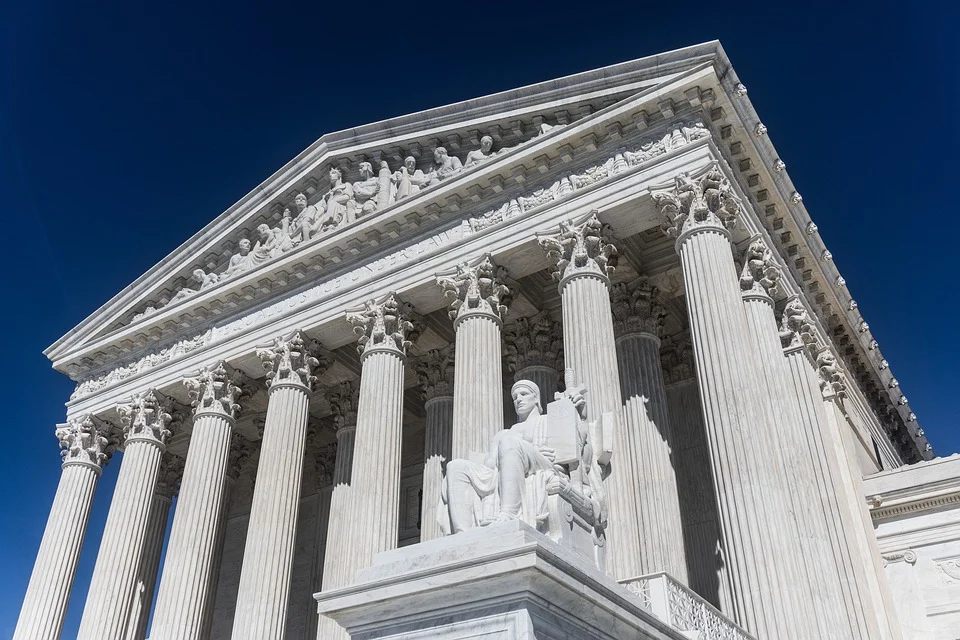
The United States Supreme Court has formally dismissed the writ of certiorari in the highly anticipated case of Laboratory Corporation of America Holdings v. Davis, a move that leaves a critical question regarding the composition of federal class action lawsuits unresolved. By dismissing the case as "improvidently granted" on June 5, 2025, the nation’s highest court bypassed an opportunity to clarify whether federal courts may certify a class for damages under Federal Rule of Civil Procedure 23 when that class includes individuals who have suffered no actual injury. This procedural "exit" by the Court maintains the status quo in several judicial circuits, much to the chagrin of corporate defendants and legal scholars who had hoped for a definitive ruling on the limits of Article III standing within the class action framework.
The Genesis of the Dispute: Accessibility and Innovation
The litigation began when Luke Davis and Julian Vargas, two individuals who are legally blind, filed a class action lawsuit against Laboratory Corporation of America Holdings, commonly known as Labcorp. The core of the complaint centered on Labcorp’s implementation of self-service, touchscreen kiosks at its patient service centers across the United States. These kiosks were designed to streamline the check-in process, allowing patients to confirm appointments and provide necessary information without waiting for a staff member.
However, the plaintiffs alleged that these kiosks were not equipped with the necessary assistive technology—such as screen-reading software or tactile interfaces—required for blind or visually impaired individuals to use them independently. According to the plaintiffs, this lack of accessibility constituted a violation of Title III of the Americans with Disabilities Act (ADA), which prohibits discrimination on the basis of disability in places of public accommodation.
Labcorp defended its practices by noting that the kiosks were an optional convenience rather than a requirement. The company maintained that its service centers remained fully staffed with employees available at front desks to assist patients with the check-in process using the same underlying technology as the kiosks. Labcorp argued that because a human alternative was always available, blind patients were not denied "full and equal access" to the company’s services.
The Legal Nexus: ADA and the California Unruh Act
While the ADA is a federal statute, the Davis case gained significant financial weight due to its intersection with California state law. Under the California Unruh Civil Rights Act, any violation of the federal ADA is automatically considered a violation of state law. Unlike the ADA, which primarily allows for injunctive relief (ordering a company to fix the barrier), the Unruh Act provides for mandatory statutory damages of at least $4,000 per offense.
This synergy between federal and state law created a high-stakes environment. The plaintiffs sought to certify a class of all blind individuals who had visited Labcorp locations in California. Because the Unruh Act allows for damages regardless of whether a plaintiff can prove specific emotional or physical distress—provided an ADA violation occurred—the potential liability for Labcorp was astronomical.
During discovery, evidence emerged suggesting that many potential class members might not have been "injured" in a traditional sense. Some blind patients may have preferred checking in with a human staff member regardless of whether the kiosk was accessible, while others may not have attempted to use the kiosk at all. This raised the central legal question: could a class be certified if it contained a significant number of members who were never actually harmed by the inaccessible technology?
Chronology of the Litigation
The procedural path of Laboratory Corporation of America Holdings v. Davis reflects the complexities of modern class action maneuvers:
- Initial Filing: The plaintiffs filed their complaint in a California federal district court, alleging systemic barriers to access at Labcorp facilities.
- Class Certification: The district court certified a class that potentially included more than 100,000 blind individuals. Given the Unruh Act’s $4,000 per-violation penalty, the estimated potential damages reached nearly $500 million per year.
- District Court Clarification: Following the initial certification, the district court issued a clarifying order regarding the class definition. While Labcorp argued this changed the nature of the class, the court maintained that the core composition remained essentially the same.
- Ninth Circuit Appeal: Labcorp sought an interlocutory appeal with the U.S. Court of Appeals for the Ninth Circuit. The Ninth Circuit affirmed the district court’s certification, adhering to its precedent that a class may be certified even if it contains uninjured members, provided the "predominance" requirements of Rule 23 are met.
- Supreme Court Grant: Labcorp petitioned the Supreme Court for a writ of certiorari, which was granted. The legal community expected the Court to build upon its 2021 ruling in TransUnion LLC v. Ramirez.
- The Dismissal: On June 5, 2025, in a per curiam (by the court) decision, the Supreme Court dismissed the case, stating the writ was "improvidently granted" (often referred to as a "DIG").
Analysis of Justice Kavanaugh’s Dissent
The dismissal was not unanimous in sentiment. Justice Brett Kavanaugh issued a solo dissent, expressing deep frustration with the Court’s decision to walk away from the issue. Justice Kavanaugh argued that the case was "straightforward" and provided a necessary vehicle to resolve a growing divide among the lower courts.

In his dissent, Kavanaugh highlighted that Rule 23(b)(3) requires that questions of law or fact common to class members "predominate" over any questions affecting only individual members. He argued that if a class is "overinflated" with uninjured members, the commonality of the injury disappears. "If there are members of a class that aren’t even injured, they can’t share the same injury with the other class members," Kavanaugh wrote, echoing arguments made by the United States government, which had filed an amicus curiae brief in support of Labcorp.
Kavanaugh also warned of the economic repercussions of the Ninth Circuit’s approach. He noted that the threat of "massive liability"—in this case, half a billion dollars—often forces corporations into "blackmail settlements." These settlements, he argued, are not based on the merits of the case but on the impossibility of risking a trial against an overbroad class. Ultimately, Kavanaugh contended, these costs are passed down to consumers, employees, and shareholders.
Supporting Data: The Rising Tide of ADA Litigation
The Labcorp case is part of a broader trend in the American legal system. Data from recent years indicates a significant surge in ADA Title III filings, particularly in jurisdictions with favorable state-level damages statutes like California and New York.
- Annual Filings: According to legal industry trackers, approximately 10,000 to 11,000 ADA Title III lawsuits are filed in federal courts annually.
- Geographic Concentration: California consistently accounts for nearly 50% of these filings. This is largely attributed to the Unruh Act’s statutory damages provision, which makes California a far more lucrative venue for plaintiffs’ attorneys than states that only allow for injunctive relief.
- Settlement Pressure: Estimates suggest that over 90% of certified class actions settle before trial. The inclusion of uninjured members in these classes significantly increases the settlement "floor," as defendants must account for every potential class member in their risk assessments.
Official Responses and Reactions
While the Supreme Court’s per curiam decision did not include a detailed explanation, the legal community has been quick to react.
Defense-side attorneys expressed disappointment, noting that the dismissal leaves businesses in a state of uncertainty. "The Court had a chance to put a leash on the ‘no-injury’ class action," said one corporate litigator. "Instead, we are left with a patchwork of rules where the location of the courthouse determines whether a company faces millions in liability for technical violations that caused no real harm."
On the other side, advocates for the disabled and plaintiffs’ counsel viewed the dismissal as a victory for civil rights enforcement. They argue that the threat of class-wide damages is the only effective way to ensure that large corporations prioritize accessibility. "The ADA is about equal access, not just waiting for someone to be ‘injured’ before a barrier is removed," a spokesperson for a disability rights group stated. "Class actions ensure that systemic problems are met with systemic solutions."
Broader Implications and the Circuit Split
The dismissal of Labcorp v. Davis means that the current circuit split will persist. The Ninth Circuit remains one of the more permissive jurisdictions for certifying classes with uninjured members. In contrast, other circuits have taken a stricter approach, influenced by the Supreme Court’s language in TransUnion LLC v. Ramirez, which stated that "every class member must have Article III standing in order to recover individual damages."
The core of the conflict lies in the timing of the standing inquiry. Should a court ensure every member is injured at the certification stage, or can that be sorted out at the damages stage after a liability finding? By failing to answer this in Labcorp, the Supreme Court has left the door open for continued forum shopping, where plaintiffs seek out circuits that allow for broader class definitions.
Strategic Outlook for Employers and Defendants
In the wake of this dismissal, employers and corporate defendants must refine their strategies for opposing class certification. Legal experts suggest several key areas of focus:
- Challenging Predominance: Even without a clear SCOTUS mandate on uninjured members, defendants can argue that determining who is uninjured requires individualized inquiries that overwhelm the common issues of the case.
- Evidentiary Development: Companies should gather data early in the litigation to show how many potential class members actually used—or had no interest in using—the challenged service or technology.
- Policy Adjustments: For companies using kiosks or automated systems, ensuring that a "human-in-the-loop" or a clear, accessible alternative is prominently offered remains the best defense against ADA claims.
- Monitoring Future "Test Cases": Justice Kavanaugh’s dissent serves as a signal to the legal community. He and likely several other conservative justices are eager to revisit this issue. It is only a matter of time before another case with a cleaner procedural record reaches the docket.
While the Supreme Court’s "DIG" in Laboratory Corporation of America Holdings v. Davis was an anticlimactic end to a high-profile case, it serves as a reminder of the procedural hurdles inherent in landmark litigation. The question of whether "uninjured" plaintiffs belong in a damages class remains one of the most contentious issues in federal law, and while the Court passed on the answer this time, the debate is far from over.