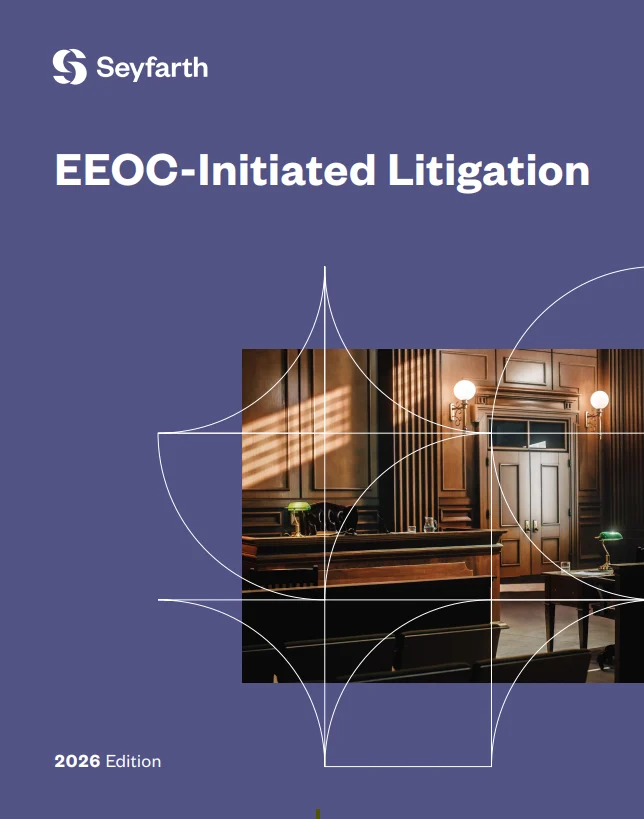
Seyfarth Shaw LLP has released its highly anticipated annual analysis, providing a comprehensive overview of the enforcement trends, case filings, and judicial decisions that defined the Equal Employment Opportunity Commission’s (EEOC) activity throughout 2025. This latest edition of the report arrives at a critical juncture for American employers, documenting what legal experts describe as one of the most transformative years in the Commission’s history. As a desk reference designed for corporate counsel, human resources professionals, and operations teams, the 2026 edition offers a deep dive into the shifting priorities of the federal agency tasked with enforcing the nation’s anti-discrimination laws.
The report highlights a year marked by aggressive litigation strategies, significant policy shifts, and a heightening of the EEOC’s focus on systemic discrimination. According to the analysis, the developments of 2025 were shaped by a combination of new legislative mandates, evolving judicial standards, and a strategic pivot in the agency’s enforcement goals following a period of internal restructuring and political transition. By categorizing major case filings and dissecting appellate court rulings, the report provides a roadmap for navigating the increasingly complex landscape of workplace compliance and litigation defense.
The 2025 Enforcement Landscape: A Year of Transformation
The 2025 calendar year stood out as a period of significant volatility and "dramatic" change, as noted by the Seyfarth Shaw legal team. This volatility was largely driven by the full implementation of the EEOC’s Strategic Enforcement Plan (SEP) for Fiscal Years 2024–2028, which prioritized emerging issues such as artificial intelligence in hiring, the protection of vulnerable workers, and the expansion of reproductive health protections in the workplace.
Throughout 2025, the EEOC demonstrated a renewed commitment to its "systemic" litigation program. Systemic cases are those involving alleged pattern-or-practice discrimination that impacts a large number of employees or applicants. The report indicates that the Commission’s focus on these high-stakes cases has not only increased in volume but also in the complexity of the legal theories being advanced. This shift represents a move away from individual charge processing toward broader, industry-wide impact litigation designed to compel institutional changes across various sectors.
The timeline of 2025 was also punctuated by the first full year of enforcement for the Pregnant Workers Fairness Act (PWFA). As the agency began to litigate under this new statute, employers faced a steep learning curve regarding the "reasonable accommodation" requirements for pregnant employees, leading to a surge in both charges and EEOC-initiated lawsuits. The report details how these cases have begun to redefine the boundaries of employer obligations under federal law.
Statistical Breakdown: Tracking the EEOC’s 2025 Performance
Data compiled in the 2026 edition reveals a steady climb in the number of merit lawsuits filed by the Commission. While the final figures for the fiscal year often fluctuate based on late-quarter filings, 2025 saw a noticeable uptick in filings compared to the previous three-year average. Specifically, the report identifies a concentration of filings in jurisdictions traditionally known for being "plaintiff-friendly," though it also notes a strategic expansion of EEOC activity in the Midwest and Southern regions.
Retaliation remains the most frequently cited basis for discrimination in EEOC filings, a trend that has persisted for over a decade. However, the 2025 data shows a significant rise in disability-related claims under the Americans with Disabilities Act (ADA), particularly concerning mental health conditions and long-term effects of chronic illnesses. The report notes that disability-related litigation accounted for approximately 35% of the Commission’s merit filings in 2025, reflecting a broader societal shift toward prioritizing mental health in the workplace.
Furthermore, the EEOC’s recovery of monetary relief for aggrieved individuals reached record levels in 2025. Through both successful litigation and pre-litigation conciliation agreements, the agency secured hundreds of millions of dollars from employers. This financial impact underscores the importance of the "conciliation" process—a mandatory step where the EEOC attempts to settle a charge before filing a lawsuit. The report provides a critical analysis of how courts have interpreted the EEOC’s duty to conciliate in good faith, a frequent point of contention between the agency and defense counsel.
Emerging Frontiers: AI, Algorithmic Bias, and Modern Hiring
One of the most forward-looking sections of the 2026 report involves the EEOC’s scrutiny of technology in employment decision-making. As more corporations integrate artificial intelligence (AI) and automated systems into their recruitment and talent management processes, the Commission has intensified its focus on "algorithmic bias."
In 2025, the EEOC initiated several landmark investigations and lawsuits targeting companies whose automated screening tools allegedly resulted in a disparate impact on protected groups, such as older workers or individuals with disabilities. The report analyzes these cases as a warning to employers that "neutral" technology is not a shield against discrimination claims. The agency’s position, as reflected in the 2025 litigation, is that employers are ultimately responsible for the outcomes of the software they deploy, regardless of whether the software was developed in-house or by a third-party vendor.
This focus on AI is part of a broader "Initiative on Artificial Intelligence and Algorithmic Fairness" launched by the agency. The 2026 edition details the specific types of evidence the EEOC is seeking in these cases, including data on "black box" algorithms and the validation studies used to justify automated hiring criteria.
Judicial Trends and Key Decisional Law
Beyond the statistics of filings, the Seyfarth Shaw report offers an in-depth look at the judicial decisions that shaped EEOC enforcement in 2025. Several federal appellate courts issued rulings that have clarified—and in some cases, complicated—the standards for what constitutes an "adverse employment action."
The report highlights the ripple effects of recent Supreme Court jurisprudence on lower court decisions. For instance, the evolving interpretation of Title VII of the Civil Rights Act has led to a lower threshold for plaintiffs to prove discrimination in job transfers and schedule changes, even in the absence of a direct loss in pay or benefits. This judicial shift has emboldened the EEOC to pursue cases that might have been dismissed in previous years, leading to a more aggressive posture in settlement negotiations.
Another area of judicial focus in 2025 was the intersection of religious freedom and workplace civil rights. Following high-profile Supreme Court rulings on religious accommodations, the EEOC has seen a rise in charges involving conflicts between corporate Diversity, Equity, and Inclusion (DEI) programs and employees’ sincerely held religious beliefs. The 2026 report provides a balanced view of how the EEOC is navigating these sensitive issues, often finding itself at the center of a cultural and legal tug-of-war.
The Role of Conciliation and Administrative Prudence
A significant portion of the analysis is dedicated to the administrative phase of EEOC proceedings. Before the agency can bring a case to federal court, it must investigate the charge and, if "reasonable cause" is found, attempt to resolve the matter through conciliation.
The 2025 data suggests that the EEOC has become more selective in its conciliation efforts, often moving quickly to litigation in cases that align with its strategic priorities. For employers, this means that the window for pre-litigation settlement is narrowing. The report emphasizes the need for companies to engage in the investigative process with a high degree of transparency and urgency, as the agency’s "reasonable cause" determinations are increasingly being used as leverage in high-stakes negotiations.
Legal analysts at Seyfarth Shaw observe that the "quality" of the EEOC’s investigations has come under scrutiny in several 2025 court cases. Employers have successfully challenged the agency’s filings by arguing that the EEOC failed to conduct a meaningful investigation or failed to provide sufficient information during the conciliation phase. The report provides a tactical guide for defense counsel on how to raise these procedural defenses effectively.
Predictions for 2026: Preparing for Continued Volatility
Looking ahead, the 2026 edition of the report predicts that the EEOC will continue to test the boundaries of its enforcement authority. With a stable majority of commissioners focused on a pro-worker agenda, the agency is expected to lean further into "novel" legal theories.
Key predictions for the coming year include:
- Increased Focus on Pay Equity: Building on the momentum of state-level pay transparency laws, the EEOC is expected to use its subpoena power more aggressively to collect and analyze employer pay data, looking for systemic disparities across gender and racial lines.
- Expansion of Protected Categories: The agency is likely to continue its efforts to protect LGBTQ+ employees and those seeking reproductive healthcare, despite potential legal challenges from various state attorneys general.
- Aggressive Use of Injunctions: The report anticipates that the EEOC will more frequently seek "preliminary injunctions" to stop allegedly discriminatory practices while litigation is still pending, a move that can cause significant reputational and operational damage to a business.
Implications for Employers and Human Resources
The overarching message of the EEOC-Initiated Litigation: 2026 Edition is one of proactive risk management. For the business community, the "dramatic" changes of 2025 serve as a reminder that compliance is a moving target. The report argues that corporate counsel and HR leaders cannot rely on outdated policies; instead, they must continuously audit their hiring practices, AI tools, and accommodation procedures.
By providing a clear-eyed analysis of the EEOC’s successes and setbacks in 2025, Seyfarth Shaw aims to empower organizations to make informed decisions. Whether it is responding to a single charge of discrimination or defending against a massive systemic lawsuit, the data and insights contained in this reference are designed to help employers mitigate risk in an era of unprecedented federal oversight.
As the legal landscape continues to evolve, the 2026 edition stands as a vital resource for understanding the mechanics of federal power in the workplace and the enduring importance of civil rights enforcement in the American economy. The report concludes that while the challenges are significant, a deep understanding of the EEOC’s playbook remains the best defense for any organization committed to fair and lawful employment practices.