In an era of increasingly fragmented labor regulations and the persistence of the distributed workforce, payroll compliance has transitioned from a routine administrative function to a critical operational risk. The complexity of managing payroll across multiple jurisdictions has created a landscape where even minor oversights can lead to significant financial penalties and a breakdown in employee trust. For modern organizations, the traditional model of annual, one-size-fits-all training is proving insufficient to mitigate the risks associated with the diverse array of state and local labor laws.
The financial implications of payroll errors are substantial. Data from the U.S. Department of Labor’s Wage and Hour Division indicates that in fiscal year 2025, the agency recovered more than $259 million in back wages for approximately 176,957 employees. On average, this amounted to $1,465 per worker—a figure that represents not only a direct financial loss to employers but also a significant administrative burden in remediation. Furthermore, the Internal Revenue Service (IRS) projected a gross tax gap of $696 billion for the 2022 tax year, with an estimated $127 billion of that total attributed to employment taxes. These figures underscore a growing reality: payroll compliance is a high-stakes environment where the cost of ignorance is quantifiable and severe.
The Evolution of Regulatory Complexity
The primary driver of modern payroll risk is the divergence of state and local regulations from federal standards. While the federal minimum wage has remained stagnant at $7.25 per hour, the National Conference of State Legislatures reports that as of July 1, 2026, 34 states, territories, and districts have established minimum wages exceeding that threshold. This fragmentation extends beyond base pay to encompass overtime calculations, pay frequency requirements, and final paycheck deadlines.
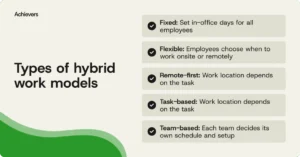
The rise of remote and hybrid work has further complicated this picture. According to the Bureau of Labor Statistics, 22.6% of workers teleworked or worked at home for pay as of March 2026. This shift means that a single company headquartered in a state like Texas may suddenly find itself subject to the labor laws of California, New York, or Colorado if its employees choose to relocate. Each move triggers a "compliance event" involving state-specific tax withholding, disability insurance, and mandatory paid leave programs.
Historically, organizations relied on annual seminars or static PDF manuals to keep staff informed. However, these methods fail to account for the speed of regulatory change. A legislative update enacted in the first quarter of the year may not be reflected in a training cycle until the fourth quarter, leaving a nine-month window of vulnerability. This "knowledge decay" is particularly dangerous in payroll, where technical details regarding wage statements and recordkeeping are easily forgotten if not reinforced through continuous learning.
A Strategic Shift: The MAPS Framework
To address these challenges, Learning and Development (L&D) and HR leaders are moving toward more dynamic, role-specific eLearning models. The "MAPS" framework—Map, Assign, Practice, and Sustain—offers a structured approach to building a resilient payroll compliance program.
1. Mapping Compliance Risk
The foundation of an effective program is a comprehensive risk map. Rather than delivering a general overview of the Fair Labor Standards Act (FLSA), organizations must identify specific risks based on geography and job function. For instance, a risk map for a multi-state employer would categorize requirements such as California’s strict daily overtime rules versus the weekly overtime standards used in most other states.
This mapping also includes recordkeeping mandates. Under federal law, employers are required to preserve payroll records for at least three years, while documents used for wage computations, such as timecards, must be kept for two. By mapping these specific requirements, L&D teams can create targeted modules that prevent "information overload" and focus on the most pertinent risks.
2. Assigning Responsibility Beyond the Payroll Desk
A common misconception is that payroll compliance is solely the responsibility of the payroll department. In reality, managers and HR generalists often serve as the first point of failure. A frontline manager who improperly approves a shift change or an HR professional who fails to update an employee’s work location can inadvertently trigger a compliance violation.
Effective eLearning assigns modules based on these functional responsibilities. A manager’s training might focus on how to properly document overtime or the legal implications of "off-the-clock" work, while a payroll specialist’s training would delve deeper into the technicalities of wage statement formatting and tax reciprocity agreements.
3. Practical Application Through Scenarios
The most effective compliance training moves away from abstract definitions and toward realistic application. Instead of asking a learner to define "gross wages," modern eLearning platforms utilize scenario-based exercises. For example, a module might present a scenario where an hourly employee works 46 hours in a week, including a shift change. The learner must then identify which data points require review before the pay cycle is finalized.
These scenarios force employees to think critically about how regulations intersect with daily operations. By practicing with simulated pay stubs and relocation requests, staff can identify potential errors in a safe environment before they manifest as actual paycheck discrepancies.
4. Sustaining Knowledge via Microlearning
The shift toward microlearning is supported by broader industry trends. The Association for Talent Development (ATD) in its 2026 State of the Industry report found that employees used an average of 16.7 formal learning hours in 2025, an increase from 13.7 hours the previous year. Despite this increase in engagement, direct learning expenditure per employee decreased to $846, indicating a demand for more efficient, modular training.
Microlearning—short, 5-to-10-minute updates—allows organizations to respond to legislative changes in real-time. When a state like New York updates its paid sick leave thresholds, a microlearning "nudge" can be sent immediately to the relevant staff, ensuring that knowledge remains current without the need for a full-scale retraining session.
Operational Metrics and Business Impact
To demonstrate the ROI of payroll eLearning, organizations are looking beyond simple completion rates. Instead, they are tracking operational metrics that correlate directly with the bottom line. Key performance indicators (KPIs) include:
- Manual Check Volume: A decrease in the number of manual checks issued to correct errors is a primary indicator of improved accuracy.
- Time-to-Compliance: The speed at which an organization implements a new state-specific regulation.
- Employee Inquiry Rates: A reduction in the number of "where is my pay?" or "why is my tax wrong?" tickets sent to HR.
- Audit Readiness: The ability to produce accurate, compliant records during internal or external audits.
These metrics allow L&D and payroll leaders to identify specific "hot spots" where training may be failing. If errors persist in a specific jurisdiction, the organization can deploy a state-specific refresher module to address the gap.
The Human Element: Building Employee Trust
Beyond the legal and financial ramifications, payroll accuracy is a fundamental component of the employee experience. In a competitive labor market, repeated payroll errors can be a primary driver of turnover. When an employee’s pay is incorrect, it creates a sense of financial insecurity and erodes the psychological contract between the worker and the employer.
This is particularly true for distributed teams who may never interact with their HR or payroll colleagues in person. In these instances, the paycheck is the most tangible point of contact with the organization. Accuracy and transparency in wage statements serve as a proxy for corporate competence and fairness. By investing in robust payroll training, organizations are effectively investing in employee retention and morale.
Future Outlook: AI and Automation in Training
As we look toward the late 2020s, the integration of Artificial Intelligence (AI) is expected to further transform payroll compliance training. Industry analysts predict three major shifts:
First, training will become increasingly automated. AI systems will be able to monitor payroll data for patterns of errors and automatically trigger personalized refresher training for the employees responsible for those entries. Second, learning will become "just-in-time." Instead of a separate course, compliance prompts may appear directly within the payroll or HR software when a user performs a high-risk action, such as processing a final paycheck for a terminated employee in a state with "immediate pay" requirements.
Third, while AI will handle the data-heavy aspects of compliance, human judgment will remain paramount. The most successful organizations will be those that combine technological safeguards with a workforce that is deeply trained in the nuances of labor law interpretation.
Conclusion
The complexity of multi-state payroll in a remote-heavy world has made the "once-a-year" training model obsolete. To mitigate the risk of multi-million dollar back-wage recoveries and IRS penalties, employers must adopt a more sophisticated, eLearning-driven approach.
By utilizing the MAPS framework and focusing on scenario-based microlearning, organizations can ensure that their staff—from frontline managers to senior payroll administrators—possess the specific knowledge required for their roles. Ultimately, reducing payroll errors is not just about avoiding fines; it is about building a resilient, transparent, and trustworthy organization that respects the most fundamental agreement in the workplace: the promise of accurate and timely pay for work performed.