Feeling safe at work should not be a luxury, yet alarming statistics underscore a global crisis in workplace well-being. The World Health Organization (WHO) reports a staggering 12 billion workdays lost annually due to depression and anxiety, imposing a formidable economic toll of approximately $1 trillion on the global economy each year. This financial burden is merely the tip of the iceberg; when individuals within an organization do not feel secure enough to voice concerns, share innovative ideas, or admit mistakes, the consequences reverberate deeply, stifling innovation, eroding trust, and ultimately impeding organizational growth.
This comprehensive analysis delves into the critical concept of psychological safety, exploring its profound meaning, its undeniable business advantages, and the proactive measures organizations and countries are implementing to foster environments where every individual feels heard, valued, and empowered to bring their authentic selves to work.
Understanding Psychological Safety: A Foundation for Success
At its core, psychological safety is the belief that one will not be punished or humiliated for speaking up with ideas, questions, concerns, or mistakes. Pioneered by Harvard Business School professor Amy Edmondson, this concept highlights the shared belief held by members of a team that the team is safe for interpersonal risk-taking. In a psychologically safe environment, employees feel comfortable asking questions, admitting errors, and challenging the status quo without fear of negative repercussions such as being shut down, sidelined, or penalized. This freedom from fear is not merely about comfort; it is a powerful catalyst for collaboration, innovation, and reduced stress.
A seminal study linked to the Harvard T.H. Chan School of Public Health reinforced this by demonstrating that workplaces with elevated levels of psychological safety experienced lower rates of job burnout among employees, even during periods characterized by high stress and limited resources. This finding underscores that psychological safety is not a fair-weather phenomenon but a resilient buffer against adversity, enabling teams to navigate challenges more effectively. Ultimately, psychological safety is a critical driver of performance, employee retention, and foundational trust, distinguishing the most successful and thriving organizations in today’s competitive landscape.
The Genesis and Evolution of Psychological Safety in the Workplace
While the term "psychological safety" gained prominence through Edmondson’s research in the late 1990s, the underlying principles have roots in earlier industrial psychology and human relations movements. Historically, workplace safety focused predominantly on physical hazards. However, as economies shifted from industrial production to knowledge-based work, the intangible aspects of work environment—such as stress, communication, and interpersonal dynamics—began to receive greater scrutiny.
The digital age, characterized by rapid change, complex problem-solving, and increased collaboration, further amplified the need for environments where diverse perspectives could be freely exchanged. A pivotal moment in the widespread recognition of psychological safety came with Google’s "Project Aristotle" in 2012. This extensive internal study, aimed at understanding what makes teams effective, meticulously analyzed hundreds of Google’s teams. The surprising finding was that individual team member skills or personality types were less significant than collective team dynamics. The single most important factor for team effectiveness, according to Project Aristotle, was psychological safety. This research catapulted the concept into mainstream corporate discourse, compelling organizations worldwide to re-evaluate their approaches to team building and leadership.

The Business Imperative: Beyond Morale to Tangible Outcomes
The benefits of psychological safety extend far beyond improved morale, translating directly into tangible business outcomes.
- Enhanced Innovation and Problem-Solving: When employees feel safe to propose novel ideas, even those that seem unconventional, and to constructively critique existing processes, organizations unlock significant innovative potential. They are more likely to identify emerging opportunities and pre-empt potential threats.
- Improved Decision-Making: Diverse perspectives and candid feedback lead to more robust discussions and better-informed decisions. Teams are less prone to groupthink when members feel empowered to voice dissenting opinions.
- Increased Learning and Adaptability: A psychologically safe environment encourages learning from mistakes rather than concealing them. This fosters a culture of continuous improvement, crucial for adapting to dynamic market conditions.
- Higher Employee Engagement and Retention: Employees who feel valued, heard, and respected are more engaged in their work, committed to their organizations, and less likely to seek opportunities elsewhere. This directly reduces turnover costs and preserves institutional knowledge.
- Stronger Trust and Collaboration: Psychological safety is the bedrock of trust within teams and across departments. When trust is high, collaboration flourishes, silos break down, and collective goals are pursued more effectively.
- Better Risk Management: Employees are more likely to report potential problems, errors, or ethical concerns early on, allowing for timely intervention and mitigating larger crises.
According to a 2023 McKinsey report, organizations with high psychological safety are more resilient, adapt faster to change, and report higher levels of employee well-being. The financial implications are clear: reduced absenteeism, lower healthcare costs associated with stress and burnout, and increased productivity all contribute to a healthier bottom line.
11 Pillars for Building Psychological Safety: A Manager’s and HR Leader’s Guide
Creating a psychologically safe culture is a strategic imperative that requires intentional effort from HR leaders and managers alike. It’s about cultivating an environment where employees don’t just survive but thrive. Here are 11 actionable strategies:
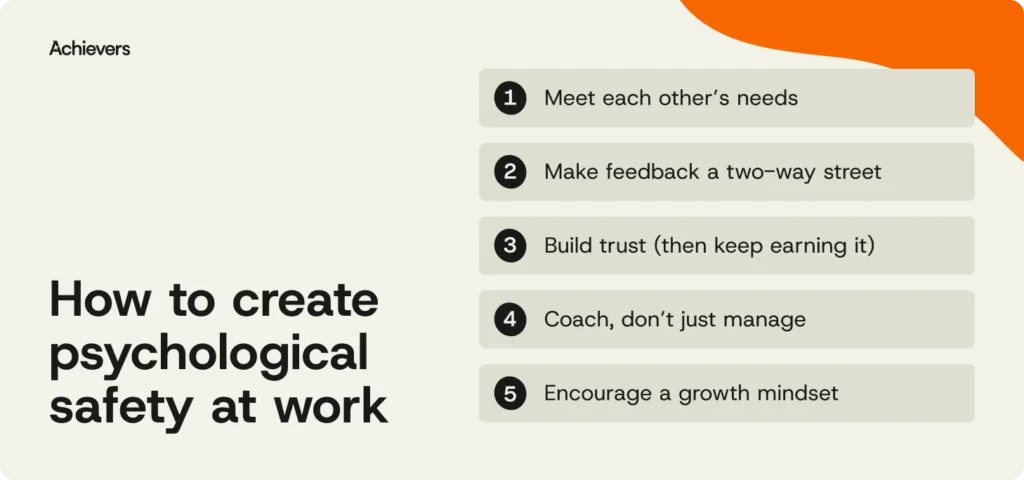
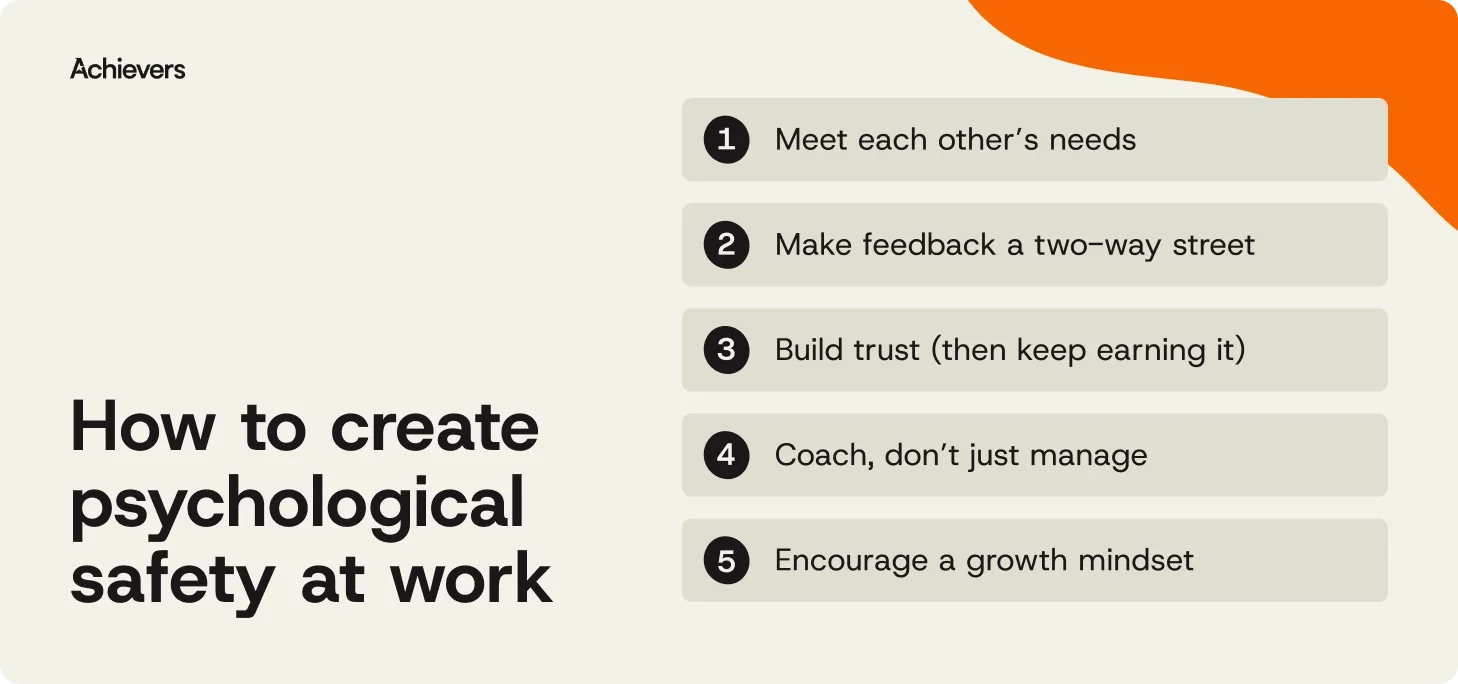
- Meet Each Other’s Needs: Effective leadership begins with understanding. Instead of making assumptions, actively inquire about your team’s needs regarding communication, meeting structures, and feedback preferences. Recognize that these needs are dynamic and require continuous check-ins. Acknowledging hard work, providing growth opportunities, and ensuring equitable participation are fundamental to a safe, motivating environment. There is no universal solution; customization is key.
- Make Feedback a Two-Way Street: Feedback is a powerful tool for growth, but only when it flows reciprocally and demonstrably leads to action. Soliciting employee input without visible follow-through breeds cynicism and disengagement. Research indicates that 62% of employees desire "hard conversations" but refrain due to a lack of perceived safety. Build trust by genuinely listening, thoughtfully responding, and collaboratively developing solutions. Implement pulse surveys for timely, unbiased insights. When employees observe their input driving tangible change, their willingness to share future insights increases exponentially, leading to significant organizational improvements.
- Build and Continuously Earn Trust: Trust is a performance accelerant. Employees who trust their managers are more engaged, motivated, and less prone to disengagement. A significant trust gap exists: while 86% of executives believe they trust their teams, only 60% of employees reciprocate that sentiment (PwC survey). Genuine trust transcends good intentions; it demands consistent actions: honesty, empathy, reliability, and empowering employees with autonomy over their work. Move beyond top-down directives and empower your people. Trusted employees perform better and exhibit higher engagement.
- Coach, Don’t Just Manage: Effective coaching fosters trust, elevates confidence, and supports employee growth—all vital components of psychological safety. Coaching involves active listening, genuine presence, and guiding individuals to connect their work with their broader career aspirations. Leaders should shift from micromanagement to mentorship. When managers invest time in coaching, employees feel seen, supported, and are more inclined to remain with the organization, creating a win-win for everyone.
- Encourage a Growth Mindset: Every individual, irrespective of their tenure or position, possesses potential for growth. Cultivating a growth mindset encourages employees to perceive challenges as opportunities for development, rather than career-threatening setbacks. When individuals feel safe enough to share incomplete work or acknowledge missteps, they are more likely to learn, collaborate, and innovate. This is particularly crucial given that 37% of departing employees cite a lack of growth opportunities as their primary reason (APA). Foster a culture where experimentation is celebrated, not penalized. Recognize learning with the same enthusiasm as achieved results. When individuals believe in their capacity for improvement, they not only achieve it but also generate momentum that strengthens teams, enhances decision-making, and reduces attrition.
- Create Space for Bold Ideas: Innovation is not born in a vacuum; it thrives in environments where individuals feel secure enough to articulate ideas, even those that initially seem unconventional. To cultivate genuine creativity, leaders must actively welcome fresh perspectives, encourage respectful debate, and embrace the occasional "wild" idea. Encouraging audacious thinking signals trust and contributes to superior business outcomes. When employees believe their ideas will not lead to negative repercussions, they are far more likely to conceive and deliver transformative concepts.
- Show Appreciation Often: Regular recognition is more than a morale booster; it actively constructs trust and psychological safety. A study revealed that 53% of employees who receive consistent praise from their manager report feeling safe, valued, and able to be their authentic selves at work. The solution lies in embedding recognition into daily workflows. Utilize recognition platforms to facilitate real-time acknowledgment of contributions. Whether it’s a public commendation for a significant achievement or a quiet thank-you for a job well done, frequent appreciation strengthens connections, reinforces desired behaviors, and consistently reminds employees that their work is meaningful.
- Nip Negativity in the Bud: Unaddressed negativity can severely impact workplace culture, productivity, and retention. However, a recent survey indicated that only 56% of people leaders feel adequately equipped to support an employee experiencing a mental health issue (WorldatWork). Leaders must approach negativity with curiosity, not judgment. Often, negative behaviors are symptoms of deeper issues such as personal stress, communication breakdowns, or feeling unheard. Address these root causes with empathy and decisive action. Tackling a toxic work environment demonstrates care for both the individual and the team. Inaction, in this context, is not leadership.
- Lead with Empathy (and Mean It): Empathy is frequently discussed but often inadequately practiced. A significant 52% of employees perceive their company’s empathy efforts as insincere (EY study). Authentic empathy involves listening to comprehend, not merely to formulate a response. Begin simply: summarize what you’ve heard, be mindful of your body language, and demonstrate genuine interest. These subtle cues significantly contribute to making others feel respected and heard. Moreover, always express gratitude; appreciation and empathy are inextricably linked. When empathy is genuine, trust blossoms, collaboration strengthens, and working together becomes a more enjoyable experience.
- Make Decisions With Your Team, Not Just For Them: Psychological safety is a top workplace priority for 84% of employees, ranking just below compensation and flexibility (Oyster HR). This highlights a fundamental desire: people want to be included, not dictated to. Therefore, involve your team in decisions that directly affect them. Solicit their input, collectively review feedback, and maintain transparency regarding the decision-making process. This approach builds trust, enhances engagement, and strengthens team dynamics, while also preventing the common "why wasn’t I informed?" scenarios. When employees feel heard and informed, their commitment increases, and their receptiveness to future initiatives improves.
- Empower Managers to Lead with Confidence: Psychological safety originates with managers, yet only 27% feel prepared to navigate difficult conversations (Achievers). This represents a significant challenge, especially when 89% of business leaders acknowledge the importance of psychological safety (McKinsey). The solution lies in equipping managers with comprehensive training and tools in communication, empathy, and conflict resolution. Provide them with access to pulse surveys and anonymous feedback mechanisms to proactively identify issues and respond with sensitivity. When managers are confident in leading challenging discussions, teams feel secure in speaking up. When every idea, question, or concern is met with curiosity rather than judgment, trust is cultivated, and performance naturally follows. Better leaders lead to better culture and superior results.
Integrating Psychological Safety as a Core HR Strategy
For psychological safety to become an enduring cultural element, it must be integrated into daily operations and HR strategies. The most effective strategies weave recognition, manager behavior, and feedback into workflows, providing consistent evidence of safe conduct.
- Make Recognition Essential: Psychological safety flourishes when employees observe that speaking up, contributing ideas, and collaborating are consistently recognized and reinforced. Embed recognition within existing workplace programs and integrations (e.g., Zoom, Slack, Microsoft Teams). Directly link recognition to desired behaviors, such as proactive risk identification or innovative idea sharing, to establish visible and consistent expectations across teams.
- Design Feedback as a Visible Two-Way System: Psychological safety hinges on employees’ belief that their input leads to meaningful change. To cultivate this trust, establish structured feedback channels and commit to publicly "closing the loop"—sharing what was heard, the actions taken, and what remains in progress. This transforms feedback from a transactional exercise into an ongoing affirmation that employee voices actively shape outcomes.
- Empower Managers to Lead Conversations: Trust is a product of consistent managerial behavior. Employees assess the safety of speaking up based on their manager’s real-time responses. Data from the 2026 State of Employee Recognition Report indicates that employees receiving weekly recognition are 11.5 times more likely to trust their manager. Train managers to conduct regular one-on-one meetings, provide timely recognition, and directly address concerns. Establish clear routines to ensure these actions are consistently repeated.
- Measure Psychological Safety Continuously: Psychological safety is dynamic and can fluctuate rapidly. Track its pulse through frequent surveys and by observing behavioral patterns, such as participation rates in meetings or who initiates ideas. Review results regularly and communicate planned actions to demonstrate progress and sustain employee confidence.
- Tie Psychological Safety to Business Outcomes: Psychological safety directly influences employees’ willingness to raise risks, adapt to change, and contribute ideas. Connect its measurement to tangible business outcomes such as improved performance, enhanced productivity, or reduced turnover. This ensures it remains a strategic priority in planning and reporting, tracked alongside other critical metrics.
- Build Participation into Decision-Making: Employees are more likely to endorse decisions when they are involved early in the process. Solicit input before decisions are finalized, and transparently illustrate how that input influenced the ultimate outcome. This creates a clear, visible link between speaking up and actionable results.
- Define and Reinforce Safe Behaviors in Real-Time: Psychological safety is cultivated through repeated actions. Employees emulate behaviors they consistently observe. Establish explicit expectations for behaviors such as active listening, respectful acknowledgment of input, and constructive responses. Publicly recognize and celebrate these moments as they occur, establishing them as the prevailing standard across the organization.
Fostering Psychological Safety During Organizational Change
Periods of organizational change inherently introduce uncertainty and anxiety, making psychological safety even more crucial. HR leaders play a pivotal role in maintaining it by ensuring clear direction, consistent reinforcement, and tangible evidence that employee input continues to influence decisions.
- Communicate Early, Often, and with Specificity: Uncertainty thrives in the absence of clear, timely communication. Proactively share information about what is changing, its implications for employees, and expected actions. Maintain a predictable communication cadence so employees know when to anticipate updates.
- Acknowledge Uncertainty, Avoid Over-Polishing: Employees value direct and honest communication. Be transparent about what is known and what remains fluid. Invite questions to clarify areas where employees can contribute and where further clarity is still being sought.
- Utilize Recognition to Stabilize Culture: Change often shifts priorities and expectations. Leverage recognition to acknowledge and reinforce effort, adaptability, and progress as they unfold. Increase the frequency of recognition to help employees maintain focus on critical tasks as conditions evolve.
- Create Structured Channels for Safe Expression: During periods of change, employees may be hesitant to voice concerns without clear, designated channels. Establish consistent forums, surveys, or feedback loops where input is explicitly invited and expected. Act on the feedback received and communicate outcomes to demonstrate that speaking up leads to action.
- Equip Managers for Emotional and Practical Concerns: Managers are the primary point of contact during change. Provide them with clear guidelines on messaging, expectations, and how to effectively respond to concerns. Support them with tools and training to ensure consistent and empathetic responses across all teams.
- Involve Employees in Shaping the Change: Employees are more likely to embrace and champion change when they actively participate in defining its practical implementation. Involve them in adjusting workflows, identifying potential risks, and refining processes. Use their insights to tailor how change is implemented at the team level.
- Monitor Team Signals, Beyond Survey Scores: Behavioral shifts often precede survey results. Pay close attention to participation levels, idea sharing, and engagement during meetings. Address any observed declines proactively through direct conversations and targeted support.
- Act on Feedback Quickly and Transparently: During change, employees need to see that their input generates timely action. Communicate what was heard, the decisions made, and what aspects are still being addressed. This rapid feedback loop is essential for sustaining trust during periods of disruption.
Checking the Pulse: Measuring Psychological Safety
Measuring psychological safety is fundamental to its continuous improvement. However, this process must be approached with sensitivity, recognizing that it involves human experience, not just data points.
- Quantitative Surveys: Implement regular, anonymous surveys with specific questions designed to gauge perceptions of psychological safety. Examples include:
- "On this team, it is safe to take risks."
- "It is easy to ask other members of this team for help."
- "No one on this team would deliberately act in a way that undermines my efforts."
- "If I make a mistake on this team, it is not held against me."
- "I can bring up problems and tough issues with my teammates."
- "Team members are able to bring up problems and tough issues."
- "My unique skills and talents are valued and utilized on this team."
- Qualitative Feedback: Conduct anonymous focus groups, one-on-one conversations, and suggestion boxes. These methods can uncover nuances and specific examples that surveys might miss.
- Behavioral Observations: Look for observable indicators such as:
- Speak-up rates: How often do employees contribute ideas or ask questions in meetings?
- Error reporting: Are mistakes reported openly, or are they hidden?
- Conflict resolution: How are disagreements handled? Are they addressed constructively or avoided?
- Innovation pipeline: Is there a consistent flow of new ideas?
- Absenteeism and turnover rates: High rates, especially in specific teams, can signal underlying safety issues.
- Exit Interviews: Analyze exit interview data for recurring themes related to feeling unheard, undervalued, or fearful of speaking up.
- Pulse Surveys: Deploy short, frequent pulse surveys to monitor changes in sentiment and address emerging issues quickly.
When assessing psychological safety, the guiding principle should be to listen more, judge less, and maintain an open mind, ensuring that both the channels for feedback and the willingness to receive it are consistently open.
Making Psychological Safety a Cultural Cornerstone
The most exemplary workplaces transcend mere discussion of psychological safety; they embody it. When employees feel genuinely safe, valued, and heard, they are empowered to perform at their highest potential and are significantly more likely to remain committed to their organizations.
Cultivating such a culture is not accidental. It requires a strategic and consistent commitment to transparent feedback, ingrained daily recognition, and the deployment of intuitive tools that facilitate both—platforms like Achievers, which seamlessly integrate these elements into the employee experience.
The imperative for psychological safety has never been stronger. In an era demanding agility, innovation, and resilience, organizations that prioritize and actively build psychologically safe environments will not only mitigate significant economic and human costs but will also establish themselves as leaders, attracting and retaining top talent, fostering groundbreaking innovation, and ultimately securing a sustainable competitive advantage in the global marketplace. The time to build a workplace where people genuinely want to work and stay is now.