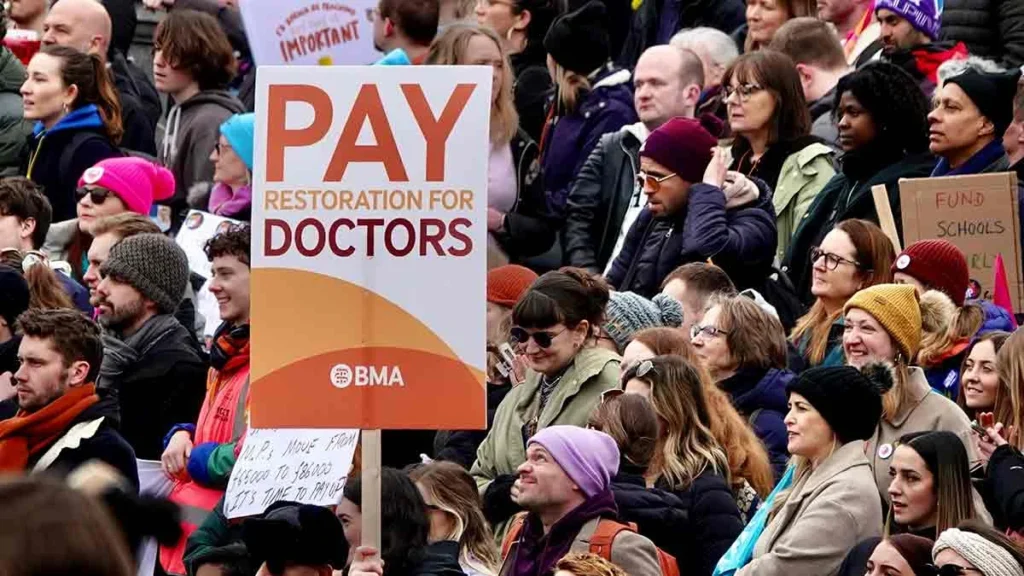
Resident doctor strikes, poised to commence across England today, have been dramatically called off after the government tabled a revised offer at the eleventh hour. The decision, announced by the executive of the British Medical Association’s (BMA) resident doctors committee on Saturday, June 13, 2026, marks a pivotal moment in the protracted industrial dispute that has significantly impacted NHS services and patient care over the past year. This latest development averts what would have been the 16th round of industrial action, offering a glimmer of hope for a resolution in the long-running disagreement centered on pay erosion, working conditions, and the critical issue of doctor unemployment.
The cancellation of the impending strikes, which had threatened to disrupt thousands of appointments and procedures, came after intensive, weeks-long negotiations between the BMA and the Department of Health and Social Care. While the full specifics of the government’s new proposal have not been publicly detailed, the BMA committee has confirmed its intention to present the offer to its members for a referendum, indicating that it meets a threshold deemed "appropriate" for consideration. This move signals a potential breakthrough in a dispute that has seen widespread discontent among junior doctors and significant pressure on an already strained National Health Service.
A Protracted Battle: The Chronology of Discontent
The roots of the current dispute stretch back well over a decade, with resident doctors arguing that their pay has been systematically eroded by inflation and successive government pay freezes since 2008. The BMA estimates that junior doctors have experienced a real-terms pay cut of over 26% during this period, leading to widespread demoralization, increased burnout, and concerns over the retention of vital medical talent within the NHS.
Industrial action first escalated in earnest in late 2024, following a breakdown in initial negotiations. The subsequent months saw an unprecedented series of strikes, each typically lasting between 72 hours and five days, leading to the cancellation of hundreds of thousands of planned operations and outpatient appointments. These actions, while deeply regrettable for patients and the broader healthcare system, were framed by the BMA as a necessary measure to compel the government to address their concerns seriously.
Key milestones in the dispute include:
- Autumn 2024: Initial ballot for industrial action, overwhelmingly supported by resident doctors, citing dissatisfaction with a proposed pay uplift and overall working conditions.
- Winter 2024-2025: The first series of strikes commence, primarily targeting non-emergency care but inevitably impacting emergency services due to staff redeployment.
- Spring 2025: Negotiations intermittently resume and collapse, leading to further escalations in strike frequency and duration. The BMA consistently highlights the dual issues of pay restoration and securing adequate training posts to prevent "doctor unemployment" – a paradoxical situation where newly qualified doctors struggle to find suitable roles within the NHS despite widespread shortages.
- Late 2025: The government introduces a multi-year pay offer for some public sector workers, which the BMA deems insufficient for resident doctors, leading to renewed mandates for strike action.
- Early 2026: Public rhetoric intensifies, with both sides expressing frustration. The BMA warns of further "escalated action" if a credible offer is not made.
- June 2026: Weeks of intense, behind-the-scenes negotiations culminate in the government presenting a new offer just days before the scheduled 16th strike, leading to its suspension.
Each strike period placed immense pressure on the NHS, forcing hospitals to divert resources, postpone elective surgeries, and rely heavily on senior medical staff and locums to maintain essential services. The cumulative effect has been a further exacerbation of the NHS’s already significant waiting lists, which stood at over 7 million procedures and appointments even before the current wave of industrial action.
Voices from the Frontline: A Cautious Optimism
Dr. Jack Fletcher, chair of the BMA resident doctors committee, articulated the committee’s position with a mix of relief and measured caution. "We have always been clear that no strikes needed to go ahead if we received an offer appropriate to put to our members," Dr. Fletcher stated. He emphasized the frustration over the timing, adding, "This should not have been left to the last moment, but we hold up our end of the bargain when the government shifts its position."
Dr. Fletcher reiterated the core demands of the BMA: "All we have asked for is a fair offer that secures enough jobs to tackle the madness of doctor unemployment and take steps to address the erosion of our pay." The impending referendum will now see "tens of thousands of frontline doctors" cast their vote on whether this offer adequately addresses these long-standing concerns. He also issued a clear warning: "If members say no to the offer, plans will continue for further escalated action next month," underscoring that the cancellation of these strikes is a suspension, not an outright cessation, of the dispute. The BMA’s strategy has consistently been to use the threat and execution of industrial action as leverage to achieve meaningful concessions, a tactic that appears to have yielded results in this instance.
The Government’s Stance: Fiscal Constraints and Acknowledged Progress
Health Secretary James Murray welcomed the BMA’s decision, framing it as a positive outcome, particularly for patients. "It is a positive and welcome development – especially for patients – that the BMA have called off these unnecessary strikes," Murray said. His statement also reiterated the government’s long-held position on fiscal prudence: "The country simply cannot afford to increase the pay offer for this year."
However, Murray also acknowledged progress in other critical areas, stating, "I am pleased that the BMA have recognised this, which has allowed us to make progress in other areas, such as training places and working conditions." This suggests that the new offer might include significant non-pay elements, such as commitments to increasing the number of available training posts, improving working patterns, or enhancing support services for resident doctors, which could be crucial in addressing broader concerns beyond immediate salary increases. The government has consistently argued that substantial pay rises for one group of public sector workers could trigger similar demands across the public sector, leading to inflationary pressures and unsustainable public finances.
NHS Leadership: A Plea for Sustainability
Sir Ciarán Devane, chief executive of the NHS Alliance, echoed the sentiments of relief across the healthcare system. "Health leaders will welcome this eleventh hour decision to suspend the planned strike action while they consider the Government’s latest offer," he commented. His statement highlighted the critical opportunity this pause in industrial action presents for all parties involved. "This is a vital chance to reset the conversation. We urge both sides to use this opportunity to reach a fair, sustainable agreement that supports doctors, strengthens the NHS and maintains patient care."

The NHS Alliance, representing a broad spectrum of healthcare organizations, has consistently emphasized the detrimental impact of ongoing industrial action on patient safety, staff morale, and the long-term sustainability of the health service. The financial cost of strikes, including the expense of covering shifts with agency staff and the economic impact of cancelled procedures, runs into millions of pounds for each day of action, further straining an already stretched NHS budget.
Broader Context: The Pressures on the NHS
The dispute with resident doctors unfolds against a backdrop of unprecedented challenges for the NHS. Still grappling with the aftermath of the COVID-19 pandemic, the health service faces record waiting lists, significant workforce shortages across multiple disciplines, and escalating demand for services. Data from NHS England consistently shows high levels of staff vacancies, particularly in nursing and medical roles. The long-term plan for the NHS relies heavily on a robust and well-supported workforce, making the resolution of industrial disputes paramount.
The issue of "doctor unemployment" – a term highlighted by the BMA – is particularly vexing. While the NHS desperately needs more doctors, structural issues within the training and recruitment pipeline, coupled with financial constraints, have meant that some newly qualified doctors struggle to secure permanent training posts in their desired specialties or locations. This leads to a brain drain, as talented medical professionals consider opportunities abroad, exacerbating domestic shortages. Any agreement must, therefore, comprehensively address not just pay, but also career progression, training opportunities, and the overall working environment to stem this outflow.
Impact on Patients and Services: A Moment of Respite
The immediate impact of the strike cancellation is a significant sigh of relief for thousands of patients who had appointments or procedures scheduled for the coming days. The disruption caused by previous strikes has been profound:
- Cancelled Appointments: Estimates suggest over 1.5 million appointments and procedures have been cancelled or postponed across all NHS industrial actions over the past two years, with resident doctor strikes contributing a substantial portion.
- Increased Waiting Lists: The constant disruption has directly contributed to the stubbornly high NHS waiting lists, impacting patient health outcomes and quality of life.
- Emergency Care Strain: While emergency care is typically maintained, the necessity to redeploy senior staff often means a reduction in capacity elsewhere, leading to longer waits in A&E departments and increased pressure on remaining staff.
The avoidance of the 16th strike allows the NHS to continue its efforts to reduce backlogs without further immediate interruption. However, the underlying issues remain, and the system’s resilience is continually tested.
The Referendum and Future Prospects: A Critical Juncture
The upcoming referendum among BMA resident doctor members represents a critical juncture. The outcome will determine whether this latest offer truly satisfies the doctors’ long-standing demands or if the dispute will reignite. Factors influencing the vote will likely include:
- The specifics of the offer: While undisclosed, members will scrutinize the balance between pay restoration, improvements to working conditions, and commitments regarding job security and training.
- Member sentiment: After numerous rounds of strikes and perceived governmental intransigence, some members may be skeptical or feel that more could be achieved. Others may be weary of industrial action and keen to accept a reasonable compromise.
- The BMA committee’s recommendation: The committee’s stance on the offer will likely hold significant sway.
If the offer is accepted, it could herald a period of stability for the NHS workforce, allowing focused efforts on recovery and long-term planning. It would represent a significant achievement for both the BMA in securing concessions and the government in reaching an agreement.
However, a rejection would plunge the NHS back into uncertainty, with the BMA committed to "further escalated action." This would likely involve longer, more disruptive strikes, potentially leading to even greater backlogs and further damage to staff morale. The government would then face renewed pressure to either sweeten its offer or risk prolonged industrial strife.
Implications for Healthcare Workforce and Policy
The resolution of this dispute, should the offer be accepted, will have broader implications for healthcare workforce policy in the UK. It could set a precedent for future negotiations with other healthcare unions, particularly those who have also engaged in industrial action over pay and conditions. It highlights the growing power of organized labor in a critical public service and the necessity for governments to engage constructively to avoid prolonged disruption.
Beyond the immediate terms of the agreement, the dispute has shone a harsh light on the need for a comprehensive, long-term workforce plan for the NHS. This includes not only competitive pay but also robust training pathways, attractive career progression, and a supportive working environment that addresses issues of burnout and retention. The "madness of doctor unemployment" alongside acute shortages underscores the systemic challenges that require more than just short-term fixes.
As the BMA prepares to present the offer to its members, the entire healthcare sector, and indeed the nation, will watch closely. The outcome of this referendum will not only shape the immediate future of resident doctors but also send a powerful signal about the government’s commitment to its healthcare workforce and the trajectory of the National Health Service for years to come.