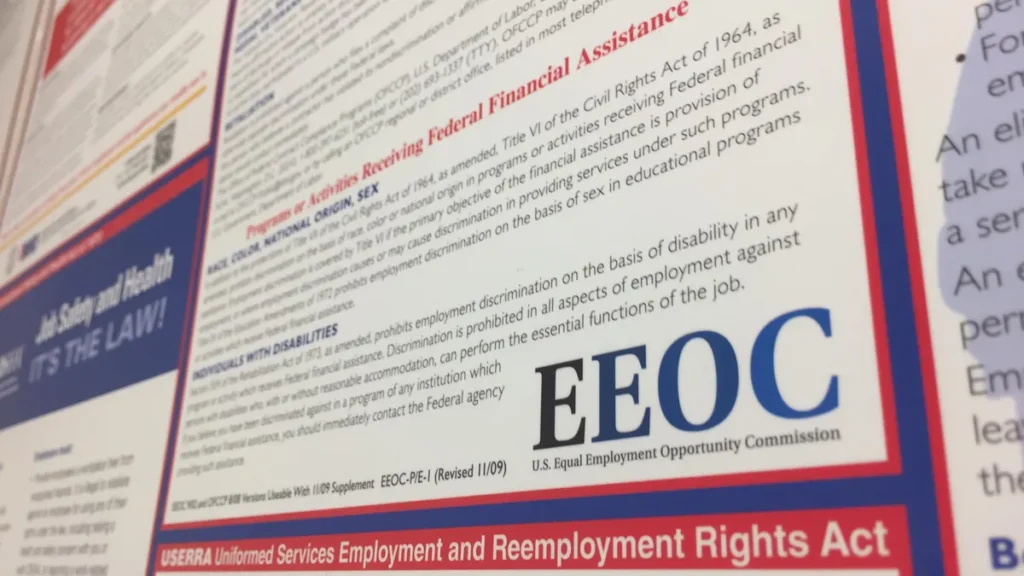
The Equal Employment Opportunity Commission (EEOC) has significantly escalated its litigation efforts against pregnancy discrimination, marking it as a critical enforcement priority. This intensified focus comes even as the agency navigates considerable controversy surrounding its recently finalized regulations, particularly those under the Pregnant Workers Fairness Act (PWFA). Published on August 3, 2026, this development underscores a persistent national challenge in workplace equity, demanding vigilance from both employers and employees alike. Despite the legal and political headwinds, the EEOC, under the leadership of Chair Andrea Lucas, continues to aggressively pursue cases, sending a clear message that discrimination based on pregnancy, childbirth, or related medical conditions will not be tolerated.
A Foundation of Protection: Title VII, the PDA, and the Rise of PWFA
The legal framework protecting pregnant workers in the United States is multifaceted, built upon decades of legislative action and judicial interpretation. At its core is Title VII of the Civil Rights Act of 1964, which prohibits employment discrimination based on sex. However, early interpretations of Title VII did not explicitly extend to pregnancy, leading to inconsistencies and widespread discrimination. This ambiguity was starkly highlighted in the 1976 Supreme Court case General Electric Co. v. Gilbert, where the Court ruled that an employer’s disability plan could exclude pregnancy benefits without violating Title VII.
In response to this significant setback for women’s workplace rights, Congress enacted the Pregnancy Discrimination Act (PDA) in 1978. The PDA amended Title VII, unequivocally clarifying that discrimination "because of sex" includes discrimination "because of or on the basis of pregnancy, childbirth, or related medical conditions." This landmark legislation mandated that pregnant workers be treated the same as other temporarily disabled employees with similar abilities or inabilities to work. The PDA primarily focuses on non-discrimination, ensuring that pregnant individuals are not fired, denied employment, or subjected to adverse treatment simply because of their pregnancy. It requires employers to provide the same benefits (e.g., leave, health insurance) to pregnant workers as they do to other employees with temporary disabilities.
Despite the PDA’s protections, a significant gap remained: the lack of a clear federal mandate for employers to provide reasonable accommodations for pregnancy-related conditions, unless similar accommodations were offered to other employees with temporary disabilities. This often left pregnant workers in a precarious position, forced to choose between their health, their job, or taking unpaid leave, especially if their pregnancy required minor modifications to their work environment or duties. Many employers, citing business necessity or lack of a specific disability, could deny requests for things like light duty, modified schedules, or even extra bathroom breaks.

Recognizing this persistent vulnerability, Congress passed the Pregnant Workers Fairness Act (PWFA) in December 2022, with bipartisan support, and it became effective on June 27, 2023. The PWFA dramatically strengthened protections by requiring covered employers to provide "reasonable accommodations" for a worker’s known limitations related to pregnancy, childbirth, or related medical conditions, unless the accommodation would cause an "undue hardship" to the employer’s business. This act mirrors the reasonable accommodation requirements found in the Americans with Disabilities Act (ADA) but specifically applies to pregnancy-related conditions, even if those conditions do not rise to the level of a "disability" under the ADA. Examples of reasonable accommodations under PWFA include allowing flexible work schedules, providing closer parking, offering modified duties, granting breaks for lactation, or permitting time off for medical appointments or recovery from childbirth. The PWFA was a crucial step in ensuring that pregnant individuals could continue working safely and maintain their careers without sacrificing their health or facing economic hardship.
EEOC’s Aggressive Enforcement Post-PWFA
Under Chair Andrea Lucas, the EEOC has made it unequivocally clear that enforcing these protections, particularly those related to pregnancy and childbirth, is a top priority. The agency has ramped up its investigative and litigation activities, pursuing employers across various sectors for alleged violations. This proactive stance is reflected in a series of recent lawsuits and settlements that highlight the pervasive nature of pregnancy discrimination and the EEOC’s commitment to rectifying it.
Linda Sales-Long, acting district director for the EEOC, articulated the agency’s resolute position in a recent press release, stating, "If an employer rejects a qualified applicant because of her pregnancy, the EEOC stands ready to enforce federal law and remedy that unlawful conduct." This statement serves as a stern warning to employers that the hiring process is not exempt from scrutiny regarding pregnancy bias.
Recent litigation examples underscore this commitment:
- Hiring Discrimination in Texas: The EEOC recently announced a significant settlement with a Texas barber and hairstyling college. The agency had brought a lawsuit alleging that the college failed to hire a qualified job candidate simply because she was pregnant. Such cases demonstrate how pregnancy discrimination can manifest even before an individual enters the workplace, denying opportunities based on unfounded stereotypes and assumptions about a pregnant person’s ability to perform job duties. Settlements in such cases typically include monetary relief for the aggrieved party, mandatory anti-discrimination training for staff, and revisions to company policies to ensure future compliance.
- Termination and Leave Discrimination in Washington, D.C.: In February 2026, the EEOC initiated litigation against the operators of Proper 21, a prominent restaurant chain in Washington, D.C. The lawsuit alleged that the company unlawfully pressured a pregnant employee to take maternity leave earlier than planned, subsequently fired her while she was on leave, and then replaced her with a male employee. This case represents a stark example of both discriminatory termination and potential violations related to family and medical leave, underscoring the severe consequences employers face when they fail to uphold federal protections. Litigation in this case remains ongoing, highlighting the EEOC’s resolve to pursue justice through the courts.
- 2025 Settlements for Unlawful Firing: Throughout 2025, the EEOC secured multiple settlements in pregnancy discrimination cases. One notable instance involved an employer’s alleged refusal to schedule a temporary worker upon learning of her pregnancy, followed by her subsequent termination. This scenario illustrates a common form of discrimination where employers make assumptions about a pregnant worker’s reliability or commitment, leading to immediate adverse employment actions. These settlements often provide not only financial compensation but also require employers to implement robust non-discrimination policies and training programs.
- Failure to Accommodate in Oklahoma: A particularly concerning case settled in February 2026 involved an Oklahoma medical clinic. The EEOC alleged that the clinic failed to accommodate an employee with a high-risk pregnancy. Disturbingly, the agency claimed in its complaint that the clinic’s HR staff was entirely unaware of the PWFA. This incident highlights a critical challenge in the post-PWFA landscape: while legislation exists, awareness and proper implementation by employers are paramount. Lack of knowledge is not a defense, and employers are legally obligated to understand and comply with federal anti-discrimination laws. The settlement likely included provisions for training and policy updates to prevent similar incidents.
These cases collectively demonstrate the various forms pregnancy discrimination can take, from hiring and firing to denying reasonable accommodations. The EEOC’s vigorous enforcement aims not only to remedy individual instances of discrimination but also to deter future violations and educate employers on their legal obligations.

The PWFA Rule Controversy: A Deepening Divide
While the EEOC’s enforcement actions under the PWFA have been robust, the implementation of the act has not been without significant controversy, particularly concerning the agency’s final rule published in April 2024. This rule, designed to provide comprehensive guidance on how employers should comply with the PWFA, quickly became a flashpoint due to its inclusion of abortion as a "related medical condition" for which employers might be required to provide accommodations.
The rule clarified that "related medical conditions" encompass a broad spectrum of conditions arising from pregnancy or childbirth, explicitly listing conditions like "infertility, miscarriage, stillbirth, or abortion." This interpretation meant that, under certain circumstances, an employer could be required to provide reasonable accommodations for a worker seeking or recovering from an abortion, such as time off for medical appointments or recovery.
This specific provision ignited a firestorm of political and legal opposition, primarily from conservative states, religious organizations, and anti-abortion advocacy groups. Critics argued that the EEOC had overstepped its congressional mandate, contending that Congress did not intend for the PWFA to cover abortion when it passed the bipartisan bill. They asserted that the inclusion of abortion was an administrative overreach that bypassed the legislative process and infringed upon religious freedom, especially for employers with moral objections to abortion.
EEOC Chair Andrea Lucas herself publicly opposed this aspect of the rule at the time of its adoption. In a statement, she expressed specific issues with the agency’s interpretation of the list of medical conditions covered by the PWFA, arguing that the inclusion of abortion went beyond the scope and intent of the legislation.
The controversy quickly escalated into legal challenges. Multiple states, including Arkansas, Tennessee, and Texas, filed lawsuits against the EEOC, seeking to block the enforcement of the rule’s abortion-related provisions. These states argued that the rule was arbitrary and capricious, violated the Administrative Procedure Act, and infringed upon their sovereign rights and religious liberty. Federal courts subsequently granted injunctions, preventing the EEOC from enforcing the abortion-related accommodation requirements of the PWFA rule in the plaintiff states. These injunctions mean that while the PWFA itself remains fully in effect, the EEOC cannot compel employers in these specific jurisdictions to accommodate abortion-related conditions under the controversial portion of its final rule. The legal battle is ongoing, with the potential for appeals that could ultimately reach the Supreme Court, creating a landscape of uncertainty regarding the full scope of PWFA protections in certain parts of the country.

Statistical Landscape and Broader Implications
Despite legislative advancements, pregnancy discrimination remains a persistent challenge in the American workplace. While exact figures for charges filed post-PWFA are still emerging, historical data from the EEOC indicates a consistent stream of pregnancy discrimination complaints. For example, in fiscal year 2022, before the PWFA’s full implementation, the EEOC received 2,900 charges alleging pregnancy discrimination. These numbers, while significant, are often considered an underrepresentation of the actual prevalence, as many instances go unreported due to fear of retaliation, lack of awareness of rights, or difficulty in proving discrimination. The PWFA’s introduction was partly a recognition that even with existing laws, pregnant workers still faced systemic barriers.
The implications of robust pregnancy discrimination enforcement are far-reaching:
- For Workers: Enhanced protections mean pregnant individuals have a stronger legal basis to demand reasonable accommodations and challenge discriminatory practices. This can lead to greater job security, improved health outcomes, and reduced financial stress during a critical life stage. However, the Oklahoma case, where HR was unaware of the PWFA, underscores the need for continuous education for employees about their rights and how to assert them.
- For Employers: The increased scrutiny from the EEOC, coupled with the new obligations under PWFA, necessitates a comprehensive review and update of internal policies and training programs. Employers must ensure their HR departments, managers, and supervisors are not only aware of but also fully understand and comply with both the PDA and the PWFA. This includes establishing clear processes for handling accommodation requests through an interactive dialogue with employees. Failure to comply can result in significant legal and financial penalties, including back pay, compensatory and punitive damages, and costly litigation, in addition to severe reputational damage. The legal complexities introduced by the controversial PWFA rule mean employers must also stay abreast of judicial developments in their specific jurisdictions.
- For the Legal Landscape: The ongoing court challenges to the PWFA rule highlight a broader tension between administrative agency authority and legislative intent, particularly on politically sensitive issues. The ultimate resolution of these legal battles will set important precedents for future agency rulemaking and the interpretation of federal employment laws. It could also influence the balance of power between federal and state governments regarding workplace regulations.
- Societal Impact: By ensuring that pregnant workers are treated fairly and are provided necessary accommodations, these laws contribute significantly to gender equality in the workplace. They support working families, help close the gender pay gap, and promote greater female workforce participation and leadership. When women are forced out of their jobs or denied opportunities due to pregnancy, it represents a substantial loss of talent and economic potential for society as a whole.
In conclusion, the EEOC’s intensified focus on pregnancy discrimination litigation, under the leadership of Chair Andrea Lucas, signals a steadfast commitment to upholding the rights of pregnant workers. Despite the significant political and legal challenges surrounding the PWFA’s implementing rule, the agency continues to leverage the full force of Title VII, the PDA, and the PWFA to combat discrimination in all its forms. Employers must recognize this heightened enforcement environment and proactively ensure their practices are compliant, transparent, and equitable. For pregnant workers, these laws offer a critical shield against bias, but awareness and advocacy remain crucial in navigating the evolving landscape of workplace protections. The journey toward full workplace equity for pregnant individuals is ongoing, and the EEOC’s current efforts mark a significant, albeit contested, stride forward.