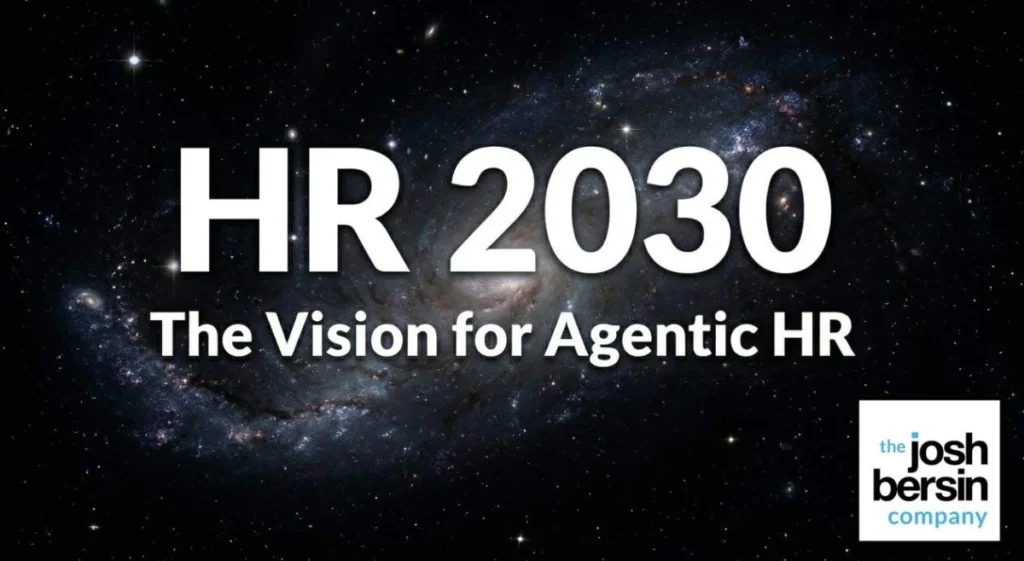
As artificial intelligence continues its rapid integration across corporate landscapes, a profound question is emerging: what will be the ultimate impact of AI agents on Human Resources and the entirety of human capital practices? The notion of HR departments becoming obsolete, replaced by a seamless interaction between managers and an "AI Agent Cloud" for all talent-related functions – from recruitment and compensation to performance management and employee development – is no longer confined to speculative fiction. This transformative shift, spearheaded by a new "HR 2030 Vision," is rapidly becoming a tangible reality, promising to redefine HR from a purely administrative function into a strategic driver of business enablement.
The emergence of this vision is rooted in the convergence of "Systemic HR," which views HR as an integrated operational entity rather than solely as Centers of Expertise, and a sophisticated AI agent architecture. While many tech giants like Microsoft, Roblox, Google, Mastercard, and ServiceNow are at the vanguard of this rapid adoption, other industries are navigating the complexities of system integration and embarking on their AI agent journeys at varying paces. Industry analysts project that this bold reimagining of HR is not a distant aspiration but a likely outcome within the next four years, fundamentally reshaping how organizations manage their most valuable asset: their people.
The Pillars of Agentic HR: A New Paradigm
The HR 2030 Vision is built upon several foundational principles that illustrate the profound capabilities of future AI agents:
1. Comprehensive Employee Data and Ambient Intelligence
At the core of this transformation is the AI agent’s capacity to hold and process comprehensive data on every employee. This includes not only traditional metrics like roles, skills, work schedules, and compensation history but also extends to personal preferences, licenses, and even the nuances of daily activities derived from an analysis of emails, meeting recordings, and location data. Leveraging generative AI, these agents will possess an unprecedented depth of understanding regarding employee contributions, project involvement, and individual behaviors. This will enable them to identify internal subject matter experts, pinpoint highly regarded individuals, and assess workload distribution, flagging overstretched employees and identifying those available for critical tasks, particularly in optimizing frontline operations.
The accessibility of this information will be equally revolutionary. Through ubiquitous devices such as smartphones, smart glasses, and even integrated in-vehicle or machinery systems, employees will have seamless access to AI-driven insights. This "ambient intelligence" will mirror the effortless data collection experienced in the consumer internet, making information retrieval and task execution fluid and intuitive.
2. Integration of External Market Intelligence
Beyond internal data, AI agents will be equipped with extensive external market intelligence. This encompasses detailed benchmarks for compensation, in-depth skill analysis of competitor roles, real-time salary trends by location, emerging job titles and required skill sets, and up-to-date regulatory information. This dual-pronged data advantage will allow agentic HR systems to provide highly accurate insights into an individual employee’s career trajectory, competitive market salaries, and opportunities for upskilling and professional development.
For talent acquisition, this translates into AI agents that can proactively identify and source candidates, conduct sophisticated comparisons between internal and external talent pools, and facilitate the precise reallocation of resources. These agents will offer guidance on optimal compensation and reward strategies, swiftly identify needs for regulatory compliance training, and, in times of crisis or sudden demand shifts, provide actionable options for response, such as adjusting staffing levels or alerting critical personnel to safety concerns.
3. Cross-Functional Business Agent Integration
The true power of agentic HR will be realized through its integration with other business agents. By connecting to systems monitoring sales, customer engagement, support cases, and operational metrics, HR agents will gain a holistic view of organizational performance. This integration could significantly reduce the reliance on traditional multi-level management reviews, as AI agents will be adept at identifying high performers and areas for improvement with remarkable speed. In scenarios of economic downturn, these "AI Superagents" will proactively generate strategic options for redeployment, cost optimization, and adjustments to compensation or overtime policies.
4. Real-Time Feedback and Proactive Issue Resolution
The traditional annual employee survey is set to become obsolete. Agentic HR systems will enable near real-time feedback loops, allowing leaders to continuously monitor and adjust operations, reward structures, and employee programs. This continuous feedback mechanism will facilitate the identification of patterns in engagement across different managers, geographies, business units, and tenure levels, enabling swift and targeted interventions. Crucially, these systems will also excel at spotting and addressing issues related to pay equity, diversity, equity, and inclusion (DEI) bias, and other fairness concerns with unprecedented accuracy.
5. Predictive Analytics and Human Oversight
While AI agents will excel at observing and predicting trends, the ultimate decision-making authority will remain a carefully orchestrated blend of AI and human judgment. Companies will define their cultural values, leadership philosophies, and behavioral models to "tune" these agentic systems, establishing clear rubrics, rule books, and "constitutions" to guide decision-making. Some agents, like those managing hourly scheduling, may operate with a high degree of autonomy, while others, particularly those involving compensation and rewards, will likely require managerial oversight and approval.
6. Emphasis on Data Integration and Continuous Learning
The success of agentic HR hinges on meticulous attention to data integration, quality, and integrity. HR and IT leaders will need to develop deep expertise in utilizing, training, and refining these AI agents. Much like consumer advertising technology learns and adapts to individual preferences, business AI tools will continuously learn from an organization’s management practices and operational outcomes. Successful initiatives will be identified and replicated, while failures will provide valuable data for future optimization.
7. Enhanced Strategic Leadership and Redeployment Capabilities
Complex strategic challenges, such as addressing underperformance in specific regions or business areas, will become more manageable. Agentic HR systems will provide rapid insights into potential people-related factors influencing performance. While AI may not fully grasp intricate communication or leadership dynamics, its ability to offer coaching, advice, and direct feedback based on observed patterns will empower leaders and individuals to seek support when needed.
8. Dynamic Career Development and Upskilling
The future of career growth, redeployment, and upskilling will be inherently dynamic. Each employee will benefit from a personalized development plan, aligned with both organizational needs and their individual career aspirations. AI-powered learning and development systems will generate tailored content, offering "dynamic enablement" irrespective of role, interest, or project. HR professionals will play a vital role in curating the knowledge base and ensuring the effective integration of learning and career agents, while employees will gain the ability to readily connect with internal experts.
9. "Digital Twins" for Knowledge Continuity
The concept of "digital twins" will enable employees to interact with virtual representations of individuals, even those on vacation or who have departed the company. This will ensure the continuity of critical knowledge and expertise, allowing for seamless inquiries about the status of projects, contract negotiations, or past communications, regardless of the physical availability of key personnel.
10. Integrated Talent Acquisition and Corporate Learning
Major HR functions like talent acquisition and corporate learning will become intrinsically interwoven within the agentic system. AI agents will automate end-to-end recruitment processes, from sourcing and screening to onboarding. Simultaneously, they will deliver personalized learning experiences and performance support through dynamically generated content.
11. Streamlined HR Service Centers and Empowered Business Partners
HR Service Centers are anticipated to shrink significantly as integrated agents handle routine inquiries and provide self-service options, maintaining context from previous interactions. HR Business Partners will evolve into "Agent Managers," serving as strategic advisors who guide and steer agents to address specific local business needs.
12. Elevated Role of CHROs and Senior HR Leaders
Chief Human Resources Officers (CHROs) and senior HR leaders will assume even more integrated business roles, focusing on the architecture and management of agentic HR systems and applying a refined set of HR practices to directly support business objectives.
Navigating the Future: Challenges and Opportunities
While the HR 2030 Vision presents an exciting trajectory, its realization is not without significant challenges that require careful consideration from HR and IT leaders, vendors, and consultants:
Integrating with Legacy Systems
A primary concern is how to build this new agentic HR architecture while coexisting with substantial investments in existing transactional systems. It is highly probable that systems of record for payroll, compliance, and other critical functions will persist. Therefore, the agentic architecture must be designed to leverage and extend these existing systems, creating a bridge between new AI capabilities and established operational frameworks. The migration of complex transactional processes into AI agents is expected to be a multi-year endeavor.
Structuring the Agent Ecosystem
The organization of AI agents, ranging from "sub-agents" and "agents" to "superagents," is a critical design choice. Experience suggests that domain-specific agents, possessing specialized intelligence and perspective, will outperform a monolithic "giant HR agent." The vendor market is expected to clarify the distinction between "core agents" holding primary data and "decision-making" or "observing and reporting" agents. Comprehensive blueprints detailing the interdependencies within this agent ecosystem are becoming increasingly vital.
Financial Models and Budgetary Allocation
The cost structure of agentic HR will likely shift from per-user licenses to consumption-based models, driven by token usage and compute needs. This necessitates a reevaluation of budget allocation, potentially moving funds from traditional seat-based licensing to consumption-based models. While studies suggest a potential reduction in HR headcount (estimated at 30-40%), the increased depth of skills within remaining HR professionals and the overall rise in organizational value and responsiveness will be key considerations in justifying budgetary shifts.
Decision-Making Authority and Managerial Trust
A pivotal question arises regarding the distribution of decision-making authority. In an agentic HR world, will decisions be increasingly removed from line managers, especially when AI possesses superior data and benchmarks? Or will organizational culture mandate that managers "override" AI, potentially diminishing its intelligence? Cultivating trust in AI tools as they learn and improve is paramount. Early indicators, such as the performance of systems like Galileo, suggest that consistent use and tuning rapidly enhance AI’s trustworthiness.
Regulatory Governance and Explainability
The evolving regulatory landscape presents a significant challenge. Laws governing pay, layoffs, hiring, and bias in promotion, mobility, and rewards must be seamlessly integrated into these AI systems. It is anticipated that regulatory bodies may soon mandate the disclosure of "explainability" data when AI-driven outcomes are contested or deviate from expected results.
The HR 2030 Vision represents a profound paradigm shift, moving HR from a reactive function to a proactive, data-driven engine of business growth. While the journey ahead involves navigating complex technological, organizational, and ethical considerations, the trajectory is clear. Leading HR technologists, including Eightfold, Maki People, Paradox, Findem, Radancy, Lightcast, Draup, Sana, CodeSignal, WorkHuman, Workday, SAP, UKG, and HiBob, are all actively contributing to this vision in their unique ways.
Organizations poised to thrive in the coming years will embrace this evolution, investing in the necessary infrastructure, talent, and strategic foresight to harness the transformative power of AI agents. The future of HR is not about replacement, but about augmentation, enabling human capital practices to become more intelligent, efficient, and strategically aligned with overarching business goals.