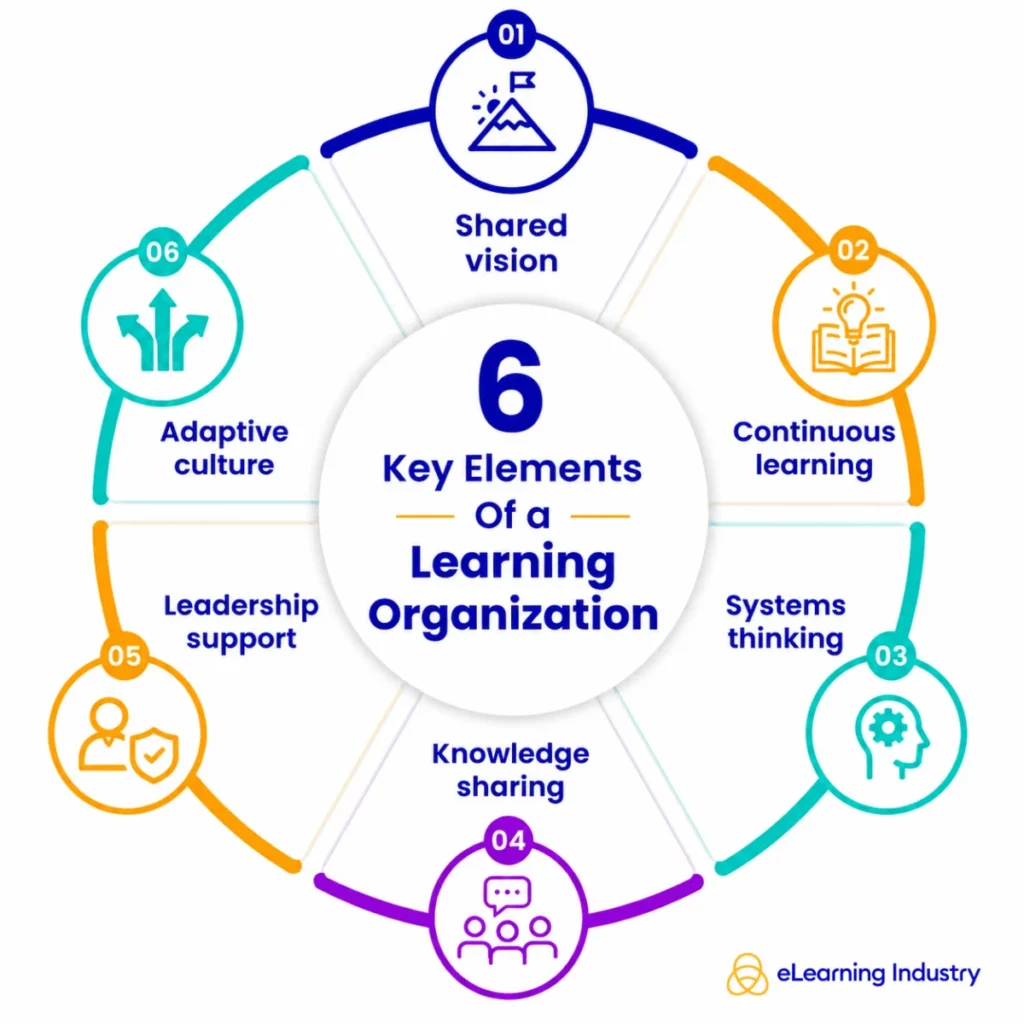
In an era defined by rapid technological disruption and shifting economic paradigms, the concept of the learning organization has transitioned from a theoretical management framework to a critical business imperative. A learning organization is defined as an entity that facilitates the continuous learning of its members and continuously transforms itself to adapt to an ever-changing environment. This model goes beyond traditional corporate training, embedding growth, collaboration, and innovation into the daily fabric of the workplace. In such an environment, employees are not merely task-oriented agents but are encouraged to solve complex problems, share institutional knowledge, and apply emerging skills across cross-functional teams.
The theoretical foundations of the learning organization are deeply rooted in the work of Peter Senge, particularly his seminal 1990 book, "The Fifth Discipline." Senge argued that organizations grow more resilient when they employ systems thinking, strive for personal mastery, and engage in collective learning. According to Senge, the most successful corporations are those that can effectively tap into people’s commitment and capacity to learn at every level of the hierarchy. Today, this philosophy is more relevant than ever as businesses navigate the complexities of generative artificial intelligence (AI), automation, hybrid work models, and the urgent need for large-scale reskilling.
Christopher Pappas, CEO of eLearning Industry, emphasizes the urgency of this transition. "In the future, the most successful organizations will not always be those with the most resources, but those that can learn, adapt, and evolve quickly," Pappas stated. "Creating a learning organization is now essential. It is a smart investment in resilience, innovation, and long-term business success."
The Historical Context and Conceptual Shift
The transition from traditional organizational structures to learning-centric models has been a multi-decade journey. Historically, the industrial-age model of business relied on a "command and control" hierarchy. In these traditional organizations, knowledge flowed from the top down, and employees were expected to adhere to fixed roles with limited autonomy. Change was often managed reactively, and training was viewed as a periodic event rather than a continuous process.
However, the rise of the digital economy in the late 20th and early 21st centuries exposed the vulnerabilities of this rigid structure. The volatility, uncertainty, complexity, and ambiguity (VUCA) of the modern market necessitated a more fluid approach. The chronology of this shift can be traced through the emergence of knowledge management systems in the early 2000s, the rise of "growth mindset" cultures in the 2010s, and the current focus on "skills-based organizations" in the 2020s.
Five Core Characteristics of a Learning Organization
A learning organization is distinguished by its cultural values and its operational mechanics. Rather than treating professional development as an isolated Human Resources project, these organizations integrate learning into the flow of work.
1. A Culture of Continuous Learning
In a learning organization, development is not restricted to the classroom. It occurs through daily interactions, peer-to-peer mentoring, and the use of digital collaboration tools. Managers in these environments act more as coaches than supervisors, helping employees reflect on their performance and identify opportunities for immediate skill application. This culture ensures that the workforce remains agile and prepared for sudden market shifts.
2. Knowledge Sharing and Cross-Functional Collaboration
One of the primary barriers to organizational growth is the "silo effect," where departments withhold information from one another. Learning organizations actively dismantle these barriers. By fostering communities of practice and utilizing centralized knowledge hubs, these companies ensure that a breakthrough in one department benefits the entire enterprise. Peer learning is prioritized, recognizing that in fast-moving industries, colleagues are often the best sources of real-world, practical knowledge.
3. Systems Thinking and Strategic Alignment
Systems thinking, the cornerstone of Senge’s theory, involves understanding the interdependencies within a business. Leaders in learning organizations do not view problems in isolation; they analyze how a decision in supply chain management might impact customer service or product development. This holistic view allows for strategic alignment, where learning initiatives are directly tied to long-term business goals, such as digital transformation or entering new global markets.

4. Psychological Safety and the Freedom to Experiment
Innovation is impossible without the risk of failure. Harvard Professor Amy Edmondson’s concept of "psychological safety" is a vital component of learning organizations. Employees must feel secure enough to ask questions, voice concerns, and report mistakes without fear of retribution. When failure is treated as a data point for improvement rather than a cause for punishment, teams become more willing to test unconventional ideas and challenge the status quo.
5. Data-Driven Decision Making
Modern learning organizations leverage skills analytics and learning metrics to guide their investments. By using data to identify capability gaps, leaders can move away from "one-size-fits-all" training and toward personalized development pathways. This analytical approach allows companies to measure the actual business impact of their learning initiatives, ensuring a higher return on investment (ROI).
Quantifiable Benefits and Economic Impact
The move toward a learning organization model is backed by significant data. According to the LinkedIn 2023 Workplace Learning Report, 93% of organizations are concerned about employee retention, and the "number one way organizations are working to improve retention is by providing learning opportunities." Furthermore, research by Deloitte indicates that "high-performing" learning organizations are 92% more likely to innovate and 17% more profitable than their peers.
The economic implications of failing to adapt are stark. The World Economic Forum’s "Future of Jobs" report suggests that by 2025, 50% of all employees will need reskilling due to the adoption of new technology. Companies that have already established themselves as learning organizations will navigate this transition with significantly lower disruption costs than those relying on traditional, reactive hiring practices.
Comparative Analysis: Traditional vs. Learning Organizations
The distinction between these two models is most visible during times of crisis.
| Feature | Traditional Organization | Learning Organization |
|---|---|---|
| Knowledge Flow | Top-down, controlled | Collaborative, multi-directional |
| Change Management | Reactive and episodic | Proactive and continuous |
| Training Philosophy | Learning as a discrete event | Learning embedded in daily work |
| Role Structure | Fixed job descriptions | Skills mobility and fluidity |
| Inter-departmental | Siloed and competitive | Cross-functional and collaborative |
In a traditional setup, hierarchy dictates access to information. In a learning organization, the focus shifts to "skills mobility," where employees are encouraged to move between projects and roles based on their developing expertise, rather than their initial job title.
Implementation Strategies for Leaders
Transforming into a learning organization requires a deliberate, multi-year strategy. Experts suggest several key steps for implementation:
- Executive Sponsorship: Learning must be a boardroom priority. When the CEO and other C-suite executives actively participate in learning initiatives, it signals to the entire company that growth is valued.
- Creating Learning Pathways: Organizations should offer diverse formats, including micro-learning (short, focused content), social learning (learning from others), and experiential learning (learning by doing).
- Incentivizing Knowledge Sharing: Recognition programs and performance reviews should reward employees who contribute to the development of their peers.
- Measuring Outcomes, Not Just Inputs: Instead of tracking "hours spent in training," companies should measure "skill proficiency gains" and "time to productivity" for new tasks.
Real-World Examples of Success
Several global corporations serve as blueprints for the learning organization model:
- Microsoft: Under the leadership of Satya Nadella, Microsoft underwent a massive cultural shift from a "know-it-all" culture to a "learn-it-all" culture. By emphasizing a growth mindset, the company revitalized its innovation pipeline and successfully pivoted toward cloud computing and AI.
- Google: Google utilizes a "Googler-to-Googler" (G2G) program, where 80% of all tracked training is conducted by employees themselves. This peer-to-peer network ensures that the most relevant, up-to-date technical skills are shared rapidly across the company.
- Amazon: Through its "Upskilling 2025" pledge, Amazon committed hundreds of millions of dollars to provide employees in its fulfillment centers and offices with access to training for high-demand roles, recognizing that internal talent development is more sustainable than external recruitment.
- IBM: IBM uses a sophisticated AI-driven platform to provide "digital badges" and personalized learning recommendations to its global workforce, ensuring that its employees’ skills remain aligned with the rapidly evolving tech sector.
Conclusion and Future Outlook
The rise of the learning organization represents a fundamental shift in the social contract between employer and employee. In a world where the half-life of a learned skill is shrinking—now estimated at just five years—the ability to learn has become the ultimate competitive advantage.
As AI and automation continue to reshape the global economy, the most resilient businesses will be those that treat their workforce as a dynamic pool of evolving talent rather than a static resource. The transition to a learning organization is not a destination but a continuous process of evolution. In the coming decade, the divide between industry leaders and laggards will likely be determined by the speed and efficiency with which an organization can convert new information into actionable institutional knowledge. Investing in a learning culture is no longer an optional "extra" for HR; it is a fundamental pillar of modern business survival and long-term prosperity.