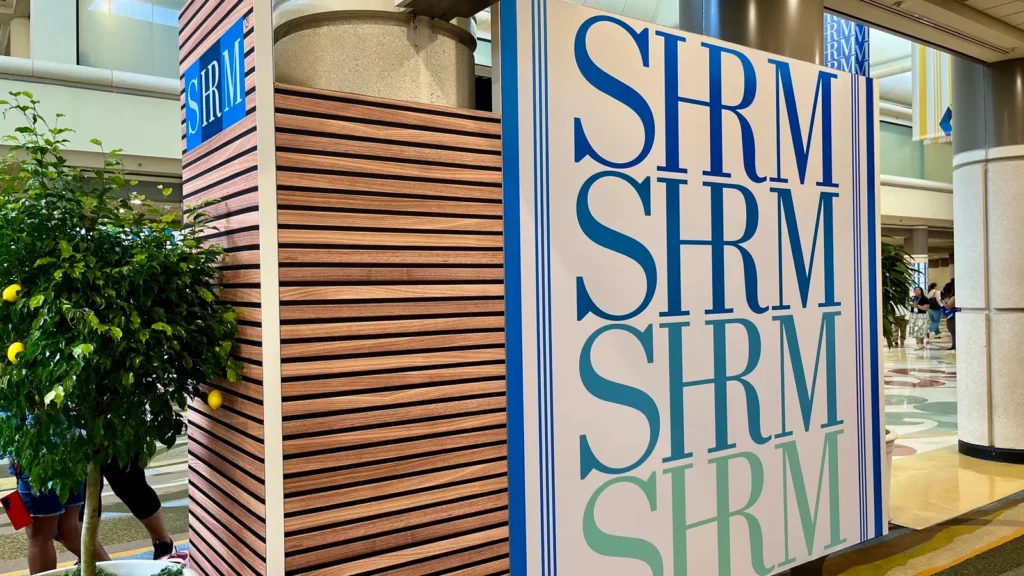
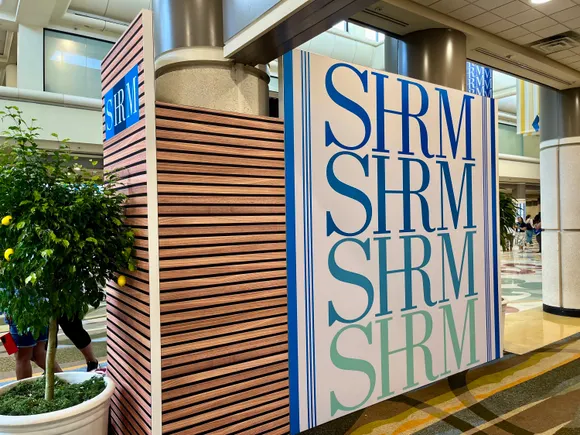
ORLANDO, Fla. – Committing to diversity, equity, and inclusion (DEI) has become an increasingly complex and challenging endeavor for organizations worldwide. This pressing issue took center stage at the 2026 SHRM Annual Conference in Orlando, Florida, where a pivotal session featuring Ashissh Kaul, Doreen Mosher, and Katharine Panessidi sought to provide clarity and a forward path for HR professionals grappling with these multifaceted demands. The session, held at the Orange County Convention Center, underscored the critical role of HR in championing inclusion amidst a landscape of converging global challenges.
Ashissh Kaul, representing SHRM India, Doreen Mosher from SHRM Linkage, and Katharine Panessidi of SHRM Business, collectively serve as integral members of SHRM’s influential Inclusion and Diversity (I&D) Council. Their combined expertise illuminated the intricate web of contemporary workplace "pain points" that intersect directly with DEI initiatives. These include persistent talent shortages, escalating compliance risks, the ongoing battle for worker trust, the imperative for clear and decisive leadership vision, and the fundamental need to foster civility within organizational cultures.
The Current Climate: Headwinds and Hurdles for DEI
The session candidly acknowledged the significant headwinds facing DEI efforts in 2026. The presenters highlighted a concerning trend of DEI budgets being slashed across various sectors, and a notable reduction in the visibility and explicit programming of DEI initiatives within Fortune 500 companies. This retrenchment is not merely an economic phenomenon but is deeply intertwined with a broader sociopolitical climate that has seen increased scrutiny, legal challenges, and even outright backlash against DEI frameworks.
Recent years have witnessed a substantial shift in the discourse surrounding DEI. Legal precedents, such as the U.S. Supreme Court’s decisions impacting affirmative action, have created ripples of uncertainty, prompting many organizations to re-evaluate their approaches to ensure compliance while maintaining their commitment to equitable practices. Furthermore, a growing number of states have introduced legislation restricting certain DEI practices in public institutions, and this sentiment has, in some cases, spilled over into the private sector, creating a climate of caution. The U.S. Equal Employment Opportunity Commission (EEOC) has also issued warnings to major corporations, advising a careful balance to avoid "identity politics" and ensure that DEI programs do not inadvertently lead to reverse discrimination claims. These factors collectively contribute to the "hard lately" sentiment expressed by many HR leaders.
However, the panel emphasized that despite these challenges, the fundamental need for fair and high-performing workforce systems remains undiminished. "I know that we all in this room can probably agree that professionals right now are facing converging demands for more strategic outcome-driven approaches to workforce development and inclusion," Panessidi articulated to the audience, underscoring the universal recognition of these pressures.
The Enduring Business Imperative for Inclusion
Even as the political and financial pressures mount, the business case for diversity, equity, and inclusion remains robust and, arguably, more critical than ever. The SHRM I&D Council representatives reiterated this foundational truth, presenting compelling statistics that underscore the tangible benefits of well-executed DEI strategies. Research consistently demonstrates that diverse teams are more innovative, make better decisions, and are more resilient in the face of market disruptions.
For instance, studies from leading consulting firms such as McKinsey & Company have repeatedly shown that companies with diverse executive teams are significantly more likely to outperform their peers on profitability. Specifically, ethnically diverse companies are often 35% more likely to have financial returns above their national industry medians, and gender-diverse companies are 15% more likely to do so. Beyond financial metrics, organizations with strong inclusion programs report higher employee engagement, lower turnover rates, and enhanced employer branding, making them more attractive to top talent in a competitive global market.
The direct correlation between inclusion and employee engagement is particularly significant. When employees feel valued, respected, and heard, they are more likely to be productive, committed, and innovative. This directly addresses the talent shortages highlighted by the panel, as inclusive cultures become powerful tools for both attracting and retaining skilled workers. Moreover, a diverse workforce brings a wider range of perspectives, experiences, and problem-solving approaches, which is invaluable for navigating complex business challenges and fostering innovation.
"Globally, the vocabulary of I&D may be changing, but the need for fair and high-performing workforce systems is not going away," Panessidi affirmed, drawing a clear distinction between the evolving language around DEI and the unchanging imperative for equitable and inclusive workplaces. This sentiment suggests that while the methods and rhetoric may adapt to the current climate, the core objectives of fostering a workplace where everyone can thrive are immutable.
SHRM’s Strategic Response: A New Center for Inclusion and Diversity
Recognizing the escalating complexity and the critical need for robust guidance, SHRM has taken significant steps to fortify its commitment to DEI. A key announcement made just prior to the session, highlighted by Panessidi, was the strategic revamp of its "CEO Action for Inclusion & Diversity" initiative. This program has been transformed and relaunched as the "SHRM Center for Inclusion and Diversity," signaling a deeper institutional commitment to research, advocacy, and practical solutions in this space.
The SHRM Center for Inclusion and Diversity is poised to become a global hub for advancing the understanding and implementation of effective DEI strategies. Under the leadership of its president, Carolynn Johnson, the center aims to provide HR professionals and business leaders with evidence-based resources, best practices, and actionable insights. Johnson’s vision for the center is encapsulated in a powerful definition that resonated with the conference attendees: "Diversity is the input, civility is the practice, and inclusion is the outcome." This framework provides a clear, actionable pathway, emphasizing that diversity is about representation, civility is about respectful interaction, and inclusion is the desired state of belonging and equitable participation.
The establishment of this center underscores SHRM’s dedication to equipping HR professionals with the tools necessary to navigate the current climate. It acknowledges that effective DEI requires more than just good intentions; it demands strategic thinking, data-driven approaches, and a clear understanding of how to translate principles into measurable outcomes. The Center will likely focus on areas such as developing metrics for inclusion, researching the long-term impact of various DEI interventions, and advocating for policies that foster equitable workplaces.
From Strategy to Practice: Real-World Examples
The session moved beyond theoretical frameworks to showcase practical applications of inclusion, providing tangible examples that resonated with HR professionals seeking actionable strategies. The advice from the I&D Council representatives was clear: inclusion must be a top-down initiative, driven by strategic thinking and characterized by measurable goals.
Jaonna Livingston, Area Executive of People and Culture for Hotel Drover, offered a compelling case study of how inclusion can be "baked into" an organization’s core mission and vision. She explained that one of Hotel Drover’s fundamental shared values, a "guiding star," is to "honor all." Livingston elaborated, "When you say you ‘honor all,’ it means everybody." This principle is not merely a slogan but is deeply embedded within the company’s operational framework, influencing everything from performance reviews to team member recognition programs. By consistently reinforcing this value, Hotel Drover has cultivated a culture where every employee feels genuinely valued and respected. The tangible result of this deep-seated commitment to inclusion is impressive: the company has successfully reduced its employee turnover by a remarkable 40%. This significant reduction underscores the direct link between a strong, inclusive culture and improved talent retention, demonstrating a clear return on investment for their DEI efforts.
Another insightful perspective came from Stephanie Casaceli, an HR Business Partner at Orlando Health, who highlighted the power of simple yet impactful flexibility in fostering inclusion. Casaceli shared how Orlando Health has adopted a more flexible approach to its employee appearance policies, specifically regarding tattoos and makeup. "We’re very flexible on our tattoo policy and our makeup policy. We want people to be who they are and want them to feel like they belong," she stated. This seemingly minor policy adjustment sends a powerful message to employees: that their individuality is accepted and celebrated, not merely tolerated. The positive feedback Casaceli receives from HR professionals and other staff members consistently centers on their ability to be their "true selves" at work. This authentic self-expression is a cornerstone of psychological safety and belonging, vital components of a truly inclusive environment. Such policies reduce the cognitive load on employees who might otherwise feel compelled to mask aspects of their identity, allowing them to focus more fully on their work and contribute their best.
Broader Implications and the Future of HR
The discussions at SHRM 2026 underscored that the role of HR professionals in navigating the complex terrain of DEI is more critical than ever. As organizations face a confluence of talent shortages, evolving legal landscapes, and a persistent need for innovation, HR leaders are positioned at the forefront of crafting resilient and equitable workplaces. The shift towards outcome-driven and strategic approaches to DEI is not a temporary trend but a fundamental recalibration.
The implications for the future of work are profound. HR professionals must evolve from administrators to strategic partners, equipped with data analytics skills, a deep understanding of organizational psychology, and the ability to influence leadership. The emphasis on measurable goals means moving beyond participation rates in training programs to tracking actual shifts in employee sentiment, representation in leadership, and equitable career progression. The focus on "civility" as a practice, as highlighted by Carolynn Johnson, also points to the increasing importance of fostering respectful dialogue and conflict resolution skills within diverse teams.
In a world that continues to become more interconnected and diverse, the fundamental principles of fairness, equity, and inclusion will remain indispensable for organizational success. While the methods and language surrounding DEI may continue to adapt to new challenges and societal shifts, the core objective of creating workplaces where every individual can thrive, contribute meaningfully, and feel a genuine sense of belonging will endure. The SHRM Annual Conference 2026 served as a vital forum for HR leaders to reflect on these challenges, share best practices, and collectively chart a strategic path forward in fostering truly inclusive and high-performing organizations.