The landscape of corporate learning and development (L&D) is undergoing a profound transformation, moving beyond traditional education and credentialing to embrace a more agile, integrated approach termed "Dynamic Enablement." This new paradigm, detailed in the recently published "Definitive Guide to Corporate Learning," emphasizes delivering critical knowledge and support to employees precisely when and where they need it – within the flow of their daily work. This strategic evolution is being rapidly accelerated by advancements in artificial intelligence (AI), prompting a surge of innovative solutions from technology vendors.
The core principle of Dynamic Enablement centers on equipping employees with the right information and expertise at the opportune moment. This can manifest in various forms: answering an immediate question, facilitating a deeper dive into a complex topic, connecting an employee with a subject matter expert, or enabling the acquisition of new skills. Unlike the previous concept of "learning in the flow of work," Dynamic Enablement encompasses a broader spectrum of support, recognizing that employees are continuously enabled by their peers, managers, and internal knowledge repositories throughout the workday.
This fundamental shift is not merely an academic concept; it is already catalyzing significant market activity. Within weeks of the "Definitive Guide to Corporate Learning" release, numerous technology providers are reportedly pivoting their strategies and product development to align with this emerging need. This rapid response underscores the substantial market demand for solutions that can effectively deliver dynamic enablement, a demand made more attainable than ever by the pervasive capabilities of artificial intelligence.
Understanding the Mechanics of Dynamic Enablement
At its heart, dynamic enablement seeks to provide context-aware support tailored to an employee’s immediate needs. When an individual encounters a challenge or requires information, the optimal response can vary significantly based on their role and the specific situation. Whether it’s an Uber driver navigating a complex route, a middle manager addressing team performance, a software engineer troubleshooting code, a sales representative closing a deal, or a manufacturing worker adhering to safety protocols, the required "enablement" will differ.
The "Definitive Guide" posits that the most effective L&D and HR departments will architect "enablement platforms" that seamlessly integrate into diverse use cases. This requires a flexible and adaptable approach, moving away from one-size-fits-all training modules. The current market reaction, characterized as a "lurching" movement by industry observers, reflects the urgency and dynamism with which vendors are seeking to capture this burgeoning sector. This rapid evolution means that organizations are advised to critically evaluate emerging solutions before becoming overly committed to a single vendor.
The AI Catalyst and Vendor Landscape
The integration of artificial intelligence is the primary driver behind the current acceleration in dynamic enablement solutions. AI’s ability to process vast amounts of data, identify patterns, generate content, and personalize interactions has made it possible to deliver sophisticated enablement experiences at scale. This has led to a "frenzied pace" among vendors, resulting in a diverse and rapidly evolving ecosystem of tools and platforms.
Arist: Mobile-First Enablement and Autonomous Learning

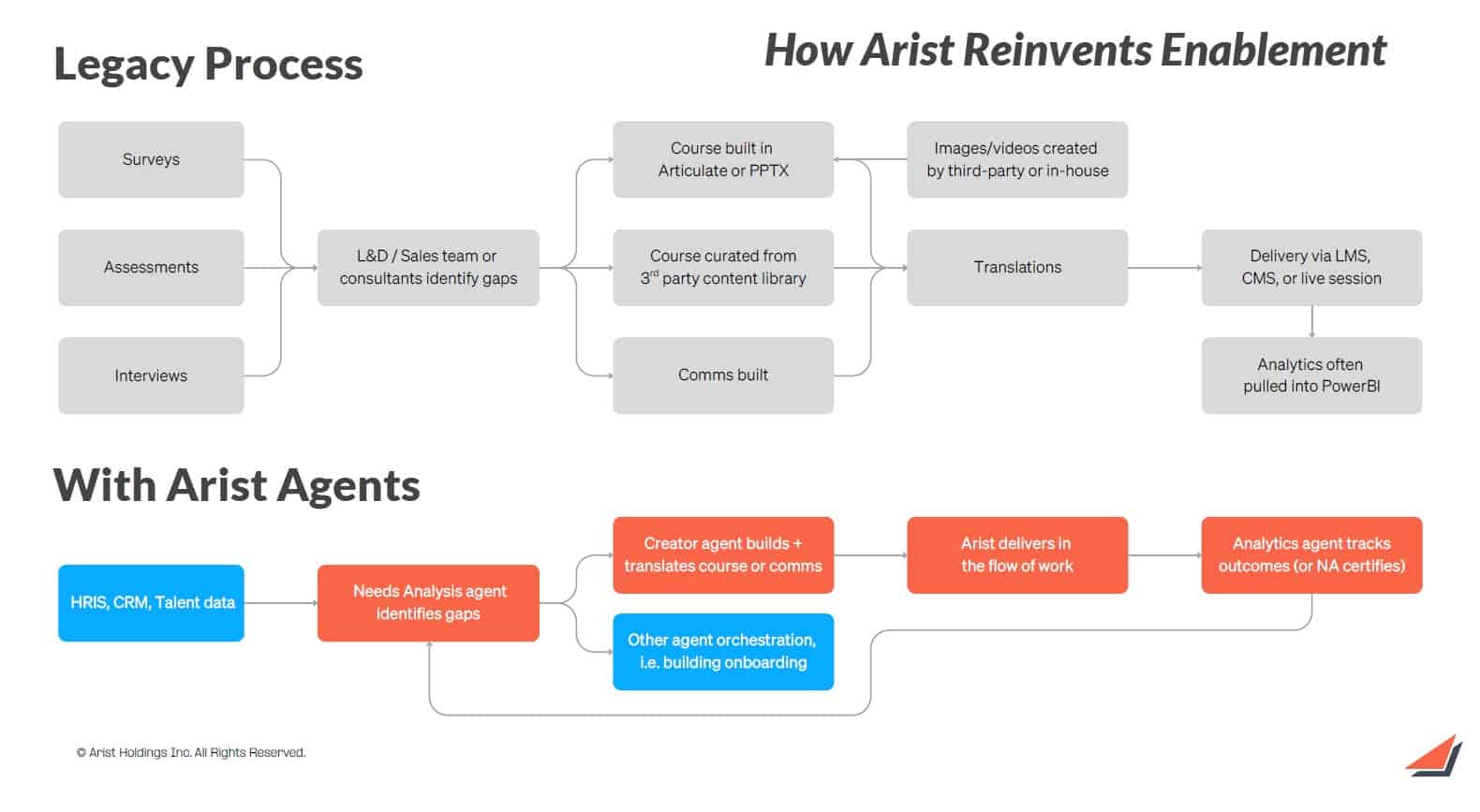
Arist, a company that has partnered with Josh Bersin on numerous HR training and enablement programs, exemplifies the evolution in this space. Initially established as a mobile-first enablement platform, Arist excels at dynamically generating and chunking complex training content for delivery on mobile devices. Their founders, recognized for their technological creativity, have rapidly expanded their offerings into the end-to-end enablement market.
A notable advancement from Arist is their "AI Performance Consultant." This innovative feature can interview operational staff, diagnose issues, and subsequently develop content to address those problems. This represents a significant step toward what could be termed "autonomous corporate learning," where AI agents proactively identify and resolve organizational challenges, akin to self-driving vehicles navigating complex environments. Companies that have utilized Arist for several years attest to its value and recommend it for exploration.
Sana (Galileo Learn): AI-Native Powerhouse
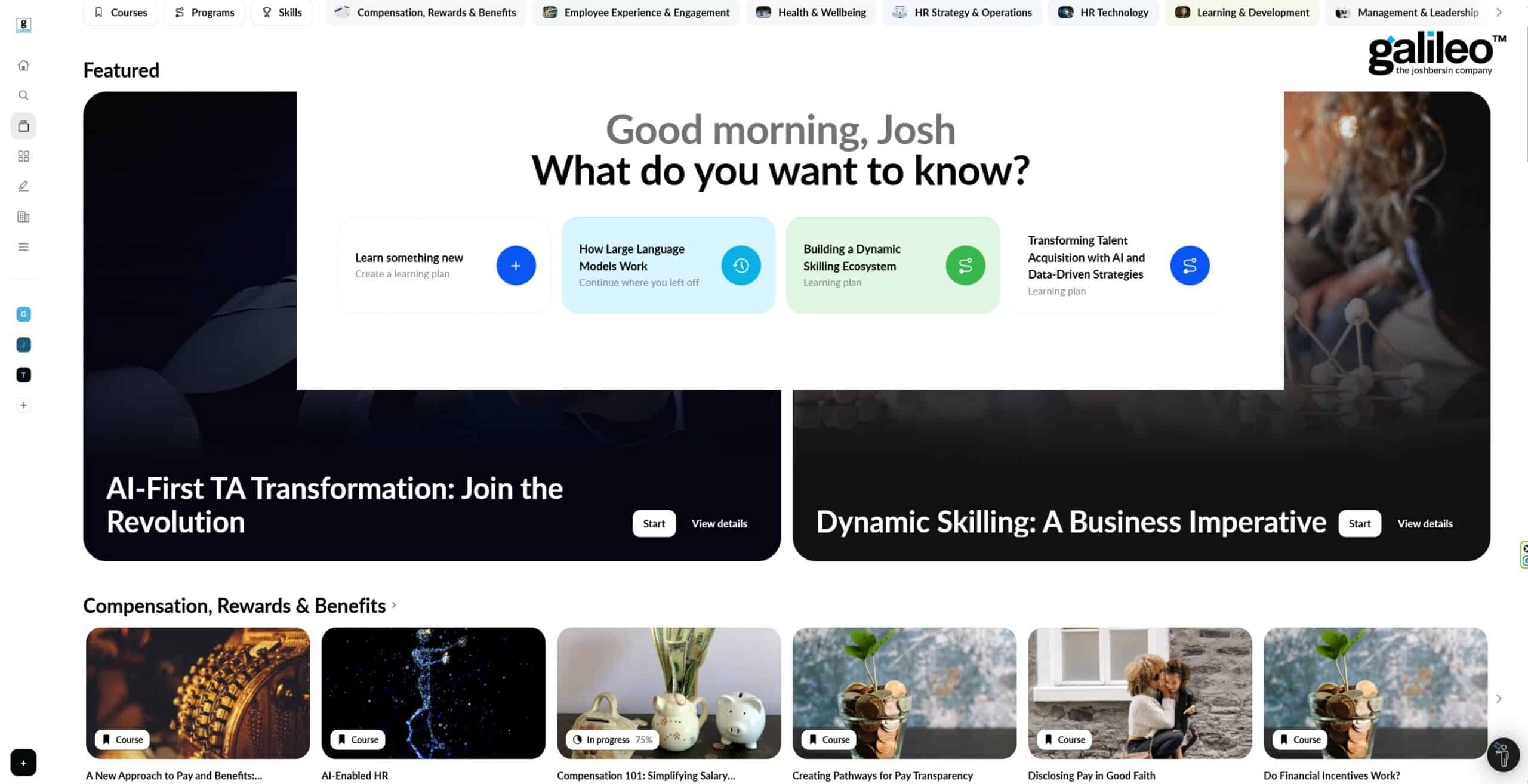
Sana, now under the umbrella of Workday, is positioned as one of the most advanced AI-native platforms available. Founded in 2016 by Joel Hellermark, Sana’s mission from its inception was to revolutionize learning. The company integrated AI into its core operations early on, leveraging OpenAI technologies even before the widespread public launch of ChatGPT. This deep AI foundation enabled Sana to develop a comprehensive learning platform, accessible through its Galileo offering on a per-user basis.
The recent introduction of the Sana Agent platform further solidifies its position as a dynamic enablement solution. The Sana Agent functions as an integrated learning, knowledge, and AI agent development platform. With the forthcoming launch of Sana Enterprise, Workday plans to enable the Sana Agent to directly access and interact with Workday data and transactions, creating a truly integrated dynamic enablement experience within the enterprise resource planning ecosystem.
Seismic: Dominating Sales Enablement
Seismic operates within the substantial and rapidly growing sales enablement market, estimated to be worth $4-6 billion annually. This sector focuses on equipping sales teams with the necessary content, tools, and information to effectively engage prospects and close deals. This includes product launch materials, pricing guides, competitive intelligence, and sales methodologies.
Seismic is a recognized leader in this space, competing with other significant players such as Allego, Mindtickle, Highspot, and Showpad. The author notes the surprising absence of Salesforce from this particular segment, given their extensive investments in agent technologies. Arist also competes in this domain, highlighting the crowded and competitive nature of sales enablement solutions.

Docebo: Next-Generation LMS with AI Integration
Docebo, one of the few publicly traded Learning Management System (LMS) companies, has made aggressive strides into AI-native learning and enablement. Their recent product developments include AI tutors, AI-native content authoring tools, and templatized AI assessments. These features are designed to enhance both revenue-generating training and internal corporate L&D initiatives.
A significant recent development for Docebo was the acquisition of 365 Talents, enhancing their capabilities in AI-driven skills intelligence. This integration allows organizations to identify skills within existing content, build comprehensive corporate skill taxonomies, and deploy targeted learning programs aligned with identified skill gaps. Major European companies like SNCF and Airbus are reported users of Docebo, showcasing its adoption in large-scale enterprise environments. This functionality addresses the fundamental question: "I need to learn more about X; what do I need to know?"
LinkedIn Learning: AI Coaching for Skill Development
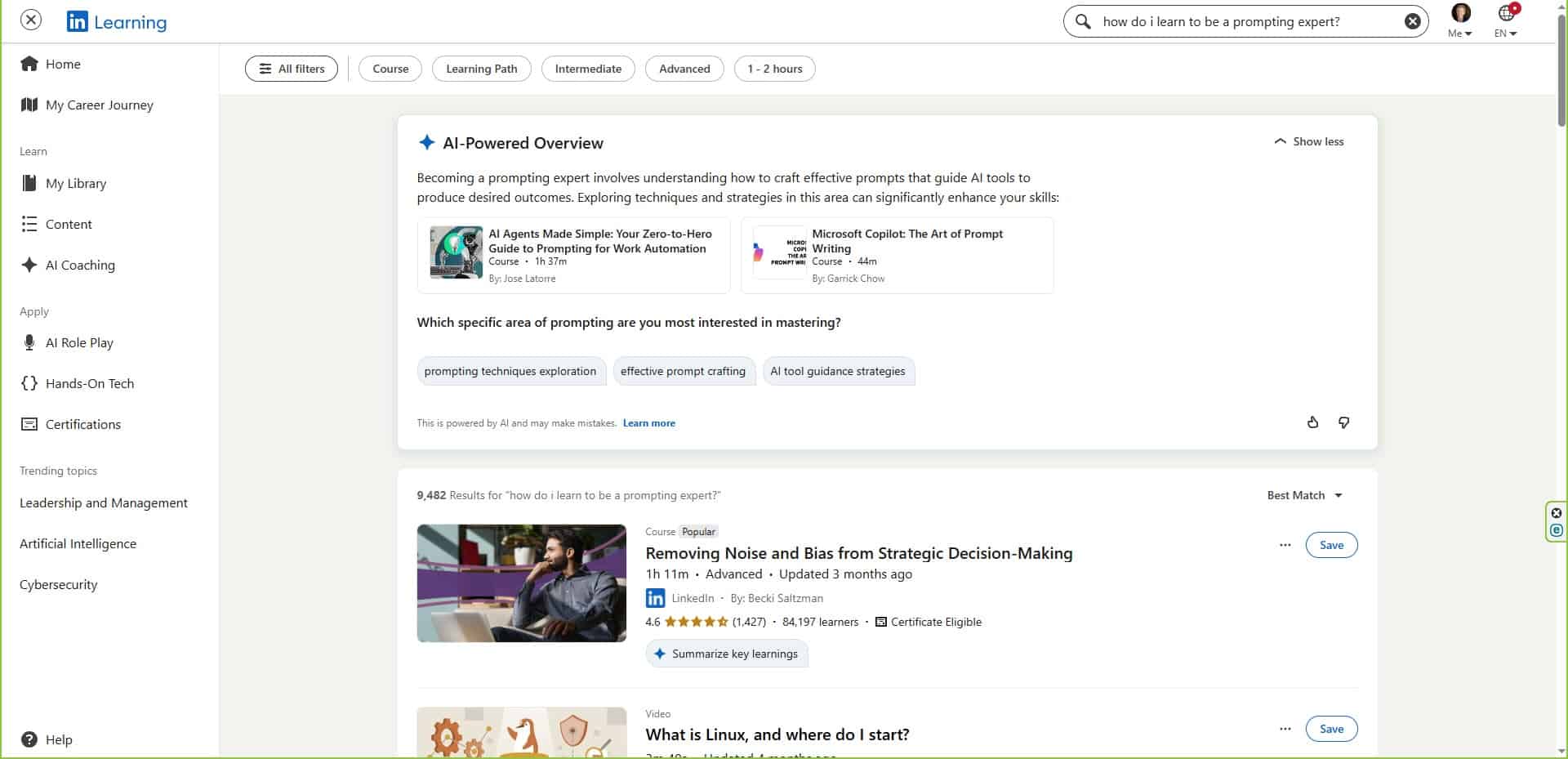
LinkedIn Learning has established itself as a trusted provider of corporate learning content, making it a "safe buy" for many L&D leaders. Their recent launch of LinkedIn Learning AI Coaching signifies a direct entry into the dynamic enablement space. This feature provides users with an AI-powered "coach" to facilitate their learning journey.
The AI Coaching system allows users to discover relevant content and then engage in AI-driven role-playing scenarios. These simulations are designed to help users practice, interact, and build confidence in their skills. While perhaps not as customizable as some of the more specialized platforms, this "heavy-touch" enablement approach offers significant value for leaders, new managers, sales professionals, and individuals new to specific domains. It represents a gradual, yet impactful, integration into the dynamic enablement market.
Uplimit: Performance Support through Practice-Based Learning
Uplimit is positioned as the missing performance support AI in many L&D technology stacks. Their philosophy is rooted in the understanding that effective learning stems from doing and practicing, rather than passive consumption of content. This approach challenges the long-held, but largely debunked, notion of fixed learning styles (auditory, visual).
Uplimit focuses on technical and sales training, domains where skills are inherently developed through hands-on practice. The platform guides learners through realistic projects and AI-powered role-plays, providing scalable, personalized feedback. This iterative process of practice, feedback, and refinement is key to skill acquisition. For instance, a learner seeking to improve customer discovery conversations would engage in AI-powered role-play scenarios with real-time coaching. Uplimit’s AI also empowers instructors and experts to evaluate exercises and support a large number of learners, facilitating personalized coaching at scale for cohort-based programs without proportionally increasing headcount. Fast-growing companies like Databricks are reportedly using Uplimit.
Degreed: AI-Enhanced Experience Platforms
Degreed, a pioneer in the Learning Experience Platform (LXP) space, has long advocated for performance enablement. Their recent integration of AI-native content generation into their platform, particularly through Maestro Studio, is a significant development. Maestro Studio enables L&D and sales enablement teams to construct custom AI-based experiences, including coaches and simulations, without the need for frequent course updates.
For existing Degreed users, Maestro acts as a contextual coach and tutor. It analyzes a learner’s skill profile, past learning activities, and progress within defined pathways to offer targeted suggestions and feedback. The platform is also incorporating adaptive assessments and coaching, providing real-time support to employees as they navigate their learning journeys.
Perceptyx: Bridging Engagement Data with Enablement
Perceptyx, a leader in employee engagement surveys, has acquired Lyceum, a company specializing in AI tutors derived from content. This integration aims to provide employees and leaders with dynamic enablement tools to address workplace issues. For example, if an engagement survey reveals micromanagement tendencies in a manager, the Perceptyx-Lyceum integration could immediately inform their coaching needs. A manager could then query the AI agent for actionable advice, which would draw upon the company’s leadership content to provide personalized coaching for improvement.
This acquisition signals a broader trend: the traditional employee experience and survey market, dominated by companies like Gallup, Glint, Qualtrics, and CultureAmp, is converging with enablement platforms. These systems, initially designed for feedback and recognition, are evolving into front doors for performance support and continuous learning. The key question for organizations will be whether to leverage dedicated L&D platforms or develop content within these integrated employee experience systems.
Disprz: AI-Native Solutions for Comprehensive Enablement
Disprz offers an AI-native learning platform that provides end-to-end solutions for onboarding, performance enablement, upskilling, reskilling, career mobility, and compliance training. The platform is built with an "impact-first" philosophy, directly linking all learning activities to measurable business outcomes rather than simply tracking completion rates.
A distinguishing feature of Disprz is its combination of dynamic content development, advanced analytics, and automated performance coaching. The company has a strong presence in India, Southeast Asia, and the Middle East and is currently expanding into North America and Europe, making it a vendor to watch.
Cornerstone: Skills-Based Talent Management and AI Integration
Cornerstone provides a suite of skills-based learning and talent management products designed to enhance workforce agility and sustain performance amidst evolving work designs and roles. Their platform aims to elevate learning, development, and performance management through personalized, multidimensional experiences aligned with business and individual goals. The upcoming rollout of Cornerstone Galaxy, their new skills-based talent and learning system, is anticipated to introduce significant advancements.
Cornerstone has a long history of offering microlearning content, dynamic content development tools, job aids, and a broad network of partners to facilitate learning within the workflow. The upcoming release of Galaxy is expected to incorporate AI-native learning capabilities, with a major announcement regarding AI-driven content anticipated soon.
360Learning: Collaborative Learning and Democratized Content Creation
360Learning operates on a collaborative learning model, centered on the principle that "everyone is a teacher." The platform empowers subject matter experts—across sales, IT, and other fields—to author courses and share knowledge without requiring specialized instructional design expertise. While initial skepticism regarding SME-generated content was common, many organizations have found that this approach yields high-quality results, increases organizational agility, and improves performance.
The market for knowledge sharing through democratized content authoring is experiencing rapid expansion. Numerous platforms have emerged, often differentiating themselves with industry-specific workflows. Syllog is cited as another example, focusing on rapid content authoring and personalized training for sectors like manufacturing, engineering, banking, insurance, and technology.
The Evolving Frontline Enablement Market
Beyond general corporate enablement, a specialized market focused on frontline workers is also gaining traction. These solutions are designed to meet the unique needs of employees in roles such as retail, hospitality, and manufacturing, where real-time support and skill reinforcement are critical.
Axonify: Brain Science and AI for Frontline Workers
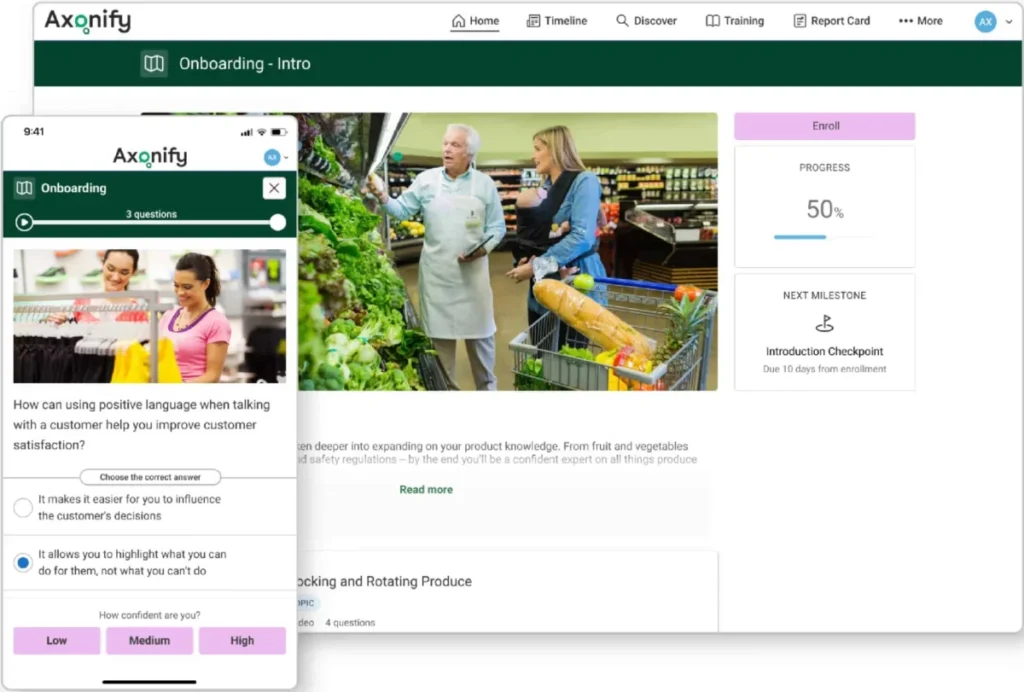
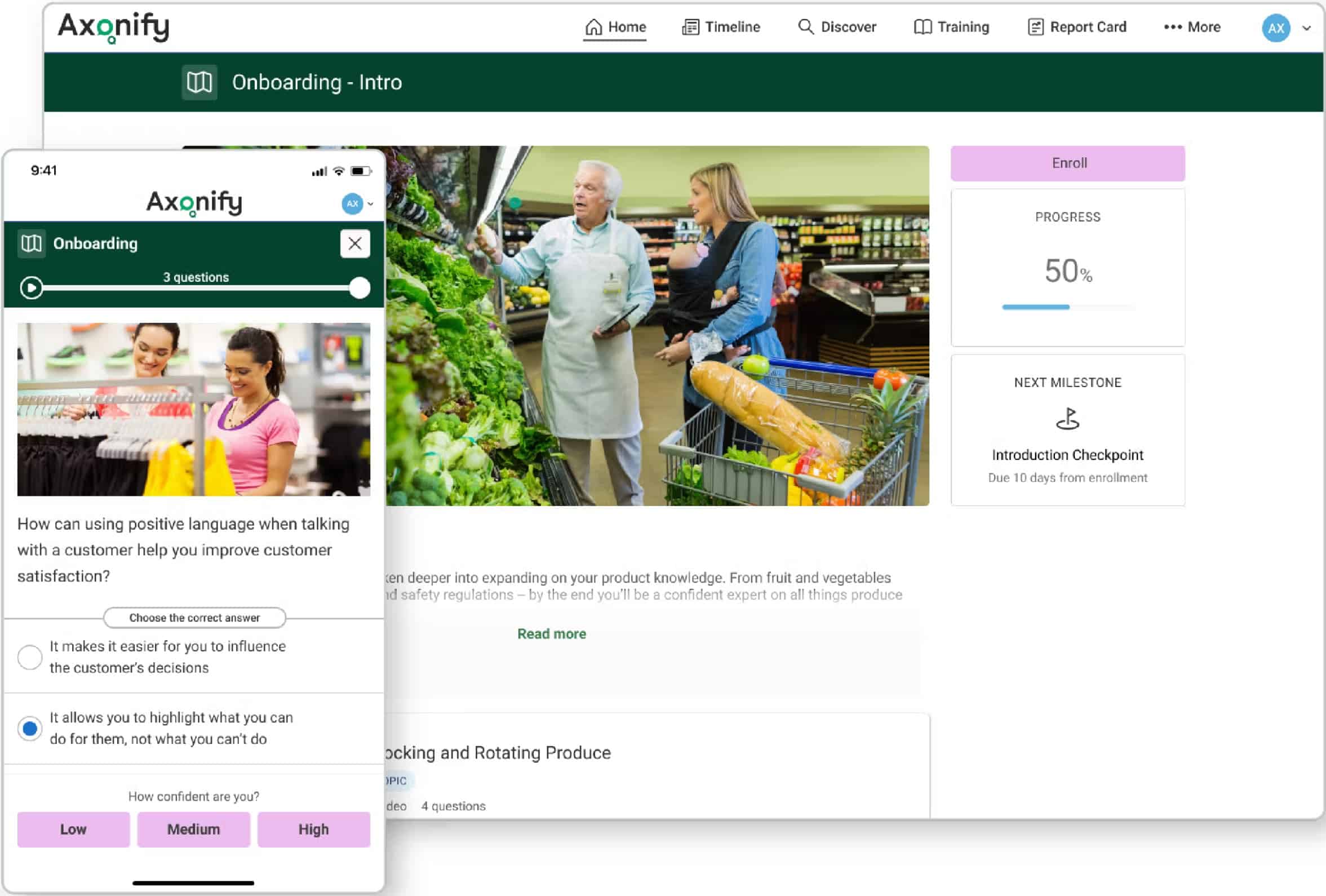
Axonify, a pioneer in this space, leverages principles of brain science and AI to deliver training that adapts to individual roles and existing knowledge. The platform reinforces critical behaviors through spaced repetition, ensuring that learning is retained and applied effectively. Their approach focuses on making training engaging and impactful for frontline employees, who often have limited time for traditional learning.
Kahuna: Operational Training and Skills Validation
Kahuna specializes in operational training and in-depth skills validation, with a strong presence in industries like oil and gas, energy, manufacturing, and distribution. Kahuna’s recent recognition as a Workday Gold Innovation Partner highlights their ability to enable frontline workers in recertifying and up-skilling their capabilities. Their focus on operational excellence and skills validation makes them a key player for organizations with significant frontline workforces.
Unique Enablement Providers and the Future
The dynamic enablement landscape also includes niche AI-powered solutions addressing highly specific needs.
IMMERSE: Language Fluency Performance
IMMERSE offers an AI-powered platform for language fluency performance. Addressing the common LinkedIn profile status of "Limited Working Proficiency," IMMERSE utilizes AI and live enablement experiences to enhance communication confidence across languages. This goes beyond basic language learning to focus on practical application and confidence-building.
Feedly: External Signal Integration for Learning
The Chalhoub Group, a luxury retail experience creator in the Middle East, has integrated Feedly into its AI-enabled L&D stack. This allows them to translate external market signals into continuous, role-relevant learning moments. This steady stream of curated insights helps employees stay current and make better real-time decisions, demonstrating how external knowledge can be synthesized into actionable learning.
Glean: AI-Powered Enterprise Search and Discovery
Glean, a company closely followed by industry analysts, began as an AI-powered search engine and has evolved to provide real-time content discovery and access through platforms like Microsoft Teams and Slack. Glean’s capabilities position it as a potential ultimate enablement platform, though it currently identifies as a "work platform." Its ability to surface relevant information contextually makes it a powerful tool for immediate support and knowledge access.
The Convergence of Learning and Experience Platforms
The rapid proliferation of these solutions indicates a significant consolidation of traditional market categories. The distinctions between Learning Management Systems (LMS), Learning Experience Platforms (LXP), Microlearning platforms, and Employee Experience Platforms (EXP) are blurring. As organizations adopt AI-powered tools like Microsoft Copilot, the expectation is for seamless integration and intelligent assistance across all HR and productivity platforms.
Dynamic Enablement represents the convergence of curated internal expertise (company IP), external knowledge resources (courses and providers), and thoughtfully designed experiences tailored to specific employee roles. In the current enterprise AI landscape, where organizations are increasingly becoming "builders" rather than just "buyers" of technology, a careful evaluation and experimentation with these evolving solutions is imperative. The future of corporate learning lies in its ability to proactively and dynamically empower employees, ensuring they have the knowledge and skills to excel in an ever-changing business environment.