Employee disengagement represents a tangible and escalating business risk, precisely where well-structured incentive programs can profoundly alter an organization’s trajectory. When exceptional work remains unacknowledged, employees inevitably disconnect, leading to a palpable decline in productivity and a concerning surge in staff turnover. Recent findings from the Achievers Workforce Institute (AWI) paint a stark picture, revealing that only 26% of employees are actively engaged, and a mere 25% genuinely feel appreciated in their workplaces. This alarming statistic serves as a critical warning sign for any enterprise striving to retain its top talent in an increasingly competitive landscape. Indeed, the financial repercussions of an unmotivated workforce are staggering, with estimates pegging the cost of unhappy employees at an astounding $1.9 trillion annually in the U.S. alone – a figure measured in trillions.
The encouraging counter-narrative is that thoughtfully designed employee incentive programs possess the power to reverse these trends. When executed effectively, these programs are not merely transactional; they ignite intrinsic motivation, consistently reinforce desired behaviors, and cultivate a workplace culture where individuals feel genuinely seen, heard, and deeply valued. Conversely, programs that are poorly conceived or inadequately implemented risk becoming administrative burdens that gather dust, offering no discernible impact on engagement scores or bottom-line performance. This article will delve into the foundational elements that render employee incentive programs truly effective, explore the psychological underpinnings that explain their efficacy, present 25 actionable incentive ideas for confident implementation, and outline best practices for their successful deployment and measurement.
The Evolving Landscape of Employee Engagement: A Chronology
The journey toward recognizing the strategic importance of employee incentives has evolved significantly over the past decades, driven by shifts in economic conditions, technological advancements, and changing workforce demographics.
- Pre-2000s: Traditional Recognition & Compensation: In earlier eras, employee recognition often revolved around annual performance reviews, fixed salary increases, and long-service awards. Incentives, particularly in non-sales roles, were often rudimentary, lacking personalization or real-time application. The focus was primarily on compensation and basic benefits, with "engagement" not yet a formalized metric or strategic priority.
- 2000s-2010s: Rise of HR Technology and Engagement Metrics: The dawn of the internet age and the increasing sophistication of HR information systems (HRIS) brought about the ability to track employee data more effectively. Concepts like "employee satisfaction" and "employee engagement" began to gain traction, with early surveys attempting to quantify employee sentiment. Some companies started experimenting with more varied perks, but often in an ad-hoc manner rather than as part of a cohesive strategy.
- 2010s-2019: The Talent War and Experience Economy: As global competition for skilled labor intensified, organizations began to understand that compensation alone was insufficient for retention. The concept of "employee experience" emerged, emphasizing the entire journey of an employee within a company. Recognition platforms, though still nascent, started to appear, offering digital solutions for peer-to-peer recognition and basic reward redemption. There was a growing awareness of the need for continuous feedback and development.
- 2020-Present: The Pandemic, The Great Resignation, and Strategic Imperative: The COVID-19 pandemic acted as a powerful accelerant for HR transformation. The sudden shift to remote and hybrid work models challenged traditional engagement methods. The "Great Resignation" highlighted the fragility of employee loyalty and the critical need for robust retention strategies. Employees began prioritizing flexibility, well-being, and a sense of purpose and appreciation. This period firmly cemented employee incentive programs as a strategic imperative, not just an HR initiative. Companies began seeking integrated, data-driven platforms to manage recognition, rewards, and overall employee experience at scale, understanding that these programs directly influence productivity, innovation, and long-term organizational health. The AWI data from this period underscores the persistent challenge despite increased focus.
The Indisputable Case for Strategic Incentives

Employee incentive programs, by definition, are structured mechanisms through which organizations intentionally motivate and acknowledge employees for their meaningful contributions. These programs leverage diverse rewards, including recognition, monetary bonuses, points-based systems, professional development opportunities, and additional time off, to reinforce behaviors that directly drive business outcomes. When meticulously designed, these initiatives cultivate an environment where employees feel acknowledged, understood, and valued, directly translating into heightened engagement, superior performance, and significantly improved retention rates over time. They serve as essential "nudges" that communicate, "Your effort is seen, and it unequivocally matters."
The staggering $1.9 trillion annual cost of disengagement in the U.S. is not merely an abstract figure. It encompasses a multitude of direct and indirect expenses: reduced productivity from unmotivated workers, the substantial financial outlay associated with recruiting and training new hires to replace departing talent, decreased innovation due to a lack of intrinsic drive, and a measurable decline in customer satisfaction stemming from disengaged frontline staff. Industry reports, including those from organizations like Gallup and Deloitte, consistently corroborate the profound economic impact of a disconnected workforce.
The power of appreciation, reinforced by incentives, is a cornerstone of human psychology. Achievers Workforce Institute’s 2026 Engagement and Retention Report data unequivocally demonstrates that employees who feel appreciated are:
- 12 times more likely to perceive their work as meaningful.
- 17 times more likely to envision a long-term career trajectory within their current organization.
Furthermore, AWI’s 2026 State of Recognition Report highlights that employees receiving frequent, meaningful recognition are 2.6 times more productive and 6 times more likely to remain with their company long-term. This consistent positive reinforcement transcends mere perks; it shapes behavior.
The underlying psychological principles at play include:
- Reinforcement Theory: This behavioral theory posits that behaviors followed by positive consequences are more likely to be repeated. Incentive programs provide these positive consequences, strengthening desired actions.
- Expectancy Theory: Employees are motivated when they believe their effort will lead to successful performance, which in turn will lead to desired outcomes or rewards. Clear incentive structures reinforce this belief.
- Equity Theory: Individuals compare their input-to-outcome ratio with that of others. Fair and transparent incentive programs ensure employees perceive equity, fostering satisfaction and motivation.
- Self-Determination Theory: This theory emphasizes the importance of autonomy, competence, and relatedness. Well-designed incentives can support these needs by giving employees choice (autonomy), acknowledging skill mastery (competence), and fostering a sense of belonging (relatedness) through recognition.
As Dr. Eleanor Vance, a prominent organizational psychologist specializing in workforce dynamics, observes, "HR strategists now view incentive programs not as a discretionary expense, but as a critical investment in human capital. The empirical data consistently reveals a direct, quantifiable correlation between employees feeling genuinely valued and measurable improvements in business outcomes, from innovation to profitability."
A Comprehensive Toolkit: 25 Incentive Programs for Modern Workplaces
Building a culture of recognition and motivation requires a diverse and adaptable array of incentive programs. Here are 25 proven strategies that organizations can implement with confidence, grouped for clarity:
I. Direct Recognition & Financial Incentives:
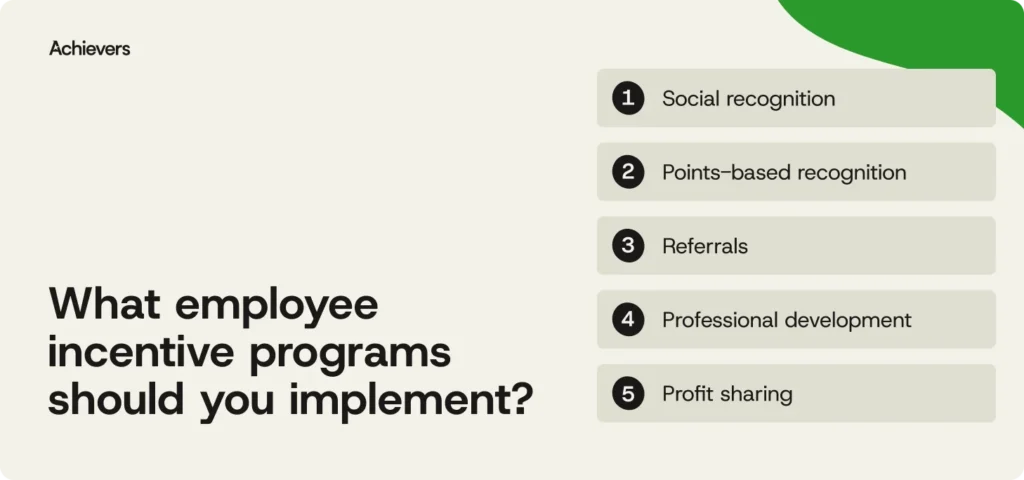
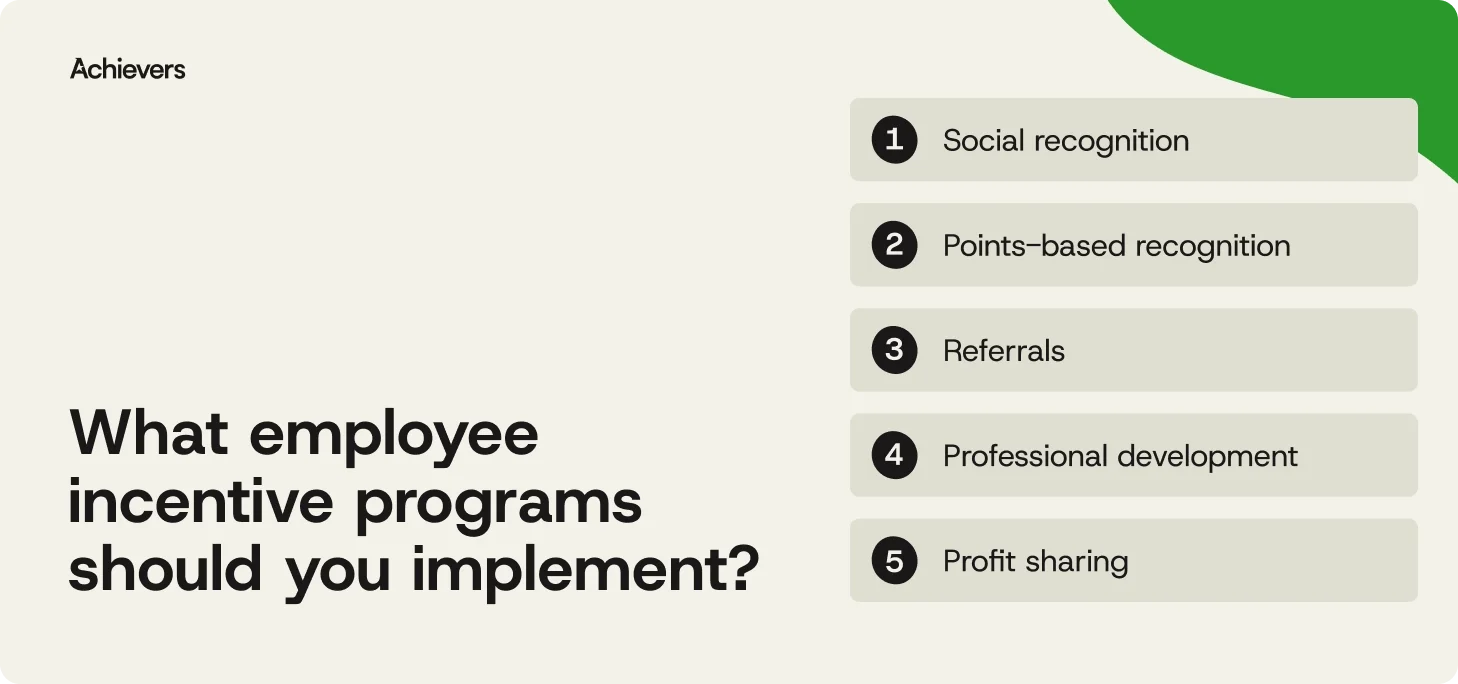
- Social Recognition Programs: These digital platforms allow peers and managers to publicly acknowledge daily wins and significant contributions. By making effort visible, social recognition fosters connection and psychological safety. AWI data shows appreciated employees are 41% more likely to feel connected to their manager and 47% more likely to feel supported in their well-being, while being 55% less likely to leave.
- Points-Based Recognition Programs: Employees earn points for various achievements, which they can redeem in a customizable reward marketplace. This offers choice and meaning, reinforcing desired behaviors. AWI data indicates 85% of employees are likely to repeat an action when recognized for it, making points a powerful behavior-shaping tool.
- Bonuses and Raises: Direct financial rewards remain a clear and impactful way to demonstrate appreciation. A survey by Benefits Canada found 52% of workers feel more valued when receiving an annual bonus. Tying these to clear, attainable goals motivates excellence without fostering unhealthy rivalry.
- Profit-Sharing Programs: Aligning employee success with company performance, profit-sharing or 401(k) matches foster a sense of ownership and investment. Employees become more engaged and loyal when they directly benefit from the organization’s prosperity, providing a tangible link between individual effort and collective reward.
- Commission Programs: Predominantly used in sales, these programs directly link effort to financial reward, motivating high performance and aligning individual success with company growth. The significant annual spend on sales compensation in the U.S. ($200 billion) underscores its established efficacy.
II. Professional Growth & Development Incentives:
- Professional Development Programs: Investing in employee growth through training, workshops, and skill-building courses boosts productivity (17% higher for companies offering training to engaged employees) and profitability (21% higher). This also serves as a crucial retention strategy, as only 22% of employees report access to such opportunities. Those who do are more likely to stay and perform better.
- Tuition Reimbursement Programs: Supporting employees’ pursuit of higher education or specialized certifications not only boosts retention but also enhances their capabilities. Instride reports that 84% of employees feel more prepared for their roles after receiving education support, yielding long-term benefits for both the individual and the organization.
- Human Resources Development: Focusing on talent development, including mentoring, coaching, and leadership pipelines, signals a commitment to long-term career growth. This significantly increases engagement and satisfaction, making the company an attractive destination for top performers.
- Customized Learning Stipends: Offering funds for employees to choose their own courses, conferences, or learning resources empowers them to pursue personal development relevant to their interests and career goals. This demonstrates trust and invests in their continuous learning.
- Choice of Projects: Granting employees autonomy to select projects aligned with their passions or strengths boosts motivation, engagement, and fosters a sense of ownership, leading to higher quality work and increased job satisfaction.
III. Well-being & Lifestyle Incentives:
- Health and Wellness Programs: Beyond basic offerings, comprehensive wellness initiatives (e.g., mental health support, fitness challenges, nutritional guidance) prevent burnout and support overall employee well-being. Employees who feel supported in their well-being are 47% more likely to feel appreciated and significantly less likely to seek new employment.
- Additional Time Off: Offering extra paid time off as a reward for hitting goals or outstanding performance is a powerful motivator that directly addresses burnout and promotes work-life balance. It’s a highly valued perk that allows employees to recharge.
- Flextime Programs: Allowing employees flexibility in their work hours fosters trust and helps them balance personal and professional responsibilities. Forbes reports that 80% of employees would stay longer with flexible hours, making it a potent retention tool.
- Sabbatical Leave Rewards: Providing extended, paid time off for long-serving employees allows them to pursue personal interests, travel, or simply decompress. This rewards loyalty, prevents burnout, and ensures employees return refreshed and re-energized.
- Green Commuting Incentives: Encouraging eco-friendly commuting options (e.g., subsidies for public transit, bike-to-work programs) supports sustainability, reduces employee costs, and promotes health, aligning with both corporate values and employee well-being.
- Wellness Challenges with Rewards: Structuring healthy habits as fun, team-based competitions with rewards (e.g., step challenges, fitness milestones) fosters camaraderie and encourages sustained engagement in personal well-being.
- Family-Oriented Perks: Benefits such as scholarships for children, dependent care allowances, or family outing subsidies demonstrate a holistic concern for employees’ personal lives. This increases work satisfaction and loyalty, making the company more attractive to talent with family responsibilities.
IV. Culture & Community Incentives:
- Referral Programs: Leveraging employees as recruiters by rewarding them for successful hires taps into the power of connection. Employees with strong peer connections are 3x more likely to envision a long career at their company. Tiered rewards can attract top talent and boost team morale.
- Employee Benefits Programs: A robust and comprehensive benefits package (health insurance, retirement plans, PTO, disability) goes beyond salary to demonstrate care for employees’ health and financial security. Such benefits are crucial for attracting and retaining top talent.
- Performance Management Programs: Shifting from annual reviews to continuous feedback, coaching, and recognition transforms performance management into a growth-oriented experience. This addresses the critical gap where only 22% of employees feel they have the tools for best performance and just 18% have regular 1:1s, directly linking ongoing support to higher engagement and retention.
- Travel Incentives: Offering fully paid trips for achieving significant targets transforms achievement into an adventurous experience. Platforms like Achievers’ Travel Store provide extensive global options, and the IRF 2024 Trends Report indicates 53% of senior leaders consider travel a "must-have" and 48% see it as a strategic differentiator for morale and loyalty.
- Employee Resource Groups (ERGs): Fostering belonging and connection, ERGs are powerful predictors of retention. AWI’s 2026 Engagement and Retention Report notes employees with a strong sense of belonging are 2.2x more likely to see a long-term career and 2x less likely to be job hunting. ERGs signal that employee voices genuinely matter.
- Recognition Through Peer Awards: Empowering employees to recognize each other’s contributions through formal or informal peer award systems fosters a positive, inclusive environment where appreciation is shared across all levels, boosting morale and encouraging exceptional effort.
- Innovation Incentives: Rewarding creative ideas that lead to improved business outcomes encourages a culture of continuous improvement and empowers employees to drive change. This can include bonuses, leadership opportunities, or dedicated resources for developing new concepts.
- Community Service/Volunteer Time Off: Offering paid time for employees to volunteer for causes they care about demonstrates corporate social responsibility and supports employee values. This can boost morale, foster team spirit, and enhance employer branding.
Implementation and Optimization: Best Practices for Success
Selecting the right incentive programs is only the first step; successful implementation requires strategic execution.
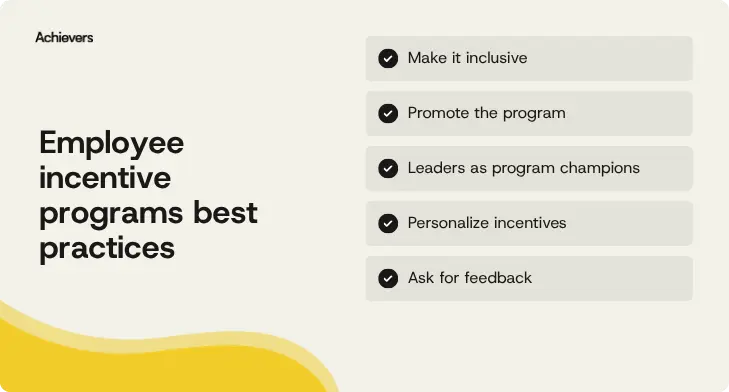
- Make Your Program Inclusive: A truly effective incentive program must resonate with all employees, regardless of their role, department, or demographics. This necessitates offering a diverse range of incentives that appeal to varied preferences and cultural backgrounds. Ensure the platform is user-friendly and accessible to everyone, fostering a sense of involvement and equal opportunity for recognition. Leaders should actively recognize both program leaders and participants to maintain momentum.
- Promote Your Incentive Programs Vigorously: Even the best programs fail if employees are unaware of them. Develop a comprehensive communications plan that spans multiple channels: internal newsletters, company-wide announcements, digital signage, team meetings, and dedicated onboarding sessions for new hires. Clearly articulate the program’s objectives, how to participate, and the types of rewards available to generate excitement and consistent engagement.
- Ensure Leaders Show the Way: Leadership buy-in and active participation are non-negotiable. Managers and senior leaders must not only endorse the incentive programs but actively utilize them to recognize their teams and peers. When leaders model the desired behavior, it creates a powerful ripple effect throughout the organization, legitimizing the program and encouraging broader adoption. Provide training for leaders on how to effectively integrate incentives into their daily management practices.
- Personalize Your Incentives: Generic rewards often fall flat. Leveraging data analytics, AI-driven insights, and direct employee feedback allows organizations to tailor incentives to individual preferences and motivations. This could involve offering a wider selection of gift cards, customized development opportunities, or flexible work arrangements. Personalization signals that the organization truly understands and values its employees as unique individuals, rather than a monolithic workforce.
- Solicit and Act on Feedback: The most successful incentive programs are dynamic and continuously evolving. Establish clear channels for employees to provide feedback on the programs through pulse surveys, anonymous suggestion platforms, focus groups, and regular one-on-one conversations. Actively listening to this feedback and making visible adjustments demonstrates that employee voices are valued and helps refine programs to ensure their ongoing relevance and effectiveness.
Measuring Impact: Key Performance Indicators for Accountability
To ascertain the true impact of an employee incentive program, organizations must employ robust Key Performance Indicators (KPIs) that directly link recognition to engagement, retention, and performance.
- Participation Rates: This metric gauges the reach and adoption of the program. Tracking the number of employees actively giving and receiving recognition helps determine if the program is inclusive and embedded across the organization, rather than being limited to a select few.
- Recognition Frequency: How often recognition events occur provides insight into whether appreciation is becoming an ingrained part of the daily work culture or remains an occasional, inconsistent gesture. Higher frequency generally correlates with a healthier recognition culture and more sustained engagement.
- Employee Engagement Scores: Regular engagement surveys are crucial for tracking shifts in morale, motivation, and overall connection to the company. Improvements in specific engagement dimensions, such as "feeling valued" or "sense of belonging," often directly reflect the success of incentive programs.
- Retention and Voluntary Turnover Rates: Perhaps the clearest indicator of success, effective incentive programs should contribute to lower voluntary turnover and higher overall retention, particularly among high-performing individuals and critical roles. The cost savings associated with reduced attrition are substantial.
- Performance Metrics: Connect incentive program data to tangible business outcomes. This could include goal attainment rates, sales growth, project completion rates, quality control metrics, or customer satisfaction scores. When incentives reinforce desired behaviors, positive shifts in these performance indicators should follow.
- Employee Feedback (Qualitative): Beyond quantitative data, qualitative feedback from pulse surveys, open-text responses, and focus groups provides essential context and nuance. It helps organizations understand the employee experience of the program, whether it aligns with their motivations, and identifies areas for improvement.
- Reward Redemption Rates: This metric reveals the perceived value and desirability of the rewards offered. Low redemption rates can signal a mismatch between the incentives provided and what employees genuinely want, prompting a review of the reward marketplace or options.
Layering in additional metrics such as productivity gains, reduced absenteeism, and internal mobility or promotion rates can further deepen insights. Consistent reporting and benchmarking are vital to ensure that employee incentive programs not only perform effectively in the present but also continuously evolve and deliver sustainable results over the long term.
The Strategic Imperative: Beyond HR to Business Success
In today’s dynamic business environment, meaningful recognition and strategically designed employee incentive programs are no longer merely "nice-to-have" HR initiatives; they are a strategic imperative for organizational survival and sustained growth. Companies that embed a culture of appreciation gain a significant competitive edge in the fierce war for talent, enhancing their employer brand and attracting high-caliber professionals.
These programs fundamentally shape organizational culture, fostering an environment built on collaboration, mutual respect, and a shared commitment to excellence. They reinforce core company values and inspire a collective drive towards innovation and continuous improvement. The financial returns are undeniable: reduced turnover costs, increased productivity, and a more engaged workforce directly contribute to improved profitability and long-term business resilience.
As Mr. David Rodriguez, CEO of a leading global consulting firm, recently remarked, "Organizations that proactively invest in a holistic, data-driven approach to employee incentives are not just investing in their people; they are fundamentally investing in a more adaptable, innovative, and ultimately more profitable future." The future of work, characterized by evolving demographics, technological shifts, and new work models, will only heighten the need for agile and impactful incentive strategies.
Ultimately, recognition is the bedrock upon which high-performing cultures are built. The most successful enterprises recognize the right behaviors, leveraging this understanding to gain a distinct competitive advantage. Platforms like Achievers empower organizations to transform recognition into tangible results, providing scientifically and psychologically backed tools that drive engagement and boost performance. By delivering greater value for every dollar spent on rewards, fostering significantly higher engagement rates, and seamlessly integrating into existing workflows, Achievers demonstrates that shaping employee behavior is synonymous with shaping organizational success.