The landscape of modern talent acquisition is increasingly complex, driven by evolving regulatory demands, heightened expectations for diversity, equity, and inclusion (DEI), and the constant pressure to attract top talent in competitive markets. Amidst these challenges, the humble job description, often viewed as a mere administrative necessity, has emerged as a strategic cornerstone for effective hiring. However, for many talent acquisition teams, especially those operating with lean resources or managing extensive portfolios of roles, the process of crafting, updating, and managing job descriptions remains a significant bottleneck. The inherent difficulty in ensuring clarity, consistency, compliance, and an inclusive tone across numerous job postings has led to a growing reliance on specialized software solutions designed to streamline and optimize this critical function. This article provides a comprehensive overview of the leading job description software tools poised to define best practices in 2026, offering insights into their capabilities, target users, and the strategic advantages they offer to organizations.
The Evolving Role of Job Descriptions in Modern Hiring
Historically, job descriptions served primarily as internal documents outlining responsibilities and qualifications. Their evolution into outward-facing marketing tools has been propelled by several factors. The rise of digital recruitment platforms has made job postings the first point of contact for potential candidates, necessitating engaging, informative, and brand-aligned content. Simultaneously, a global emphasis on fairness and equity in hiring has brought scrutiny to the language used in job descriptions, highlighting the potential for unconscious bias to deter diverse applicants. Legal frameworks, particularly the proliferation of pay transparency laws across various jurisdictions, have added another layer of complexity, demanding accurate and compliant salary disclosures.
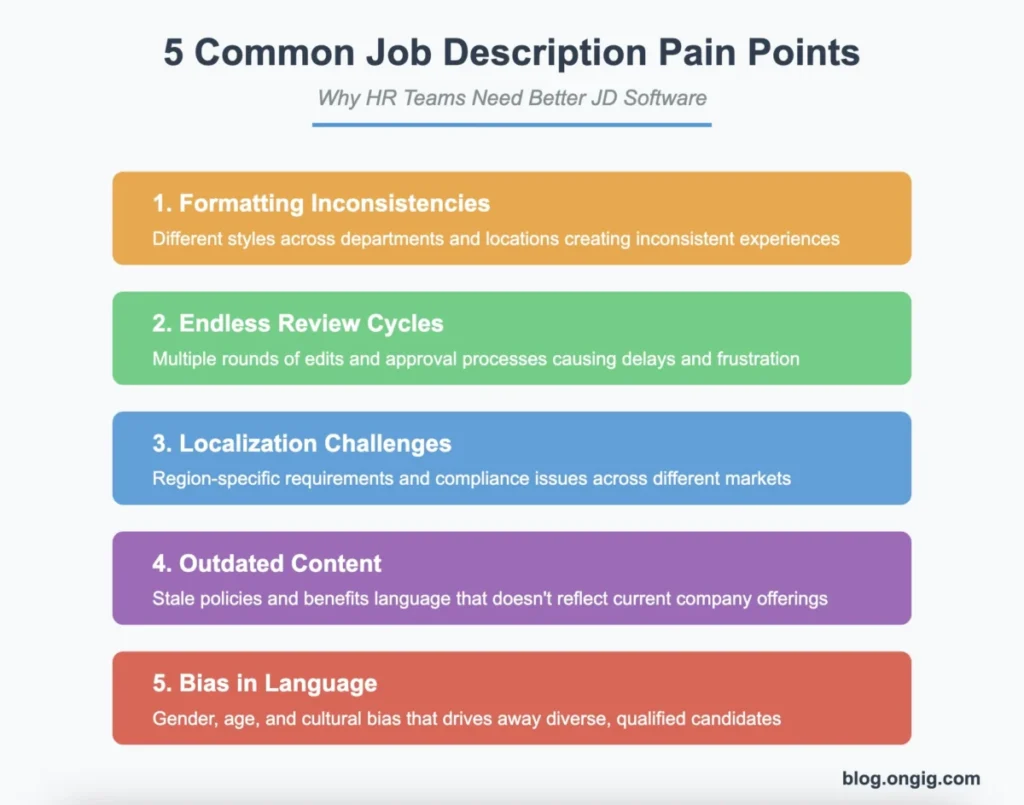
Without specialized tools, HR and talent acquisition professionals frequently grapple with a range of inefficiencies and risks. Manual drafting is time-consuming and prone to inconsistencies. Ensuring compliance with local, national, and international regulations—from EEO statements to pay transparency mandates—becomes an arduous task. The subtle presence of biased language can inadvertently narrow the candidate pool, undermining DEI initiatives. Furthermore, maintaining an up-to-date repository of job descriptions, especially for large enterprises with hundreds or thousands of roles, is a logistical challenge that can lead to outdated information and internal discrepancies.
Defining Job Description Software: Beyond Basic Text Editing
Job description software is an advanced category of human resources technology designed to automate, standardize, and enhance the creation and management of job postings. Far more sophisticated than simple word processors, these platforms offer a suite of functionalities tailored to the specific needs of recruiters and HR professionals. At its core, the software facilitates the drafting of job descriptions, often leveraging templates and AI-powered suggestions to accelerate the process. A key feature is the automated scanning for biased or exclusionary language, providing real-time feedback to promote inclusive hiring practices.
Beyond initial drafting, these tools ensure structural consistency, arranging content into easily scannable formats that enhance readability for candidates. They perform crucial compliance checks, flagging missing elements such as salary ranges, EEO statements, or specific regulatory disclosures before a posting goes live. For larger organizations, advanced platforms often support bulk editing capabilities, allowing for rapid updates across hundreds of job descriptions simultaneously. Integration with Applicant Tracking Systems (ATS) and Human Resources Information Systems (HRIS) is common, creating a seamless workflow from job creation to candidate application. Crucially, many solutions incorporate approval workflows, ensuring that all stakeholders—from hiring managers to legal teams—can review and approve job descriptions, maintaining accuracy and compliance throughout their lifecycle.
Addressing Critical Pain Points in Job Description Management
The adoption of specialized job description software directly addresses several pervasive challenges faced by talent acquisition teams:
- Mitigating Bias and Enhancing Inclusivity: Research from organizations like Textio and Ongig consistently shows that certain words and phrases can subtly deter applicants from underrepresented groups. Software with advanced bias detection algorithms helps identify and neutralize such language, broadening candidate pools and supporting DEI objectives. This is particularly relevant as studies continue to demonstrate the positive impact of diverse teams on innovation and financial performance.
- Ensuring Consistency and Brand Alignment: Inconsistent messaging across job descriptions can dilute employer brand and confuse candidates. These tools enforce standardized formatting, tone, and language, ensuring that every job posting reflects the company’s values and brand identity, thereby improving candidate experience and perception.
- Navigating Complex Compliance Requirements: The regulatory landscape for hiring is dynamic. For example, states like Colorado, California, and New York have pioneered robust pay transparency laws, requiring salary ranges to be disclosed in job postings. Job description software provides essential guardrails, automatically checking for compliance with EEO, ADA, and evolving pay transparency mandates, significantly reducing legal risk and potential penalties.
- Boosting Efficiency and Reducing Time-to-Hire: Manually creating and reviewing job descriptions is time-consuming. By automating drafting, suggesting improvements, and streamlining approval processes, these platforms free up recruiters to focus on strategic initiatives like candidate engagement and relationship building, ultimately shortening time-to-hire.
- Providing Data-Driven Insights: Advanced platforms offer analytics on job description performance, such as readability scores, inclusivity metrics, and the effectiveness of certain keywords. This data allows HR teams to continuously refine their job descriptions for better engagement and application rates, transforming JD writing from an art into a data-informed science.
Methodology for Evaluating Top Platforms for 2026
The selection of the best job description software for 2026 was based on a comprehensive evaluation of several critical factors. These included the breadth and depth of features, particular emphasis on advanced functionalities like AI-driven bias detection and robust pay transparency support, and the degree of pricing transparency offered by vendors. Scalability was a key consideration, assessing whether a tool could effectively serve the needs of a solo recruiter, a growing small-to-medium enterprise, or a large, multinational corporation managing thousands of diverse roles. Compliance support, free trial availability, and seamless integration capabilities with existing HR tech stacks (ATS, HRIS) also played a significant role. Crucially, the evaluation considered the user experience, ensuring that the software was intuitive and genuinely built to alleviate recruiter pain points rather than adding complexity. Each tool’s target audience was carefully considered to match specific organizational needs with the most appropriate platform.
In-Depth Analysis of Leading Job Description Software for 2026
Here is a detailed breakdown of the top job description software tools set to lead the market in 2026:
-
Ongig’s Text Analyzer:
- Best for: Talent acquisition teams seeking scalable, inclusive, and on-brand job descriptions with a strong focus on compliance.
- Key Features: Ongig excels in its robust bias detection, identifying subtle gendered, racial, ageist, or ableist language. Its pay transparency compliance feature is a standout, ensuring salary ranges are appropriately included and formatted according to various state laws. The platform offers a vast library of templates, custom branding capabilities, and bulk editing for large-scale operations. Integrations with major ATS platforms streamline workflows.
- Pricing: Starts at $13,900/year, with discounts for non-profits and smaller organizations.
- Insights: Ongig positions itself as a comprehensive solution for enterprise-level organizations that prioritize both DEI and regulatory compliance. Its ability to combine these critical functions on a single platform makes it highly valuable in the current hiring climate.
-
Textio:
- Best for: Teams focused on writing inclusive, brand-aligned job postings, particularly those with a strong emphasis on predictive language performance.
- Key Features: Textio pioneered augmented writing for hiring. It uses AI to analyze language and predict how job descriptions will perform with different demographic groups. It provides real-time guidance on tone, gender bias, and readability, helping create engaging and equitable content. Textio offers custom style guides to maintain brand voice.
- Pricing: Custom enterprise pricing.
- Insights: Textio remains a market leader in bias detection and predictive analytics, offering deep insights into how language impacts applicant diversity and quality. Its strength lies in its sophisticated AI and vast dataset.
-
Datapeople:
- Best for: Companies with distributed teams looking for JD consistency, performance insights, and a data-driven approach to language optimization.
- Key Features: Datapeople focuses on improving job description performance through data science. It analyzes past job performance to suggest improvements, flags inconsistent language, and offers robust analytics on job title effectiveness and candidate engagement. It also provides some bias detection.
- Pricing: Custom quote based on company size.
- Insights: Datapeople differentiates itself through its analytical capabilities, helping organizations understand what language truly resonates with candidates and drives applications, making it a strategic tool for continuous improvement.
-
JobArchitect (by Salary.com):
- Best for: Compensation and HR teams aligning job content with pay structure, leveling, and market benchmarking.
- Key Features: This tool is deeply integrated with Salary.com’s extensive compensation data. It helps create detailed job descriptions that accurately reflect job value, responsibilities, and qualifications, linking them directly to compensation bands and market data. It includes templates and workflow management.
- Pricing: Starts around $5,000/year, varying with company size and features.
- Insights: JobArchitect is indispensable for organizations where compensation equity and accurate job leveling are paramount. It bridges the gap between talent acquisition and total rewards, ensuring internal and external pay fairness.
-
ChatGPT + JD Prompts:
- Best for: Small teams or solo recruiters needing quick drafts, edits, and brainstorming for job descriptions.
- Key Features: Leveraging large language models, ChatGPT can generate entire job descriptions from simple prompts, rewrite existing content, summarize key responsibilities, and even suggest interview questions. It’s highly versatile for initial content generation.
- Pricing: $20/month for GPT-4; free GPT-3.5 version available.
- Insights: While not purpose-built JD software, general AI platforms like ChatGPT offer an accessible and cost-effective starting point for many. However, they lack specialized compliance checks, advanced bias detection, and structured workflows, requiring significant human oversight for accuracy and legal adherence.
-
JDXpert:
- Best for: HR teams in highly regulated industries that require robust approval workflows, auditing capabilities, and detailed version history for job descriptions.
- Key Features: JDXpert is a comprehensive job description management system focused on governance and control. It offers multi-level approval workflows, an audit trail for every change, and version control. It helps manage large volumes of job descriptions across different departments and locations, ensuring consistency and compliance.
- Pricing: Starts at ~$10,000/year, based on seats and number of JDs.
- Insights: For organizations where regulatory compliance and meticulous record-keeping are paramount, such as healthcare, finance, or government, JDXpert provides the necessary rigor and control.
-
Applied:
- Best for: Organizations prioritizing unbiased hiring throughout the entire recruitment funnel, with a strong focus on skills-based assessments.
- Key Features: While encompassing JD writing, Applied extends its bias reduction focus to the entire hiring process. It helps de-bias job descriptions and offers anonymized applications, skills-based assessments, and structured interviewing tools to remove bias at every stage.
- Pricing: Starts at £3,500/year (~$4,300 USD), with nonprofit pricing available.
- Insights: Applied is ideal for organizations committed to a holistic, evidence-based approach to fair hiring. Its integrated platform ensures that the commitment to equity extends far beyond the initial job description.
-
RoleMapper:
- Best for: Large enterprises and public sector organizations needing governed, audit-ready job descriptions within a broader job architecture framework.
- Key Features: RoleMapper focuses on creating and managing a consistent job architecture, ensuring that job descriptions are accurately mapped to organizational roles, career paths, and compensation structures. It offers robust governance, audit trails, and version control.
- Pricing: Custom quote based on company size.
- Insights: RoleMapper is designed for strategic workforce planning, linking job descriptions directly to organizational design and talent strategy. It’s suitable for complex organizations needing a single source of truth for all job-related data.
-
MoshJD:
- Best for: Compensation and HR teams needing a centralized job description inventory with built-in templates and pay benchmarking.
- Key Features: MoshJD provides a modern approach to managing job descriptions, emphasizing governance and accuracy. It offers a comprehensive library of templates, integrated pay benchmarking data, and tools for ensuring consistency across job records.
- Pricing: Starts at $0.00/month for basic features; advanced features are custom.
- Insights: MoshJD stands out for its focus on modernizing JD management, particularly for compensation-focused teams. Its emphasis on a centralized, accurate inventory helps reduce discrepancies often found in legacy systems.
-
Workable:
- Best for: Growing teams that desire integrated JD writing and Applicant Tracking System (ATS) capabilities within a single, user-friendly platform.
- Key Features: Workable is primarily an ATS that includes strong job description creation tools. It offers a library of customizable templates, AI-powered writing assistance, and features to optimize job descriptions for various platforms. Its strength lies in its seamless integration of JD creation with the broader recruitment workflow.
- Pricing: Starts at $299/month.
- Insights: Workable is an excellent choice for organizations seeking an all-in-one solution, particularly smaller to mid-sized companies that benefit from a unified platform for managing their entire recruitment process, from drafting to hiring.
The Strategic Imperative of Advanced JD Software
The investment in advanced job description software is no longer merely an operational expense but a strategic imperative for modern organizations. Beyond the immediate gains in efficiency and compliance, these tools contribute significantly to several critical business outcomes:
- Enhanced Employer Branding: Consistently well-crafted, engaging, and inclusive job descriptions project a professional and attractive image of the organization, strengthening its employer brand and making it a more desirable place to work.
- Superior Candidate Experience: Clear, concise, and accessible job descriptions improve the candidate experience from the outset, leading to higher application rates and better-qualified applicants.
- Robust Risk Mitigation: By systematically addressing bias and ensuring compliance with evolving legal mandates, organizations significantly reduce their exposure to discrimination lawsuits and regulatory penalties, safeguarding their reputation and financial health.
- Data-Driven Recruitment Strategy: The analytics provided by these platforms enable HR leaders to move beyond guesswork, making informed decisions about job titles, language, and channels that yield the best results, optimizing recruitment spend and effectiveness.
- Integration with Workforce Planning: As job descriptions become more standardized and data-rich, they seamlessly integrate into broader workforce planning initiatives, supporting compensation reviews, career pathing, and organizational design.
In conclusion, the era of rudimentary job description creation is rapidly drawing to a close. As talent acquisition becomes more competitive, complex, and scrutinized, the role of specialized software in streamlining this process, ensuring compliance, and fostering an inclusive hiring environment is undeniable. For organizations navigating the intricate demands of the 2026 talent market, selecting the right job description software is not just about convenience; it is a strategic investment that underpins effective recruitment, strengthens employer brand, and safeguards organizational integrity. The diverse array of solutions available ensures that teams of all sizes and industries can find a platform tailored to their unique needs, transforming a once tedious task into a powerful lever for strategic talent management.