The landscape of global marketing is undergoing a seismic shift in 2026, driven by the maturation of generative artificial intelligence, the obsolescence of third-party cookies, and a fundamental change in buyer psychology. As digital channels become increasingly saturated with AI-generated content, the premium on authentic human connection has reached an all-time high. Industry research underscores this trend, with recent data from Bizzabo indicating that 84% of event attendees now prioritize in-person gatherings for professional development and high-level networking. Consequently, the marketing conference circuit in 2026 has evolved from simple educational seminars into critical hubs for strategic alignment, market intelligence, and cross-functional collaboration.
The Strategic Imperative of In-Person Events in the AI Era
In 2026, the primary challenge for marketing organizations is no longer the acquisition of data, but the interpretation of it. As AI tools now handle the bulk of campaign execution, from content generation to real-time bidding, the role of the marketer has shifted toward high-level strategy and community building. This transition has revitalized the relevance of physical conferences. These events serve as a filter, allowing professionals to distinguish between technological hype and actionable performance improvements.
The 2026 conference season is characterized by a "hands-on" philosophy. Attendees are moving away from passive keynote listening toward interactive workshops and closed-door executive roundtables. This shift reflects a broader industry need to understand the "real-world" application of emerging technologies like Generative Engine Optimization (GEO) and Answer Engine Optimization (AEO), which are rapidly replacing traditional SEO as the primary drivers of organic visibility.
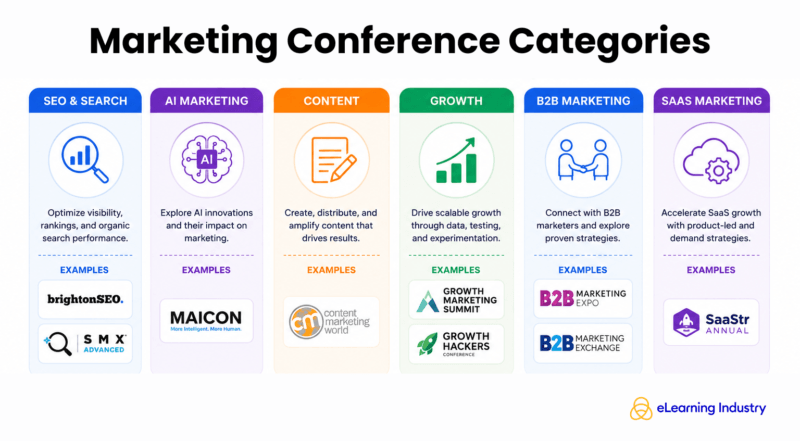
Categorizing the 2026 Conference Landscape
To maximize the return on investment (ROI) for attendance, organizations are increasingly categorizing events based on specific business outcomes: lead generation, brand authority, or technical mastery.
B2B and Revenue-Focused Summits
B2B marketing in 2026 is defined by complex, multi-stakeholder buying journeys. Events such as the B2B Marketing Expo and the Forrester B2B Summit have become essential for teams navigating long sales cycles and account-based marketing (ABM). These conferences focus heavily on the alignment of sales and marketing teams—a concept now referred to as "Smarketing" or Revenue Operations (RevOps).
Analysis of these events suggests a move toward "Precision Targeting." Instead of broad-spectrum lead generation, 2026 sessions are focused on intent data and predictive analytics to identify high-value accounts before they even enter the active search phase.
Growth and Performance Optimization
For growth-focused teams, the emphasis has shifted from "growth hacking" to building sustainable, repeatable systems. The Growth Marketing Summit and CXL Live remain the gold standards in this category. These events prioritize experimentation frameworks, conversion rate optimization (CRO), and full-funnel analytics. In 2026, a significant portion of these conferences is dedicated to "Retention Marketing," reflecting the rising costs of customer acquisition and the increased value of customer lifetime value (CLV).
Content and Brand Strategy
As AI-generated content becomes indistinguishable from human-written text, brand storytelling has become the ultimate differentiator. INBOUND and Content Marketing World are leading the charge in 2026 by focusing on the "Human-to-Human" (H2H) connection. These events explore how brands can leverage the creator economy and community-led growth to build trust in a skeptical market.
The Executive Circuit: High-Level Strategy for CMOs
For Chief Marketing Officers and senior leaders, the 2026 conference calendar features exclusive events designed for high-level decision-making and global brand positioning.
- Gartner CMO Leadership Summit: This event remains a cornerstone for executive networking. In 2026, the focus is on budget allocation in a post-cookie world and the restructuring of marketing departments to accommodate AI-driven workflows.
- Cannes Lions International Festival of Creativity: While historically focused on advertising, Cannes Lions in 2026 has integrated performance data into its core curriculum. The festival now serves as a bridge between creative excellence and measurable business outcomes, emphasizing how emotional impact drives long-term market share.
- Advertising Week: Taking place across major global hubs, this event brings together agency leaders and media executives to discuss the evolving media ecosystem, with a particular focus on retail media networks and connected TV (CTV) advertising.
- Adobe Summit: As the intersection of marketing and technology tightens, the Adobe Summit focuses on customer experience (CX) and personalization at scale. In 2026, the primary theme is the "Content Supply Chain"—how brands can manage the massive volume of assets required for hyper-personalized campaigns.
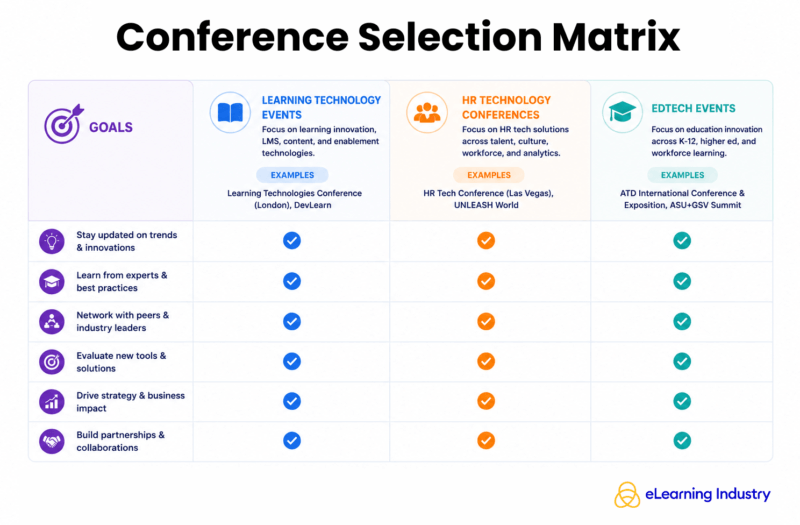
Specialized Industry Events: EdTech, HR Tech, and Learning
Specific sectors with unique regulatory and buying environments, such as education and human resources, have their own dedicated circuits in 2026.
- Learning Technologies Conference: Focused on corporate training and performance enablement, this event is critical for vendors in the LMS and LXP spaces.
- HR Tech Conference: This summit explores the employee experience and how marketing principles are being applied to employer branding and talent acquisition.
- ASU+GSV Summit: A high-level gathering for EdTech innovators and investors, focusing on the global scaling of education platforms.
Emergent Trends Shaping the 2026 Agenda
Several key themes are dominating the discourse at 2026 marketing conferences, reflecting the broader industry’s response to technological and regulatory changes.
The Rise of GEO and the Evolution of Search
Traditional Search Engine Optimization (SEO) is being supplemented by Generative Engine Optimization (GEO). At conferences like BrightonSEO and MozCon, the focus has shifted to how brands can ensure their information is cited by AI answer engines like ChatGPT, Perplexity, and Google’s Gemini. This involves a move toward structured data and "Entity-Based" content strategies.
Community-Led Growth (CLG)
With the decline of traditional advertising efficiency, many brands are turning to community-led growth. This strategy involves building a loyal audience that acts as a brand advocate. 2026 conferences are increasingly featuring tracks on community management, forum moderation, and the use of platforms like Discord and Slack for brand building.
First-Party Data and Privacy-First Marketing
The final transition away from third-party tracking has made first-party data the "new oil" of the marketing world. Events in 2026 are heavily focused on how brands can ethically collect and activate data from their own channels to drive personalization without infringing on consumer privacy.
Maximizing ROI: A Chronological Framework for Attendance
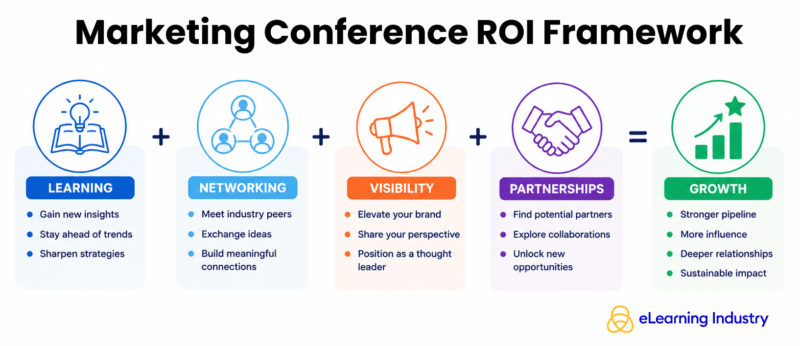
Attending a major conference represents a significant investment of time and capital. Industry analysts suggest a three-phase approach to ensure a positive return.
Phase 1: Pre-Conference Strategic Planning
Successful attendees set specific KPIs (Key Performance Indicators) before the event. This might include a target number of new partnerships, specific technical skills to be acquired, or a set number of competitive intelligence reports to be generated. Utilizing event apps to pre-schedule meetings with high-value targets is now considered a standard best practice.
Phase 2: Intentional Engagement
During the event, the focus should be on "active" rather than "passive" participation. This includes attending smaller breakout sessions and workshops where direct interaction with speakers is possible. Many top-tier marketers now skip the largest keynotes—which are often recorded—in favor of private networking events and localized meetups where the most candid industry insights are shared.
Phase 3: Post-Conference Activation
The value of a conference is realized in the weeks following the event. This involves not only following up on leads but also conducting internal "knowledge transfer" sessions. In 2026, leading firms use conference insights to conduct "Gap Analysis," comparing their current strategies against the industry benchmarks observed at the event.
The Role of Virtual and Hybrid Formats
While the demand for in-person events is high, virtual and hybrid models have become a permanent fixture of the 2026 landscape. These formats offer a cost-effective way for junior staff to access high-quality training and for global teams to stay aligned without the carbon footprint or expense of international travel. Hybrid events often feature "digital-only" content, such as extended Q&A sessions and deep-dive technical tutorials, providing a unique value proposition that complements the physical experience.
Conclusion: The Broader Impact on 2026 Marketing Strategy
As we move through 2026, marketing conferences have solidified their role as the "R&D departments" of the industry. They provide the necessary friction and feedback that digital channels lack, allowing for the rapid refinement of ideas and the forging of deep professional bonds. For the modern marketer, these events are no longer optional "perks" but essential strategic exercises. Whether the goal is to master the latest AI-driven tactics, build a global brand, or align a revenue team, the 2026 conference circuit offers the most direct path to staying competitive in a volatile market. The companies that will lead in 2027 and beyond are those currently leveraging these gatherings to transform insights into execution.