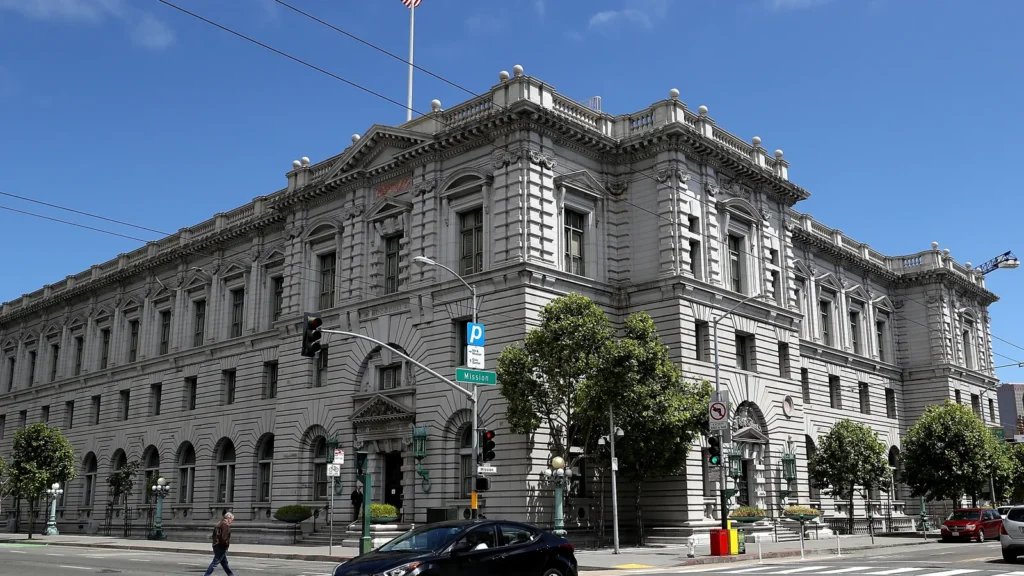
The 9th U.S. Circuit Court of Appeals delivered a significant development on Thursday, June 22, 2026, by vacating a prior three-judge panel’s decision and granting an en banc rehearing in the high-stakes case of Union Gospel Mission of Yakima Washington v. Brown. This move signals a profound re-evaluation of how Washington state’s robust anti-discrimination laws intersect with the First Amendment’s protections for religious freedom, particularly concerning the hiring practices of faith-based organizations for non-ministerial roles. The original panel had ruled that the state’s prohibition against discrimination on the basis of sexual orientation did not apply to the religious ministry, a decision that a dissenting judge, Patrick Bumatay, sharply criticized as part of a "disturbing path" for religious liberty.
The legal battle centers on the Union Gospel Mission of Yakima, a faith-based organization that provides critical services to the community, including shelter, food, and rehabilitation programs. The Mission maintains a policy of preferring to hire individuals who align with its religious beliefs, including specific doctrines on marriage and sexuality, even for positions not directly involved in religious instruction or leadership. This policy directly conflicts with the Washington Law Against Discrimination (WLAD), which broadly prohibits discrimination based on sexual orientation in employment. The panel’s January decision had upheld a lower court’s injunction, effectively blocking state regulators from enforcing the WLAD against the Mission. This injunction was based on the panel’s reasoning that the Mission was likely to succeed in its claim that the state law infringed upon its First Amendment rights, viewing the hiring of employees for non-ministerial roles as an "internal management decision" rooted in religious faith.
A Contentious Legal Landscape: Religious Freedom vs. Anti-Discrimination
The tension between religious organizations’ freedom to operate according to their tenets and the state’s interest in preventing discrimination has been a long-standing and increasingly complex area of American jurisprudence. The First Amendment to the U.S. Constitution guarantees both the free exercise of religion and prohibits the establishment of religion. The Free Exercise Clause, in particular, has been invoked by religious entities seeking exemptions from generally applicable laws that might burden their religious practices. However, courts have grappled with the extent to which such exemptions can override other fundamental rights, including protection from discrimination.
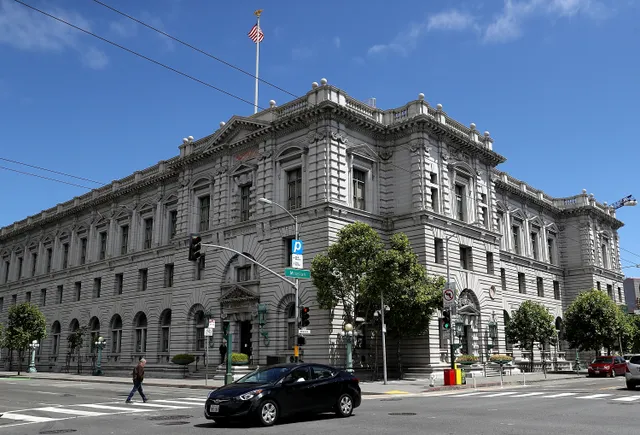
Washington state, known for its progressive legal framework, has one of the most comprehensive anti-discrimination statutes in the nation. The Washington Law Against Discrimination (WLAD), enacted in 1949 and significantly expanded over the decades, explicitly includes sexual orientation as a protected characteristic in employment, housing, and public accommodations. For years, the application of WLAD to religious organizations, particularly those receiving public funds or operating in public-facing capacities, has been a source of legal contention.
Central to this debate is the "ministerial exception," a judicially created doctrine that exempts religious institutions from anti-discrimination laws when making employment decisions about their ministers. The U.S. Supreme Court affirmed and clarified this exception in Hosanna-Tabor Evangelical Lutheran Church and School v. EEOC (2012) and Our Lady of Guadalupe School v. Morrissey-Berru (2020), recognizing the autonomy of religious organizations to select their own spiritual leaders. However, the critical question in cases like Union Gospel Mission of Yakima is whether this exception extends to non-ministerial roles. Religious organizations often argue that their entire staff, regardless of specific job duties, contributes to their religious mission and ethos, and therefore, they should be able to enforce religious conduct standards for all employees. Conversely, civil rights advocates argue that extending the ministerial exception to non-ministerial roles would create broad loopholes in anti-discrimination laws, allowing religious organizations to discriminate in hiring for positions like janitors, accountants, or social workers, based on protected characteristics.
Chronology of the Case and Related Precedents
The path to the 9th Circuit’s en banc rehearing has been marked by several key legal milestones, both within this specific case and in related litigation in Washington state:
- Early 2020s: Union Gospel Mission of Yakima establishes or reinforces its hiring policy requiring employees, including those in non-ministerial roles, to adhere to its religious beliefs regarding marriage and sexuality.
- Initial Legal Challenge: State regulators or individuals challenge the Mission’s policy under the Washington Law Against Discrimination (WLAD). The Mission seeks an injunction to prevent the state from enforcing the WLAD against it.
- Lower Court Injunction: A lower court grants the injunction, finding that the Mission was likely to succeed on its First Amendment claims, effectively pausing state enforcement.
- January 6, 2026: 9th Circuit Panel Decision: A three-judge panel of the 9th U.S. Circuit Court of Appeals issues a decision upholding the lower court’s injunction. Authored by Judge Patrick Bumatay, the panel reasoned that the Mission’s hiring practices for non-ministerial roles were "internal management decisions" protected by the First Amendment’s Free Exercise Clause. The panel suggested that applying WLAD to these roles would infringe upon the Mission’s religious autonomy.
- June 22, 2026: 9th Circuit Vacates and Grants En Banc Rehearing: The full 9th Circuit Court of Appeals votes to vacate the panel’s January decision and grants an en banc rehearing. This signifies that a majority of the active judges on the court believe the case presents an issue of exceptional importance or that the panel’s decision conflicts with other 9th Circuit precedent or Supreme Court rulings.
- June 22, 2026: Judge Bumatay’s Dissent: In a strong dissent from the grant of rehearing en banc, Judge Patrick Bumatay, joined by two other circuit judges, criticizes the majority’s decision. He asserts that the 9th Circuit "has relegated religious liberty to a second-class right" and is continuing down a "disturbing path." Bumatay expresses concern that the court is moving towards endorsing a view where states can compel religious organizations to hire individuals who openly contradict their religious beliefs and teachings, arguing this is "wrong" as a matter of constitutional principles.
This case does not exist in a vacuum. It follows a series of related legal battles that highlight the ongoing conflict in Washington state:

- Seattle’s Union Gospel Mission v. Woods (2022): In a separate but similar case, the U.S. Supreme Court declined to review a Washington Supreme Court decision. That state court had refused to apply a religious exemption to another Christian employer (Seattle’s Union Gospel Mission, a different entity from the Yakima Mission) that had declined to hire a bisexual job applicant. While the Supreme Court denied certiorari, Justice Samuel Alito, joined by Justice Clarence Thomas, issued a statement concurring in the denial but strongly hinting that such disputes "may warrant future review by the high court." This statement underscored the Supreme Court’s awareness of, and potential future interest in, the broader legal question.
- Seattle Pacific University Case (2024): Seattle Pacific University, a Christian institution, brought a case alleging that Washington’s attorney general unlawfully investigated its employment practices. The university requires faculty and staff to adhere to religious teachings on sexuality and marriage. In 2024, the 9th Circuit issued a mixed ruling, affirming in part and reversing in part a district court’s decision to dismiss the complaint. The 9th Circuit held that the university’s pre-enforcement injury claims had standing, meaning they could challenge the state’s actions before actual enforcement. However, the court also found that the attorney general’s requests for documents and inquiry into the ministerial status of employees were lawful, indicating a nuanced approach to the state’s investigative powers versus the university’s religious autonomy.
These preceding cases illustrate a pattern: Washington state consistently seeks to enforce its anti-discrimination laws, while religious institutions push for broader religious exemptions beyond the traditional ministerial exception. The 9th Circuit has been a crucial battleground for these interpretations.
Implications of the En Banc Rehearing
The decision by the 9th Circuit to grant an en banc rehearing is highly significant, indicating the court recognizes the profound constitutional and societal implications of the issues at stake.
- For Union Gospel Mission of Yakima: The immediate consequence is that the injunction blocking state enforcement is now in jeopardy. If the en banc court reverses the panel’s decision, the Mission could face legal action, potential fines, and be compelled to change its hiring practices to comply with WLAD. This would force a direct confrontation between its religious tenets and state law, potentially impacting its ability to maintain its faith-based identity in all aspects of its operations.
- For LGBTQ+ Rights and Anti-Discrimination Advocates: This move is likely viewed as a victory. It provides an opportunity for the full court to reaffirm the broad scope of anti-discrimination protections in Washington state and potentially limit the expansion of religious exemptions to non-ministerial roles. A ruling in favor of the state would reinforce the principle that religious freedom, while fundamental, does not grant a blanket right to discriminate in employment, especially for organizations operating in the public sphere or receiving public benefits. Advocates would argue that such a ruling ensures equal employment opportunities for all individuals, regardless of sexual orientation.
- For Religious Organizations Nationally: The 9th Circuit’s eventual ruling will be closely watched by religious organizations across the country. A decision that restricts religious exemptions could have a chilling effect, leading many to reassess their hiring policies or brace for similar legal challenges. Conversely, a decision that maintains or expands religious exemptions could embolden other faith-based groups to assert similar rights. The uncertainty generated by the en banc rehearing itself creates a period of legal ambiguity for many organizations.
- For the 9th Circuit’s Jurisprudence: The en banc court’s decision will establish a binding precedent for all federal courts within the 9th Circuit’s vast jurisdiction, which includes California, Oregon, Washington, and several other Western states. This ruling will shape how future cases balancing religious freedom and anti-discrimination laws are decided in this region. The strong dissent by Judge Bumatay also signals deep divisions within the court on these matters, suggesting a potentially fractured decision even after the rehearing.
- Potential for Supreme Court Review: Given the constitutional magnitude of the issue, the existing split among lower courts, and Justice Alito’s previous remarks, it is highly probable that the losing party in the en banc decision will seek review from the U.S. Supreme Court. This case, or one like it, seems destined to reach the nation’s highest court, which would then have the opportunity to provide a definitive ruling on the scope of religious exemptions in hiring for non-ministerial roles. The Supreme Court’s current conservative majority might be receptive to arguments prioritizing religious freedom, making the ultimate outcome nationally significant.
Broader Societal Context and Data
The conflict underscored by Union Gospel Mission of Yakima v. Brown reflects a broader societal debate. Public opinion polls often show strong support for both religious freedom and LGBTQ+ rights, making these issues particularly difficult to reconcile in law. Data from the Equal Employment Opportunity Commission (EEOC) consistently show a significant number of discrimination charges filed annually based on religion and sexual orientation, highlighting the prevalence of these issues in the workplace. Religious organizations constitute a substantial portion of employers in the U.S., encompassing schools, hospitals, social service agencies, and advocacy groups. Their employment practices, therefore, have a wide-ranging impact on the American workforce.

The Washington Law Against Discrimination, like similar statutes in other states, aims to ensure that employment decisions are based on qualifications and performance, not on protected characteristics. However, religious organizations argue that their "mission" or "identity" is intrinsically linked to the shared faith of their employees, extending beyond just ministerial roles. They contend that forcing them to hire individuals who do not adhere to their core tenets undermines their very purpose and ability to effectively carry out their religiously motivated work.
Legal experts from various perspectives weigh in on the complexities. "This case presents a classic clash of fundamental rights," commented Dr. Eleanor Vance, a constitutional law scholar at the University of California, Berkeley. "The challenge for the 9th Circuit, and ultimately for the Supreme Court, is to draw a line that respects both the autonomy of religious institutions and the dignity and equality of individuals in the workplace. Where that line is drawn for non-ministerial roles will have profound implications for civil rights law."
Conversely, spokespersons for religious freedom advocacy groups, who typically align with Judge Bumatay’s view, emphasize the importance of allowing religious organizations to define their own religious identity through their hiring. "Religious institutions must be free to uphold their sincerely held beliefs in all aspects of their operations, including whom they employ," stated a representative from the Alliance Defending Freedom, a prominent religious liberty legal organization, in a general comment on similar cases. "To deny them that freedom is to undermine the very essence of religious exercise guaranteed by the First Amendment."
Advocates for LGBTQ+ rights, on the other hand, reiterate the necessity of upholding anti-discrimination protections. "No one should face discrimination in employment based on who they are or whom they love," said a representative from Lambda Legal, an LGBTQ+ civil rights organization, in a statement regarding the broader issue of religious exemptions. "Allowing broad exemptions for non-ministerial roles would create a dangerous precedent, effectively sanctioning discrimination under the guise of religious freedom and eroding crucial protections for countless individuals."
As the 9th Circuit prepares for its en banc rehearing, the legal community and concerned public await a decision that will undoubtedly reshape the contours of religious freedom and anti-discrimination law in the United States. The outcome of Union Gospel Mission of Yakima Washington v. Brown will not only determine the fate of one religious organization’s hiring practices but will also contribute significantly to the ongoing national dialogue about how deeply held beliefs can coexist with the commitment to equality for all.