The newest cohort of professionals, Generation Z, is increasingly expressing a strong preference for traditional, hands-on workplace experiences, identifying them as the most valuable exposures they can acquire. This trend emerges against a backdrop of significant shifts in the labor market, characterized by the growing influence of artificial intelligence in automating entry-level tasks and a sustained "low-hire, low-fire" economic climate. Despite these potential anxieties, Gen Z maintains a remarkable degree of optimism about their post-graduation prospects, underscoring a pragmatic and strategic approach to career entry.
The Shifting Landscape for New Graduates
The journey for recent graduates into the professional world has grown notably complex over the past few years. The aftermath of global economic fluctuations, coupled with rapid technological advancements, has reshaped employer expectations and the nature of entry-level positions. Historically, a degree often served as a primary gateway, but today, practical skills and demonstrable experience are increasingly critical differentiators.
A significant factor in this evolving landscape is the accelerating integration of artificial intelligence across industries. AI tools are becoming adept at tasks once performed by entry-level employees, from data entry and routine analysis to basic content generation and customer service interactions. While this automation promises increased efficiency for businesses, it simultaneously prompts a re-evaluation of the skills necessary for human workers entering the workforce. Employers are now seeking candidates who possess not only foundational knowledge but also the critical thinking, problem-solving, and adaptive learning capabilities that AI cannot yet replicate.
Furthermore, the labor market has settled into a "low-hire, low-fire" equilibrium, where companies are cautious about expanding their headcounts but also hesitant to shed existing employees. This conservative approach means fewer new positions are opening up, intensifying competition for the roles that do become available. For new graduates, this translates into a more challenging job search, where a robust resume featuring relevant experience becomes indispensable. Data from a recent economic review indicates that year-over-year growth in entry-level job postings has slowed by an average of 15% in the last 18 months, while applications per opening have surged by 25%. This imbalance underscores the need for graduates to distinguish themselves through tangible skills and practical exposure.
Gen Z’s Enduring Optimism and Strategic Outlook
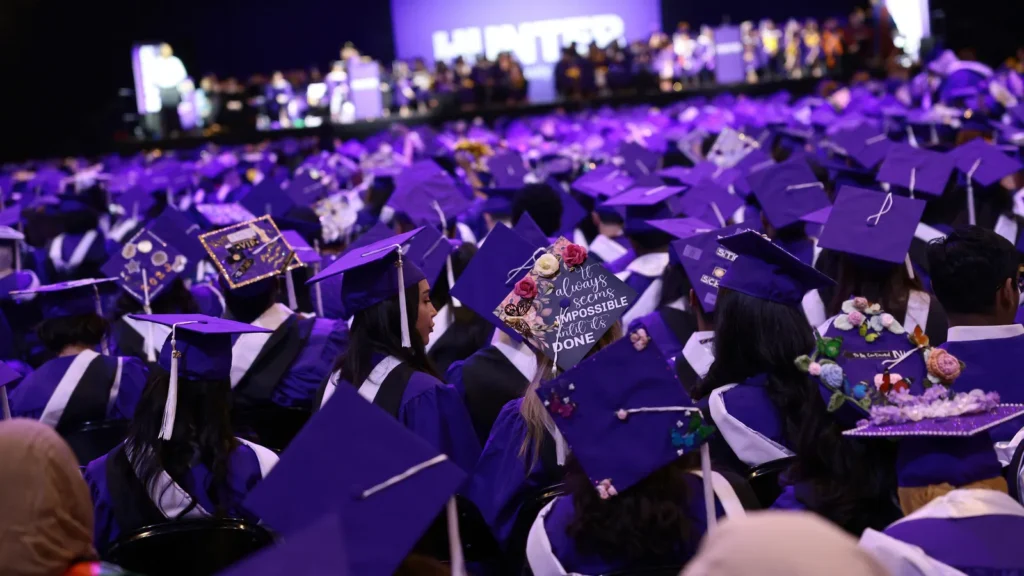
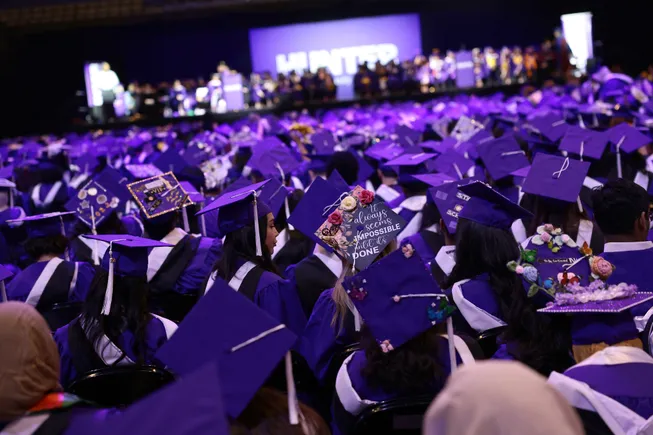
Despite these formidable challenges, Generation Z exhibits a striking level of confidence regarding their future. A comprehensive survey conducted by the National Society of High School Scholars (NSHSS) revealed that a resounding 94% of polled Gen Z students expressed being "extremely," "very," or "somewhat" confident about their post-graduation future. This widespread optimism is not born of naiveté but rather a pragmatic understanding of the evolving professional environment and a proactive approach to preparing for it.
This generation, often characterized by its digital native status and inherent adaptability, appears to view the current economic and technological shifts not as insurmountable obstacles, but as conditions to be navigated strategically. Their optimism likely stems from a blend of factors: their comfort with technology, a strong entrepreneurial spirit, and a deep-seated desire for purpose-driven work. Rather than being daunted by AI, many Gen Z individuals see it as a tool to be mastered and integrated into their workflows, understanding that the future workforce will be one where humans collaborate effectively with intelligent systems. This strategic outlook is a key driver behind their preference for hands-on experiences, as they recognize the imperative to develop skills that complement, rather than compete with, artificial intelligence.
The Resurgence of Hands-On Learning: What Gen Z Seeks
The core finding of Gen Z’s preference for "old-school, hands-on experiences" is a testament to their insightful understanding of what truly builds career resilience in the 21st century. This isn’t a rejection of digital tools or innovation, but rather a recognition that foundational practical skills are irreplaceable. What exactly constitutes these valuable experiences? It encompasses opportunities for direct involvement in core business operations, meaningful project ownership, and mentorship that extends beyond superficial guidance.
Gen Z interns are actively seeking roles where they can:
- Directly contribute to projects: They desire to move beyond administrative tasks to actively participate in the development, execution, and analysis of real-world company initiatives. This could mean contributing code to a software project, drafting actual marketing copy for a campaign, or conducting primary research that informs business decisions.
- Engage in problem-solving: Interns want to tackle genuine business challenges, working alongside experienced professionals to devise and implement solutions. This fosters critical thinking, analytical skills, and a practical understanding of business operations.
- Receive substantive mentorship: While digital communication is prevalent, Gen Z values face-to-face or direct mentorship from senior colleagues who can offer personalized guidance, share industry insights, and provide constructive feedback on their work. This goes beyond formal check-ins to include informal learning moments and career discussions.
- Understand organizational culture: Hands-on roles offer a deeper immersion into the company’s culture, values, and operational dynamics. This allows interns to assess if the environment aligns with their career aspirations and personal values, a crucial factor for this purpose-driven generation.
- Develop "human" skills: By engaging directly in complex tasks and team environments, interns hone essential soft skills such as communication, collaboration, adaptability, and emotional intelligence – attributes that are difficult for AI to replicate and increasingly prized by employers.
This preference for practical exposure is directly linked to the need to differentiate themselves in a competitive market. A survey by a leading internship platform found that 78% of Gen Z respondents believe practical project experience is more impactful on their job prospects than a high GPA alone. They are acutely aware that while academic knowledge is essential, it is the application of that knowledge in a professional context that truly prepares them for long-term success.
Employer Expectations and Adaptation
In response to these shifting preferences and the broader market dynamics, employers are recalibrating their internship programs and entry-level hiring strategies. The traditional model of internships, which sometimes involved interns performing ancillary tasks, is giving way to more structured, immersive, and skill-development-focused programs.
HR professionals and hiring managers are increasingly looking for candidates who can demonstrate not just what they know, but what they can do. This emphasis on practical application has led to a greater focus on portfolio-based assessments, project simulations, and behavioral interviews that gauge problem-solving capabilities. A recent report from the Society for Human Resource Management (SHRM) indicated that 65% of companies are redesigning their internship programs to include more direct project ownership and mentorship opportunities, a significant increase from five years ago.

Companies are also recognizing the importance of fostering a learning environment. This involves:
- Structured Onboarding: Providing clear objectives, comprehensive training, and integration into team workflows from day one.
- Dedicated Mentorship: Pairing interns with experienced professionals who can guide their development, offer feedback, and facilitate networking within the organization.
- Real-World Projects: Assigning interns to projects that have tangible impact on the business, ensuring their contributions are meaningful and visible.
- Exposure to Diverse Teams: Allowing interns to work across different departments or with cross-functional teams to gain a holistic understanding of the business.
- Feedback Loops: Implementing regular and constructive feedback mechanisms to help interns track their progress and identify areas for improvement.
The goal for employers is twofold: to attract top Gen Z talent by offering the experiences they crave, and to develop a pipeline of skilled, adaptable future employees who are ready to navigate a technology-driven workplace.
The AI Conundrum: Threat or Opportunity for Entry-Level Roles?
The rise of artificial intelligence presents a complex duality for entry-level professionals. While it undeniably automates some routine tasks, leading to a perception of job displacement, it simultaneously creates new opportunities and elevates the value of uniquely human skills. For Gen Z, understanding this dynamic is paramount.
AI’s role is shifting the definition of "entry-level work." Instead of performing repetitive, data-heavy tasks, new hires are increasingly expected to leverage AI tools, interpret AI-generated insights, and focus on higher-order cognitive functions. This includes:
- Prompt Engineering: The ability to effectively communicate with AI models to achieve desired outputs.
- Data Interpretation and Storytelling: Transforming raw data, often processed by AI, into actionable insights and compelling narratives.
- Ethical AI Application: Understanding the societal and ethical implications of AI and ensuring its responsible use.
- Human-AI Collaboration: Working seamlessly with AI tools to augment human capabilities, rather than being replaced by them.
- Creative Problem Solving: Addressing novel challenges that require human intuition, innovation, and empathy.
This context explains why hands-on experience is so vital. It allows Gen Z interns to develop the practical acumen to work with AI, not against it. By engaging in real projects, they learn how to integrate AI tools into workflows, identify where human judgment is indispensable, and develop the critical thinking skills necessary to question and validate AI outputs. An analysis by a prominent tech think tank suggests that roles requiring human-AI collaboration are projected to grow by 20% over the next five years, emphasizing the importance of practical experience in this burgeoning field.
Educational Institutions’ Role in Bridging the Gap
Educational institutions play a crucial role in preparing Gen Z for this dynamic future. Universities and colleges are under pressure to adapt their curricula and career services to align with the evolving demands of the labor market and the specific preferences of their students.

This adaptation involves:
- Emphasis on Experiential Learning: Integrating more internships, co-op programs, capstone projects, and service-learning opportunities directly into academic programs. Many institutions are now making experiential learning a mandatory component of degree requirements.
- Cross-Disciplinary Programs: Fostering collaboration between departments (e.g., computer science with humanities, business with design) to cultivate well-rounded students capable of interdisciplinary problem-solving.
- Skill-Based Training: Supplementing theoretical knowledge with practical, industry-relevant skills workshops, certifications, and bootcamps, particularly in areas like data analytics, digital marketing, and AI literacy.
- Industry Partnerships: Forging stronger ties with corporations to ensure curriculum relevance, facilitate internship placements, and provide students with exposure to real-world business challenges.
- Enhanced Career Services: Offering more personalized career counseling, resume workshops focused on showcasing practical skills, and interview preparation that addresses the nuances of modern hiring processes. University career counselors report a 30% increase in student inquiries specifically about "hands-on" or "project-based" internships over the last three years.
By proactively responding to these trends, educational institutions can better equip Gen Z graduates with the blend of academic knowledge, practical skills, and adaptability required to thrive in a rapidly changing professional landscape.
Implications for the Future Workforce
The collective preferences and strategies of Gen Z, coupled with technological advancements and economic shifts, carry significant implications for the future workforce. The definition of career readiness is expanding, moving beyond academic credentials to encompass a broader spectrum of practical competencies and soft skills.
- Evolving Career Paths: Traditional linear career paths may become less common. Gen Z is likely to experience more dynamic careers, requiring continuous learning, reskilling, and adaptability across different roles and industries.
- Importance of Lifelong Learning: The rapid pace of technological change means that formal education is just the beginning. The ability to acquire new skills and adapt to emerging tools throughout one’s career will be paramount.
- Hybrid Skill Sets: The most successful professionals will possess hybrid skill sets – a combination of technical proficiency (including AI literacy) and uniquely human attributes like creativity, critical thinking, emotional intelligence, and ethical reasoning.
- Rethinking Talent Acquisition: Companies will need to move beyond traditional resume screening to more holistic assessments that evaluate practical experience, problem-solving capabilities, and cultural fit. This will involve more project-based interviews, skill assessments, and a greater emphasis on internship performance.
- Shaping Company Culture: To attract and retain Gen Z talent, companies will need to cultivate cultures that prioritize learning, mentorship, meaningful work, and opportunities for growth and impact.
In conclusion, Generation Z’s strategic prioritization of hands-on experiences is a clear signal to employers and educators alike. It reflects a deep understanding of the current and future demands of the professional world, where adaptability, practical application of knowledge, and the cultivation of uniquely human skills are paramount. Despite the challenges posed by AI and a fluctuating labor market, this generation remains optimistic and determined, recognizing that a blend of traditional, immersive learning and modern technological fluency will be the key to unlocking a successful and fulfilling career future.