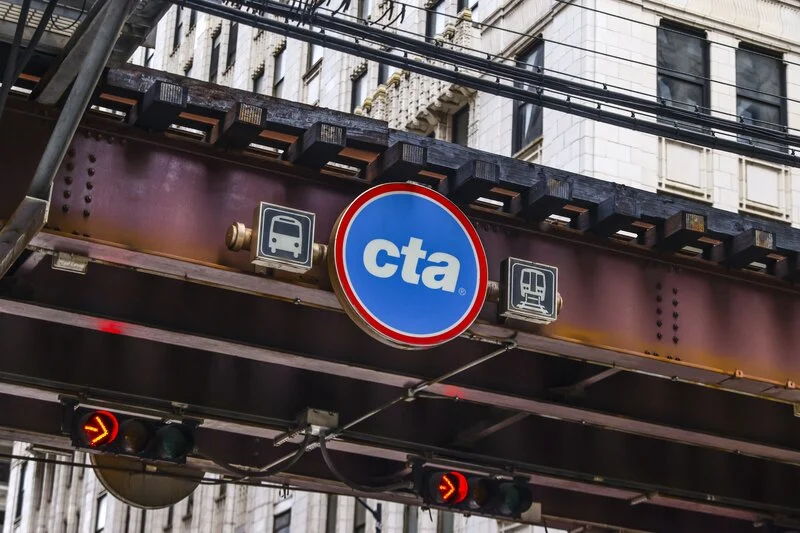
The U.S. Court of Appeals for the Seventh Circuit has affirmed a lower court’s decision to dismiss a lawsuit brought by a transgender bus driver against the Chicago Transit Authority (CTA), concluding that the plaintiff failed to provide sufficient evidence that his termination was motivated by gender identity discrimination rather than a violation of attendance policies. In a decision handed down on June 25, 2026, a three-judge panel ruled that the driver’s claims of pretext were unsupported by the record, which showed a documented history of unapproved medical leave that led to his dismissal.
The case, which has been closely watched by employment law experts and civil rights advocates, underscores the high evidentiary bar plaintiffs must meet when attempting to prove that a legitimate, non-discriminatory reason for termination—such as a policy violation—is actually a cover for illegal bias. The Seventh Circuit’s ruling emphasizes that the court’s role is not to act as a "super-personnel department" that second-guesses the wisdom of an employer’s business decisions, but rather to determine if those decisions were motivated by discriminatory intent.
Background of the Litigation
The plaintiff, who served as a bus driver for the Chicago Transit Authority for several years, alleged that the atmosphere at the agency shifted after he began his gender transition. According to the original complaint filed in the U.S. District Court for the Northern District of Illinois, the driver claimed that supervisors and colleagues became increasingly hostile, leading to a work environment he described as "toxic."
The core of the legal dispute, however, centered on a period of absence in late 2023. The driver had requested medical leave to undergo procedures and recovery related to his transition. While the driver maintained that he had provided the necessary documentation and believed the leave was under review or tentatively approved, the CTA contended that the leave was officially denied because the paperwork submitted did not meet the specific requirements of the Family and Medical Leave Act (FMLA) or the agency’s internal short-term disability policies.
When the driver did not report for his scheduled shifts, the CTA initiated disciplinary proceedings. Following a series of internal hearings, the agency terminated his employment, citing "job abandonment" and "unauthorized absence." The driver subsequently filed a charge with the Equal Employment Opportunity Commission (EEOC) before bringing a federal lawsuit alleging violations of Title VII of the Civil Rights Act of 1964.
Chronology of Events
The timeline of the case reflects a complex intersection of medical necessity, administrative procedures, and deteriorating labor relations:
- January 2021: The plaintiff begins employment with the Chicago Transit Authority as a full-time bus operator, initially receiving positive performance reviews.
- March 2023: The plaintiff informs human resources and his immediate supervisors of his intent to transition and requests accommodations regarding uniforms and restroom usage.
- September 2023: The plaintiff submits an initial request for medical leave for gender-affirming surgery scheduled for November.
- October 2023: The CTA’s third-party leave administrator requests additional medical certification, claiming the initial submission was "incomplete and vague."
- November 12, 2023: The plaintiff begins his absence from work, believing his leave was protected.
- November 20, 2023: The CTA issues a formal denial of the leave request and sends a "notice of unauthorized absence" to the plaintiff’s residence.
- December 2023: Upon attempting to return to work with a doctor’s release, the plaintiff is informed he is being placed on administrative leave pending a discharge hearing.
- January 2024: The CTA officially terminates the plaintiff’s employment.
- May 2024: The plaintiff files a lawsuit in the Northern District of Illinois alleging gender identity discrimination and retaliation.
- August 2025: The District Court grants summary judgment in favor of the CTA, ruling the plaintiff failed to establish a "convincing mosaic" of discrimination.
- September 2025: The plaintiff appeals to the Seventh Circuit.
- June 25, 2026: The Seventh Circuit affirms the lower court’s dismissal.
The Legal Standard and the Seventh Circuit’s Analysis
In its opinion, the Seventh Circuit focused on the "honest belief" rule, a cornerstone of employment law in the circuit. This rule dictates that if an employer honestly believes its stated reason for a termination—even if that reason is ultimately mistaken, foolish, or meritless—the employee cannot prove pretext for discrimination.
The panel noted that for the plaintiff to prevail, he had to demonstrate that the CTA’s explanation for his firing was a lie intended to mask a discriminatory motive. The driver argued that other employees who were not transgender had been given more leeway with their medical leave documentation or were allowed to correct errors without facing immediate termination. However, the court found that the "comparators" provided by the plaintiff were not "similarly situated" in all material respects, such as having the same supervisor or a similar disciplinary record.
"The plaintiff’s subjective belief that he was being targeted because of his gender identity, while deeply felt, does not substitute for objective evidence of discriminatory intent," the court wrote. "The record confirms that the CTA followed its established protocols for unauthorized absences. Whether those protocols are harsh is not a matter for this court to decide; our only concern is whether they were applied in a discriminatory manner."
Supporting Data on Workplace Discrimination
The ruling comes at a time when litigation involving gender identity in the workplace is on the rise. Since the U.S. Supreme Court’s landmark 2020 decision in Bostock v. Clayton County, which established that Title VII’s prohibition on sex discrimination includes sexual orientation and gender identity, the number of charges filed with the EEOC has seen a measurable shift.
According to EEOC data from the 2023-2024 fiscal year, charges alleging discrimination based on gender identity increased by approximately 18% nationwide. However, legal analysts note that these cases often face significant hurdles at the summary judgment stage. Data from the Administrative Office of the U.S. Courts suggests that nearly 70% of employment discrimination cases that reach the summary judgment phase are decided in favor of the employer, often due to the plaintiff’s inability to disprove the employer’s "legitimate business reason."
In the context of public transportation, the CTA is one of the largest employers in the Chicago metropolitan area, with over 10,000 employees. The agency has historically maintained rigorous attendance policies, which are often codified in collective bargaining agreements with unions like the Amalgamated Transit Union (ATU). These policies are designed to ensure service reliability, but they frequently become the subject of litigation when they intersect with the medical needs of employees.
Official Responses and Reactions
Following the ruling, a spokesperson for the Chicago Transit Authority issued a brief statement: "The CTA is pleased with the Seventh Circuit’s decision. We maintain a firm commitment to diversity and inclusion in our workforce, but we also must ensure that our operational requirements and attendance policies are upheld to provide reliable service to the people of Chicago. This ruling validates that our actions were based solely on policy compliance."
Legal counsel for the plaintiff expressed disappointment, suggesting that the ruling sets a difficult precedent for transgender employees who may face subtle forms of bias that do not always leave a "paper trail."
"This decision highlights the immense difficulty plaintiffs face in proving pretext," the attorney said. "When an employer can hide behind a complex web of administrative leave policies to justify the termination of a marginalized employee, the protections afforded by Title VII are weakened. We believe the evidence showed a clear shift in treatment toward our client once his transition became public knowledge."
Advocacy groups have also weighed in on the implications of the case. A representative from a prominent LGBTQ+ legal defense fund noted that while Bostock provided the legal framework for protection, the "mechanics of proof" in the Seventh Circuit remain a significant barrier. "Cases like this show that having a right on paper is not the same as having a remedy in practice," the representative stated.
Broader Impact and Implications for Future Litigation
The Seventh Circuit’s refusal to reinstate the suit reinforces the importance of administrative precision for employees seeking medical leave. For legal practitioners, the case serves as a reminder that in "pretext" cases, the focus will remain heavily on whether the employer’s decision-making process was consistent and documented.
For municipal agencies and large corporations, the ruling provides a level of protection for their internal disciplinary processes, provided they are applied consistently. However, HR experts warn that relying solely on "policy violations" can be a risky strategy if there is any evidence of disparate treatment.
The decision also touches upon the evolving nature of "gender-affirming care" as a recognized medical necessity. While the court did not dispute that the plaintiff’s surgery was a legitimate medical reason for leave, the failure lay in the execution of the paperwork. This distinction is crucial for future cases: the right to leave for gender-affirming care is protected, but it is not exempt from the standard procedural requirements of the workplace.
As the legal landscape continues to evolve post-Bostock, the Seventh Circuit’s conservative approach to pretext may lead to a shift in how plaintiffs’ attorneys frame their arguments, perhaps focusing more on "cat’s paw" liability or seeking more robust discovery regarding how attendance policies are enforced across different demographic groups.
For now, the dismissal stands as a significant victory for the Chicago Transit Authority and a cautionary tale for employees navigating the complex intersection of personal health transitions and rigid institutional policies. The plaintiff has not yet indicated whether he intends to petition the U.S. Supreme Court for a writ of certiorari, though legal experts suggest the chances of the High Court taking up a case focused on the factual application of the "honest belief" rule are slim.