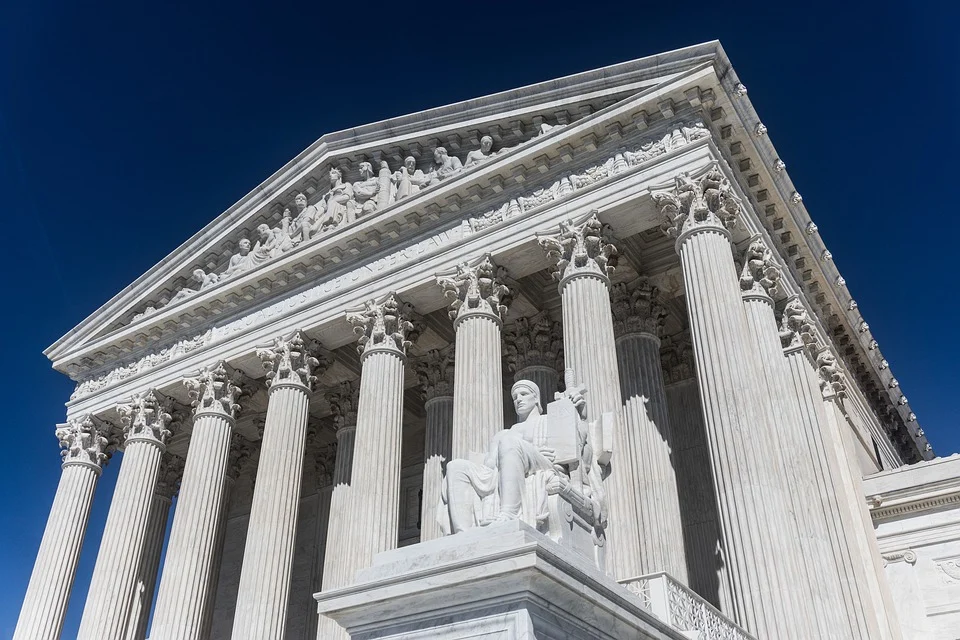
In a move that has left legal scholars and corporate defense counsel searching for clarity, the United States Supreme Court on June 5, 2025, dismissed a case that was expected to resolve a critical ambiguity in federal class action litigation. The Court issued a one-sentence per curiam order in Laboratory Corporation of America Holdings v. Davis, No. 24-304, dismissing the writ of certiorari as "improvidently granted." By declining to rule on the merits, the nation’s highest court passed on a significant opportunity to decide whether federal courts may certify a damages class under Federal Rule of Civil Procedure 23 when that class includes members who have suffered no actual injury.
The dismissal maintains the status quo in a deeply divided legal landscape, leaving intact a Ninth Circuit Court of Appeals ruling that favored plaintiffs. For employers and large-scale service providers, the decision—or lack thereof—means that "over-inclusive" classes remain a potent threat, particularly in jurisdictions known for plaintiff-friendly class certification standards.
Origins of the Dispute: Accessibility and the Unruh Act
The litigation began when Luke Davis and Julian Vargas, both of whom are legally blind, filed a class action against Laboratory Corporation of America (Labcorp). The plaintiffs alleged that Labcorp’s use of on-site, self-service touchscreen kiosks for patient check-ins violated Title III of the Americans with Disabilities Act (ADA) and the California Unruh Civil Rights Act.
According to court records, Labcorp implemented these kiosks at its patient service centers to streamline the check-in process. While the kiosks offered a modern convenience for many, they were not equipped with screen-reading technology or tactile interfaces, rendering them inaccessible to blind patients unless they received assistance from Labcorp staff or companions.
Labcorp argued that it provided meaningful access by ensuring that every service center had at least one staff member available to perform manual check-ins at a front desk. This manual process utilized the same backend technology as the kiosks, ensuring that blind patients were not denied service. However, the plaintiffs contended that being forced to wait for staff assistance or disclose personal information to an employee—when sighted patients could check in privately via a kiosk—constituted a discriminatory experience and a violation of their civil rights.
The case took on massive financial proportions due to the California Unruh Civil Rights Act. Unlike the federal ADA, which primarily provides for injunctive relief (ordering a company to fix the barrier), the Unruh Act allows plaintiffs to recover statutory damages of $4,000 per violation. In a class-action context, these damages can aggregate into astronomical sums.
The Certification of a "Potentially Uninjured" Class
The central legal controversy arose when the U.S. District Court certified a class that could potentially include more than 100,000 blind individuals who had visited Labcorp facilities. Labcorp challenged this certification, pointing out a fundamental flaw: the class definition included thousands of individuals who had not actually been harmed by the kiosks.
Evidence presented during the proceedings suggested that many blind patients preferred checking in at the front desk and would have done so regardless of whether the kiosks were accessible. Others may have used the online check-in system from their homes before even arriving at the center. Labcorp argued that including these "uninjured" individuals in a damages class violated Article III of the U.S. Constitution, which requires a plaintiff to have a "concrete and particularized" injury to bring a claim in federal court.
Despite these objections, the District Court maintained the class certification, and the Ninth Circuit Court of Appeals later affirmed the decision. The Ninth Circuit’s stance contributed to an existing circuit split, as other appellate courts have expressed skepticism about certifying classes where individualized inquiries are required to determine if each member was actually injured.
Chronology of the Supreme Court Appeal
The path to the Supreme Court’s June 5 dismissal was marked by several key procedural milestones:

- Initial Filing: Davis and Vargas filed the suit as a putative class action, seeking both injunctive relief and statutory damages.
- District Court Certification: The lower court certified the class under Rule 23(b)(3), finding that common questions of law and fact predominated over individual issues.
- Interlocutory Appeal: Labcorp sought an immediate appeal to the Ninth Circuit, arguing that the class was overbroad.
- Clarification Order: While the appeal was pending, the District Court issued a clarifying order regarding the class definition. Though the order did not significantly change the class’s composition, it would later become a point of procedural contention.
- Ninth Circuit Affirmation: The appellate court upheld the certification, reinforcing the trend of allowing large classes in California-based ADA litigation.
- Grant of Certiorari: The Supreme Court agreed to hear the case in late 2024 to resolve the question: "May a person who lacks Article III standing be a member of a class certified under Rule 23(b)(3)?"
- The June 5 Dismissal: After briefing and oral arguments, the Court abruptly reversed course, dismissing the case without a ruling on the merits.
Justice Kavanaugh’s Dissent: A Warning of Economic Consequences
The dismissal was not unanimous in its sentiment. Justice Brett Kavanaugh issued a lone, stinging dissent, criticizing his colleagues for "passing" on a straightforward legal issue. Kavanaugh argued that the Court’s decision to dismiss the writ as "improvidently granted" (DIG) was a mistake that would have "real-world consequences" for the American economy.
Justice Kavanaugh dismissed the procedural argument that the case had become moot due to the District Court’s "clarification" of the class definition. He characterized the mootness claim as "insubstantial," noting that the core legal dispute—the inclusion of uninjured members—remained identical.
On the merits, Kavanaugh was unequivocal. He stated that under the Supreme Court’s 2021 precedent in TransUnion LLC v. Ramirez, every class member must have Article III standing to recover individual damages. "If there are members of a class that aren’t even injured, they can’t share the same injury with the other class members," Kavanaugh wrote, echoing the position of the United States government, which had filed an amicus brief in support of Labcorp.
Kavanaugh warned that the Ninth Circuit’s approach allows for "overinflated" classes that exert "in terrorem" settlement pressure on defendants. He noted that Labcorp was facing potential liability of $500 million per year—a figure so large that it could force a settlement regardless of the merits of the underlying accessibility claim. These costs, he argued, are eventually passed on to consumers and workers.
Supporting Data and Litigation Trends
The Labcorp case sits at the intersection of two major trends in American litigation: the rise of ADA Title III lawsuits and the expansion of class action filings.
According to data from the Seyfarth ADA Title III blog, federal ADA Title III lawsuits have reached record highs in recent years. In 2023 and 2024, filings remained near peak levels, with California and New York serving as the primary hubs for this litigation. California’s dominance is largely attributed to the Unruh Act, which provides a financial incentive for plaintiffs that does not exist under federal law alone.
Furthermore, statistics cited in Labcorp’s petition for certiorari indicate that approximately 10,000 class action lawsuits are filed annually in the United States. The "predominance" requirement of Rule 23(b)(3) is the most frequently litigated hurdle in these cases. When courts allow uninjured members to remain in a class, the "commonality" of the legal issues is often artificially inflated, making it easier for plaintiffs’ attorneys to secure certification and leverage massive settlements.
Implications for Employers and Corporate Defendants
The Supreme Court’s refusal to provide a definitive answer is a setback for the defense bar. For now, companies operating within the Ninth Circuit (including California, Washington, and Arizona) must continue to navigate a landscape where they can be sued for millions of dollars by individuals who may never have interacted with the allegedly non-compliant technology.
However, legal analysts suggest that the issue is far from dead. The "DIG" dismissal indicates that the Court may have found this specific case to be a "poor vehicle" for the question—perhaps due to the messy procedural history involving the District Court’s clarification order—rather than a rejection of the legal theory that uninjured members should be excluded.
In the interim, employers are advised to:
- Audit Digital and Physical Interfaces: Ensure that all customer-facing technology, from kiosks to websites, meets the latest accessibility standards (such as WCAG 2.1) to avoid becoming a target.
- Focus on Individualized Evidence: During the discovery phase of class actions, defendants should aggressively seek evidence showing that specific class members suffered no "concrete harm." This data can be used to argue that individualized questions of injury outweigh common questions, thereby defeating class certification.
- Watch for the Next Test Case: Other circuits, such as the Second and Eleventh, have taken different approaches to this issue. A future case with a cleaner procedural record will likely find its way back to the Supreme Court.
While Labcorp avoided an immediate ruling, the shadow of TransUnion v. Ramirez looms large. The Supreme Court has previously signaled that it views Article III standing as a rigorous requirement that applies to every individual seeking money from a defendant. The dismissal of the Labcorp case merely delays the inevitable confrontation between the requirements of the Constitution and the procedural mechanics of Rule 23 class actions.