
A groundbreaking analysis conducted by International Workplace Group (IWG) in collaboration with Arup, a global firm of designers, engineers, planners, and business strategists, suggests that the widespread adoption of hybrid working models could inject trillions into the global economy. The report, released on September 24, 2026, by Neil Franklin for Workplace Insight, posits that the most significant economic uplift will stem from improved employee retention, a critical factor often underestimated in the broader discourse on workplace productivity. The economic modelling indicates that these retention gains alone could be worth a staggering $204.7 billion to the United States economy and £10.8 billion to the United Kingdom’s economy over a five-year period.
This research challenges conventional thinking by framing hybrid working not merely as an employee perk, but as a strategic imperative with profound economic implications. Beyond the readily quantifiable savings in recruitment costs, the study highlights the less tangible yet equally crucial benefits of retaining experienced personnel. When employees remain with an organization, they carry with them a wealth of institutional knowledge, established productive capacities, and honed skills. The disruption and productivity loss associated with the constant churn of staff, particularly the erosion of organizational memory, is estimated by IWG and Arup to be worth $65.5 billion in the US and £5.7 billion in the UK over the same five-year timeframe. This underscores the long-term value of fostering environments that prioritize employee well-being and flexibility.
Unlocking Talent: The Dual Impact of Hybridity on Recruitment and Retention
The economic modelling extends beyond retention to encompass the significant advantages hybrid working offers in talent attraction. The analysis projects that improved talent attraction capabilities, driven by the appeal of flexible work arrangements, could contribute an additional $98.3 billion to the US economy and £6.5 billion to the UK economy. Furthermore, the report quantifies the efficiencies gained in the recruitment and onboarding processes themselves, estimating these savings to be $9.4 billion in the US and £600 million in the UK. These figures collectively paint a compelling picture of hybrid working as a potent engine for both acquiring and retaining the human capital essential for economic growth.
The findings are strongly supported by supplementary research commissioned by IWG, which underscores the growing importance of flexibility in the modern employment landscape. A survey of chief human resources officers revealed that an overwhelming 81 percent consider hybrid working crucial for retaining top-tier talent. Even more tellingly, 86 percent identified flexible working as the single most sought-after benefit by prospective employees. This indicates a significant shift in employee priorities, where work-life balance and autonomy are increasingly valued alongside traditional compensation.
The Tech Talent Imperative and the Shifting Demographics of the Workforce
In the highly competitive sector of technology, hybrid working has emerged as the preeminent strategy for attracting skilled professionals. The IWG report indicates that 37 percent of business leaders surveyed identified hybrid or flexible working as their primary method for securing tech talent, narrowly outpacing the 35 percent who cited competitive pay as their leading attraction strategy. This suggests that while compensation remains a factor, the nature of work itself is becoming a more powerful differentiator in the war for talent, particularly in fields demanding specialized and in-demand skills.
The appeal of flexibility extends across generational lines, with nearly three-quarters (72 percent) of business leaders acknowledging its importance in attracting younger leaders. Moreover, a substantial 78 percent believe that organizations offering hybrid or flexible arrangements possess a distinct competitive advantage over those that do not. This sentiment reflects a broader societal evolution, where younger generations entering the workforce often prioritize work arrangements that align with their values and lifestyle preferences. The pandemic acted as a catalyst, accelerating trends that were already in motion, and embedding flexibility as a non-negotiable aspect of the modern employment contract.
Contextualizing the Shift: A Post-Pandemic Reassessment of Workplace Norms
The IWG and Arup report arrives at a critical juncture, as organizations globally continue to grapple with the long-term implications of workplace policies that were rapidly implemented or significantly expanded in response to the COVID-19 pandemic. The traditional paradigms of office-centric work have been fundamentally challenged, prompting a widespread reassessment of what constitutes an effective and productive work environment. This ongoing debate, amplified by the findings of this report, centers on the intricate relationship between working location, an organization’s ability to attract and retain talent, and its overall performance.
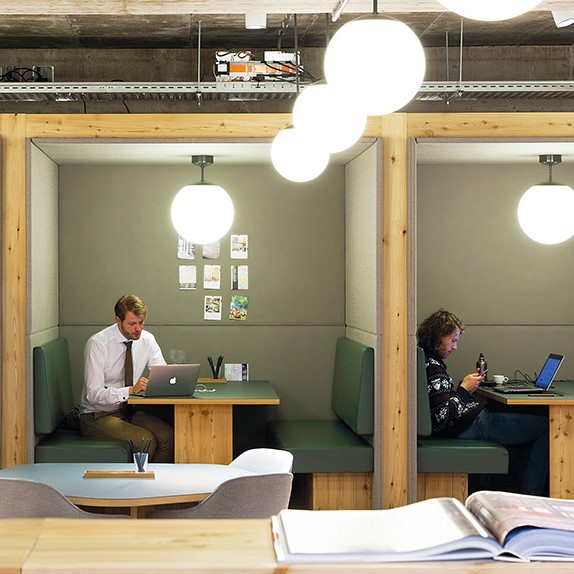
IWG’s stance, bolstered by this research, is that empowering employees with greater choice over their work locations can significantly broaden an employer’s recruitment horizons. By de-emphasizing geographical constraints, companies can tap into a more diverse and geographically dispersed talent pool. Simultaneously, this flexibility serves as a powerful retention tool, demonstrating an organization’s commitment to its employees’ well-being and professional development.
The Synergy of AI and Hybrid Work: A Glimpse into the Future of Productivity
Adding another layer of insight, the research also explores the potential synergistic relationship between hybrid working and artificial intelligence (AI). The findings suggest a potent combination, with four out of five CEOs surveyed by IWG reporting that the integration of AI with hybrid working models has demonstrably increased employee productivity. This implies that AI tools can enhance efficiency, streamline workflows, and provide valuable support within flexible work frameworks, further amplifying the benefits of hybrid arrangements.
The positive impact is also felt by employees themselves. Approximately 60 percent of US workers and 68 percent of UK workers surveyed indicated that AI is improving their experience of hybrid work. This suggests that AI is not only an enabler of productivity but also a contributor to a more positive and effective remote or hybrid working experience, mitigating some of the potential challenges associated with distributed teams.
It is important to note that the projected economic values presented in the report are derived from sophisticated economic modelling. These figures are contingent upon the underlying assumptions made regarding the precise relationships between flexible working, recruitment, retention, and overall productivity. While not directly observed economy-wide productivity gains, the robust methodology and comprehensive data underpinning the analysis lend significant weight to its conclusions.
Broader Implications: A Paradigm Shift in Organizational Strategy
The implications of this research are far-reaching for businesses, policymakers, and the broader economy. For businesses, it provides a data-driven rationale for embracing and optimizing hybrid working strategies. It suggests that investments in flexible work infrastructure, technology, and employee support systems are not merely operational costs but strategic investments with significant potential for economic returns. Companies that fail to adapt to these evolving expectations risk falling behind in the competition for talent and experiencing the detrimental effects of higher employee turnover.
For policymakers, the report highlights the potential for flexible working to contribute to economic growth and job creation. It may inform policies related to urban planning, transportation, and digital infrastructure, all of which can support and enhance the viability of widespread hybrid working. Furthermore, the findings underscore the importance of fostering an environment that encourages innovation in work practices and supports the digital transformation necessary for distributed teams to thrive.
On a societal level, the shift towards hybrid working could lead to more equitable distribution of economic opportunities, reduce urban congestion, and improve the quality of life for many individuals by offering greater autonomy and work-life balance. The sustained focus on employee well-being, driven by the recognition of its economic benefits, could foster a more resilient and engaged workforce, ultimately contributing to a more prosperous and sustainable future. The long-term success of this paradigm shift will hinge on continued adaptation, innovation, and a deep understanding of the evolving needs and expectations of the modern workforce.