
America’s journey of reinvention has historically been led by its leaders, who have consistently adapted to and shaped transformative eras. From the nation’s founding, where leaders forged a republic without a blueprint, to the industrial revolution, the post-war boom, and the digital age, each generation of American business leadership has faced unprecedented challenges. Now, as the nation stands at its 250th anniversary, a convergence of accelerating technological change, geopolitical realignments, and evolving workforce dynamics is poised to test leadership more profoundly than ever before. By 2031, the pace of change will dwarf the last decade, demanding a fundamental shift in how organizations and their leaders operate. The CEOs who will not only survive but thrive will be those who cultivate an organizational capacity for judgment, rapid decision-making, and its seamless integration into automated systems, rather than simply those who adopt new technologies most aggressively. This era calls for a re-examination of leadership, focusing on the cultivation of deep, hard-earned judgment, a trait increasingly vital yet paradoxically harder to develop in a rapidly automating world.
The Accelerating Tide of Disruption: A Multifaceted Challenge
The coming years present a complex tapestry of interconnected disruptions. Artificial intelligence is not merely a new tool but a force that is simultaneously accelerating decision cycles, dissolving traditional organizational structures, automating vast swathes of work, and fundamentally reshaping the very definition of leadership. Simultaneously, geopolitical shifts are redrawing long-established supply chains and trade relationships with unprecedented speed. The workforce is also undergoing a rapid transformation, outpacing the adaptive capabilities of many HR systems and management practices. Compounding these challenges are the intertwined risks of climate change, cybersecurity threats, volatile capital markets, and eroding social trust, all interacting in ways that render traditional, sequential planning obsolete.
This confluence of factors means that the leaders who will find success and uncover new opportunities will not be those who succumb to the complexity or ignore its reality. Instead, they will be the architects of organizations that can function effectively even in their absence. This is the enduring lesson of American leadership since 1776: the power lies in building systems and cultures that possess inherent resilience and decision-making capability. At the heart of this lies judgment—the nuanced, experience-driven wisdom that distinguishes those who shape eras from those who are merely swept along by them.
The Shifting Landscape of Organizational Design: From Controller to Architect
The evolution of leadership can be understood through three distinct stages: the controller, the builder, and the architect. Controllers address problems directly, while builders establish frameworks for others to follow. Architects, however, design systems where effective decision-making occurs autonomously, without their constant intervention. As articulated by Bill Flynn, founder of Catalyst Growth Advisors, the critical question for today’s CEOs is not "How do I handle this?" but "How do I design a system where handling this happens without me?" This shift is particularly pertinent in the age of AI, as the technology amplifies existing organizational structures. Companies with clear workflows, defined decision rights, and coherent incentives will see their efficiency magnified by AI. Conversely, organizations characterized by ambiguity, informal processes, and conflicting incentives will find AI accelerating their confusion.
The experience of Ultimo, a UK-based industrial asset management firm, illustrates this transition. CEO Steven Elsham has integrated AI into the organizational chart as if they were human employees, complete with profile photos and job titles. AI agents like "Hunter," an account engagement planner, and "Harry," an HR assistant, are managed and evaluated by human counterparts. The key to their successful integration was not the sophistication of the AI but the establishment of clear ownership. When AI tools lack accountability, they stagnate. By treating AI as labor to be managed, Ultimo fostered habit formation, embedding AI into its core operations. This redefinition of the organizational chart, potentially including humans, AI agents, hybrid teams, and automated workflows, necessitates a CEO who can provide a central logic and clear boundaries for this complex ecosystem.

Rita McGrath, a professor at Columbia Business School and an authority on strategic inflection points, emphasizes that the traditional CEO role, built on clear hierarchies and predictable markets, is becoming obsolete. As markets become more personalized and value shifts towards experiences and services, the CEO’s primary task is to "center" their organization. This involves articulating a coherent operating philosophy, making consistent choices, and ruthlessly defending decisions that reinforce this core. CEOs who prioritize technology adoption over strategic clarity risk chasing tools, while those who begin with their organization’s fundamental purpose and value creation will be better positioned to leverage technology for competitive advantage.
The Crucial Role of Judgment in an AI-Augmented World
By 2031, leaders will be inundated with more information, analysis, and recommendations than ever before. The challenge will be discerning valuable insights from flawed outputs. Neil Sahota, Chief AI Officer at Consolidated Analytics, notes that AI compresses the time between decision and consequence. As companies automate millions of daily operational decisions, there will be a temptation to push AI further up the value chain. However, Sahota cautions that certain decisions, particularly those concerning human dignity, acceptable risk, societal impact, and organizational purpose, should never be fully automated. AI can identify statistically "least valuable" employees, but it cannot define the ethical framework for such decisions or the kind of company one aspires to be.
The human role in decision-making will increasingly involve interrogating what AI systems optimize for and what they overlook. Anat Baron, a former CEO who scaled Mike’s Hard Lemonade, observes that as AI becomes more sophisticated, its errors become subtler and potentially more consequential, especially as organizations become more reliant on its outputs. Her blunt assessment is that the most critical CEO skill in the coming years will not be knowing how to use AI, but knowing when not to use it.
Rachel Sha, CEO of Terrestrial Bio, grapples with this tension daily, using AI for research and analysis but then questioning its validity. This simple yet profound question—"Do I believe that?"—may become a cornerstone of CEO discipline. While AI can accelerate sense-making, it cannot replace wisdom. Sha believes that as decision-making accelerates, the reliance on human insight and wisdom will become even more critical. Bjorn Reynolds, CEO of Safeguard Global, navigates this paradox by using AI to synthesize information and flag key priorities, freeing up his time. However, this also presents a challenge of managing an increased volume of recommendations with apparent authority. Reynolds stresses the importance of discernment, advocating for a balance of agility and judgment, the ability to act on genuine signals while resisting the urge to react to every data fluctuation. His decision to establish a sales team in South Africa, overriding an AI assessment based on political risk, underscores the enduring value of contextual human understanding.
Adapting the C-Suite for a Systemic Age
The traditional C-suite, built around functional silos, is ill-equipped to address the interconnected challenges of AI, geopolitics, climate change, and social volatility. Deb Rubin, Senior Partner at RHR, notes that CEOs and boards are increasingly seeking leaders who can comprehend the external environment across multiple horizons, recognizing that opportunities and risks are deeply intertwined and that functional silos are becoming increasingly irrelevant.
While AI may initially reside within IT departments, its impact permeates every facet of an organization, from revenue and marketing to legal, finance, and human resources. A CEO delegating AI solely to the CIO signifies a fundamental misunderstanding of its pervasive influence. It is predicted that the Chief Operating Officer (COO) role will become increasingly pivotal by 2031, as the bottleneck shifts to operational architecture—designing the workflows upon which AI executes. Furthermore, a new role, perhaps a Chief Systems Officer or Head of Operating Architecture, may emerge, bridging the gap between the COO and CTO, responsible for the data, workflow, and AI agent infrastructure that increasingly underpins business operations.
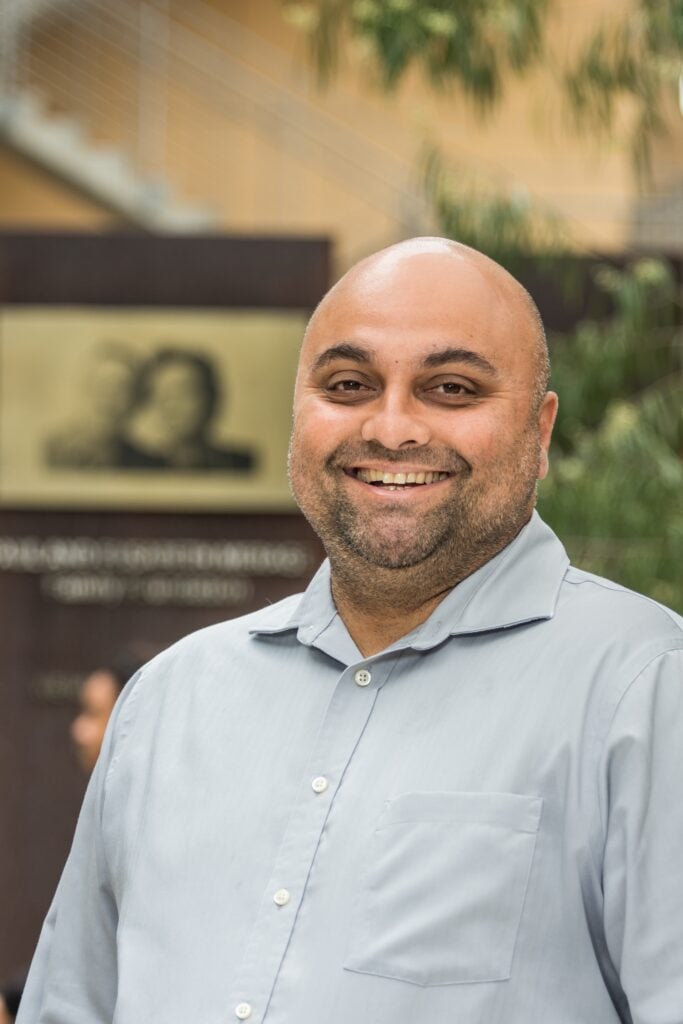
Noa Gafni, an NYU professor and C-suite advisor, frames this as a move away from a strategy playbook focused solely on industry dynamics towards one that acknowledges systemic external forces—technology, geopolitics, society, environment, and economics. The traditional C-suite model is insufficient, as the CEO is increasingly the sole individual attempting to synthesize these disparate factors. The CEO’s role is not to absorb every shock but to foster cross-enterprise dialogue, ensuring that AI, geopolitical risk, workforce strategy, sustainability, brand trust, and capital allocation are not treated as isolated issues until a crisis forces their integration. Gafni highlights the elevation of geopolitical risk teams to the CEO level and the emergence of Chief Diplomacy Officers as companies navigate a complex global landscape where government relations, social legitimacy, and trade policy are inseparable from strategy.
This transformation is also reshaping internal leadership. Mike Handelsman, CEO of FoamOrder, observes that leadership roles are becoming less rigid, requiring a broader understanding of interconnected functions. At Mother Murphy’s, a third-generation family-owned flavor manufacturer, CEO Al Murphy is transitioning from founder-family instinct to formal operating discipline by integrating professional leadership in HR, regulatory affairs, operations, and R&D. The goal is not to dilute the company’s culture but to build a scalable organization.
Cultivating the Next Generation of Leaders: The Judgment Deficit
One of the most significant, yet often overlooked, risks posed by AI is its impact on leadership development. As AI automates entry-level tasks such as research, analysis, drafting, and customer response, it erodes the very experiences that have historically trained judgment. Anat Baron warns that automating junior roles without a plan for cultivating future judgment is not cost savings but borrowing against the leadership pipeline. The immediate productivity gains from automation mask a less visible, second-order loss: a reduction in individuals learning to think critically, make decisions, recover from setbacks, contextualize information, and ultimately, lead.
Ravin Jesuthasan, a Senior Partner at Mercer, describes this as the collapse of the traditional organizational pyramid. Historically, professional services firms and corporate functions relied on a broad base of junior talent for training. AI is shrinking this pyramid, creating a "stovepipe" or even an inverted structure. This raises the critical question: where will the senior leaders of tomorrow emerge from? In response, companies like IBM are recommitting to hiring and developing entry-level talent, albeit with redefined roles.
The talent that will be most valuable in 2031 will be characterized not only by technical skills but by judgment under uncertainty, learning agility, relational trust, effective communication, ethical reasoning, and the ability to collaborate with both humans and machines. Ethan McCarty, CEO of employee experience firm Integral, posits that the AI question and the talent question are intrinsically linked. Deploying AI into an organization with unclear communication, managerial opacity, and a disconnect between leadership and the frontline will only expose existing weaknesses. Integral’s research indicates a significant gap in "employee activation" between senior managers and non-managers, a disconnect that translates into execution problems across customer experience, innovation, and overall business performance. By 2031, this gap will become more costly, as organizations will require a committed workforce that understands the rationale behind change and trusts its leadership.
Bjorn Reynolds advocates for a broader approach to talent acquisition, emphasizing talent quality over geographic location and suggesting that in a world where speed is paramount, talent will triumph over geography. He believes the Chief Human Resources Officer (CHRO) will become a critical role, as human strategy is increasingly intertwined with enterprise strategy, especially with evolving workforce compositions including AI agents, contractors, and global employees. The urgent question for CEOs is not how many jobs AI can replace, but "What work must humans still experience to become leaders worth following?"

The Imperative of Learning Agility: Anticipating the Future
The contemporary environment is defined by accelerated velocity and volatility, with interconnected forces in geopolitics, climate, health, energy, economics, and technology rendering traditional planning horizons insufficient. Many CEOs have already shortened their planning horizons to 12 months. Ravin Jesuthasan highlights the crucial role of foresight, urging CEOs to consider not just immediate financial gains but also the long-term sustainability of their enterprises under multiple future scenarios.
Daniel Burrus, a renowned futurist, emphasizes the need for CEOs to become more anticipatory. Reacting faster is no longer adequate; the most effective leaders will identify certainties, act proactively, and guide their teams with confidence. This involves shifting from reacting to volatility to "pre-solving" for predictable "hard trends" on the horizon.
Jeff Kaiden, CEO of Capacity, a fulfillment company, embodies the principle of being a fast follower. In his 26 years of leadership, he has focused on quickly adopting innovations that prove effective. He stresses the importance of keeping "antennas up for what’s changing." Observing the effective use of AI in customer service by larger companies, Kaiden recognized its potential for his account management teams, particularly in automating routine inquiries to free up human agents for more complex client retention conversations. His philosophy underscores that even amidst advanced technology, human connection remains fundamental. The ability to learn, adapt, and integrate new technologies thoughtfully will be a defining characteristic of successful leadership in the coming years.